



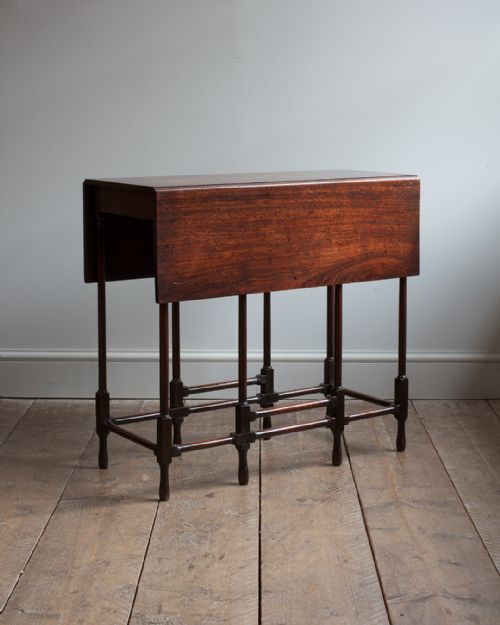


Slender Mahogany Table
These slender mahogany table pieces offer refined proportions and rich timber grain, bringing practical elegance to compact spaces.
Slender Mahogany Table
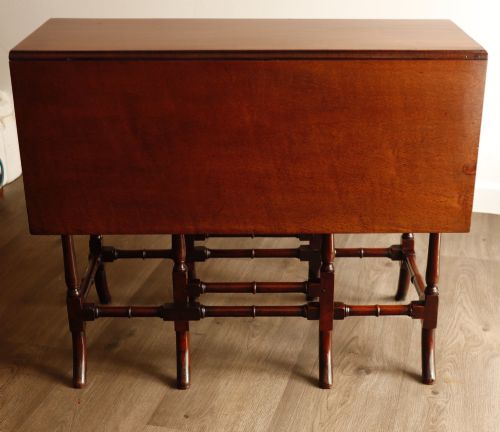
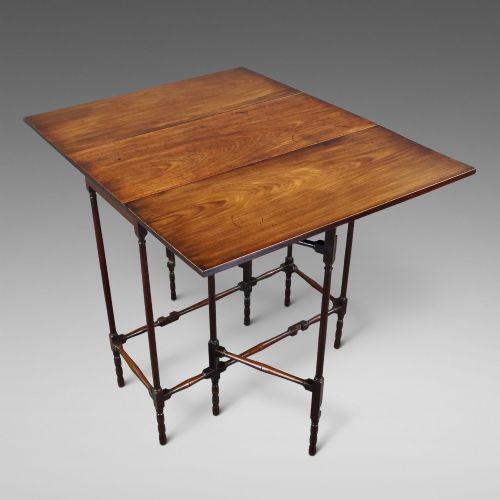
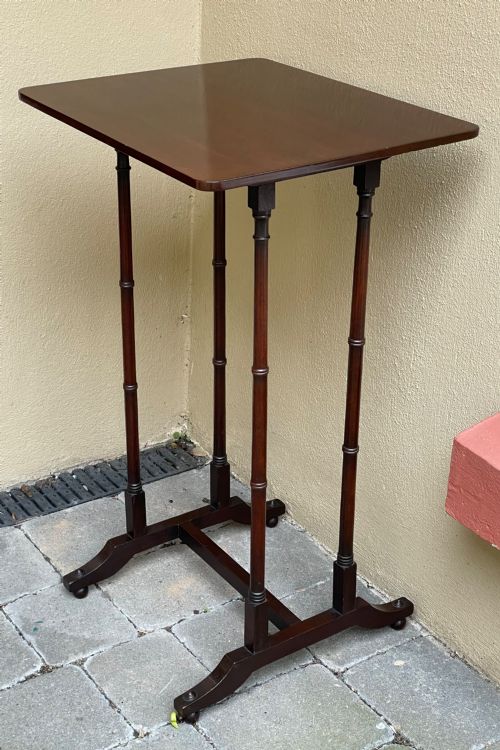
A slender mahogany table combines narrow proportions with warm timber tones, appearing most frequently in eighteenth century and Georgian forms such as spider leg tea tables and drop leaf occasional pieces. These designs utilise minimal footprints to fit tight corners or beside seating without dominating a room.
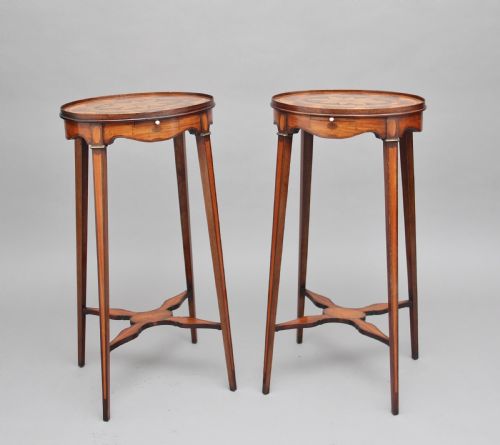
Buyers encounter variations spanning from eighteenth century gateleg examples to Edwardian Sheraton revival urn stands and nineteenth century bedside chests. The core identity remains the same: light, movable timber furniture designed for utility and grace.
Materials and construction
Cabinetmakers constructed these tables using solid mahogany, frequently augmented by delicate wood inlay, satinwood details, and bone escutcheons or pulls. The timber provides structural stability despite slender turned legs and thin drop flaps.
Joinery techniques focus on weight reduction and stability, seen in the slender columnar spindles of spider leg frames and folding gateleg mechanisms. Brass hinges and castors appear on select pieces to facilitate movement.
Slender Mahogany Table Retail Price Guide 2026
Typical asking prices for slender mahogany table among the pieces listed under this phrase on Sellingantiques today, from the lower quarter to the upper quarter. They describe what is for sale here now, not the wider market.
Materials across the selection rely on mahogany foundations, complemented by occasional highlights of brass, bone, and satinwood inlay.
Assessing quality
Quality rests upon the crispness of the timber turning and the tightness of the joinery in narrow legs and folding leaves. Superior examples display carefully chosen grain patterns and subtle inlay work rather than heavy or clumsy proportions.
The integrity of the structural frame dictates the longevity of lighter tables, where thinner components demand precise execution to prevent wobble. Finer pieces maintain balanced proportions across drop leaf actions and turned spindles.
The Slender Mahogany Table Glossary
- Spider table
- A lightweight occasional table featuring numerous slender turned legs connected by thin stretchers. This design allows the table to remain stable despite very narrow wooden components.
- Drop leaf table
- A table with a fixed centre section and hinged flaps that fold down when not in use. This mechanism allows the footprint to adjust according to available space.
- Urn stand
- A tall, narrow pedestal or table designed specifically to hold a tea urn. These pieces emphasise height and slender proportions over broad surface area.
- Sheraton revival
- A late nineteenth and early twentieth century style emulating the neoclassical designs of the eighteenth century. It typically incorporates satinwood inlay and refined geometric lines.
- Satinwood
- A pale, lustrous exotic timber utilised for contrasting stringing and decorative inlay on dark mahogany surfaces. It provides bright visual highlights on tabletops and borders.
Slender Mahogany Table: Frequently Asked Questions
Where do I put a slender mahogany table?
These tables suit narrow hallways, tight bedside positions, or beside seating where floor space is limited. Their light frames allow them to tuck into corners without crowding a room.
Drop leaf and folding variants can sit flat against a wall until extra surface area is required for tea or display.
How do spider leg tables fold?
Spider leg tables utilise a series of hinged wooden flaps supported by pivoting or swinging legs. When the leaves lift into position, the extra legs rotate outward to bear the weight.
Folding the leaves down swings the thin turned supports back into a compact vertical alignment.
What is the difference between Georgian and Edwardian pieces?
Georgian tables date from the eighteenth and early nineteenth centuries, featuring period joinery and natural timber ageing. They represent the original era of these lightweight domestic forms.
Edwardian pieces often revive these earlier Sheraton and Chippendale styles, utilising twentieth century manufacturing methods while imitating historical proportions.
How do I care for mahogany furniture?
Mahogany benefits from consistent indoor humidity and protection from direct sunlight to preserve its deep colour and polish. Regular dusting with a soft cloth maintains the finish without chemical buildup.
Avoid placing damp items directly onto antique timber surfaces to prevent marking the polished wood.