
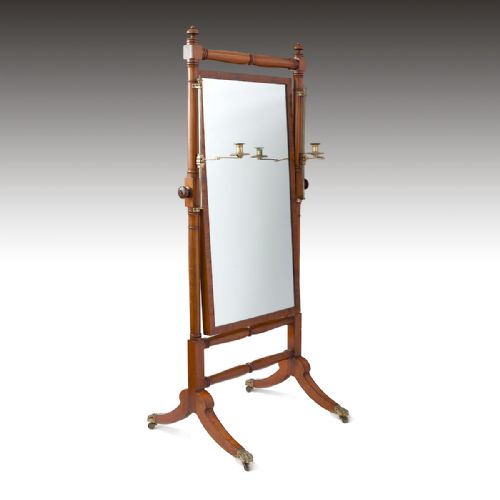
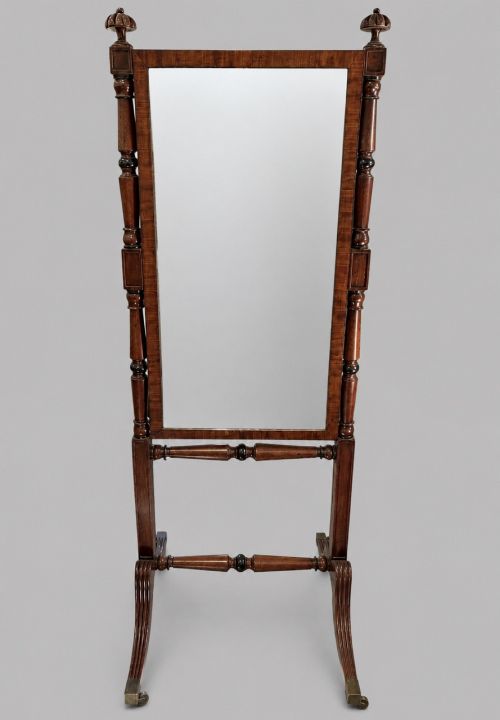
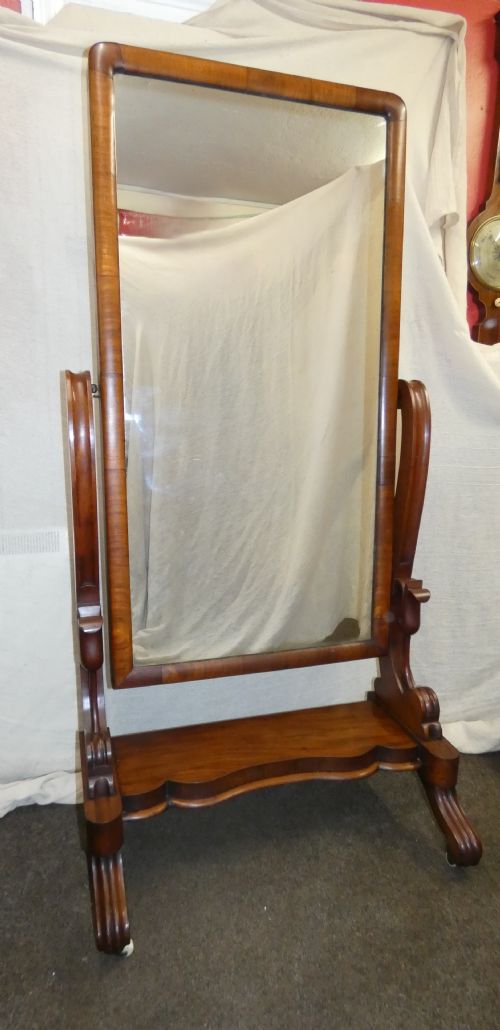


Regency Mahogany Cheval Glass
A regency mahogany cheval glass brings architectural proportion and deep timber tones to a room, functioning as both a practical dressing mirror and a striking focal point.
Regency Mahogany Cheval Glass
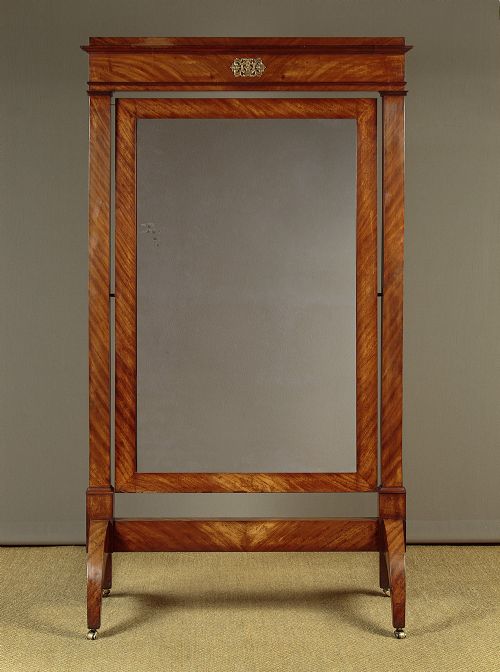
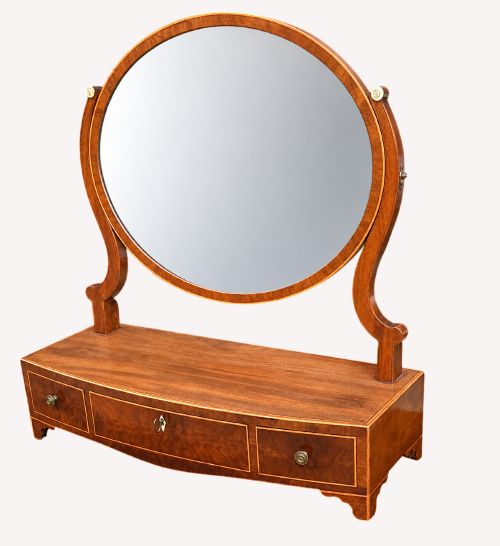
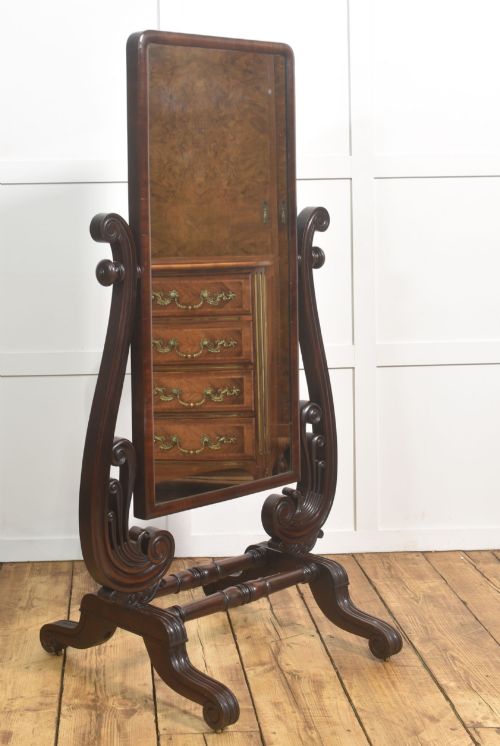
A regency mahogany cheval glass is a freestanding, full-length swing mirror designed to stand independently on the floor. When searching for this phrase, buyers encounter substantial floor-standing pieces alongside smaller dressing table variants from the nineteenth century.
The dominant forms span the Regency, Georgian, and Victorian periods, with many pieces displaying the clean architectural lines characteristic of the early nineteenth century. Makers constructed these tall swing mirrors to allow a full view of attire, often mounting the frame on sturdy side pillars.
The selection here includes grand country house examples alongside more compact domestic versions. Timber choices remain consistent, favouring rich mahogany frames supported by brass castors and articulated brackets.
Materials and construction methods
Craftsmen built these standing mirrors using dense mahogany timber, frequently accented with boxwood inlay, satinwood details, and gold leaf highlights. The primary structural framing relies on solid mahogany boards joined with traditional cabinetmaking techniques.
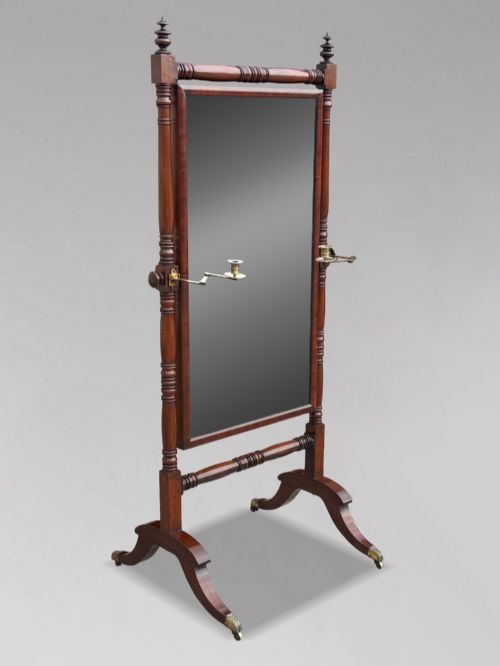
Functional metal components play a vital role in the construction, incorporating brass for castors, swing pivots, and occasionally articulated candle holders. Original mirror glass sits within adjustable side frames, balanced by weighted bases or supportive trestles.
Some dressing mirrors arrived equipped with built-in candle holders so users could inspect their reflections well after daylight faded.
Assessing quality in execution
Quality reveals itself in the handling of the timber and the refinement of the turning on the upright supports. Superior examples display carefully matched mahogany grain across the entire frame rather than patched veneer.
The sophistication of the mechanical joints and brass hardware dictates the tier of the piece. Finer versions incorporate smooth swivel mechanisms and original castors that allow the heavy glass frame to tilt without sagging.
Gillows
The Regency Mahogany Cheval Glass Glossary
- Cheval glass
- A full-length swing mirror mounted in a freestanding frame. The term derives from the French word for horse, referencing the four-legged support structure.
- Mahogany
- A durable tropical hardwood prized for its deep reddish-brown colour and stable grain. It served as the primary material for high-end case furniture throughout the Georgian and Regency periods.
- Swing mirror
- A looking glass hung on pivots within an upright frame, allowing the user to adjust the angle of reflection. This mechanism forms the core operation of both table and floor-standing models.
- Boxwood inlay
- Contrasting light-coloured wood inserted into recesses within the darker mahogany surface. Cabinetmakers utilised this technique to create delicate geometric borders and linear decoration.
- Toilet mirror
- A smaller dressing glass designed to sit upon a table or chest of drawers rather than stand on the floor. These pieces share the pivoting frame mechanism of their taller counterparts.
Regency Mahogany Cheval Glass: Frequently Asked Questions
How do I date a regency mahogany cheval glass?
Dating relies on examining the construction of the frame, the turning of the support pillars, and the style of the brass hardware. Earlier Regency examples often feature sharper architectural lines and delicate brass fittings.
Later Victorian interpretations tend to have heavier proportions and simpler turning. Comparing the joinery and timber selection helps narrow down the decade of manufacture.
Where should I place a cheval mirror?
These freestanding mirrors suit bedrooms, dressing rooms, and grand hallways where adequate floor space allows for the swinging frame. Positioning them near a light source enhances their reflective quality and utility.
Ensure the floor is level so the heavy frame remains stable on its castors. The pivoting mechanism also requires clearance to tilt forward and backward without obstruction.
What is the difference between a cheval and a toilet mirror?
A cheval mirror is a tall, floor-standing piece designed to reflect the entire figure. It requires its own footprint on the floor.
A toilet mirror is scaled down to sit upon a dressing table or chest, focusing on the upper body and face. Both utilise the same basic swing-frame construction principle.