
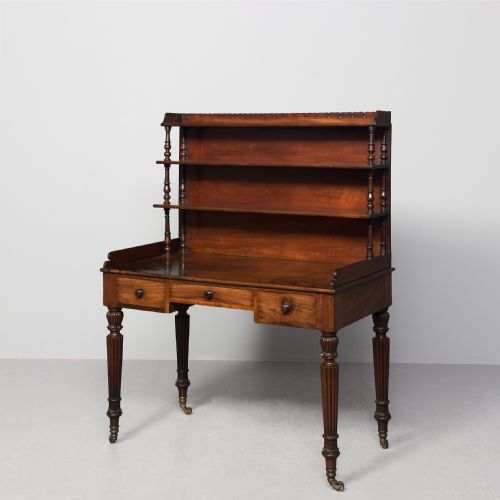
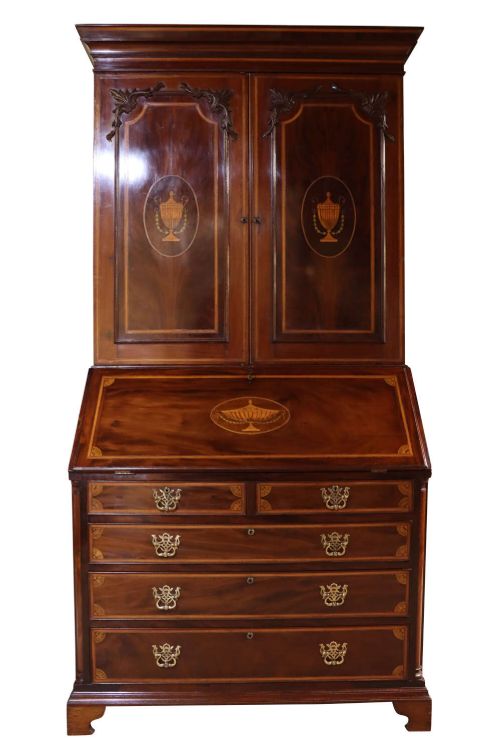
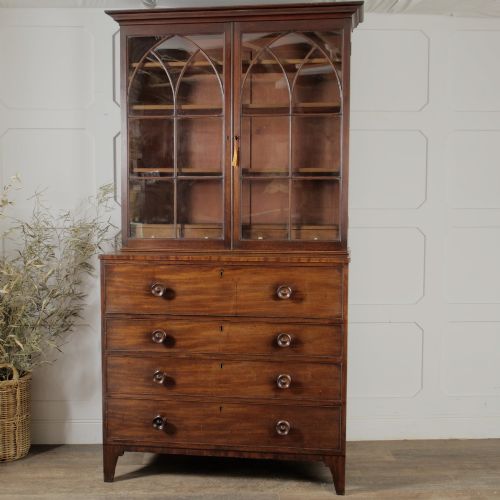
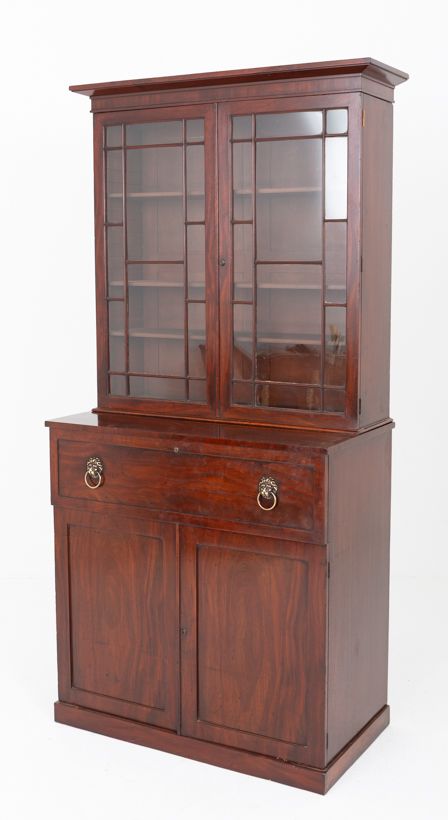

Regency Mahogany Bureau Desk
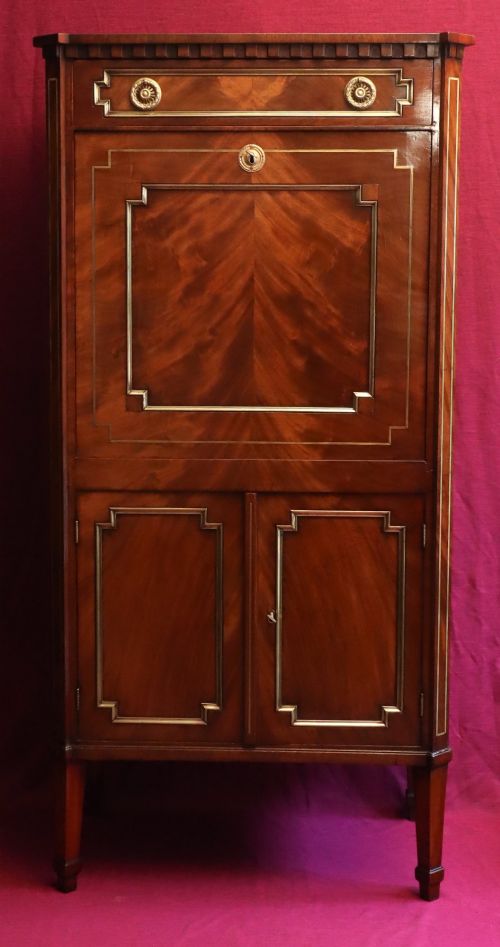
A regency mahogany bureau desk brings sophisticated cabinetwork and clever concealed writing compartments into a room.
Regency Mahogany Bureau Desk
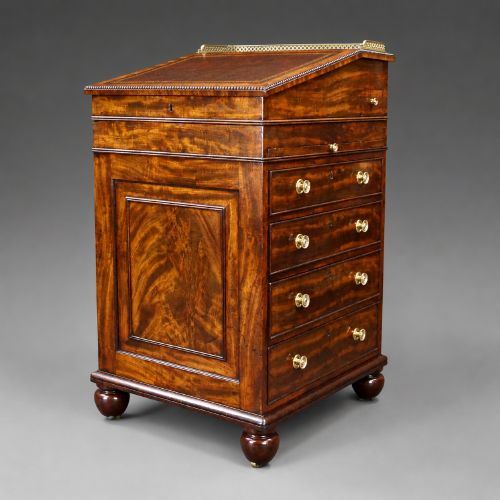
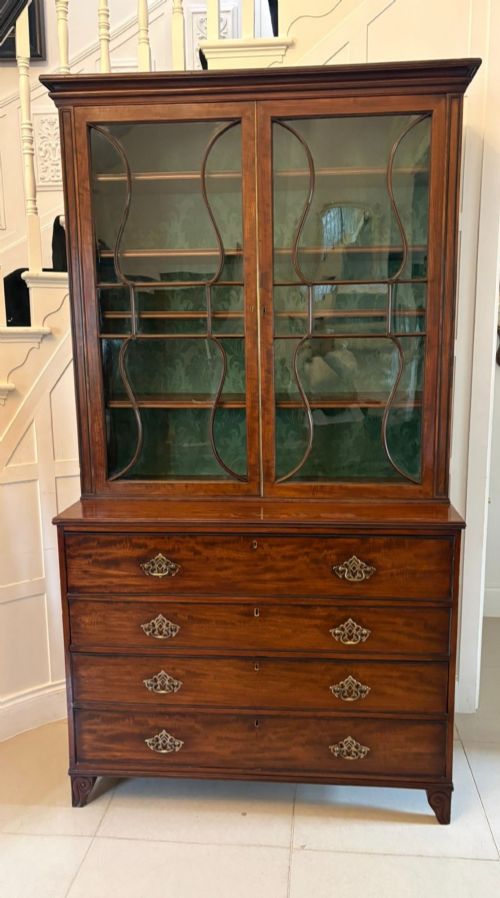
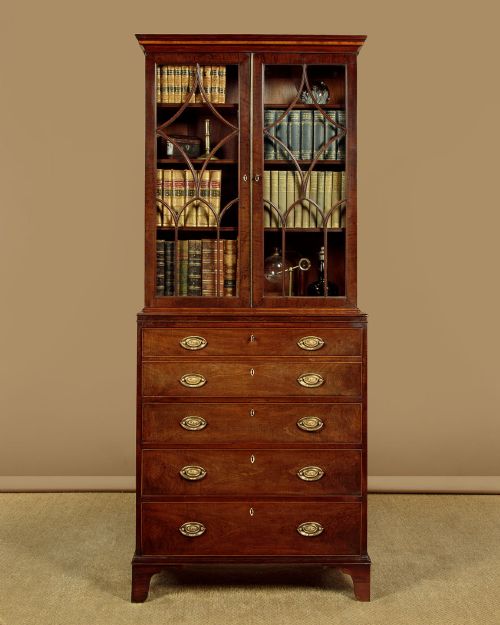
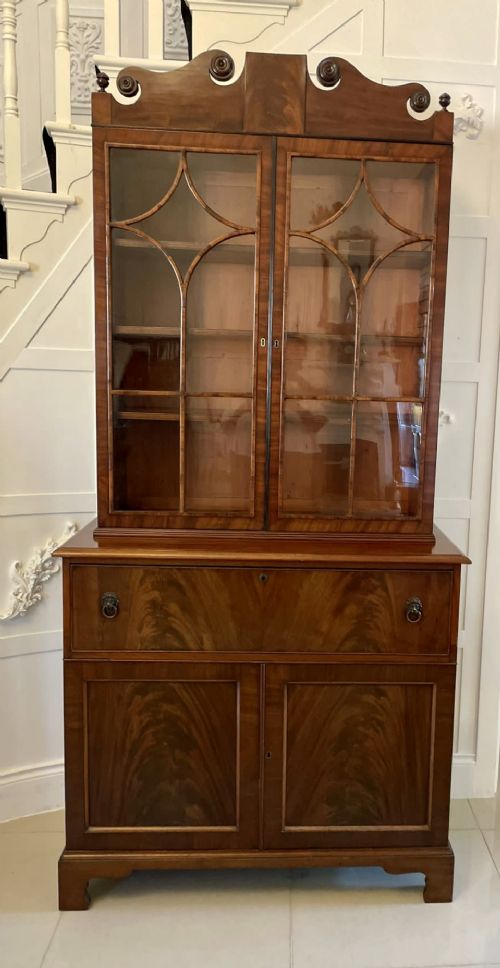
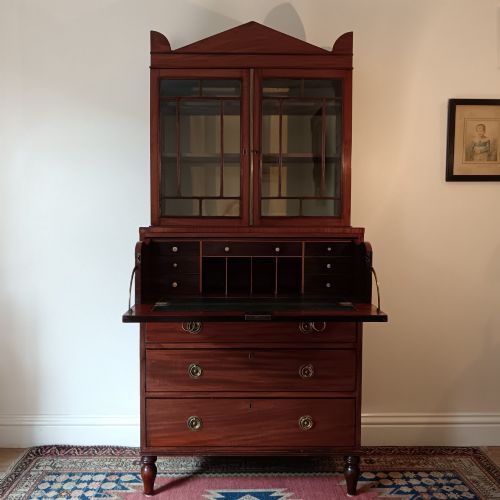
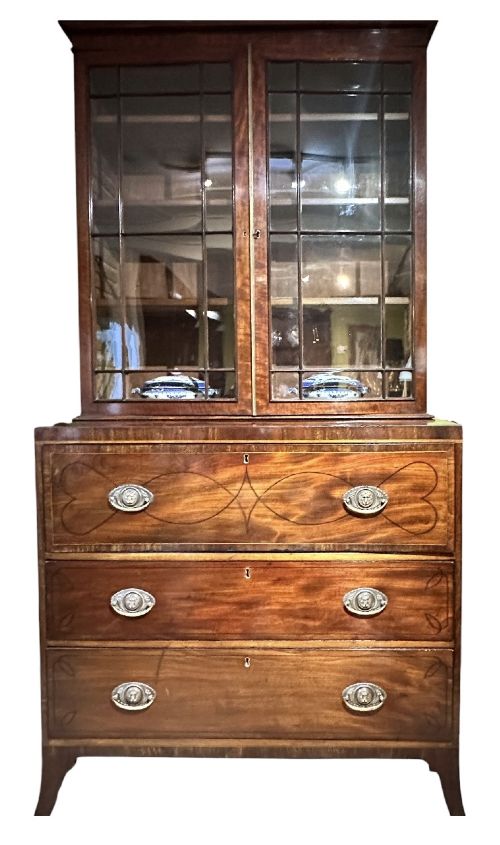
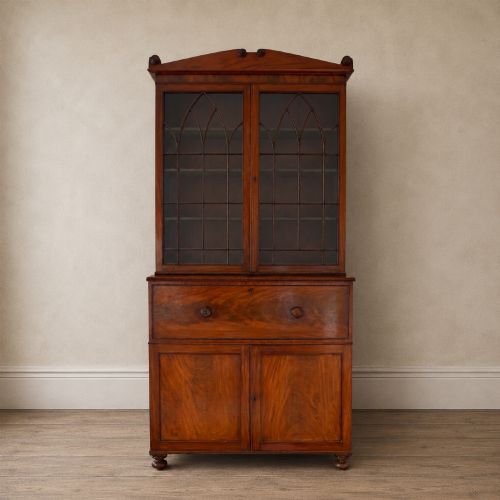
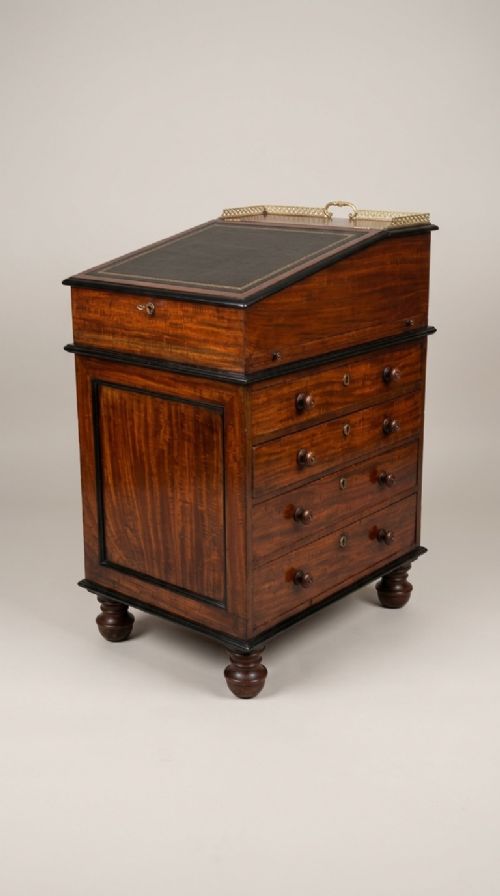
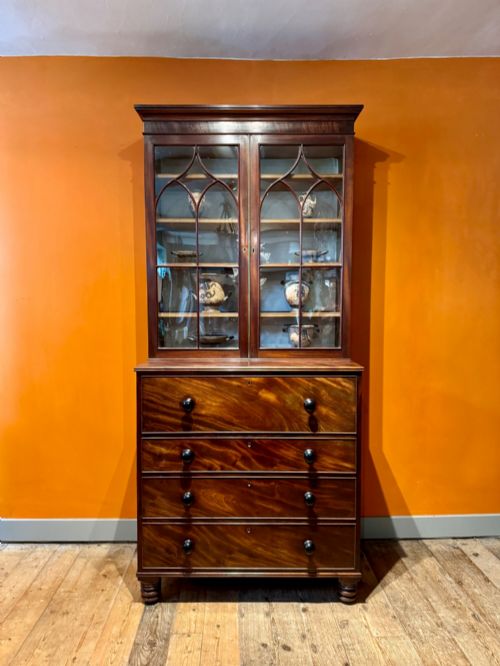
A regency mahogany bureau desk unites formal writing surfaces with substantial storage, frequently appearing as a tall secretaire bookcase or a compact Davenport. These pieces span the late Georgian, Regency, and William IV periods, reflecting an era of inventive cabinet design.
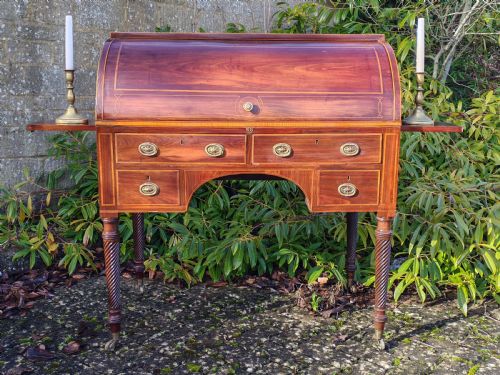
The most common formats on this page are secretaire bookcases featuring glazed upper doors alongside fitted interior pigeonholes, alongside smaller writing tables and cylinder desks equipped with drawers.
Originating primarily from early nineteenth-century English workshops, these items served both public reception rooms and private quarters as elegant administrative hubs.
How they were made
Makers utilised solid mahogany and rich flame mahogany veneer applied to secondary timbers, often accentuating surfaces with delicate wood inlay, brass mounts, and ebonised details. Leather writing inserts frequently lined the pull-down flaps or sliding desks to provide a smooth, durable working surface.
Interiors were constructed with precision joinery to accommodate numerous hidden compartments, small drawers, and pigeonholes within the fall-front or drawer-based writing sections.
Several desks hide miniature secret drawers behind false stationery partitions, built for private letters and hidden fortunes.
What varies in quality
The distinction between ordinary and exceptional pieces lies in the choice of timber and the ambition of the internal arrangement. Figured and flame mahogany veneers matched symmetrically across a facade indicate superior craftsmanship.
Cabinetwork complexity also dictates standing, where marked or attributed pieces featuring integrated mechanism drawers and refined brass hardware command greater appreciation among collectors.
Gillows·James Mein of Kelso·George Oakley·John MaClean·Hobbs & Co
The Regency Mahogany Bureau Desk Glossary
- Secretaire
- A piece of furniture containing a concealed writing drawer or a fold-down writing flap. This mechanism transforms a chest of drawers or bookcase into a functional desk.
- Davenport
- A small, compact desk featuring a sloping writing surface above a pedestal of drawers. It typically includes a hinged lid and internal stationery compartments.
- Flame mahogany
- A veneer cut from timber where the grain creates a distinctive flickering, flame-like pattern. It was widely used on prominent surfaces during the Regency period.
- Glazed doors
- Glass-fronted upper cabinet doors often divided by wooden glazing bars into geometric panes. They protected valuable book collections from dust.
- Escritoire
- An alternative term for a writing cabinet or desk, particularly one with a drop-front panel. The word shares its roots with the French term for writing.
Regency Mahogany Bureau Desk: Frequently Asked Questions
How were these desks used originally?
These desks served as private administrative centres for managing correspondence, household accounts, and personal reading materials. The drop-front flap or sliding surface offered an immediate writing area that concealed the paperwork when closed.
Upper bookcase sections provided secure display and storage for bound volumes, while lower drawers held personal documents.
Where should I place one at home?
A regency mahogany bureau desk suits a study, drawing room, or living space where its rich timber tones anchor the room. Smaller formats like Davenport desks fit comfortably beside armchairs or in compact corners.
Keeping the piece away from direct sunlight protects the mahogany veneer and leather writing surfaces from drying out.
How do I tell Regency from Victorian pieces?
Regency and early nineteenth-century pieces typically exhibit crisper classical proportions, finer flame mahogany veneers, and restrained brass or inlay details. Later Victorian interpretations often feature heavier scaling and darker finishes.
Examining the secondary timbers inside the drawer linings and the style of the brass handles helps confirm the period.