

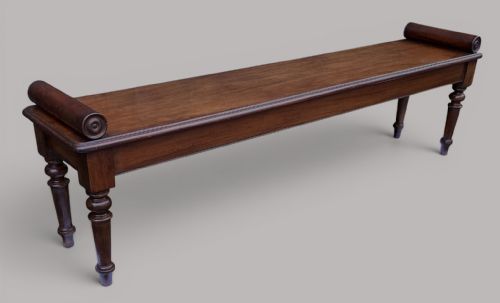


Regency Mahogany Bench
A regency mahogany bench brings architectural presence and seating versatility to a hallway or window space.
Regency Mahogany Bench
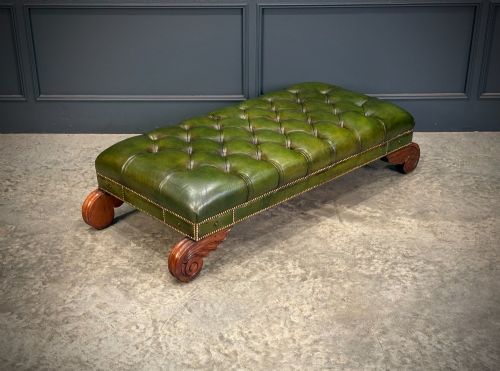
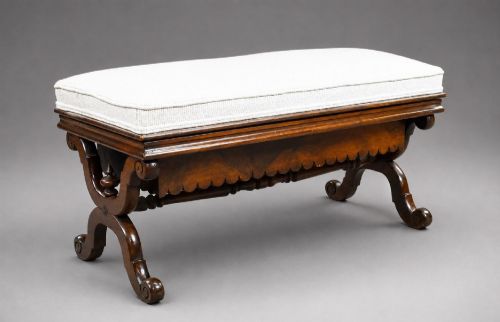
When searching for a regency mahogany bench, you are looking at seating forms created primarily during the early nineteenth century and later revival periods. The selections span long hall benches, window seats, and X-framed stools constructed to furnish grand country houses and town residences.
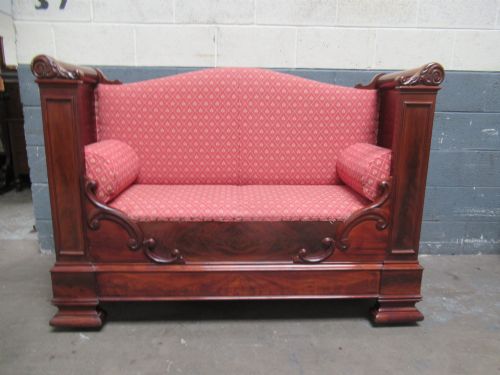
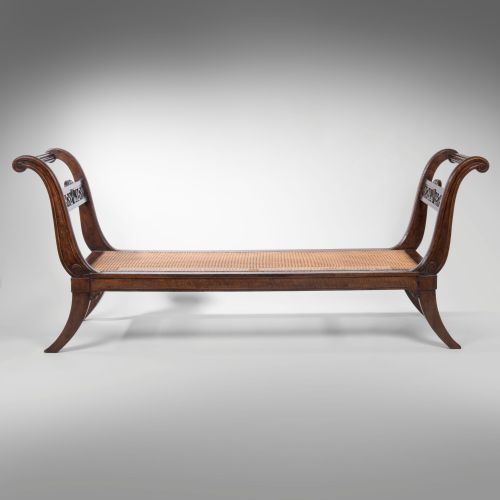
You are most likely to meet window seats and hall benches featuring scroll ends or cylindrical roll supports. These pieces often blur the line between bench and settee, appearing in forms from simple long plank benches to elaborately carved seating.
The aesthetic bridges the neat classical lines of the Georgian era and the heavier proportions of the William IV and Victorian periods. Pieces emerge from genuine Regency manufacture as well as later nineteenth and early twentieth-century revivals.
What varies in quality
The distinction between ordinary and exceptional examples rests on timber selection, carving crispness, and structural harmony. Superior pieces exhibit dense, well-figured mahogany with hand-carving that retains sharp, deep undercut profiles rather than soft, rounded moulding.
Proportion and attribution also dictate standing, where pieces bearing the stylistic hallmarks of known workshops command greater attention. The integrity of the original frame structure, down to the joinery of the scroll ends and X-frames, determines long-term endurance.
Some nineteenth-century occupants used these long benches as impromptu day beds during particularly long afternoon reads.
Gillows·Marsh and Tatham
The Regency Mahogany Bench Glossary
- X-frame
- A cross-legged structural base forming an X shape when viewed from the side. This ancient form gained popularity during the Regency period for stools and window seats.
- Scroll end
- A rolled arm or terminal curving outward or inward in a spiral profile. These often terminate both ends of a bench or window seat symmetrically.
- Window seat
- An elongated stool or bench designed specifically to fit within a window recess. They frequently feature padded ends and low backs.
- Caning
- Woven rattan material used to form light, resilient seat panels. It appears on various stools and benches across different nineteenth-century periods.
- Roll-end support
- A cylindrical wooden bolster forming the terminal of a bench or day bed. This feature provides arm support on backless seating forms.
Regency Mahogany Bench: Frequently Asked Questions
Where should I place a regency mahogany bench?
These benches suit long entrance hallways, narrow corridors, or placement beneath large bay windows. Their finished backs and ends allow them to sit centrally within a room or against a wall.
Matching the scale of the bench to the architectural proportions of your space ensures the piece commands the room without obstructing movement.
How do I care for mahogany and leather upholstery?
Maintain the mahogany frame by dusting regularly with a dry cloth and applying occasional quality wax to nourish the timber. Avoid placing the wood in direct sunlight or near heat sources to prevent splitting.
Leather surfaces benefit from periodic conditioning with specialised balms to keep the hide supple. Check upholstered edges and webbing gently during routine cleaning.
Are these benches comfortable for daily sitting?
Many historical benches serve primarily as architectural furniture or occasional seating rather than deep lounging furniture. Versions with upholstered leather or fabric offer softer support for short durations.
Stiff cane panels and firm squabs provide a rigid seat intended for upright posture in a hallway or dressing room.
How can I tell an early piece from a revival piece?
Examine the timber patination, construction joints, and secondary woods used on the underside or interior frame. Early nineteenth-century pieces display hand-cut joinery and aged mahogany patination developed over generations.
Revival pieces from later periods often feature machine-tooled elements, different secondary framing timbers, and standardised fixings that reveal a later manufacturing date.