



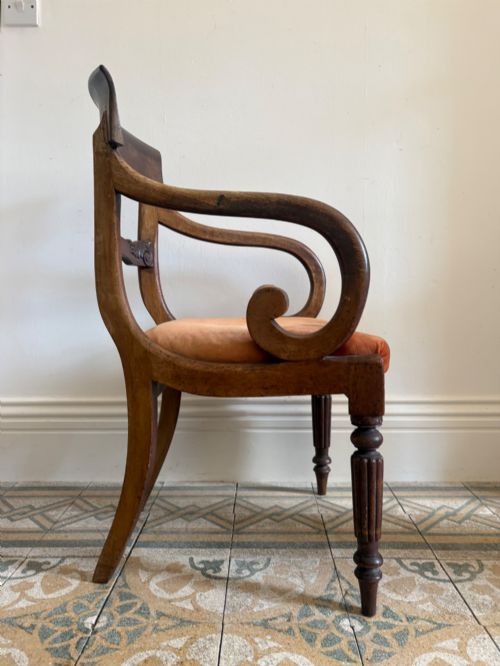

Regency Mahogany Arm Chair
A regency mahogany arm chair brings the clean lines and rich timber of the early nineteenth century straight into a modern study or sitting room.
Regency Mahogany Arm Chair
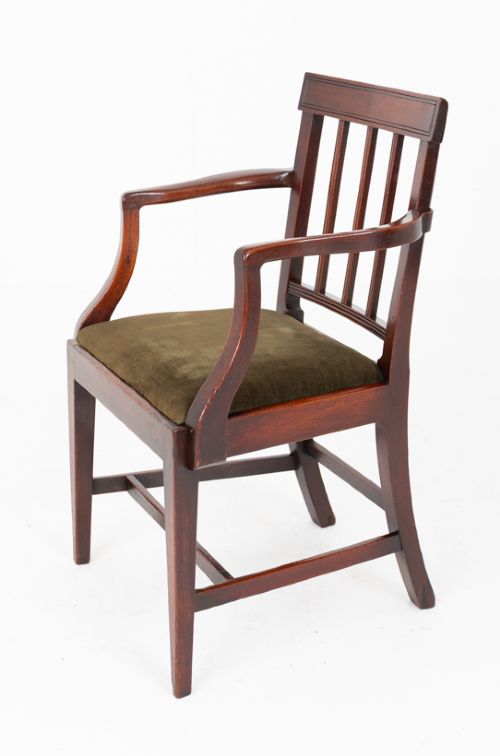
A regency mahogany arm chair encompasses a variety of seating forms designed during the early nineteenth century, ranging from library armchairs and desk chairs to dining carvers.
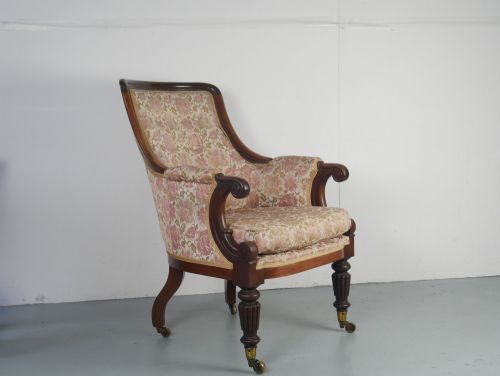
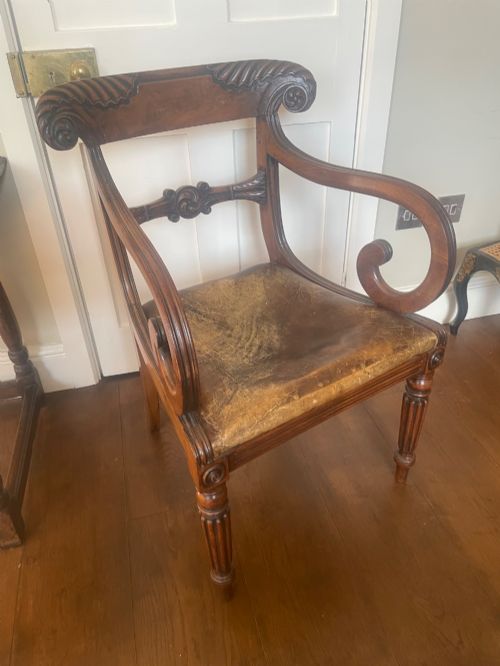
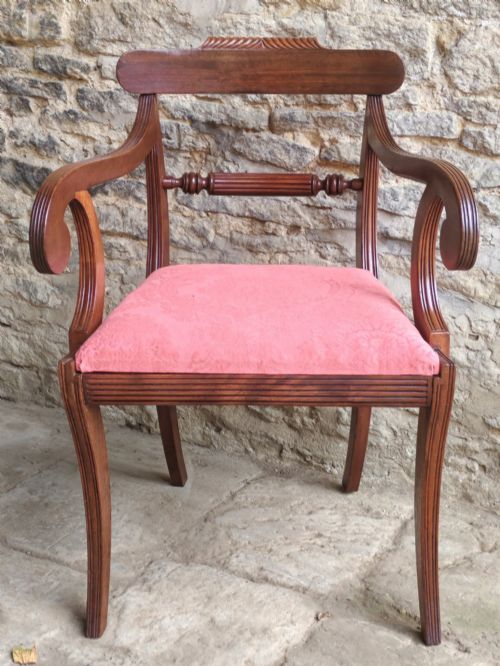
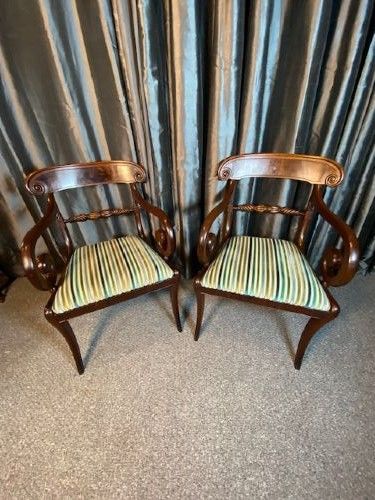
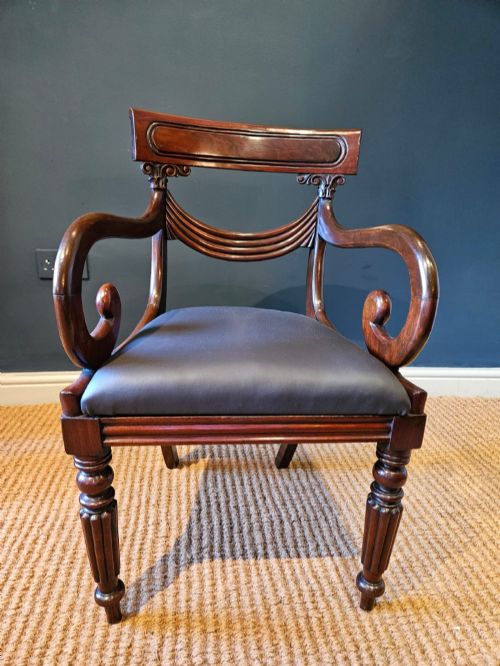
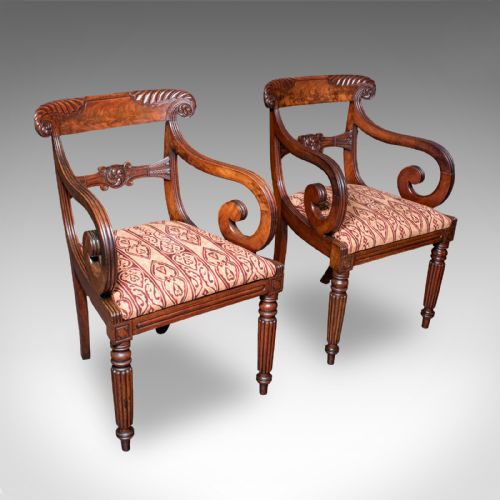
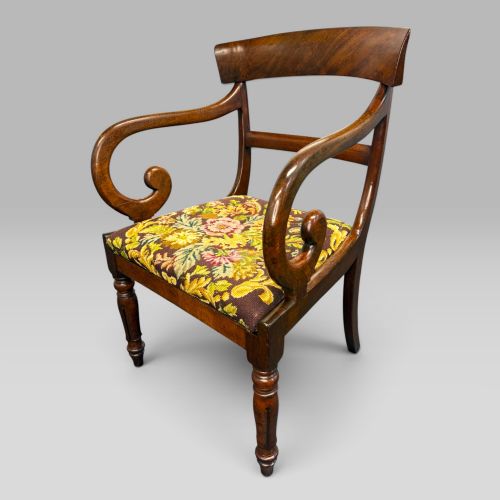
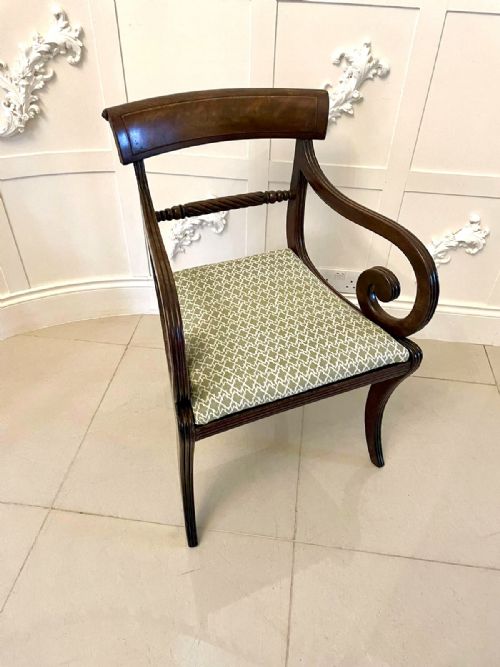
The version most commonly encountered on this page combines a rich mahogany timber frame with scroll arms, sabre legs, or upholstered seating designed for the library or dining room.
Beyond the strict Regency period, the evidence shows these chairs span Georgian, William IV, and later nineteenth-century interpretations, alongside occasional twentieth-century examples.
Materials and Construction
Cabinetmakers relied heavily on solid mahogany for the structural frames, valued for its deep grain and resilience.
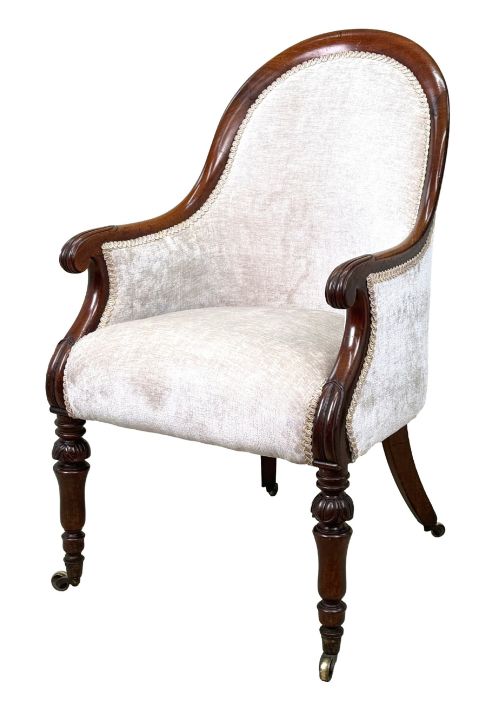
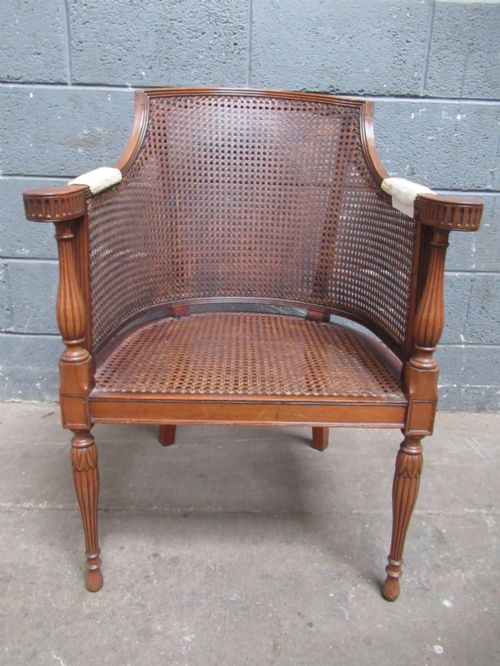
Upholstery techniques varied from simple drop-in fabric pads and leather panels to woven cane seats and complex bergère construction.
Decorative detailing often involved brass inlays, reeded carvings on the frame, and scrollwork on the arm supports.
Regency Mahogany Arm Chair Retail Price Guide 2026
Typical asking prices for regency mahogany arm chair among the pieces listed under this phrase on Sellingantiques today, from the lower quarter to the upper quarter. They describe what is for sale here now, not the wider market.
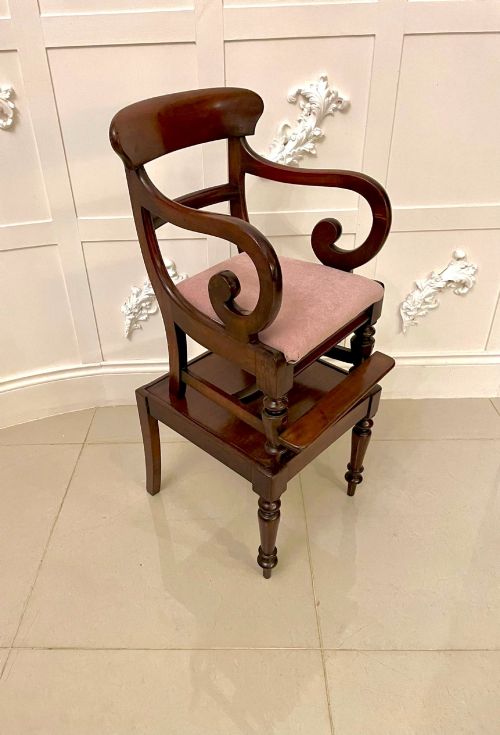
Object forms span dining chairs, open armchairs, metamorphic library steps, and chaise longues.
Evaluating Quality
The upper tier of these chairs is distinguished by the crispness of the hand-carved details, such as deep scroll arms and well-defined reeding, rather than flat or mechanically produced mouldings.
Proportion and structural integrity separate simpler dining carvers from sophisticated library armchairs designed for extended periods of reading and study.
The choice of secondary timbers and the original quality of the leather, cane, or fabric upholstery panels also mark the difference between standard production pieces and superior workshop output.
Gillows·Minter
The Regency Mahogany Arm Chair Glossary
- Bergère
- An enclosed armchair with upholstered or cane sides and back. This form often appears in libraries and morning rooms.
- Carver
- An armchair designed to match a set of dining chairs, typically featuring open arms to accommodate wide garments. These pieces frequently head a dining table.
- Sabre leg
- A concave-curving rear or front leg that tapers towards the foot. This style is characteristic of classic Regency seating.
- Tub chair
- An armchair with a continuous curved back and armrest rail forming a circular enclosure. It provides a snug, supportive seat.
- Reeding
- Parallel convex mouldings carved directly into the wooden frame. This decorative technique adds texture to legs and arm supports.
Regency Mahogany Arm Chair: Frequently Asked Questions
How do I identify a true Regency period chair?
Look for characteristic design elements such as sabre legs, reeded framing, and scroll arms executed in solid mahogany. True period pieces date from the early nineteenth century.
Matching the construction details and secondary woods to known examples from the era helps confirm the period of manufacture.
What is the difference between a carver and a library chair?
A carver is typically built as part of a dining set with open arms to allow comfortable movement at a table. Library chairs are usually larger, sturdier, and designed specifically for reading.
Many library chairs incorporate leather or cane panels to support prolonged daily use.
Can I use these chairs at a modern desk?
Many examples from this group function well as desk or reading chairs due to their supportive proportions and sturdy mahogany frames. Desk-specific variations often feature lower arm heights to slide beneath work surfaces.
Checking the seat height and arm clearance ensures compatibility with contemporary office furniture.
What maintenance do cane and leather seats require?
Cane panels need occasional cleaning with a damp cloth and should be kept away from excessive direct heat to prevent snapping. Leather surfaces benefit from periodic conditioning to maintain suppleness.
Gentle care preserves the original materials while allowing the chair to be used safely every day.