
Wooden Carver Armchairs
These wooden carver armchairs combine solid timber frames with supportive elbow rests, offering sturdy domestic seating shaped by centuries of regional design.
Wooden Carver Armchairs
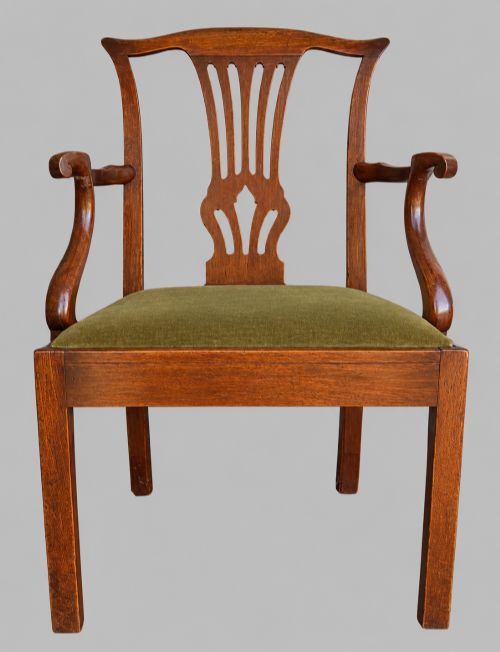
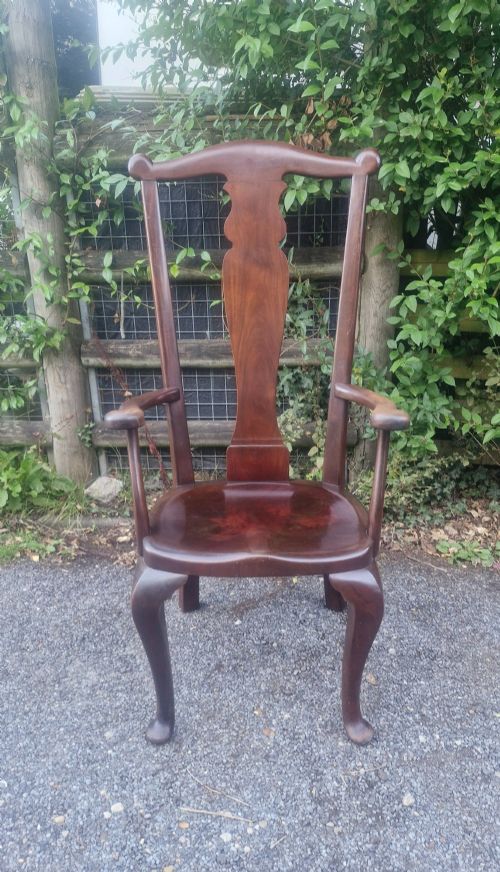
Wooden carver armchairs comprise sturdy seating with integrated armrests designed for dining tables, desks, and parlours. These items emerge from multiple eras spanning the seventeenth through the early twentieth centuries.
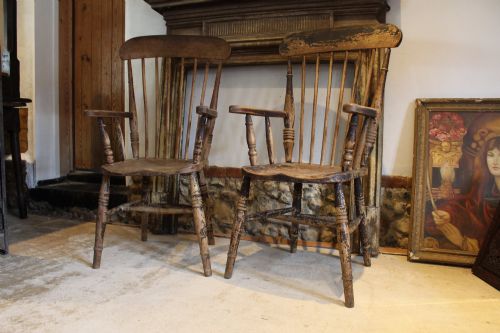
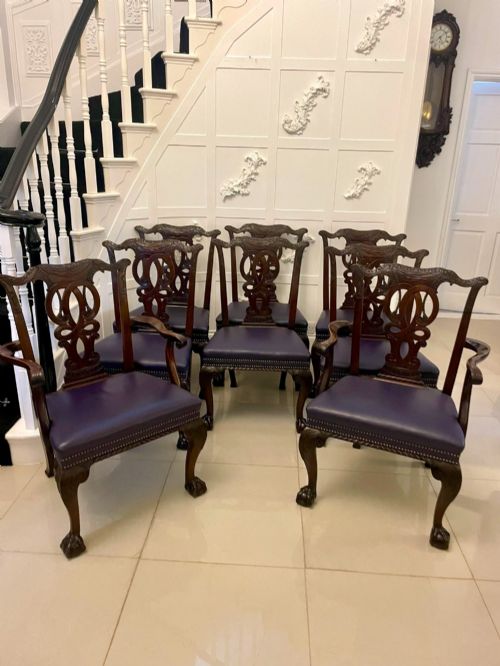
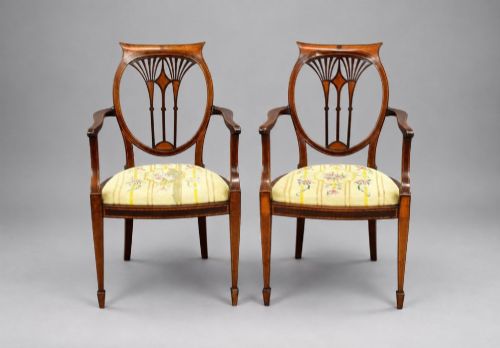
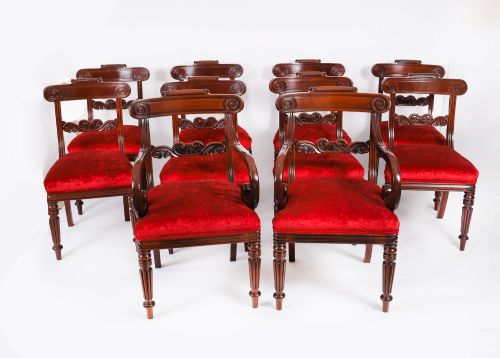
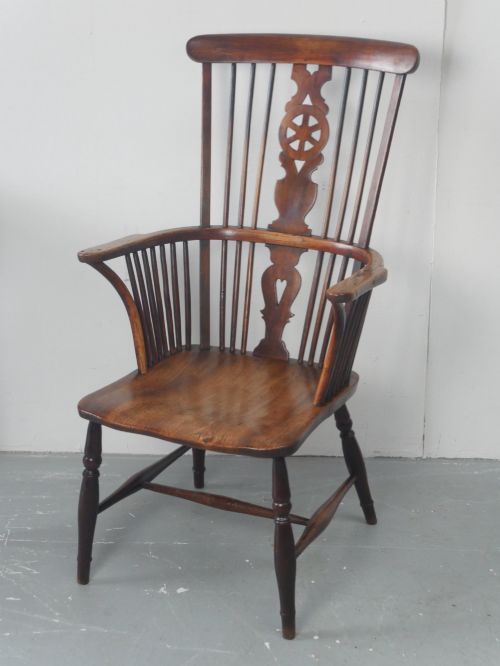
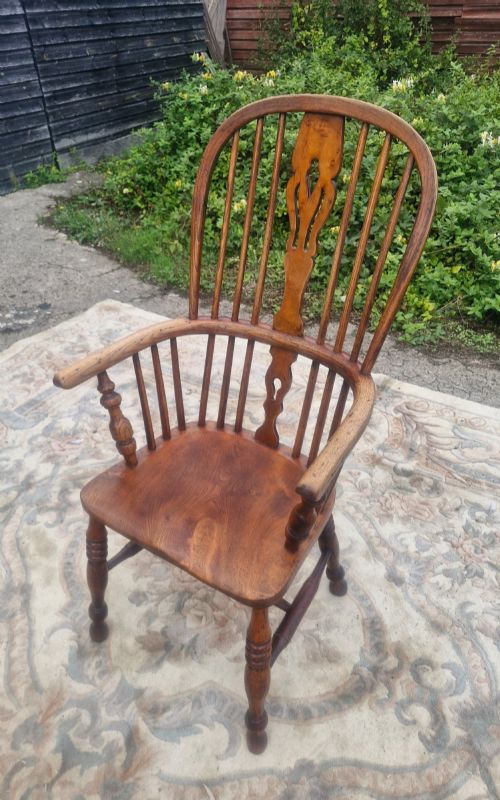
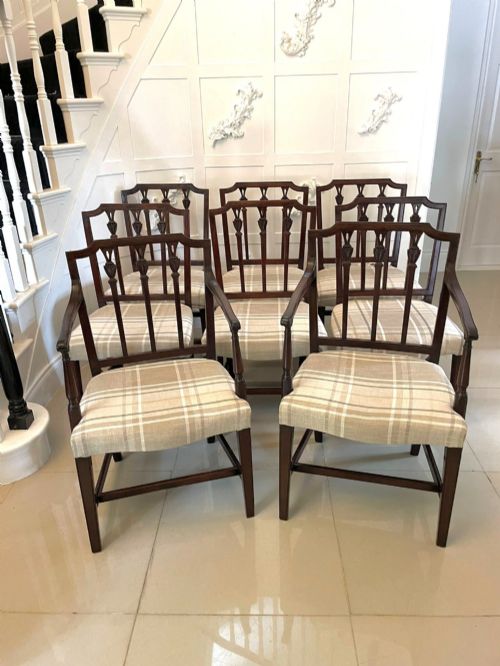
The selection on this page relies heavily on regional country styles alongside formal Georgian and Victorian iterations. Buyers frequently encounter Windsor forms, ladder-backs, and mahogany dining armchairs built from native British timbers.
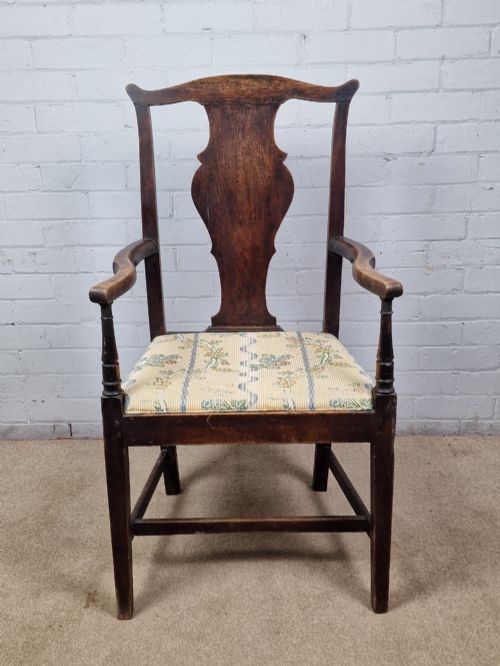
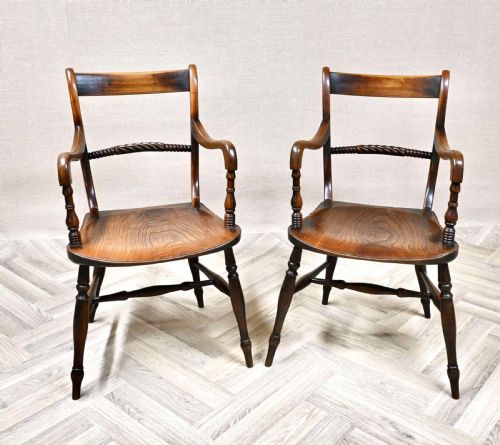
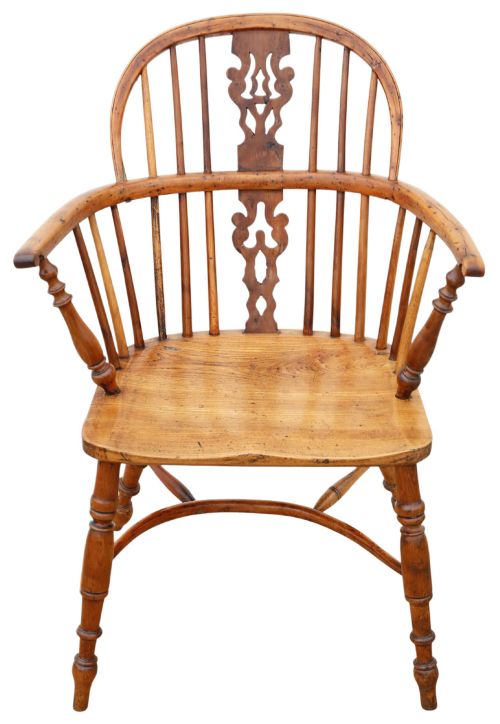
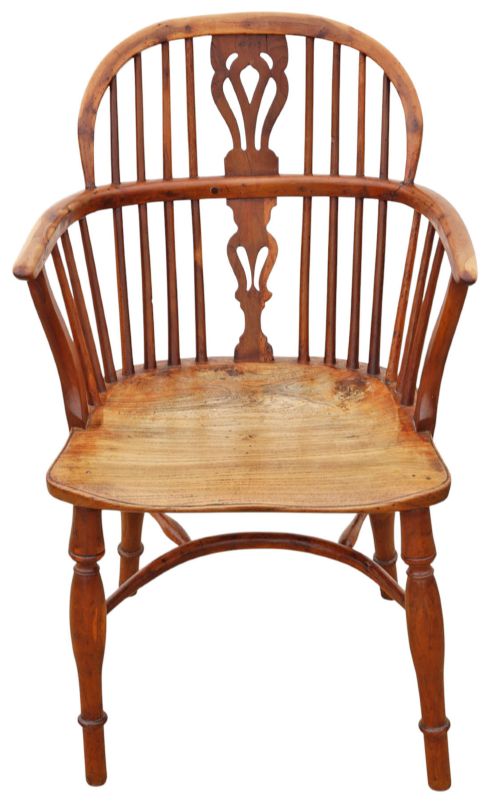
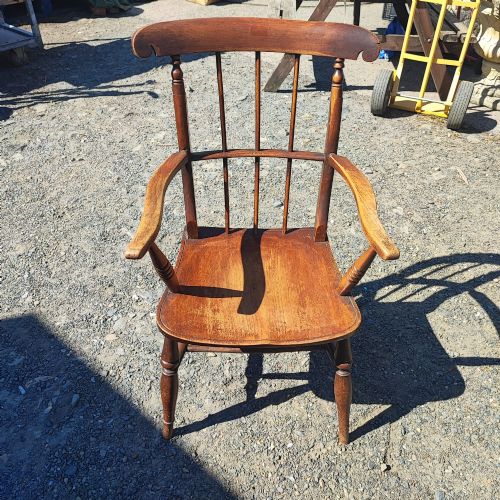
Makers utilised specific regional traditions, producing everything from Thames Valley wheelbacks to simple elm farm chairs. Each piece offers distinct arm support paired with varied back constructions like stick-backs, barbacks, and shield backs.
How they were made
Cabinet makers and country bodgers constructed these chairs using native hardwoods including elm, ash, beech, yew, and mahogany. Turners shaped spindles and legs on lathes while joiners fitted seats and crest rails using traditional pegged mortise and tenon joints.
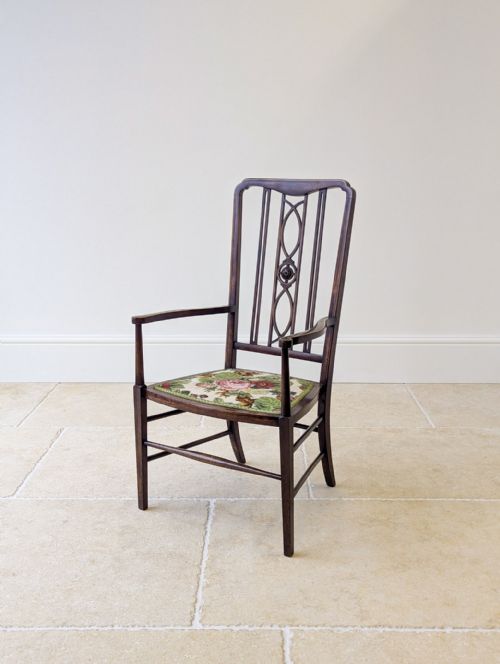
Country Windsor frames combined bowed elements with solid saddle-shaped wooden seats carved from single slabs of elm. Formal urban seating relied on mahogany and walnut frames finished with drop-in or upholstered tapestry and fabric pads.
Materials recorded across these chair frames include mahogany, elm, ash, oak, beech, yew, walnut, and fruitwood.
What varies in quality
The integrity of timber joints and the selection of figured grain set finer pieces apart from basic utilitarian seating. Timbers chosen for contrast, such as yew wood bows paired with elm seats, indicate superior workshop execution.
Original surface finishes and minimal structural alterations determine the overall standing of a chair. Pieces retaining authentic patination and maker stamps command greater respect than those stripped or heavily rebuilt.
Howard and Sons·Liberty Morris And Co·Philip Clissett·Maple And Co·Gillows
The Wooden Carver Armchairs Glossary
- Carver
- An armchair designed to match a set of dining chairs, traditionally used at the head of the table. These seats feature supportive arms built into the frame.
- Windsor
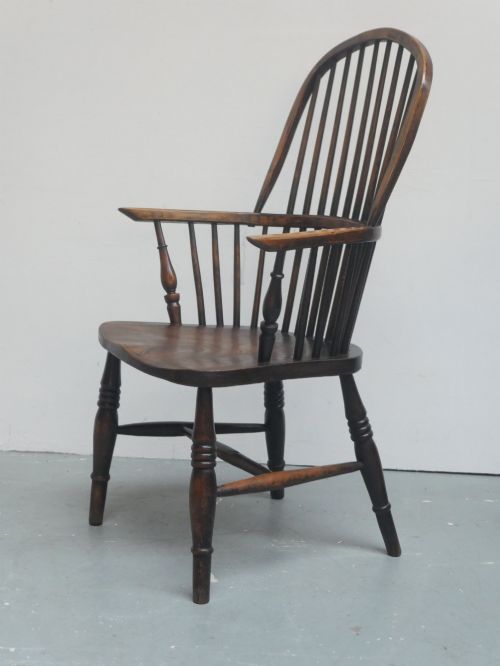
- A chair built with a solid wooden seat into which the legs, back sticks, and bow are separately bored and wedged. This form developed strong regional variations across the English countryside.
- Elbow chair
- An alternative term for an armchair or carver, referencing the prominent armrests designed to support the sitter's elbows.
- Stick back
- A chair back constructed from multiple turned wooden spindles inserted into the seat and top rail. This method provides robust support without heavy upholstery.
- Barback
- A chair featuring a horizontal wooden slat across the upper backrest. This detail appears frequently on nineteenth-century dining and parlour seating.
Wooden Carver Armchairs: Frequently Asked Questions
How do I identify a Windsor carver?
Windsor carvers are identified by their solid wooden seats, into which the legs and back spindles are fitted directly without a continuous upholstered frame. They often feature bowed top rails and distinct central splats or stick backs.
Country versions frequently combine contrasting timbers, pairing pale ash spindles with darker elm seats.
Where should I place a carver chair?
Carver chairs function effectively as head-of-table seating in dining rooms where their supportive armrests provide added comfort. They also suit studies, hallways, and morning rooms as standalone writing or reception seats.
Their substantial timber frames make them reliable everyday furniture pieces for domestic use.
How do I care for antique wooden armchairs?
Maintain antique wooden armchairs by keeping them away from direct heat sources and sudden temperature fluctuations that cause timber to dry and split. Regular application of appropriate furniture wax helps preserve the natural surface patination.
Inspect joinery periodically to ensure that pegged joints and glued connections remain stable under regular sitting loads.
What is the difference between a carver and a dining chair?
Carver chairs include structural armrests integrated into the upper frame, whereas standard dining chairs are open at the sides. This addition makes carvers wider and more restrictive regarding table clearance.
Historically, pairs or single carvers were reserved for the head and foot of a dining table, while armless single chairs filled the remaining spaces.