
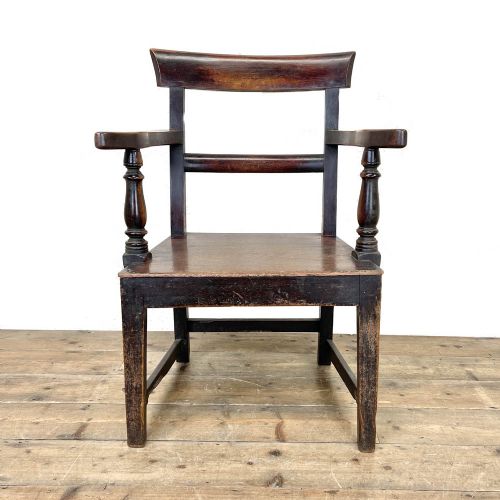
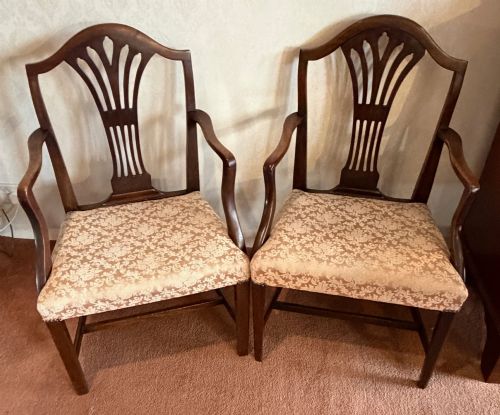


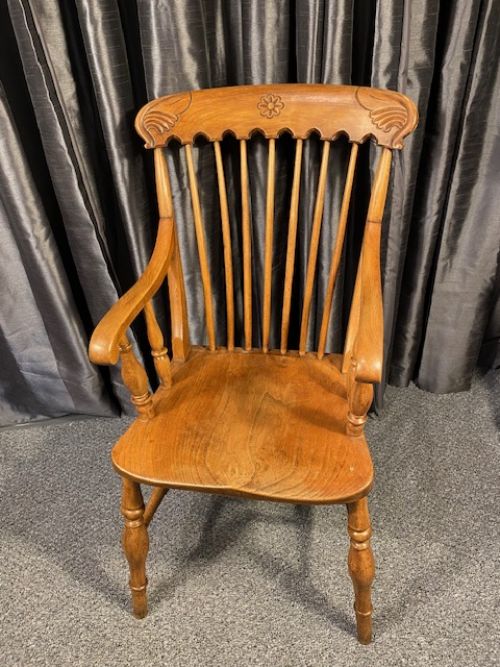

Timber Carver Chair
A timber carver chair brings substantial presence and supportive arms to a dining table or fireside.
Timber Carver Chair
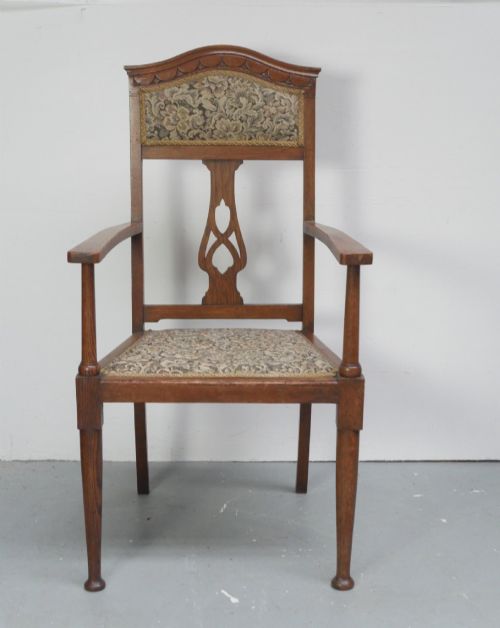
A timber carver chair is a sturdy seated piece featuring integrated armrests, often used at the head of a dining table or beside a hearth. When searching for a timber carver chair, buyers encounter various historical iterations spanning the Georgian, Victorian, and Edwardian periods.
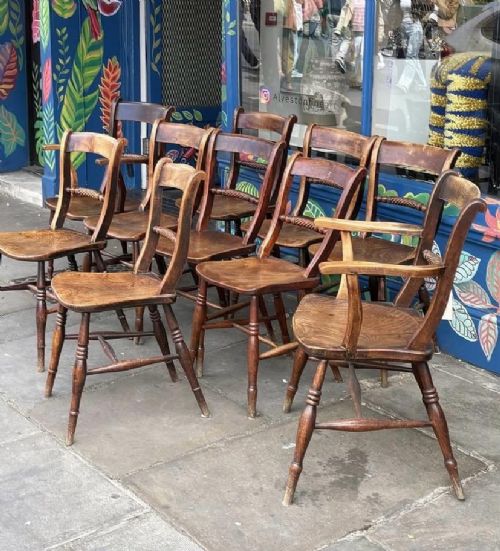
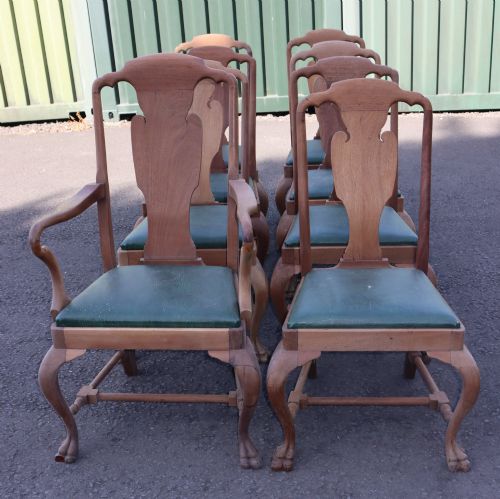
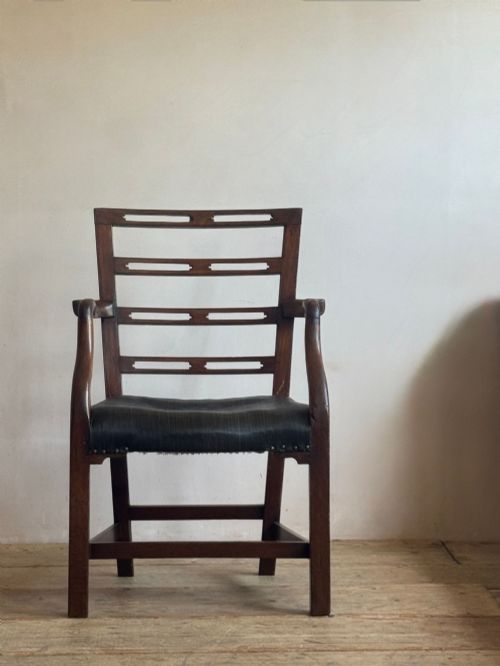
The selections on this page range from rustic country ladder-back and Windsor forms to formal mahogany and walnut dining armchairs. These seating options combine practical utility with distinct period styles, utilising traditional timbers like elm, oak, and mahogany.
Materials and construction methods
Construction relies heavily on robust native timbers such as elm, ash, oak, and mahogany, shaped into solid seats, turned spindles, and curved armrests. Joinery methods include traditional pegging and mortise and tenon joints to ensure long-term stability under daily use.
Surface finishes applied to these frames typically consist of wax or polish, which protect the timber grain while developing a deep patina over decades of handling.
Certain dining carver chairs carry specific historical provenance linking them directly to Winston Churchill and Harry Warren House.
Distinctions in quality
Quality in these chairs rests upon the selection of timber, the integrity of the original joinery, and the retention of crisp decorative carving. Superior examples demonstrate thoughtful grain matching and robust structural framing that withstands centuries of weight.
Lesser pieces often suffer from over-restoration, replacement components, or structural looseness resulting from careless repairs to the arm joints and legs.
The Timber Carver Chair Glossary
- Carver chair
- A dining chair fitted with arms, traditionally placed at either end of a table. It is heavier and more substantial than the side chairs accompanying it.
- Windsor
- A traditional chair construction style featuring a solid wooden seat into which the legs, back spindles, and arms are wedged independently. This method creates a resilient and durable frame.
- Ladder-back
- A chair back featuring horizontal wooden slats or rails stacked vertically between the upright posts. This design appears frequently in country vernacular seating.
- Splat
- The vertical central strip of wood set into the middle of a chair back. It often takes a vase, fiddle, or ladder profile depending on the prevailing style.
- Elbow chair
- An alternative term for an armchair, particularly those used in domestic dining or study settings. The descriptor highlights the prominent curved arm supports.
Timber Carver Chair: Frequently Asked Questions
What defines a timber carver chair?
A timber carver chair is essentially an armchair designed to match a set of dining chairs, traditionally positioned at the head of the table. These pieces feature solid wooden frames and supportive armrests.
They appear across various periods from the Georgian era through to the early twentieth century, utilising native and imported hardwoods.
How were these chairs used historically?
These armchairs served primary roles at dining tables, writing desks, and beside domestic fireplaces. The arms provided extra comfort and stature for the head of the household or honoured guests.
Over time, many migrated to living spaces as occasional seating or fireside companions due to their supportive proportions.
How do I care for a wooden armchair?
Maintain timber carver chairs by keeping them away from direct heat sources and sudden humidity changes that cause wood to crack. Regular application of a quality beeswax polish nourishes the surface.
Avoid commercial silicone sprays, which damage historic finishes and attract dust to carved crevices.
How can I tell the period of a chair?
Dating relies on identifying characteristic design motifs, tool marks, and construction techniques associated with specific eras like the Victorian or Edwardian periods. For instance, heavy turned stretchers and rush seats often point to country vernacular traditions.
Examining the underside and joints reveals hand-cut elements or modern fixings that indicate the age of the piece.