




19th Century Oak Carver
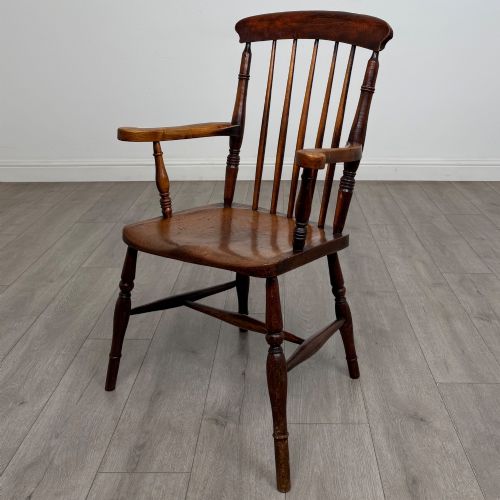
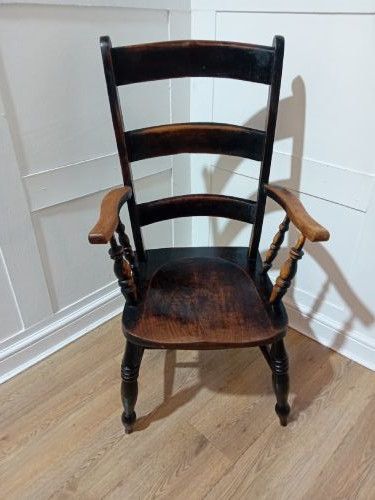
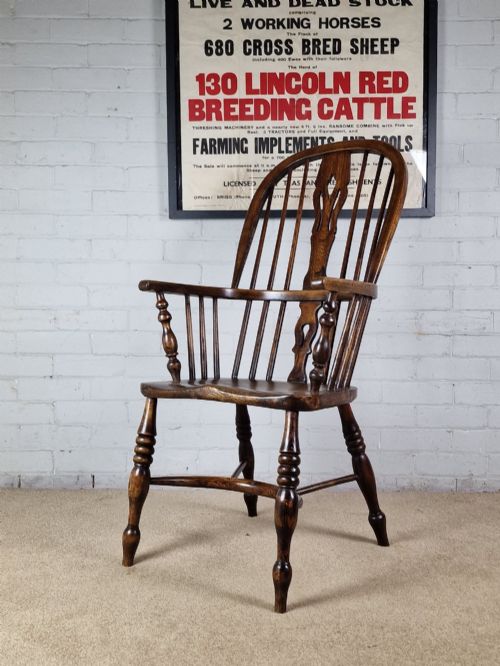
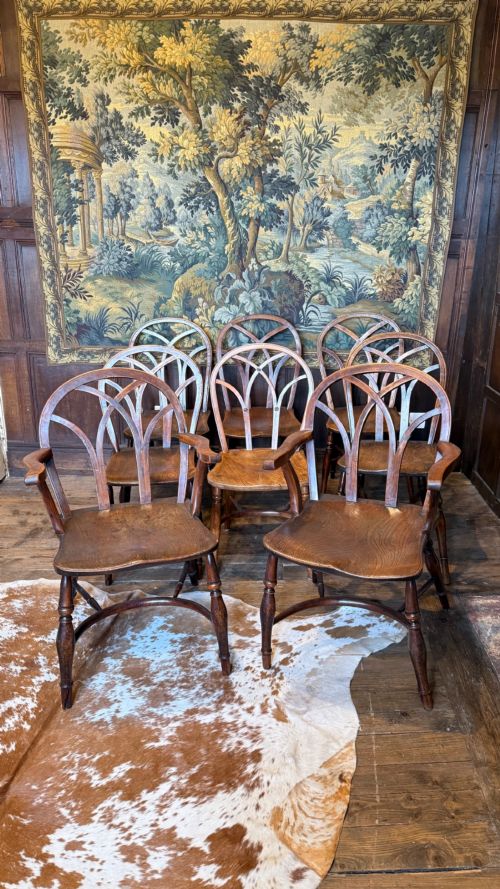
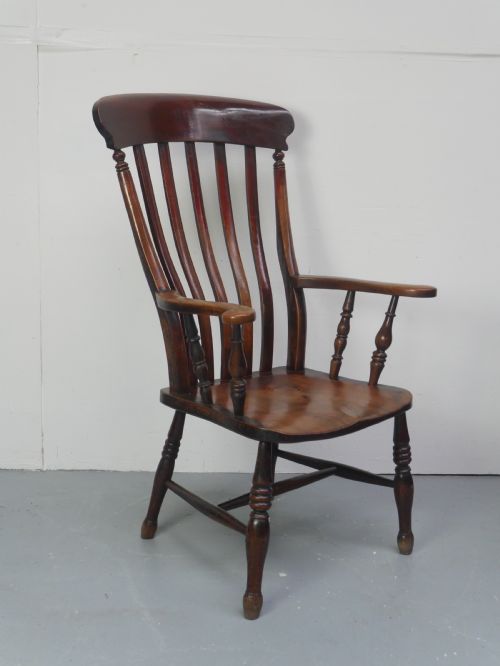
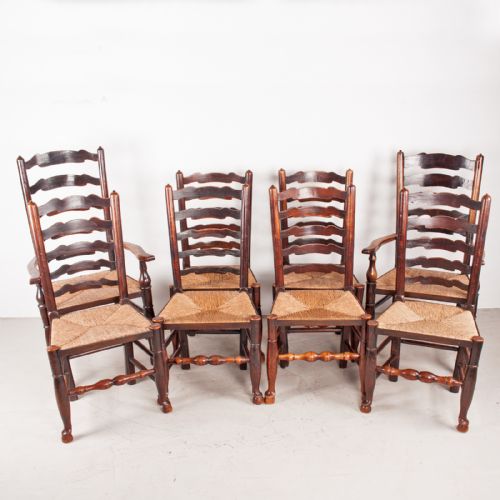
These robust 19th century oak carver armchairs bring solid vernacular character and generous proportions to any interior.
19th Century Oak Carver
A 19th century oak carver is a sturdy open armchair intended to stand at the head of a dining table or serve as a fireside seat. The pieces on this page span the Victorian era, the Georgian period and the later decades of the nineteenth century.
You will encounter regional Windsor designs alongside heavy carved throne chairs and vernacular ladderbacks. Many examples incorporate secondary timbers like elm, ash and beech alongside solid oak frames.
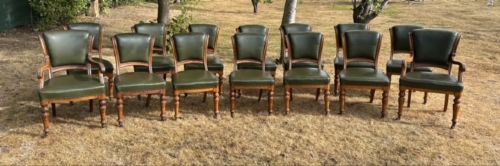
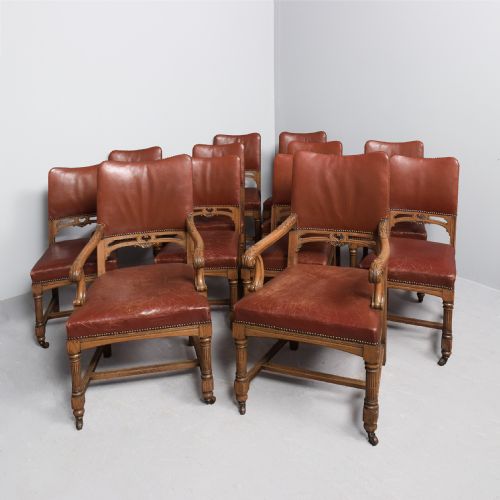
The selection ranges from single fireside armchairs to matched and harlequin sets of dining carvers. Most pieces demonstrate regional British country traditions, including Thames Valley and Lincolnshire origins.
Materials and construction
Cabinet makers and rural bodgers utilised solid oak for primary structural frames, often combining it with elm seats and ash or beech spindles. Turned components rely on traditional pole lathes to shape legs, stretchers and uprights.
Joinery techniques include mortise and tenon joints, pegged constructions and steam-bent components for arched backs and armbows. Seat foundations take the form of solid wood slabs, woven rush or upholstered leather pads.
Several armchairs retain stubborn traces of old farm kitchen mud dried deep into their foot stretchers.
What separates examples
Quality rests upon the integrity of the timber, the crispness of turned or carved details and the retention of original surface finishes. High-grade seating displays balanced proportions and minimal replacement timbers in the undercarriage.
Regional distinctiveness and traceable provenance elevate certain examples above standard workshop output. Original seat pads, undisturbed pegging and honest patina distinguish superior specimens from heavily restored items.
Charles Bevan·William Morris
The 19th Century Oak Carver Glossary
- Carver
- An armchair designed with open sides to accommodate voluminous clothing, traditionally placed at the ends of a dining table. They frequently match a set of smaller single chairs.
- Windsor
- A chair constructed with a solid wooden seat into which the legs, back spindles and bow are independently inserted. Regional variations include wheelbacks, stick backs and comb backs.
- Vernacular
- An object made by local craftsmen following regional traditions rather than metropolitan academic designs. These pieces often employ mixed native timbers like elm, ash and yew.
- Splines
- Thin pieces of wood inserted across grain lines to repair or reinforce structural weaknesses in panels. They indicate historical conservation work by skilled hands.
19th Century Oak Carver: Frequently Asked Questions
How do I identify a Thames Valley Windsor chair?
Thames Valley Windsors are recognised by their sculpted elm seats, distinctive wheel or pierced splat motifs, and substantial ash or yew bow frames. They often display crisply turned undercarriages with crinoline stretchers.
Makers in this region favoured generous proportions and highly figured native woods, making these chairs distinct from northern or midland equivalents.
Can these armchairs be used daily at a dining table?
Solid oak carvers from the nineteenth century are structurally robust and built for regular domestic use. Their sturdy frames and pegged joints handle daily sitting well.
Check the seat height and arm clearance against your dining table before purchasing, as nineteenth-century dimensions can sit lower than modern standard chairs.
What is a harlequin set of carvers?
A harlequin set consists of chairs that share similar periods, styles or materials but were not originally made as a single batch. They are gathered together to create a cohesive grouping around a large table.
This approach was common in large country houses where dining sets accumulated over generations through additions and replacements.
How should I care for an original oak finish?
Maintain the surface by applying traditional beeswax sparingly and buffing it with a soft brush. Avoid modern silicone sprays or harsh chemical cleaners that strip the historic patina.
Keep the timber away from direct heat sources and sudden humidity changes to prevent wood shrinkage and joint loosening.