
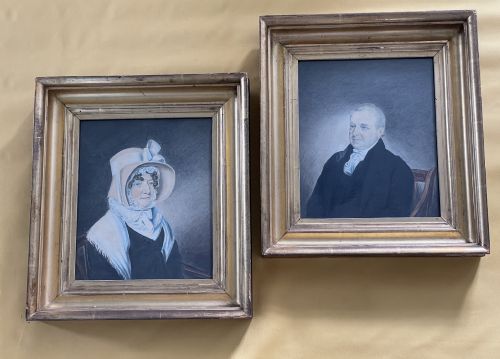


Regency Lady Watercolour Painting
A regency lady watercolour painting captures the delicate grace of early nineteenth-century portraiture, offering a small, intimate window into past elegance.
Regency Lady Watercolour Painting
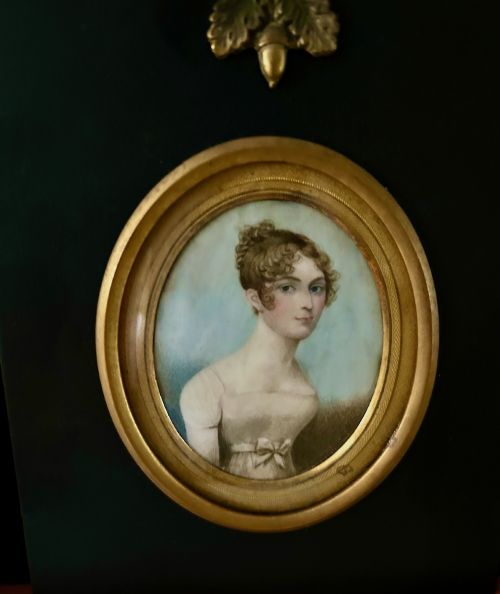
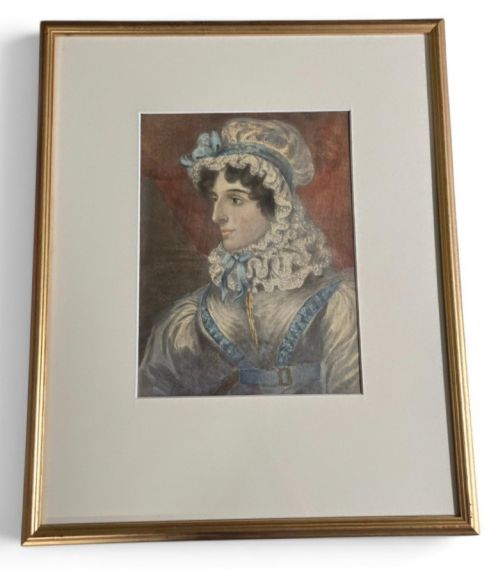
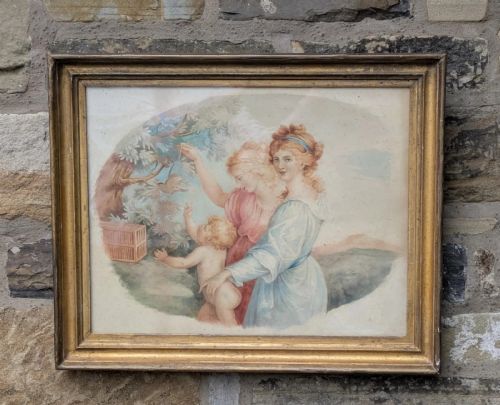
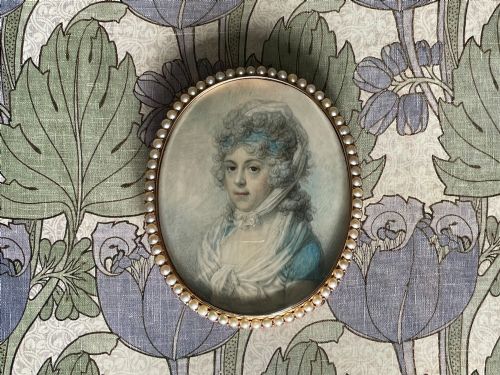
A regency lady watercolour painting takes the form of portrait miniatures, watercolour paintings, and framed studies on paper or ivory. These works depict women in period attire, often rendered with fine detail during the Regency, Georgian, and early nineteenth-century periods.
Most examples encountered here are small-scale portrait miniatures or watercolour paintings housed in ebonised wood, maple, or gilt frames. They range from intimate oval studies to companion pieces capturing individual sitters with distinct character.
The aesthetic is rooted in English Regency and neoclassical styles, reflecting the portraiture traditions of the late eighteenth and early nineteenth centuries. Buyers commonly find works attributed to named artists alongside unsigned character studies from the same era.
How they were made
Framing played an integral role in the presentation and preservation of these fragile works. Makers utilised ebonised wood, maple, brass, and gilt metal or wood, often protecting the delicate paint surface beneath glass.
Listings feature works from the 18th century, Regency period, and 19th century, utilising watercolour on paper, card, and ivory.
What varies in quality
The finesse of the brushwork and the psychological depth of the sitter's expression set the finest examples apart. Superior works capture lifelike proportions and nuanced lighting in the subject's face and garments.
The integrity of the original housing contributes significantly to the piece. Retaining period frames in ebonised wood, maple, or gilt metal enhances the historical context of the watercolour.
Richard Cosway·Nicolas Freese·George Hargreaves·Archibald Skirving·Thomas Woolnoth·William Grimaldi·Henry Jacob Burch·Edward Smyth·Isaac Wane Slater·Jeremiah Steele·George Perfect Harding
The Regency Lady Watercolour Painting Glossary
- Regency
- An English stylistic period spanning the early nineteenth century. It is characterised by neoclassical elegance and refined portraiture.
- Miniature painting
- A small-scale artwork executed with meticulous detail. These works were often housed in pocket-sized or wall-hung frames.
- Ebonised wood
- Timber treated to imitate ebony. This dark finish provided a high-contrast border popular for framing nineteenth-century watercolours.
- Giltwood
- Wood carved and covered with a thin layer of gold leaf. It offers a bright, decorative finish typical of period frames.
Regency Lady Watercolour Painting: Frequently Asked Questions
What are regency lady watercolour paintings?
These works are small portrait paintings depicting women from the late eighteenth and early nineteenth centuries. They are executed in watercolour on paper, card, or ivory.
Created during the Regency and Georgian eras, they serve as intimate historical records of period fashion, hairstyles, and portraiture traditions.
How should I display them?
Display these watercolours away from direct sunlight to prevent the pigments and paper from fading over time. Maintaining stable indoor humidity protects both the delicate paint and the original framing.
Because many are small-scale portrait miniatures, placing them where viewers can examine the fine brushwork up close is ideal.
Are these paintings original period works?
The pieces listed date from the 1800s, Regency, and Georgian periods, utilising materials authentic to the era such as ivory, card, and ebonised wood.
Many retain their original maple, gilt, or brass frames, which helps verify their nineteenth-century origins.
What materials were used?
Artists used watercolour paint applied to specialised surfaces including paper, card, and thin sheets of prepared ivory. These mediums allowed for high precision in facial details.
Protective enclosures combined glass with frames made from ebonised wood, brass, and gilt metal or wood.