
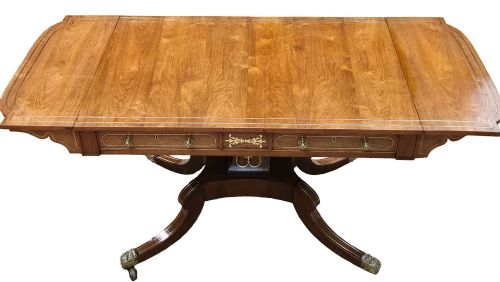
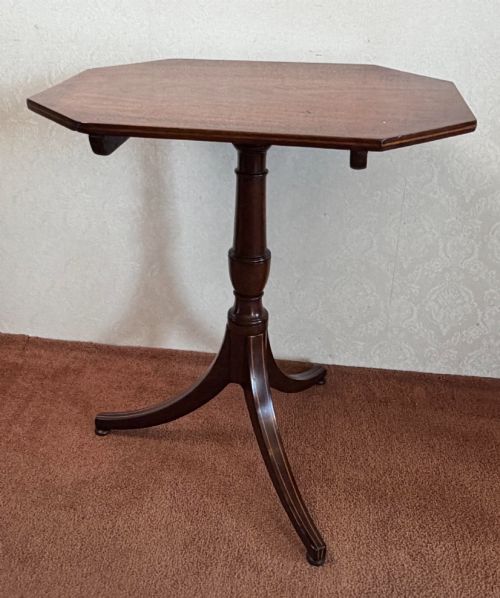

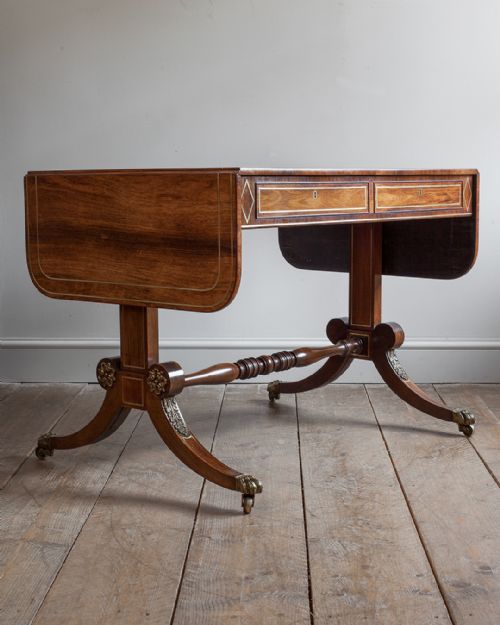
Regency Inlaid Side Table
When you search for a regency inlaid side table, you encounter compact timber furniture built for elegance and versatility in Georgian and nineteenth-century interiors.
Regency Inlaid Side Table
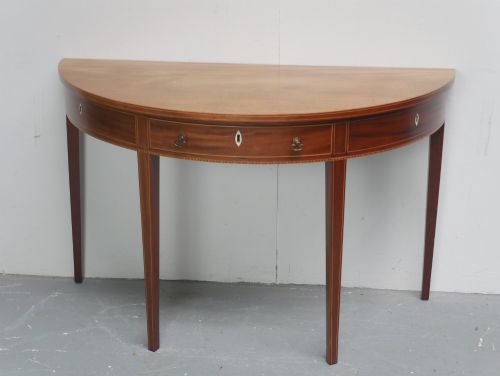
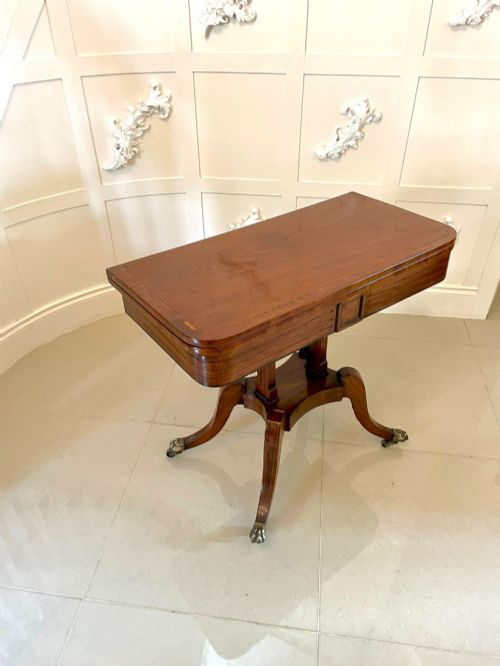
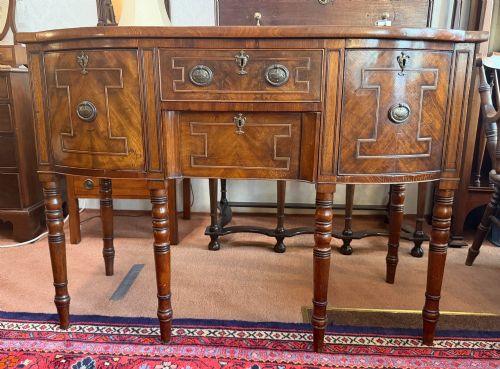
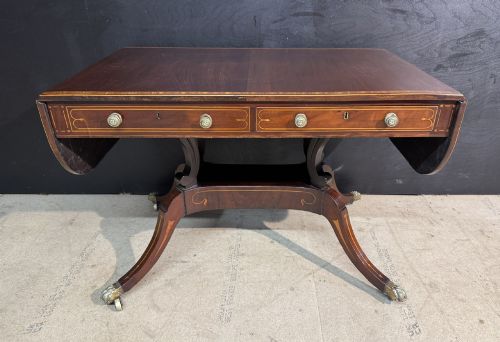
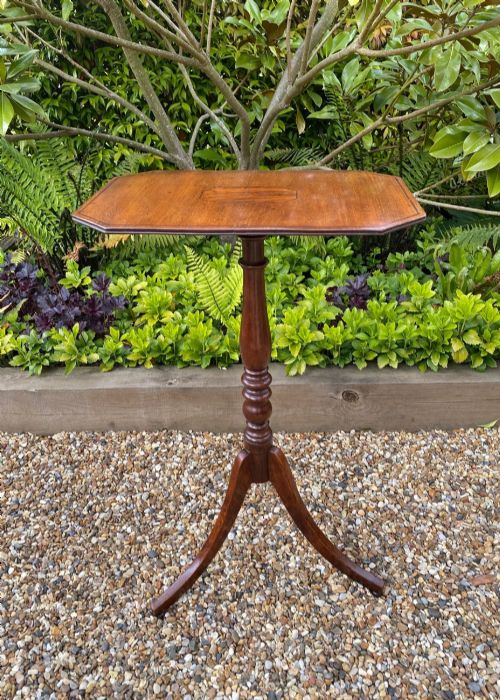
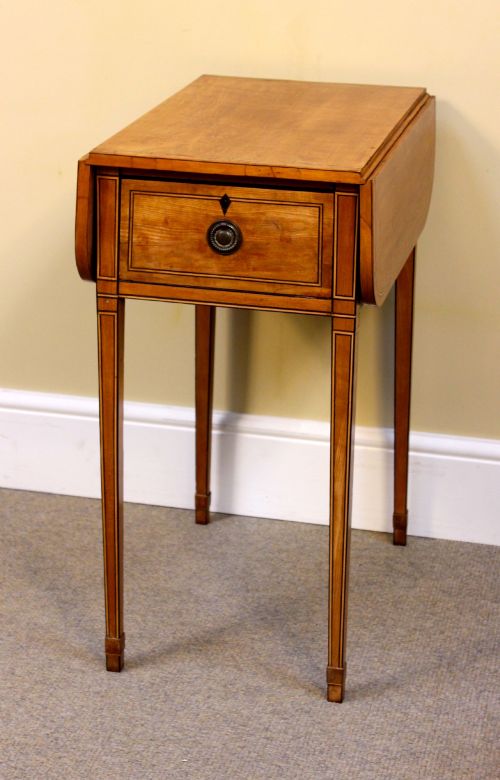
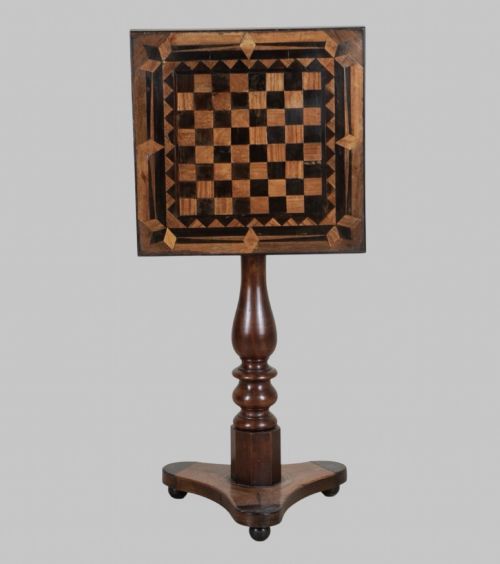
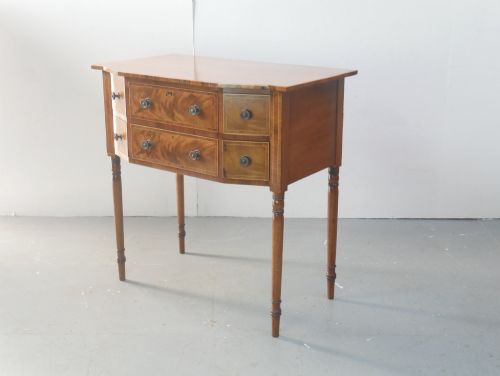
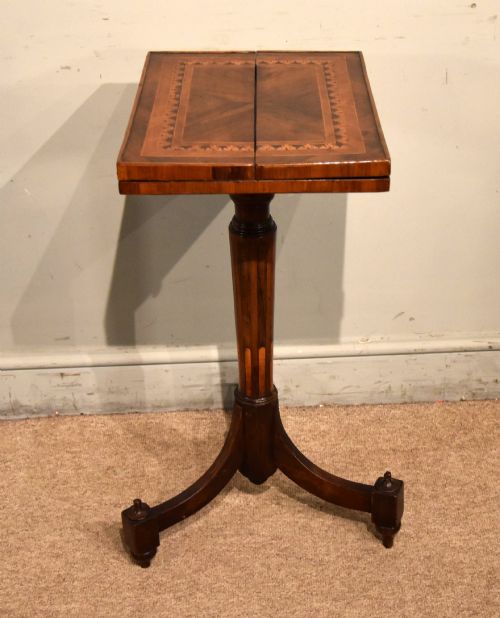
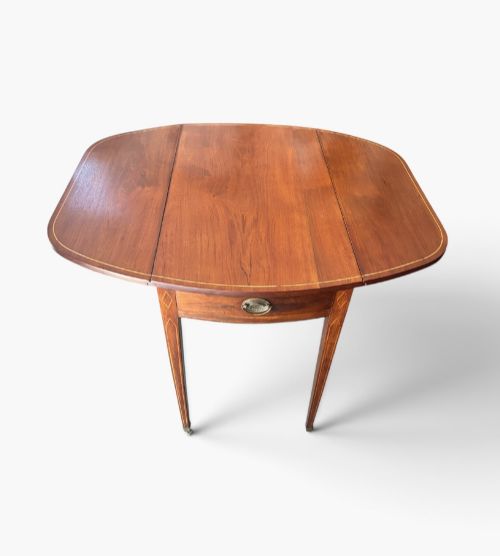
A regency inlaid side table encompasses versatile small furniture forms designed to sit against walls or beside seating in period rooms. The selection includes demi-lune shapes, fold-over card tables, Pembroke drops, and nested quartetto sets.
Most examples originate from the early nineteenth century under Georgian, Regency, and William IV influences, though later revival periods also appear. These tables served multiple daily functions, acting as writing desks, lamp stands, and gaming surfaces.
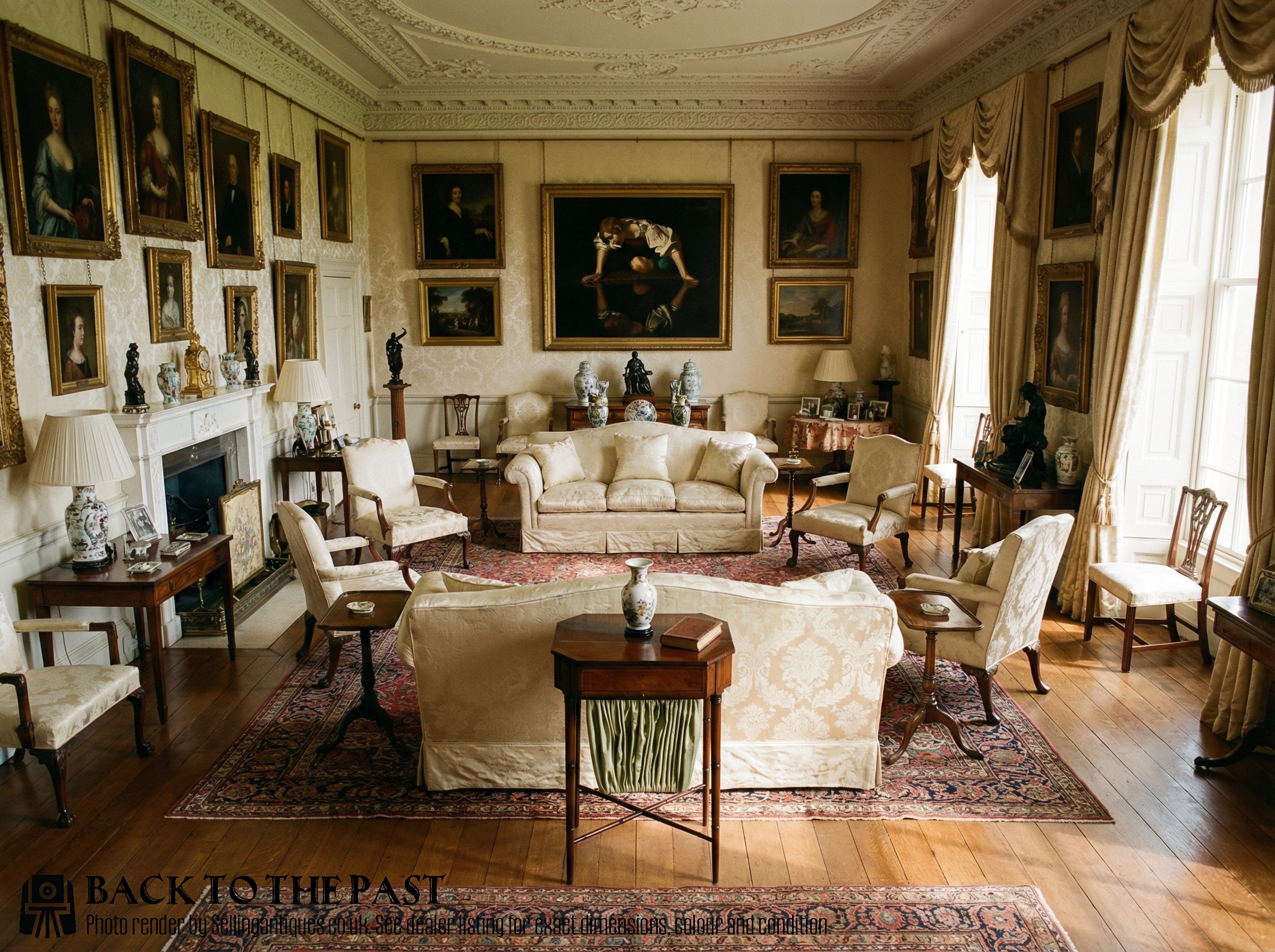
How They Were Made
Cabinet makers utilised dense primary timbers such as mahogany, rosewood, and satinwood, often applied as fine veneers over sturdy secondary woods. Surface ornamentation relied heavily on contrasting linear stringing and geometric details formed from boxwood, ebony, and lighter fruitwoods.
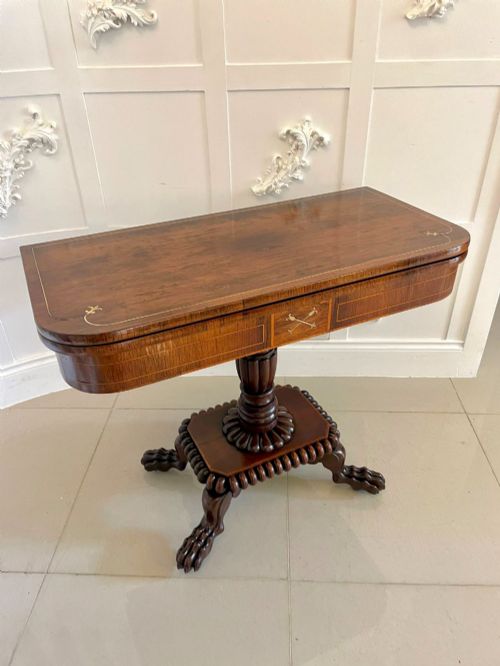
Many sophisticated examples incorporate detailed brass stringing inlaid directly into dark rosewood panels, complemented by cast brass sabots and castor feet. Structural cleverness appears in pivoting tops, drop leaves, and sliding mechanisms designed for multi-use domestic spaces.
Regency Inlaid Side Table Retail Price Guide 2026
Typical asking prices for regency inlaid side table among the pieces listed under this phrase on Sellingantiques today, from the lower quarter to the upper quarter. They describe what is for sale here now, not the wider market.
Listings feature woods including mahogany, rosewood, satinwood, and walnut across various nineteenth-century side table formats.
What Varies in Quality
The standard of a regency inlaid side table depends significantly on the precision of the timber preparation and the intricacy of the contrasting veneer work. Superior examples demonstrate tight, seamless joints where inlay meets the base wood without visible filler.
Hardware selection and internal secondary framing further differentiate standard production from superior cabinet work. Original brass fittings, well-figured timber grains, and balanced proportions elevate the execution of these tables.
Gillows·George Bullock·George Oakley·Druce And Co·Donald Ross
The Regency Inlaid Side Table Glossary
- Demi-lune
- A half-moon shape popular for console and card tables designed to stand flush against a wall. This profile maximises floor space while offering a decorative surface.
- Stringing
- Thin lines of contrasting wood or brass inlaid into channels on table tops and legs. It creates geometric borders that frame the primary timber grain.
- Pembroke table
- A small rectangular table featuring two hinged drop leaves on opposing sides. It often includes one or more small drawers and tapered legs.
- Quartetto tables
- A nested set of four graduated tables designed to slide neatly beneath one another. They gained popularity during the Regency period for tea and card games.
- Sabot
- A protective metal sleeve or socket fitted to the base of furniture legs. They are frequently cast from brass and sometimes incorporate small castor wheels.
Regency Inlaid Side Table: Frequently Asked Questions
What is a regency inlaid side table used for?
These versatile pieces functioned as small serving surfaces, writing desks, and lamp stands in principal rooms. Many variants also included folding tops specifically configured for card games and leisure.
Their compact footprints allowed them to move easily around the drawing room or parlour as daily domestic needs required.
How do I identify a genuine period piece?
Examine the construction methods, timber choice, and the integration of the decorative veneer work. Period examples typically show hand-cut joinery and natural ageing within the secondary woods beneath the surface.
Inlay work on older tables integrates smoothly with the timber rather than sitting flush within modern machine-routed channels.
What woods were commonly used?
Mahogany served as the primary structural and surface timber for a large proportion of these domestic tables. Exotic dark woods like rosewood became highly fashionable during the Regency era for contrasting surfaces.
Satinwood, boxwood, and ebony provided the pale and dark tones required for intricate geometric stringing and marquetry motifs.
How do I care for antique wood furniture?
Keep wooden tables away from direct heat sources and dramatic humidity fluctuations to prevent veneer lifting and timber splitting. Regular dusting with a soft, dry cloth protects the aged polish from abrasion.
Occasional applications of appropriate wax feed the dry timber without building up heavy residue on the delicate inlay.