

Regency Inlaid Pedestal Table
A regency inlaid pedestal table brings architectural proportion and contrasting veneers to a room, offering a stable central support and folding or fixed tops designed for social use.
Regency Inlaid Pedestal Table
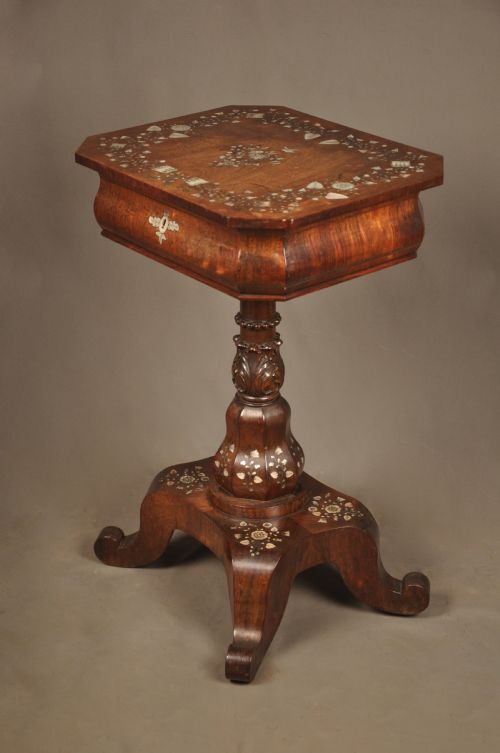
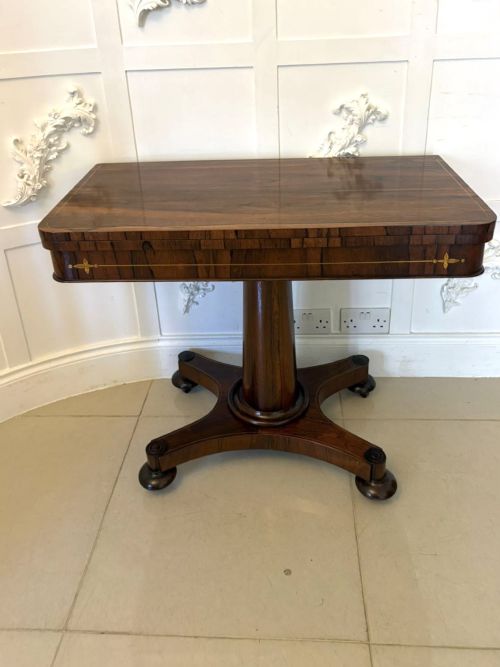
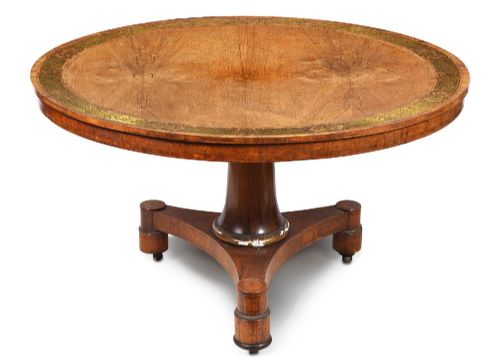
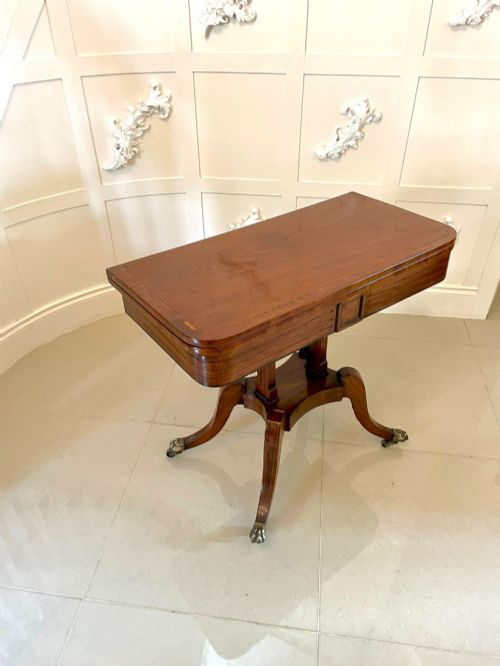
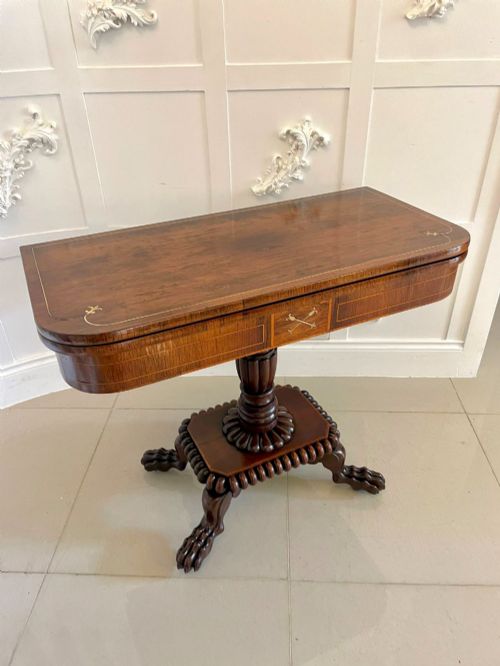
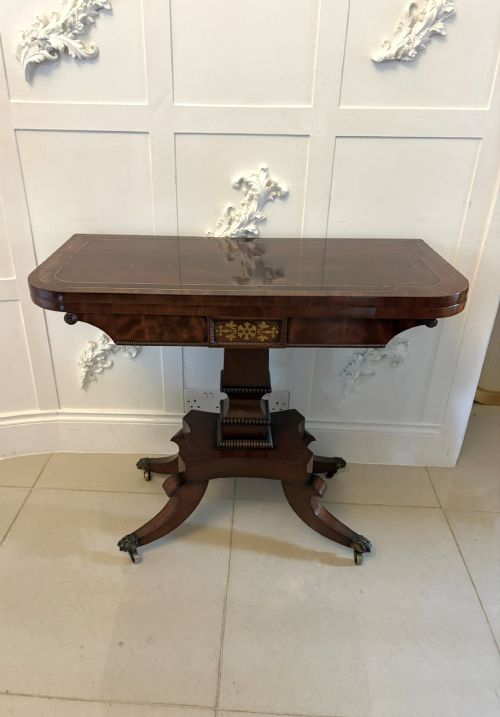
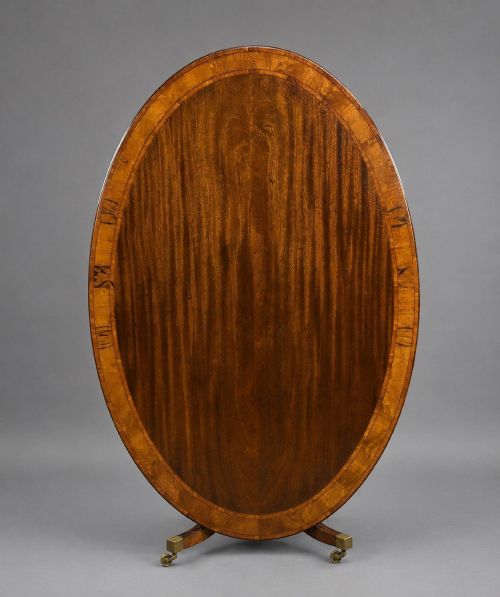
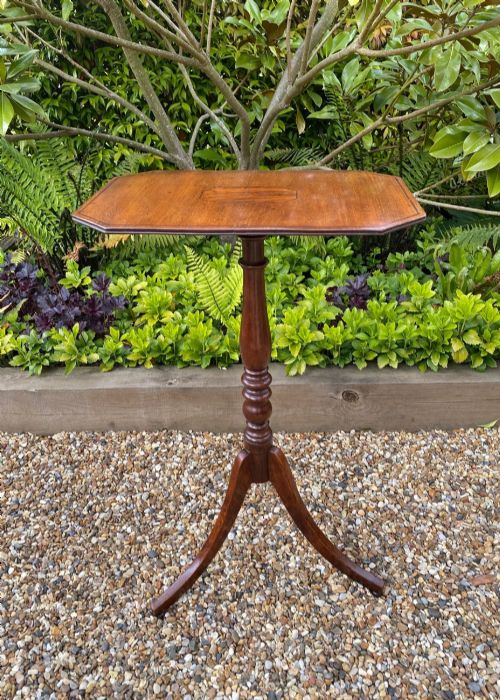
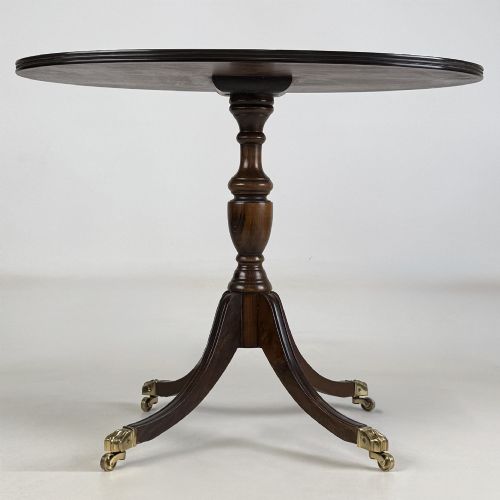
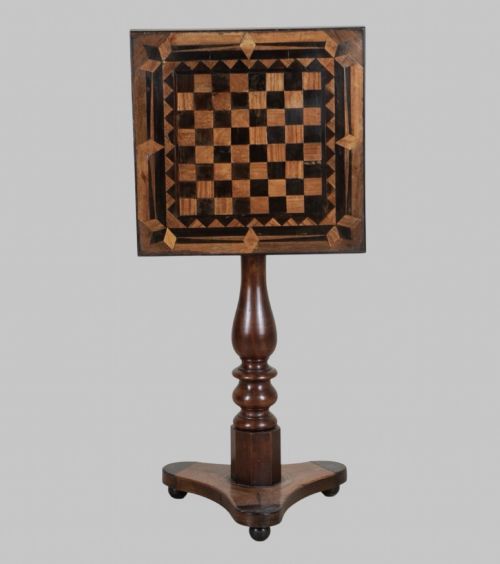
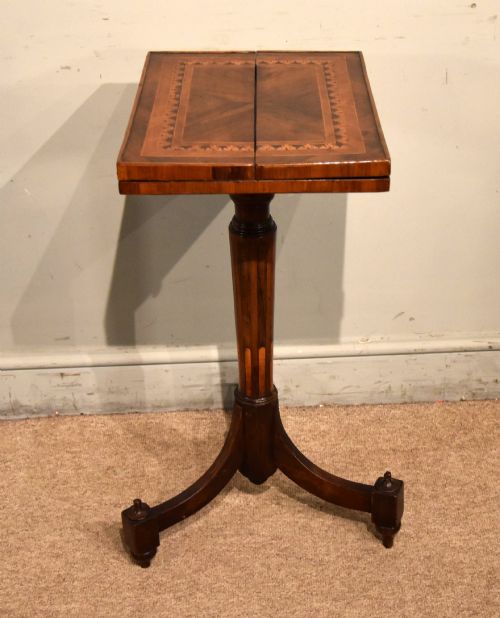
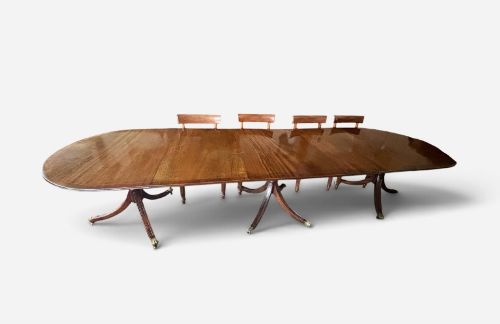
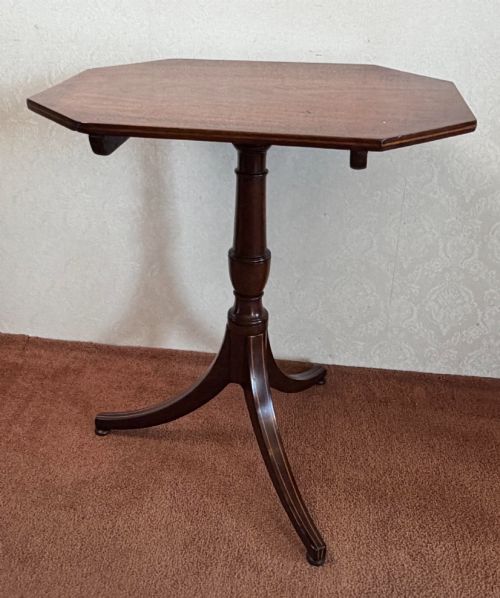
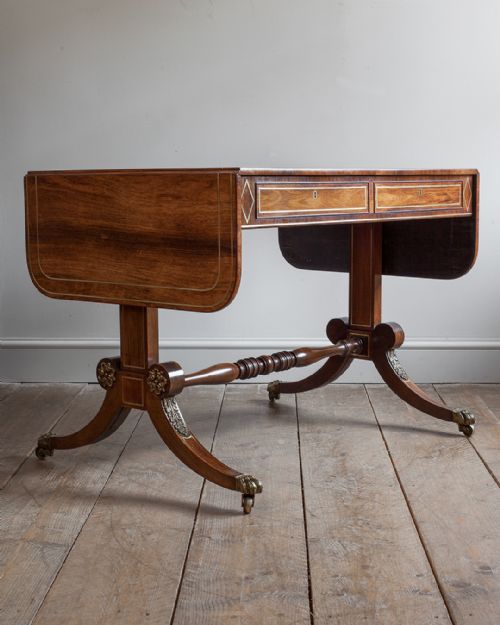
A regency inlaid pedestal table takes several forms across the inventory, appearing most frequently as card tables, games tables, centre tables, and sofa tables supported by a central pillar or column on a platform base.
The periods represented stretch from the late eighteenth century and the Regency era itself through to later revivals in the Edwardian period and the nineteen-twenties, incorporating styles such as Georgian, William IV, and Sheraton Revival.
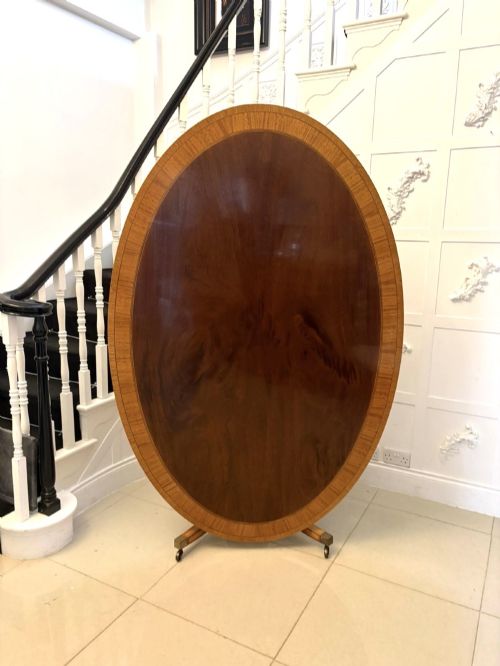
Makers and designers of the period utilised timber frames scaled for domestic interiors, ranging from compact occasional tables to triple pillar dining tables designed for larger spaces.
Materials and Technique
Cabinet makers constructed the carcases using dense timbers such as mahogany, rosewood, and oak, applying fine veneers of satinwood, amboyna, and olive to the visible surfaces.
Contrasting stringing and detailed inlay work utilised boxwood and ebony, whilst brass inlay and fine brass stringing frequently accented the borders and friezes of card and centre tables.
Structural stability was achieved through turned or carved central pedestals, sometimes featuring lyre supports, scroll bases, or tripod legs.
Listings feature rosewood, mahogany, satinwood, and brass alongside regional variations including Maltese olive and Ceylonese specimen woods.
Distinctions in Execution
The standard of a regency inlaid pedestal table rests on the precision of the timber matching and the crispness of the contrasting inlay, where tight geometric lines or delicate floral motifs indicate higher craftsmanship.
The choice and figuring of the primary veneer, particularly in rosewood and figured mahogany, dictates the visual depth of the top and pedestal.
Engineering details such as the smoothness of the pivot action on fold-over card tables and the stability of the central column assembly separate standard workshop output from exceptional cabinet work.
George Bullock
The Regency Inlaid Pedestal Table Glossary
- Pedestal table
- A table supported by a single central pillar rising from a base, rather than four corner legs. This construction allows maximum seating clearance around the perimeter.
- Card table
- A specialised table featuring a hinged fold-over top that opens to reveal a baize or leather-lined playing surface. They were essential furniture for Georgian and Regency drawing rooms.
- Brass inlay
- The technique of recessing thin strips or cut patterns of brass into the wooden surface of furniture. It is often combined with ebony stringing to create sharp linear contrast.
- Satinwood
- A durable, light yellow timber imported from tropical regions, valued for its lustrous grain. It is frequently employed for contrasting banding and marquetry panels.
- Sofa table
- A rectangular occasional table designed to stand in front of a sofa, typically fitted with two small drawers and drop leaves at either end.
Regency Inlaid Pedestal Table: Frequently Asked Questions
What is a pedestal table used for?
These tables served various domestic functions depending on their top configuration, acting as card tables for evening games, tea tables for social hosting, or centre tables for displaying decorative objects.
The central pillar construction allowed people to sit around the perimeter without legs obstructing their knees.
How do you identify a Regency table?
Regency pieces often display classical proportions, dark tropical timbers like rosewood and mahogany, and contrasting inlay such as brass stringing or boxwood details.
Support structures commonly feature central columns, brass paw feet, or platform bases rather than traditional cabriole legs.
Where should you place a centre table?
A centre table is designed to stand free in the middle of a room rather than against a wall, allowing access from all sides.
They function well in large entrance halls or principal reception rooms where the top veneer and pedestal base can be viewed fully.