




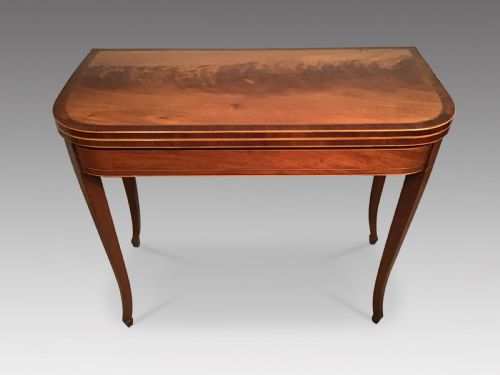
Classical Inlay Table
A classical inlay table brings enduring symmetry and fine decorative detail into a room, joining classical forms with intricate contrasting woodwork.
Classical Inlay Table
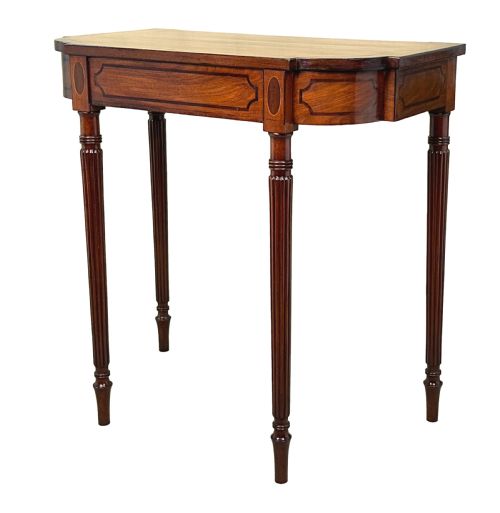
A classical inlay table draws upon Georgian, Regency, and Victorian design traditions, incorporating distinct stylistic revivals from the nineteenth and early twentieth centuries. These pieces appear in forms such as centre tables, tea tables, occasional tables, and console tables, reflecting the period's preference for balanced proportions and classical motifs.
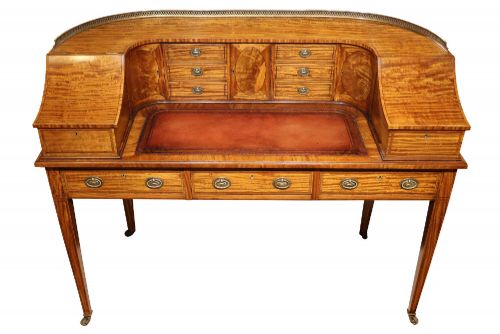
The buyer meets versions spanning the late eighteenth century through to the early twentieth century, including Edwardian interpretations and revival pieces. Mahogany and satinwood form the primary structural bases, frequently accented with delicate boxwood inlay or marquetry.
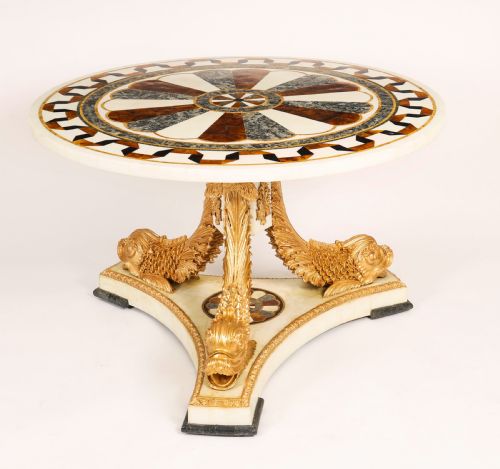
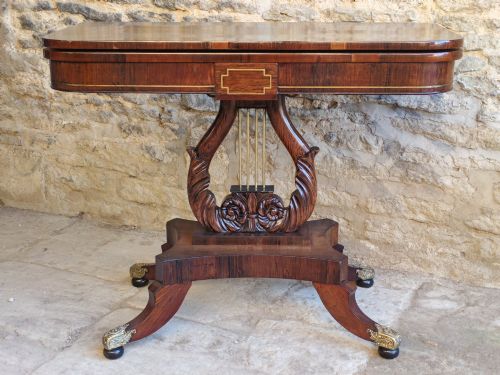
Many examples adhere strictly to Neoclassical principles, displaying geometric borders, urns, and foliate scrolls across their top surfaces. Others adopt bolder Regency characteristics, such as lyre supports or pedestal bases paired with contrasting wood veneers.
Materials and construction methods
Cabinet makers utilised dense timbers like mahogany, rosewood, and kingwood as the core foundation for these tables, applying fine veneers of satinwood or walnut over the primary carcass. This technique permitted complex surface patterning without compromising the structural integrity of the furniture.
Inlay work relied on meticulously cut sections of boxwood and contrasting tinted woods fitted directly into routed channels within the surface veneer. Artisans secured these delicate decorative elements using animal glues before scraping and polishing the entire top flat.
Marble inserts occasionally formed part of the upper surface, particularly on Neo-Classical Revival and Victorian examples, requiring robust wooden framing to support the heavy stone slab safely.
Listings feature mahogany, satinwood, and marble across periods spanning the Georgian era to the 1930s.
Distinctions in craftsmanship
The refinement of the inlay work marks the primary division between standard production and exceptional craftsmanship. Superior pieces display seamless joints between the contrasting woods without visible filler or gaps.
The choice and figuring of the timber veneers heavily influence the character of the piece. High-grade tables employ carefully matched grain patterns that create symmetrical visual effects across the entire top surface.
The execution of the underlying joinery, from the stability of the pedestal base to the precision of the drawer linings, separates workshops of high repute from routine commercial production.
Baby and Jannings·Pietro Ferrario·Edwards and Roberts
The Classical Inlay Table Glossary
- Marquetry
- The art of creating decorative pictures or patterns on a wooden surface using fitted veneer pieces. Unlike simple inlay set into solid wood, marquetry covers the entire plane with a veneer mosaic.
- Satinwood
- A lustrous, hard timber native to Ceylon and the West Indies, prized for its golden yellow colour and reflective grain. Cabinet makers used it extensively for tabletops and decorative banding.
- Boxwood
- A dense, pale yellow hardwood employed for fine stringing and intricate inlay details due to its uniform texture and sharp contrast against darker timbers.
- Demi-lune
- A half-moon shape characteristic of side and console tables designed to sit flush against a wall. These tables often feature radial veneer patterns on the semicircular top.
- Neoclassical
- A style drawing inspiration from the classical art and architecture of ancient Greece and Rome. It emphasises straight lines, symmetry, and classical motifs such as urns, swags, and key patterns.
Classical Inlay Table: Frequently Asked Questions
What rooms suit a classical inlay table?
These tables function effectively as centrepieces in entrance halls, living rooms, or studies, where their decorated surfaces remain visible from multiple angles. Occasional and tea tables offer versatile placement options beside seating.
Larger console and side tables sit flush against walls, providing a stable surface for lamps or decorative objects while adding architectural presence to a room.
How do I care for inlaid wooden surfaces?
Protect the polished timber from direct sunlight to prevent the natural colour of woods like satinwood and mahogany from fading or shifting unevenly over time. Use coasters and avoid placing damp items directly onto the veneer.
Apply a traditional beeswax polish occasionally to nourish the wood and maintain the lustre of the finish, avoiding modern silicone sprays that can damage historic polishes.
How can I tell a Georgian table from a later revival piece?
Georgian tables generally exhibit hand-cut construction details, native timber usage, and structural wear consistent with active daily use over two centuries. The joinery inside drawers and beneath tabletops shows specific manual tooling marks.
Revival pieces from the Edwardian period often feature standardised machine-cut components, alternative secondary woods, and crisper preservation states that reflect late nineteenth or early twentieth-century manufacturing methods.
What is the difference between inlay and marquetry?
Inlay involves embedding pieces of contrasting material, such as boxwood, into hollowed-out recesses carved directly into a solid wooden surface. The surrounding timber remains the primary background.
Marquetry assembles an entire pictorial or geometric pattern from various veneers on a backing sheet before applying the complete sheet to the surface of the furniture piece.