

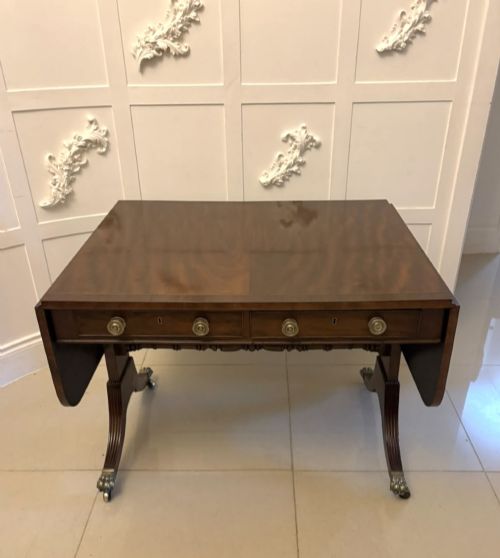
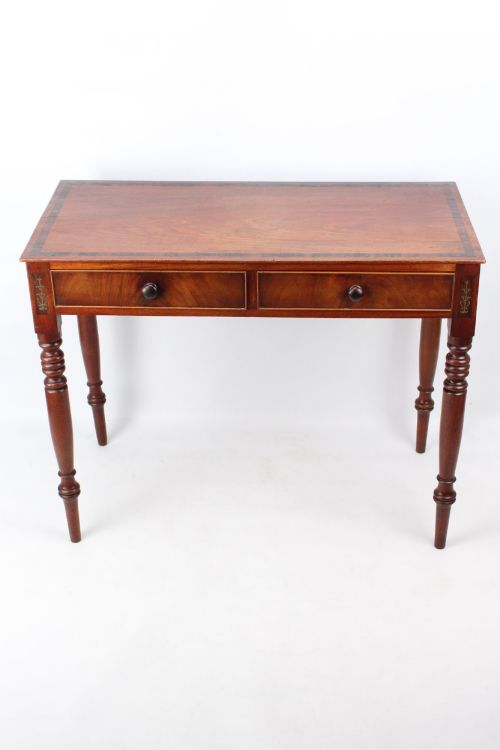
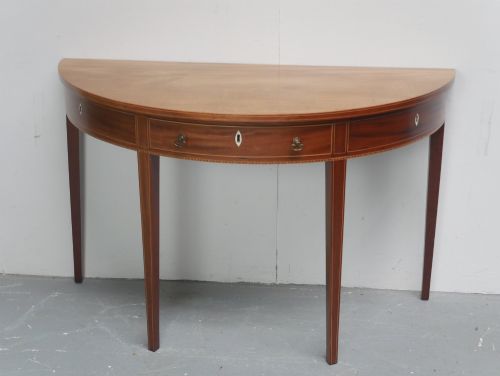
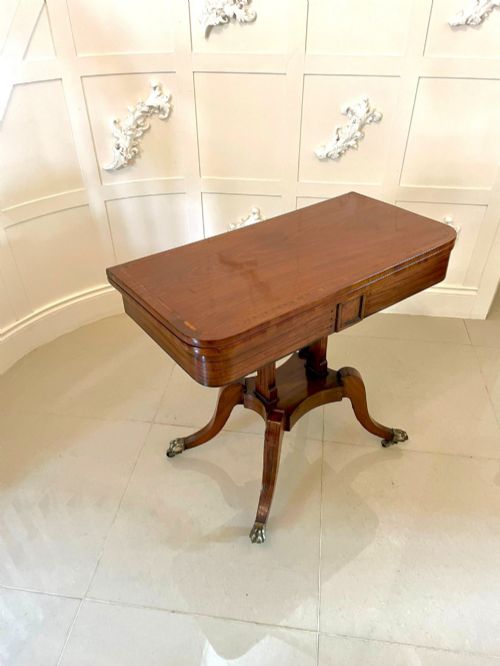
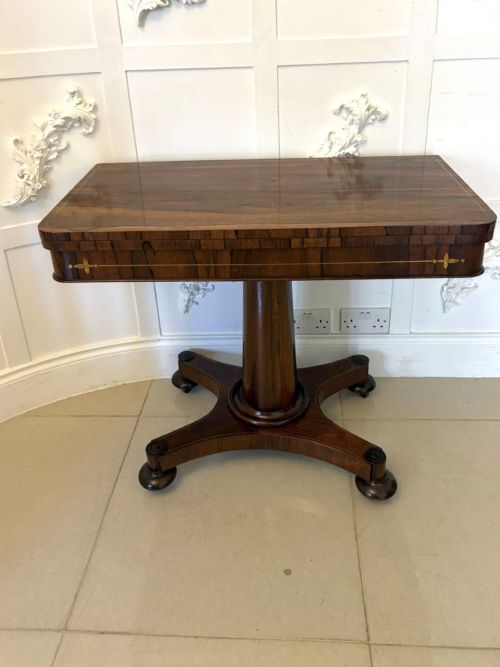
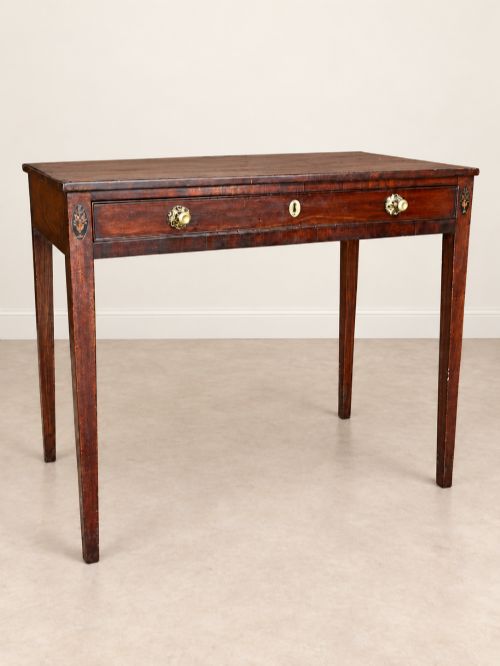
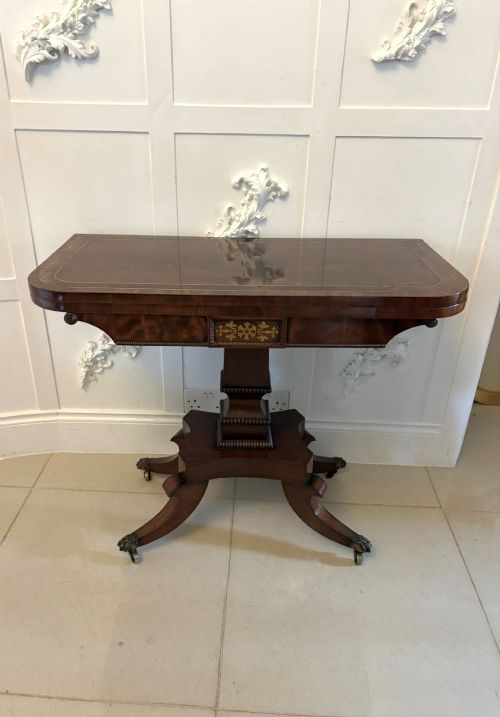

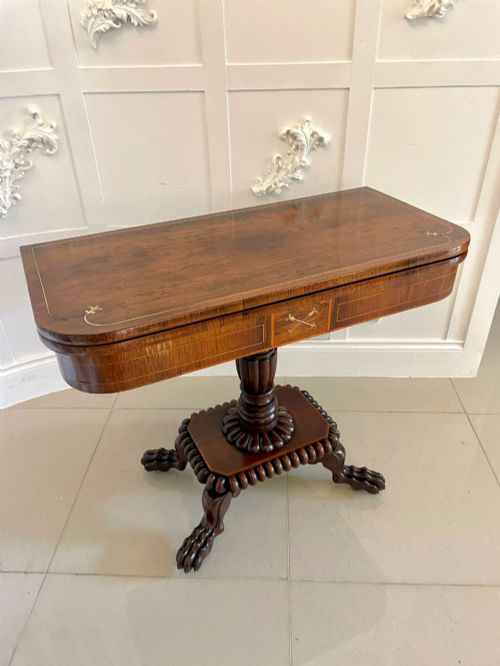
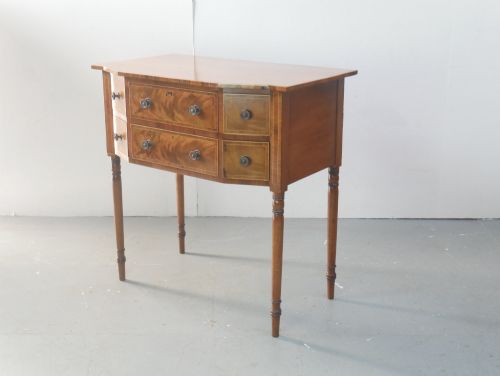
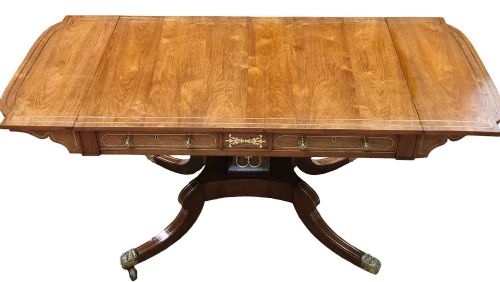
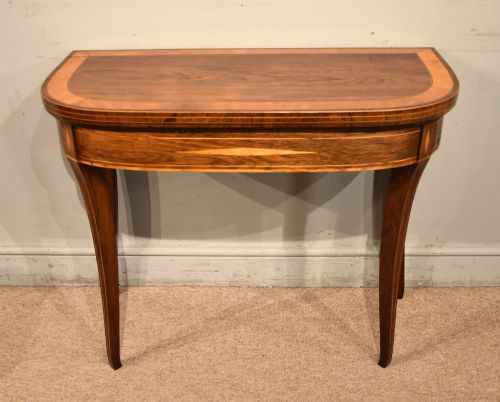

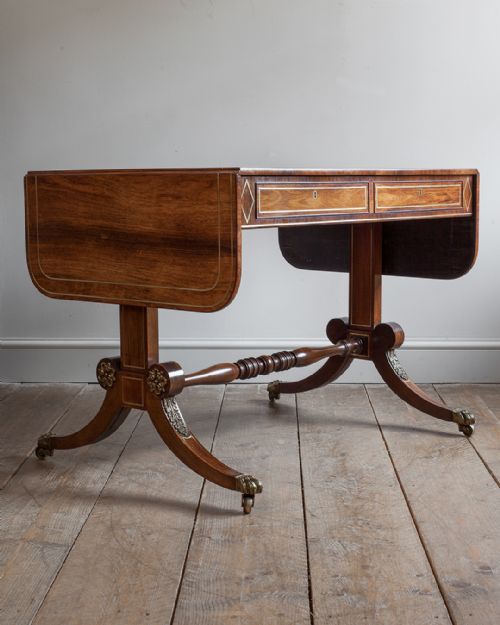
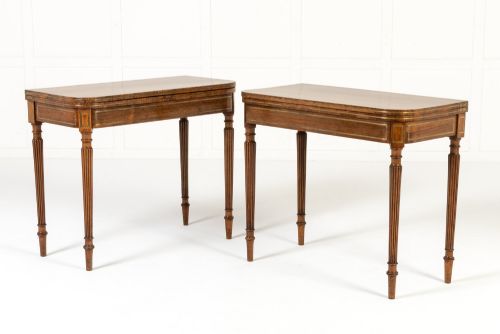
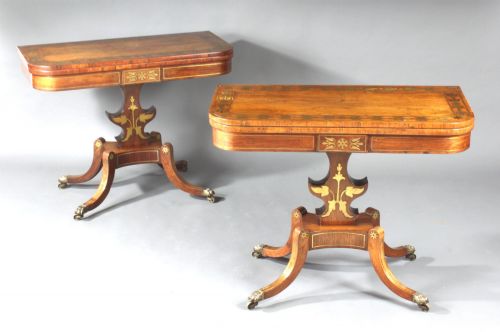
Regency Inlaid Console Table
A regency inlaid console table brings formal elegance to a room, offering clever fold-over tops and rich timber grain.
Regency Inlaid Console Table
A regency inlaid console table combines architectural form with decorative surface detail, originating predominantly from the Regency and Georgian periods alongside later revival eras. Buyers searching this phrase meet versatile furniture that frequently functions as a fold-over card table, tea table, or side support against a wall.
Origins span late eighteenth to early nineteenth century workshops, supplemented by later nineteenth and twentieth century revivals. Mahogany and rosewood form the structural backbone of these console and card tables.
What Varies in Quality
The standard of timber selection and the precision of the wood inlay establish the primary visual hierarchy among these tables. Richly grained rosewood and figured mahogany paired with crisp boxwood or satinwood stringing separate superior workshops from simpler production.
Hardware integration further distinguishes the grade of a piece, specifically the neatness of brass stringing channels and the casting quality of brass sabots and castors. Structural stability in the fold-over mechanism and the execution of carved pedestal bases reflect the original maker's investment of time and skill.
Regency Inlaid Console Table Retail Price Guide 2026
Typical asking prices for regency inlaid console table among the pieces listed under this phrase on Sellingantiques today, from the lower quarter to the upper quarter. They describe what is for sale here now, not the wider market.
Many a card table hides its clandestine gaming history beneath a polite facade of polished rosewood and polite parlour manners.
George Bullock
The Regency Inlaid Console Table Glossary
- Console table
- A table designed to stand against a wall, frequently featuring decorative front legs and a flat rear edge.
- Fold-over top
- A hinged table surface that doubles its area when opened, commonly found on card and tea tables of the Regency period.
- Demi-lune
- A half-moon shape characteristic of side and console tables designed to sit flush against a wall.
- Brass inlay
- The technique of embedding thin strips or motifs of brass into timber surfaces to create geometric or floral patterns.
- Satinwood
- A luminous yellowish timber utilised for contrasting inlay work and dramatic veneering panels.
- Crossbanding
- A border veneer applied perpendicularly to the grain of the main surface to frame a table top.
Regency Inlaid Console Table: Frequently Asked Questions
What is a regency inlaid console table used for?
These tables served multiple domestic purposes in period interiors, functioning primarily as decorative side supports or display surfaces against a wall. Many incorporated clever hinged leaves that unfolded to accommodate card games, tea service, or writing.
In modern rooms, they retain this versatility as hallway focal points or slim living room furniture. Their folding mechanism allows them to occupy minimal space when closed.
How do I identify a genuine period piece?
Examination of the secondary timbers, construction joints, and hand-cut joinery helps determine the age of a console table. Genuine Regency and Georgian examples exhibit timber shrinkage, hand-hammered brass pins, and wear patterns consistent with age.
Revival pieces from later centuries often display machine-made uniformity in their screw threads and veneer thickness. Comparing the hardware and timber grain against documented examples clarifies the era of manufacture.
Which woods are most common?
Mahogany and rosewood dominate the surviving inventory, providing a dark, heavy foundation for the furniture. These primary timbers were chosen for their strength and deep natural grain.
Satinwood, boxwood, and ebony appear as contrasting veneers and stringing materials to create pale geometric borders. Fruitwood also occurs in selected regional or earlier Georgian variants.
How should I care for timber surfaces?
Maintenance requires gentle dusting with a soft, dry cloth to protect the delicate wood inlay and polished finish. Avoiding direct sunlight and maintaining stable room humidity prevents timber splitting and veneer lifting.
Occasional application of appropriate microcrystalline wax preserves the lustre of rosewood and mahogany without building up heavy residue. Moisture should be kept away from all antique polished surfaces.