


Regency Hearth Fender
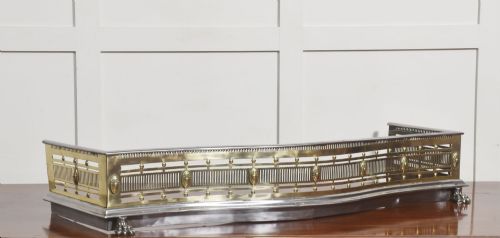
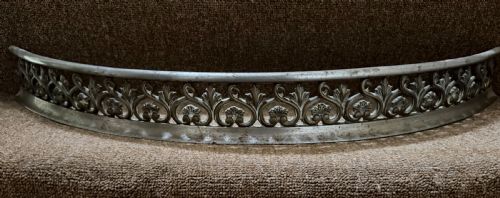
A regency hearth fender sets the tone for an open fireplace, combining burnished brass and iron to frame the hearth.
Regency Hearth Fender
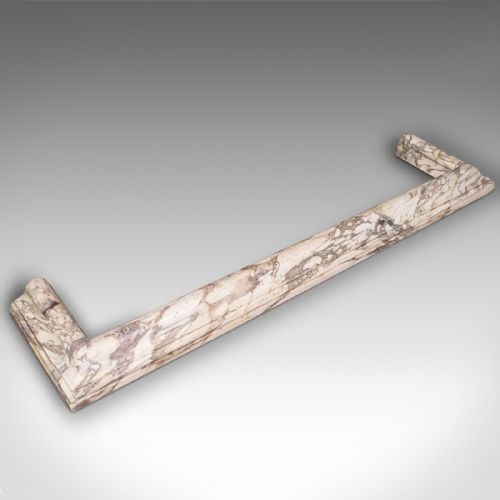
A regency hearth fender guards the floorboards from stray embers while defining the hearth in the principal rooms of the house. These fireplace accessories sit directly on the floor around the opening, protecting carpets and timber from falling sparks.
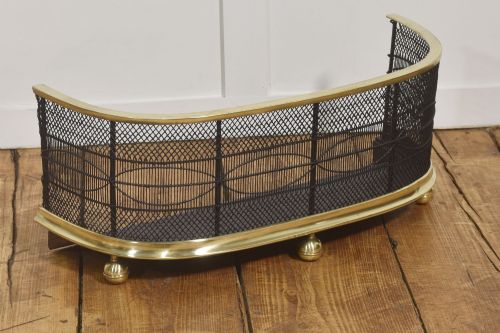
The examples gathered here span the nineteenth century, including pieces from the Regency, William IV, and Victorian periods. Most pieces take the form of low curbs or guards fabricated from metal, often curved to follow the line of the fireplace.
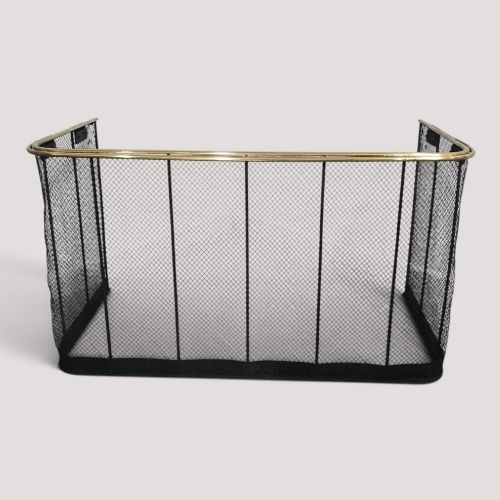
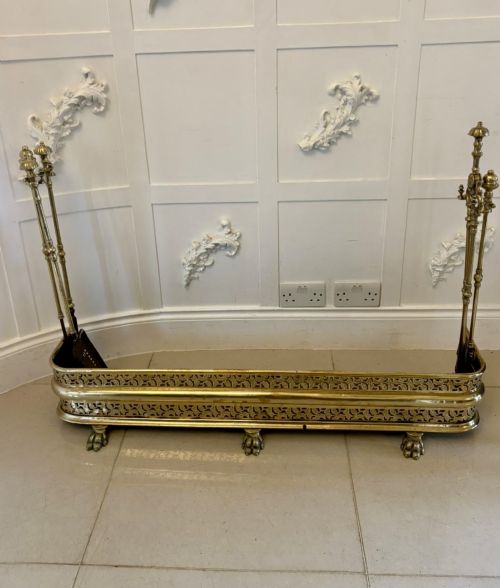
Brass dominates the selection, frequently paired with iron, steel, or bronze to create contrasting metallic tones. Certain pieces incorporate woven wire or decorative elements such as lions and garlands.
How they were made
Metalworking techniques of the period involved casting brass and shaping iron or steel by hand. Founders cast brass components in moulds to produce decorative garlands and paw feet, whilst blacksmiths hammered and forged iron frames to fit domestic hearths.
Polished steel and gilt bronze surfaces required meticulous hand finishing and abrasive polishing to achieve a bright reflective finish. Wirework fire guards utilised fine strands of iron woven into rigid mesh screens to contain ash and embers securely.
Several fenders watch over the hearth with cast brass lions guarding the perimeter.
What varies in quality
The weight of the metal and the crispness of the casting separate standard utility items from finer examples commissioned for formal drawing rooms. Thick gauge brass and heavy cast bronze retain their structural integrity better over generations of domestic use.
Subtlety of detail in cast ornamentation, such as well-defined lion mounts and hand-chased garlands, indicates superior workmanship. The survival of original fire irons or matching components adds significantly to the integrity of the piece.
The Regency Hearth Fender Glossary
- Curb fender
- A low metal barrier placed around the hearth to contain ashes and prevent logs from rolling onto the floor. These low frames sit flat against the floorboards.
- Fire guard
- A protective barrier of woven wire or metal mesh designed to block sparks from escaping the fire opening. They often stand taller than standard curbs.
- Polished steel
- Iron alloy treated to a bright, reflective finish through grinding and polishing. This material requires regular maintenance to prevent surface corrosion.
- Gilt bronze
- Bronze metal treated with a thin layer of gold leaf or mercury gilding. This technique provides a rich, durable golden appearance that resists tarnishing.
Regency Hearth Fender: Frequently Asked Questions
How do I measure for a fender?
Measure the width and depth of the fireplace opening and the hearth stone to ensure the inner dimensions accommodate the hearth surround comfortably.
allow clearance on all sides so the metal frame sits squarely on the floor without obstructing the ash pan or fire tools.
Were these used in every room?
Fenders were principally installed in formal reception rooms and parlours where open coal or wood fires heated the main living spaces.
servant quarters and secondary chambers typically utilised simpler, heavier iron guards rather than polished brass or bronze.
How do I clean antique brass?
Dust the metal gently with a soft cloth and avoid harsh chemical dips that strip the historic surface oxidation known as patina.
apply a mild, non-abrasive metal polish sparingly only when necessary to maintain the natural warmth of the brass.
What is the difference between iron and steel?
Wrought iron contains fibrous slag inclusions from the smelting process and resists rusting better than early steel alloys. Steel contains controlled carbon content that permits a brighter, more uniform polish.