

Regency Hall Seat
A regency hall seat brings classical proportion and architectural form into a hallway, offering a sturdy perch for visitors.
Regency Hall Seat
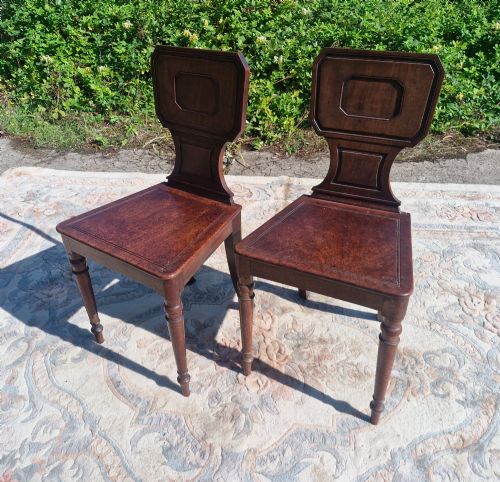
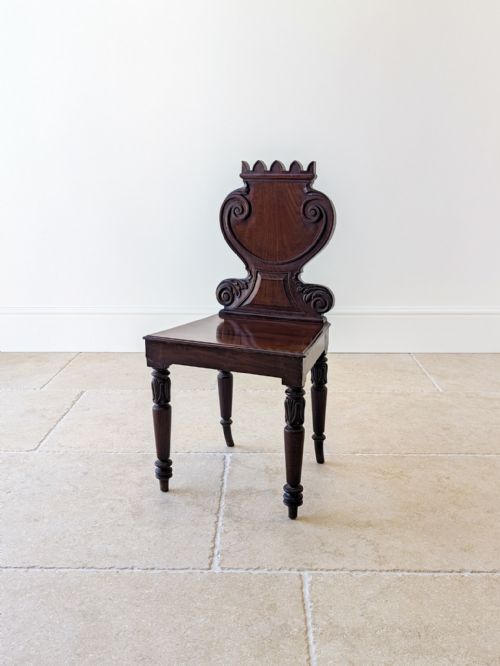
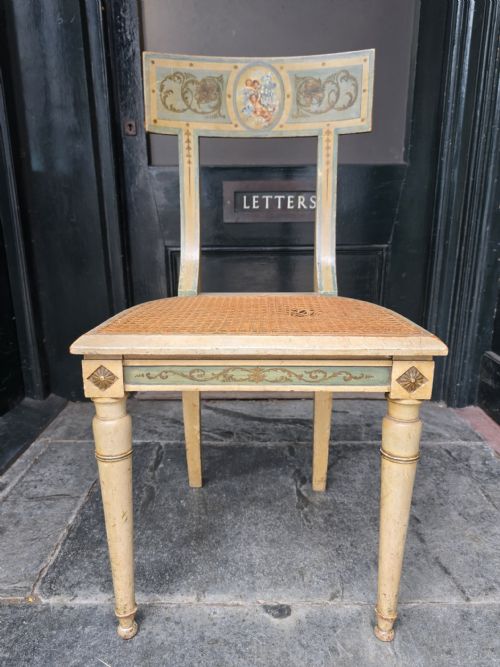
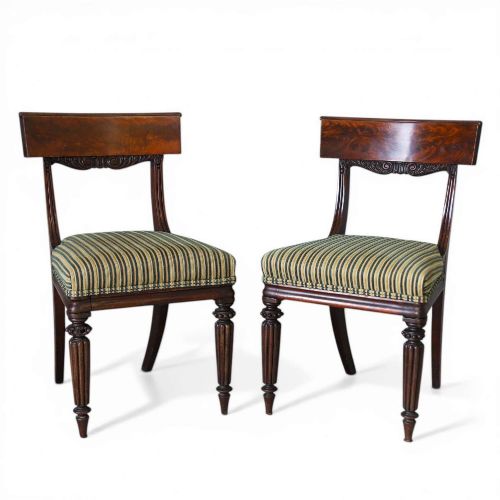
A regency hall seat encompasses a variety of long benches, window seats, and individual hall chairs designed for entranceways and reception rooms. The pieces span the Regency, William IV, and Georgian eras, alongside later revival interpretations from the nineteenth and twentieth centuries.
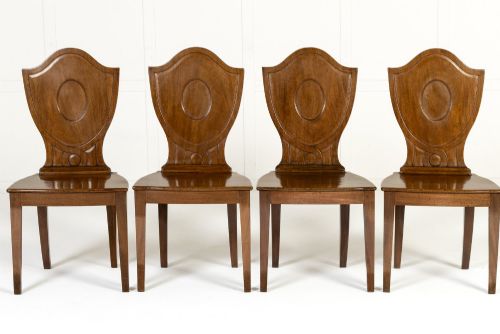
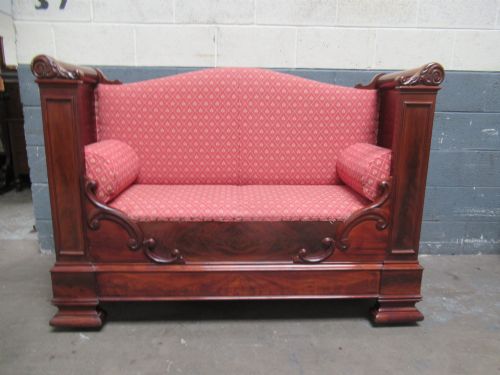
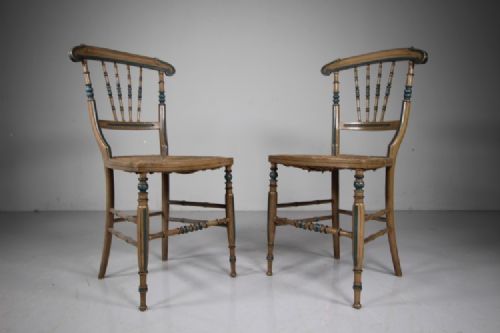
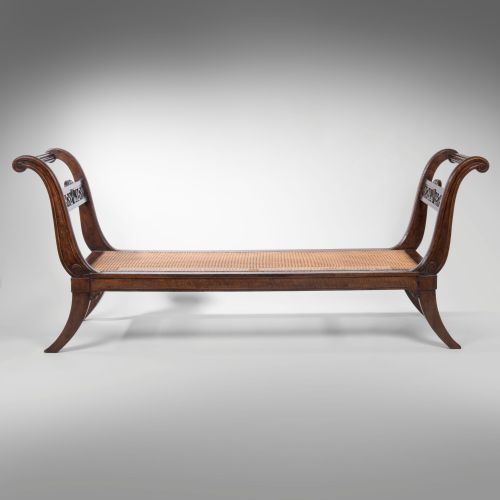
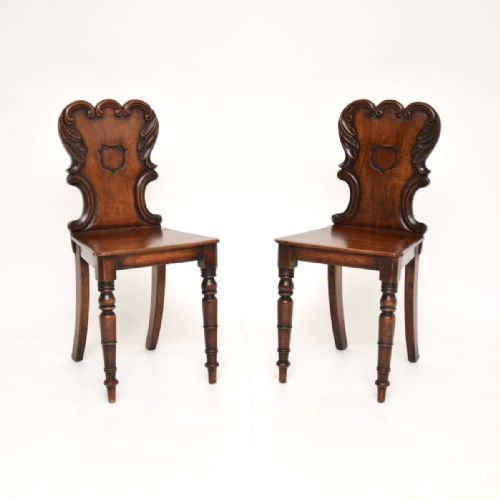
Mahogany forms the primary wood for these seats, frequently accompanied by oak, painted pine, and ebonised timber. Designs range from plain timber benches with cylindrical roll ends to carved shell backs, shield backs, and armorial details.
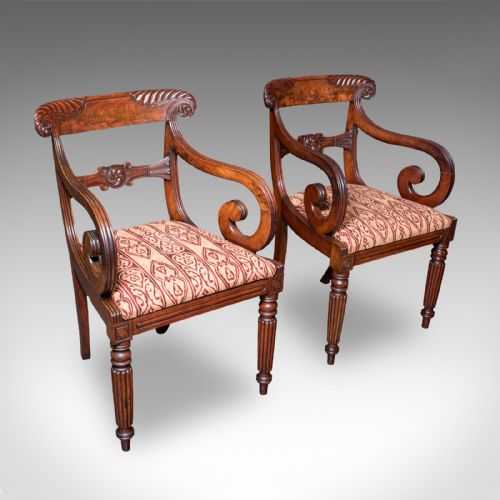
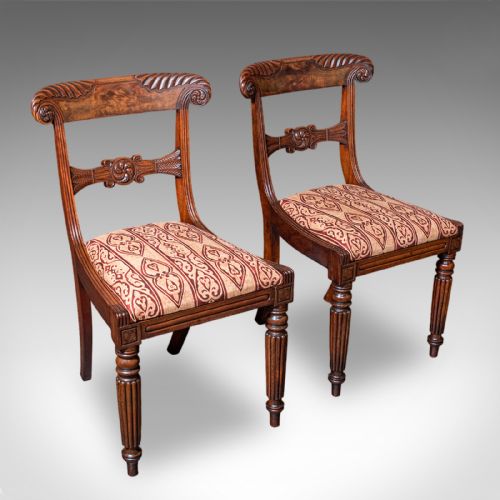
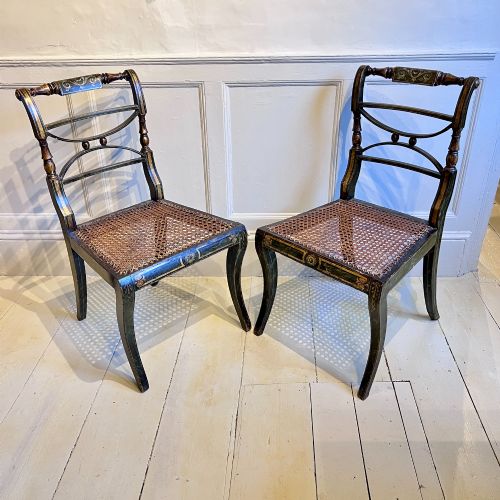
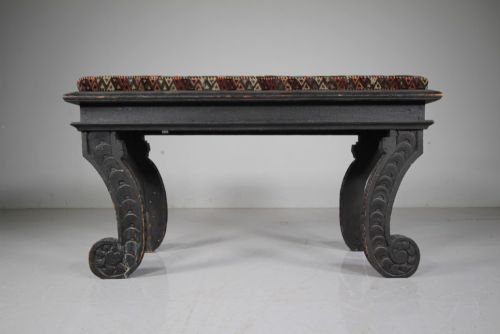
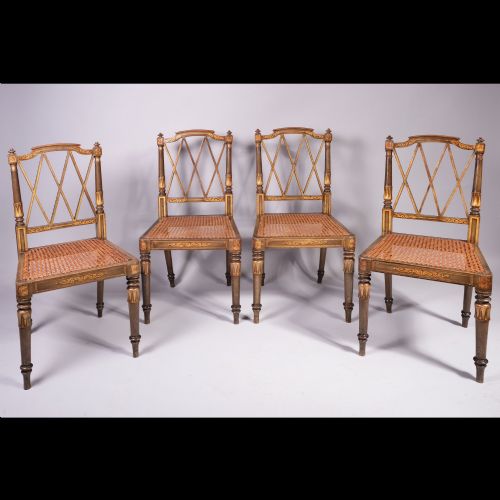
Buyers will encounter single chairs, matched pairs, and long wooden benches stretching up to six feet in width. Some examples incorporate cane seats, leather upholstery, or fabric pads for added comfort.
Materials and Construction
Cabinet makers utilised solid mahogany and oak to build heavy, durable frames capable of enduring regular use in busy reception halls. Turned legs, fluted supports, and saber legs provide structural stability beneath the timber seats.
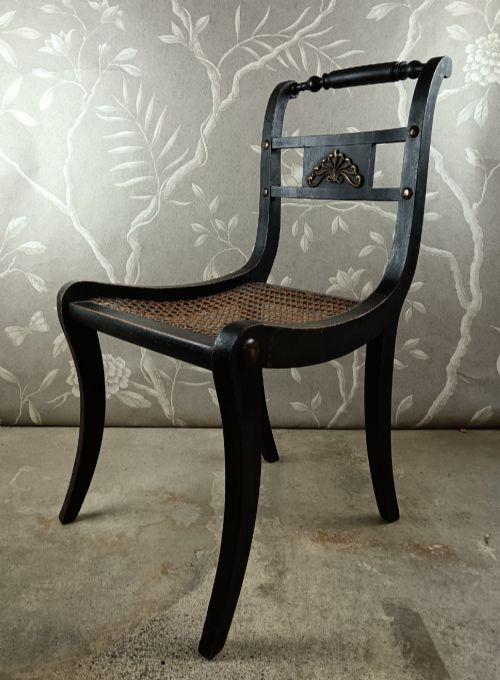
Decorative touches rely on ebonised wood, giltwood accents, and painted finishes to emulate more expensive exotic timbers like rosewood. Caning and fabric upholstery appear across various seats, secured with brass tacks or studs.
Several benches feature roll ends, ensuring guests could recline their posture while waiting in the hallway.
Judging Quality
The sophistication of the timber carving and the crispness of classical motifs distinguish standard examples from finer commissions. Pieces bearing armorial crests or attributed to notable cabinet makers display superior craftsmanship in their joinery and proportions.
The integrity of the original wood, the retention of authentic painted or ebonised surfaces, and the preservation of cane or leather seating determine the long-term desirability of the piece.
Gillows·Marsh and Tatham
The Regency Hall Seat Glossary
- Trafalgar saber leg
- A curved, outwardly splaying leg characteristic of Regency seating design. It tapers toward the foot and provides a sturdy base for side chairs.
- Cylindrical roll end
- A raised, rounded terminal at one or both ends of a bench or window seat. This feature echoes classical Roman daybed designs.
- Armorial
- A painted or carved family crest displayed on the backrest of a chair. These were commissioned for grand country houses.
- Shell back
- A carved wooden backrest shaped to resemble a fluted scallop shell. It appears frequently on formal hall chairs from the early nineteenth century.
- Ebonised wood
- Timber treated with a dark stain or finish to imitate ebony. This technique was popular for achieving high-contrast classical decoration.
Regency Hall Seat: Frequently Asked Questions
Where were hall seats placed in a home?
These seats were positioned in entrance halls, corridors, and morning rooms to provide a convenient place for guests to wait. Their sturdy construction suited high-traffic areas near the main entrance.
Larger benches were often placed beneath windows or along long hallways to balance the architectural scale of public rooms.
Are wooden hall seats comfortable to sit on?
Original hall chairs and wooden benches were designed for brief seating rather than long lounging, featuring carved wooden panels instead of deep cushioning. Many retain or have been fitted with cane work, leather pads, or fabric squab cushions.
Buyers seeking softer seating often look for examples with upholstered drop-in pads or long leather benches designed for studies and dressing rooms.
What is the difference between a hall chair and a window seat?
Hall chairs are upright single seats with solid wooden backs, often featuring carved crests or armorials intended to make a formal impression on visitors. They lack armrests and prioritize a rigid, upright posture.
Window seats and benches are elongated forms built to sit low beneath window frames or along corridors, frequently featuring roll ends or X-frame supports.