



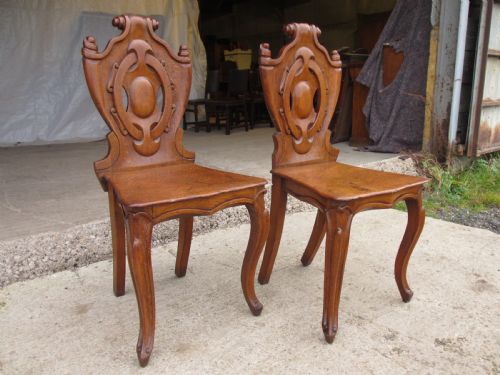


Antique Corridor Seating
Antique corridor seating brings together formal timber hall benches and rigid wooden reception chairs designed to stand against narrow passage walls.
Antique Corridor Seating
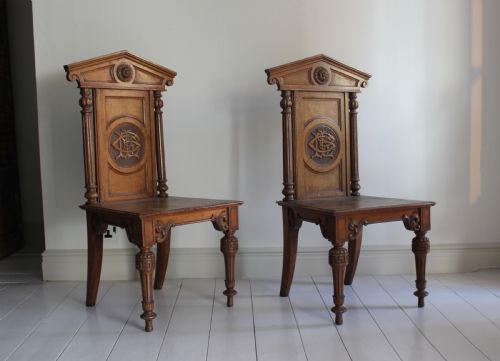
When buyers search for antique corridor seating, they encounter practical wooden furnishings originally placed in hallways, vestibules, and reception rooms during past centuries. These pieces were built for brief seating rather than lounging, often featuring solid timber construction without upholstered cushions.
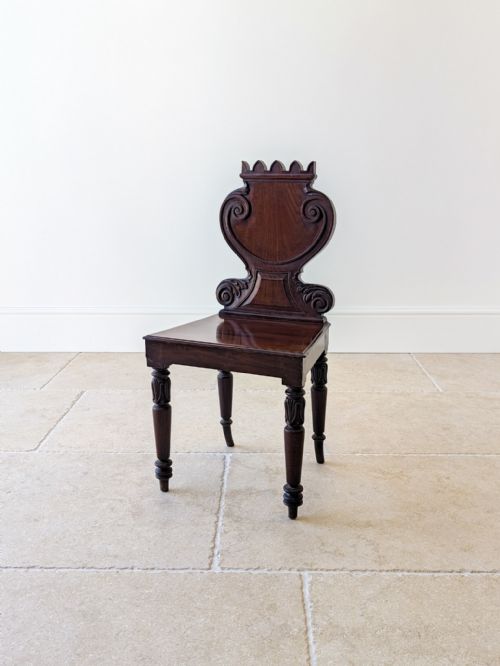
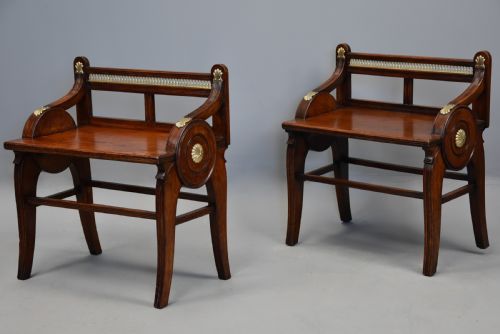
The selections span distinct historical eras, encompassing Georgian, Regency, William IV, and Victorian periods. Most examples appearing on this page take the form of upright hall chairs or sturdy wooden hall benches designed to fit narrow spaces.
Origins range across English and Scottish workshops, utilising traditional regional cabinet-making approaches. Buyers typically find single chairs, matched pairs, or occasional long benches suited for contemporary entryways.
Materials and Construction
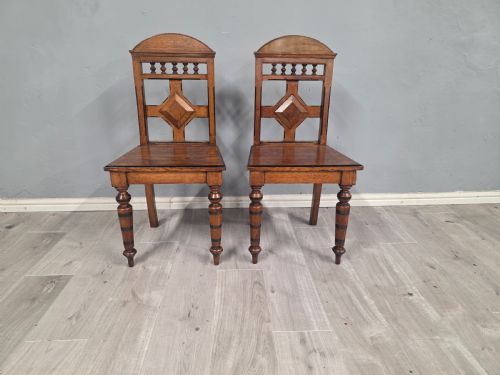
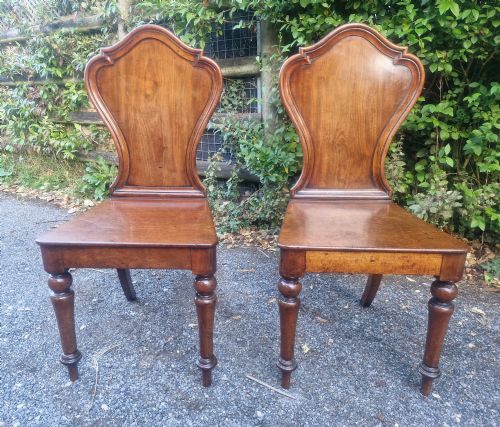
Cabinet-makers relied heavily on dense hardwoods like mahogany and oak, frequently selecting solid wood to withstand the heavy wear expected in entrance corridors. Walnut also appears among these selections, providing varied grain patterns for reception areas.
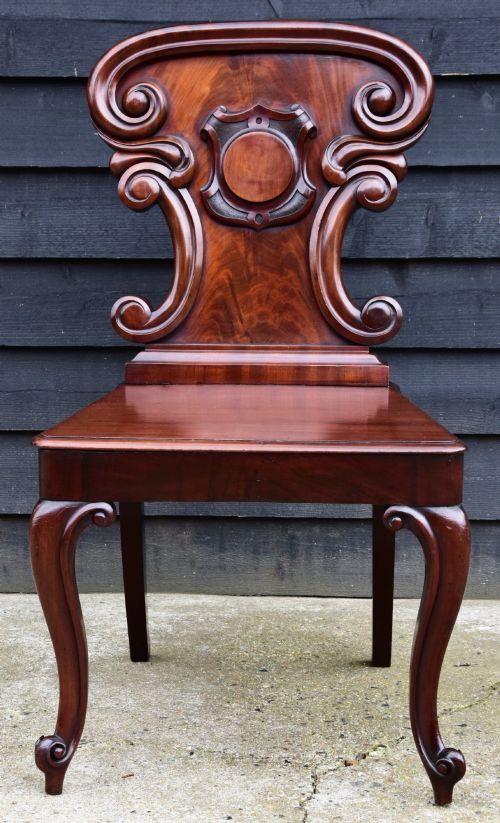
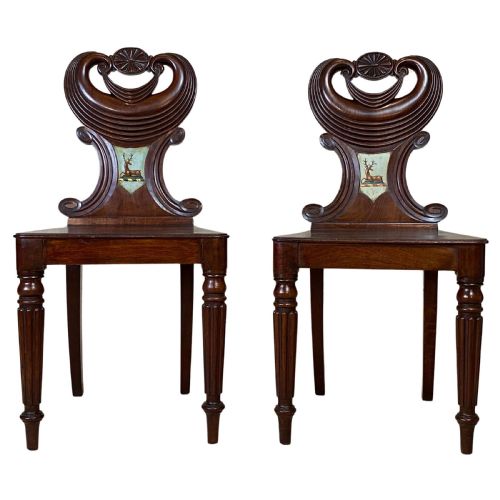
Joinery techniques combined traditional mortise and tenon framing with carved wooden details, including shield backs and applied brass or inlay work. Carved ornaments and cabriole legs added decorative distinction to otherwise functional passageway furniture.
Antique Corridor Seating Retail Price Guide 2026
Typical asking prices for corridor seating among the pieces listed under this phrase on Sellingantiques today, from the lower quarter to the upper quarter. They describe what is for sale here now, not the wider market.
Some Victorian corridor chairs feature carved Prince of Wales feathers, offering a subtle royal nod for guests waiting in the hall.
Factors That Separate the Best Examples
The division between standard corridor seating and exceptional items rests in the crispness of the timber carving and the architectural ambition of the design. Workshops attributed to known makers or specific stylistic revivals often display deeper relief work and more balanced proportions.
Material selection and timber figure dictate much of the visual weight, with well-matched mahogany grains or richly toned golden oak elevating the piece. Original surface patination and intact structural joinery preserve the integrity valued by collectors.
James Shoolbred & Co.·Gillows·Richard Bridgens
The Antique Corridor Seating Glossary
- Hall chair
- A rigid wooden seat with a solid back, designed for entryways and corridors rather than long periods of sitting. These chairs often feature carved family crests or shield backs.
- Shield back
- A chair back shaped like a heraldic shield, popular during the Georgian and Victorian periods. This design allows for carved centre splats and decorative motifs.
- Armorial
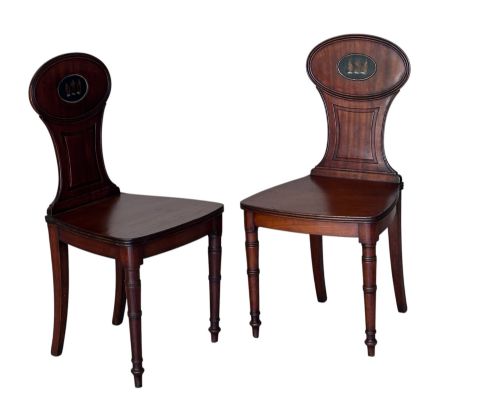
- Bearing a heraldic coat of arms or family crest, usually carved or painted onto the back panel of a reception chair. Such details indicate bespoke commissions for country houses.
- Cabriole leg
- A furniture leg that curves outward and then tapers inward, mimicking an animal's limb. This form appears on various Victorian seating styles.
- Inlay
- The technique of embedding pieces of contrasting timber or brass into a solid wood surface to create decorative patterns. It enhances the visual depth of corridor furniture.
Antique Corridor Seating: Frequently Asked Questions
Where were hall chairs placed?
These seats stood strictly in entry halls, vestibules, and wide corridors rather than living rooms. Guests used them briefly while waiting to be announced.
Servants also used them during formal household routines. Their upright posture discouraged lounging.
Are these benches comfortable?
Antique corridor seating prioritises posture and durability over comfort. The solid timber seats and straight wooden backs encourage upright sitting.
They were built for short waits rather than extended relaxation. Modern owners often add loose squabs for comfort.
How do I date a hall chair?
Dating relies on matching the timber choice, leg style, and back design to documented historical periods. Regency pieces often show classical lines, while Victorian examples lean toward heavier carvings.
Construction marks and tool traces underneath the seat also help determine the era.
Why are many sold as pairs?
Makers originally built corridor seating in matched sets to flank hallway walls symmetrically. Grand homes required balanced arrangements of furniture on either side of a passage.
Surviving pairs remain highly sought after by modern collectors. Single chairs also appear frequently.