


Mahogany Entryway Bench
A mahogany entryway bench is a solid timber seat built to greet visitors, offering practical utility and period character for a hallway.
Mahogany Entryway Bench
A mahogany entryway bench covers a varied group of hallway seating and storage forms designed to furnish entrance spaces and corridors. When you search for a mahogany entryway bench, you encounter pieces spanning the nineteenth and twentieth centuries, including Regency models, Victorian examples, and Edwardian items.
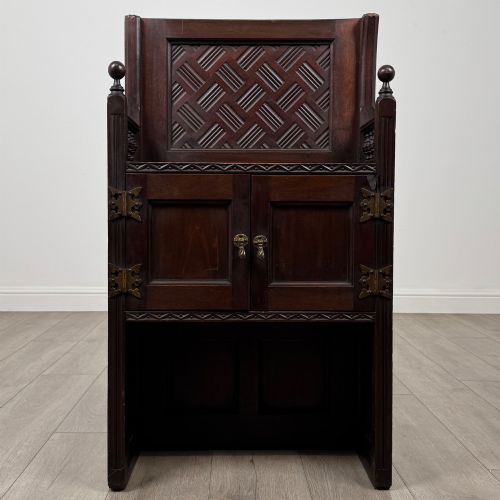
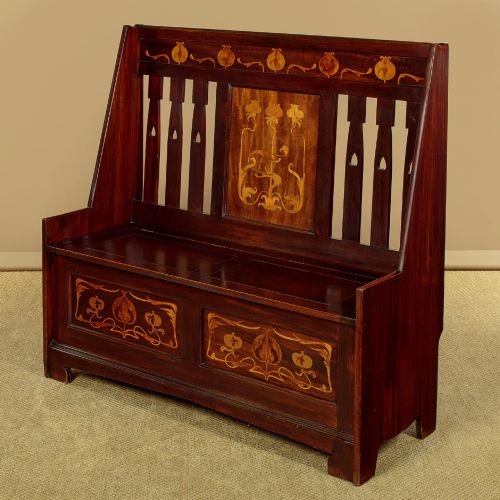
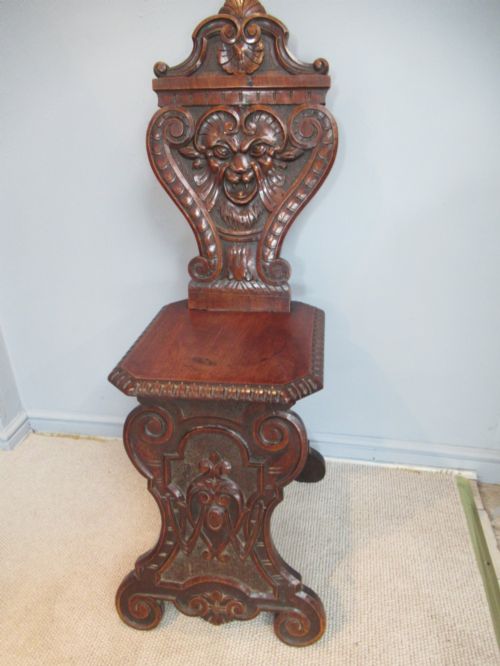
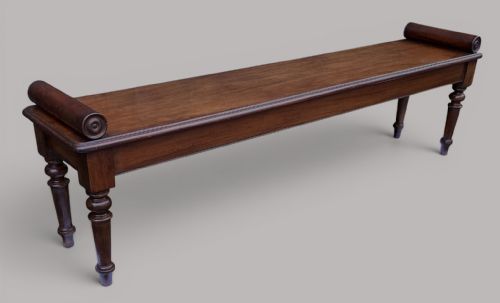
The selection includes long window seats, panelled box settles, hall chairs, and large hall stands incorporating marble and mirrors. Pieces range from simple timber benches to elaborate carved forms influenced by Gothic and Arts and Crafts styles.
Origin and period dictate the exact silhouette, with formal Regency pieces contrasting against later Edwardian cabinet seats and sturdy Brazilian mahogany box settles. Most examples found here combine seating with practical hallway functions such as coat hanging or box storage.
Materials and construction
Makers utilised solid mahogany and Brazilian mahogany timbers, occasionally complemented by boxwood inlay for decorative contrast. Structural durability relied on dense hardwoods, sometimes paired with secondary woods for internal framing.
Secondary materials appear in specific forms, such as brass hardware for hooks, glass elements, marble inserts on stands, and fabric upholstery on seats. Joinery techniques and deep carving defined the stylistic expressions of Victorian and Regency pieces.
Listings feature mahogany, brass, glass, boxwood inlay, fabric, marble, and timber across nineteenth and twentieth-century periods.
Assessing quality and craftsmanship
The standard of carving and timber selection dictates the distinction between ordinary and superior pieces. Fine examples display crisp hand-carved details, well-figured mahogany grain, and robust structural joinery without unnecessary restoration.
Design integration separates utilitarian forms from high-style workshop output. Pieces attributed to notable makers or specific stylistic movements show superior proportion, thoughtful use of boxwood inlay, and well-integrated auxiliary elements like mirrors and marble slabs.
James Shoolbred & Co·Gillows·Richard Bridgens
The Mahogany Entryway Bench Glossary
- Box settle
- A high-backed wooden bench with a hinged seat lid forming a storage chest underneath. This form kept hallways tidy by concealing items inside.
- Window seat
- An elongated bench designed to fit into a window recess, featuring arms at both ends and polished mahogany framing. These items doubled as occasional hallway seating.
- Hall stand
- A tall entryway furnishing combining a seat, coat hooks, a mirror, and frequently a marble shelf or umbrella tray. They served multiple domestic purposes in Victorian and Edwardian halls.
- Boxwood inlay
- Contrasting pale wood inserted into mahogany surfaces to create geometric or floral patterns. This decorative technique appeared frequently on Edwardian pieces.
Mahogany Entryway Bench: Frequently Asked Questions
Where did these benches sit?
These benches sat in hallways, entrance lobbies, and corridors to provide a place to sit while putting on boots or waiting for guests.
Their practical design suited high-traffic entry spaces in period homes.
How do I date a bench?
Dating relies on stylistic clues, timber characteristics, and construction methods. Regency pieces often show classical restraint, whereas Victorian items lean towards heavier carving.
Reference to periods like Edwardian or William IV helps narrow down the decade of manufacture.
Did these benches include storage?
Many examples, particularly box settles, incorporated a hinged seat lid opening to a storage compartment below. This compartment held blankets, boots, and hallway clutter.
Other configurations focused solely on open seating or combined stands with umbrella wells.
How do I care for mahogany?
Mahogany timber requires minimal intervention, benefiting from occasional dusting with a dry cloth and avoidance of direct sunlight. Keeping the wood away from extreme heat sources prevents splitting.
Polished surfaces retain their lustre through careful cleaning without harsh chemical polishes.