
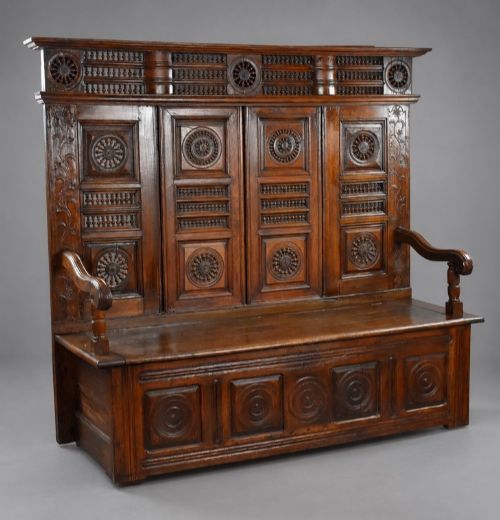
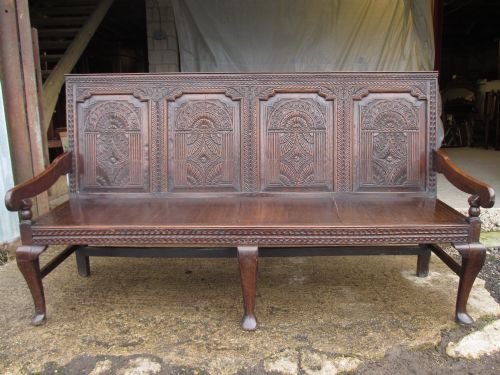
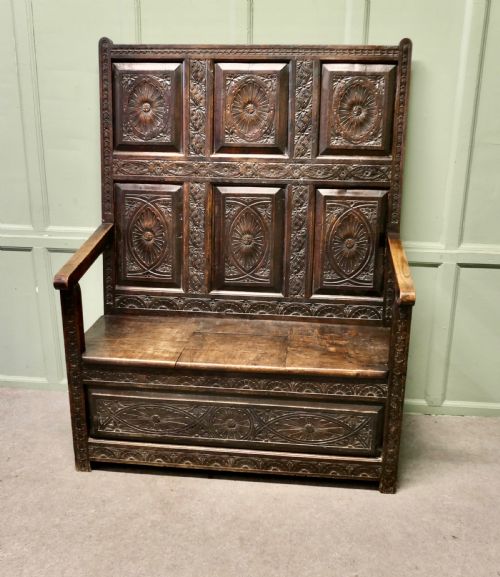
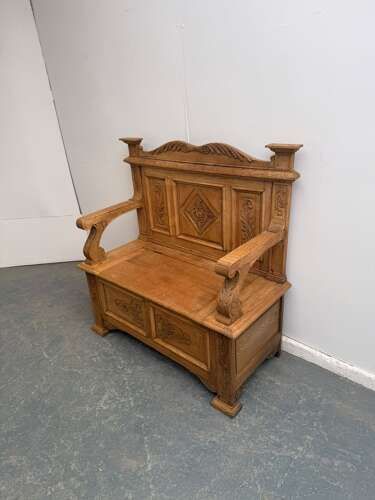
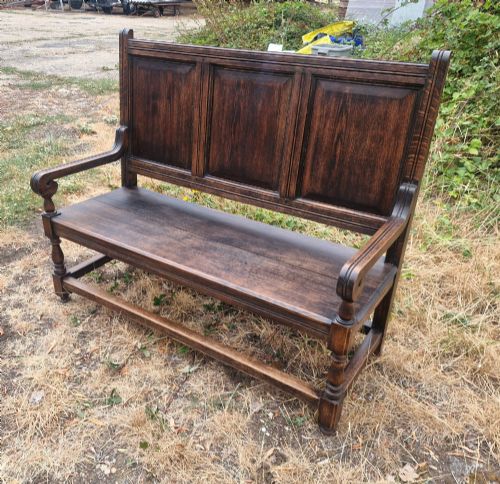
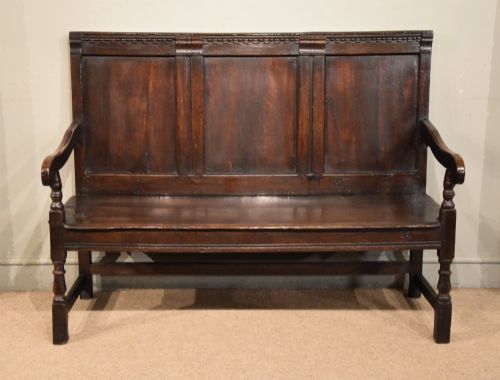
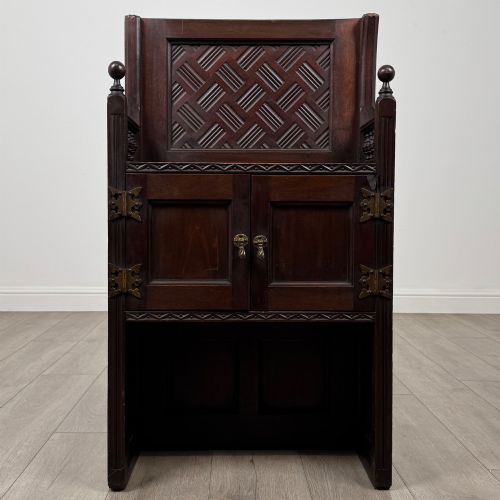
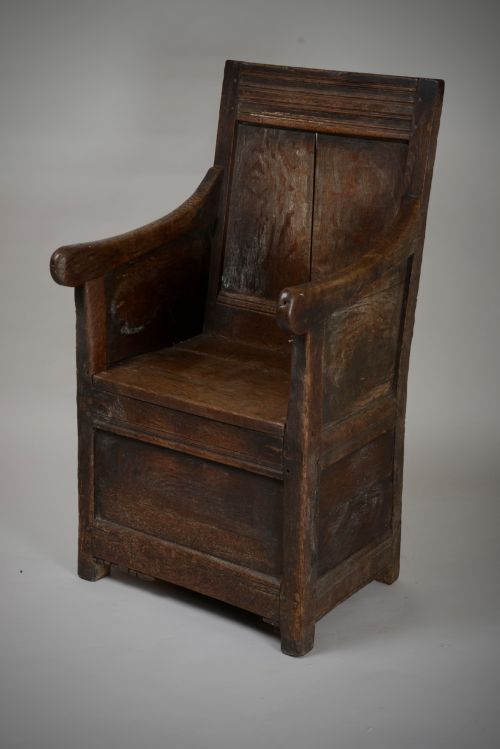
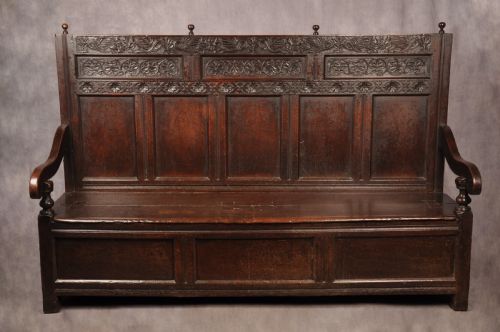


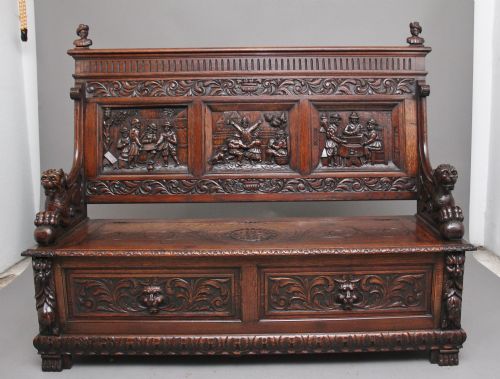
Carved Panel Settle
A carved panel settle offers solid timber seating with built-in storage and period presence for a hallway or living space.
Carved Panel Settle
A carved panel settle provides a heavy wooden seat designed to keep out draughts and store household goods in domestic halls. When you search for a carved panel settle, you encounter high-backed seating with architectural woodwork and storage bases.
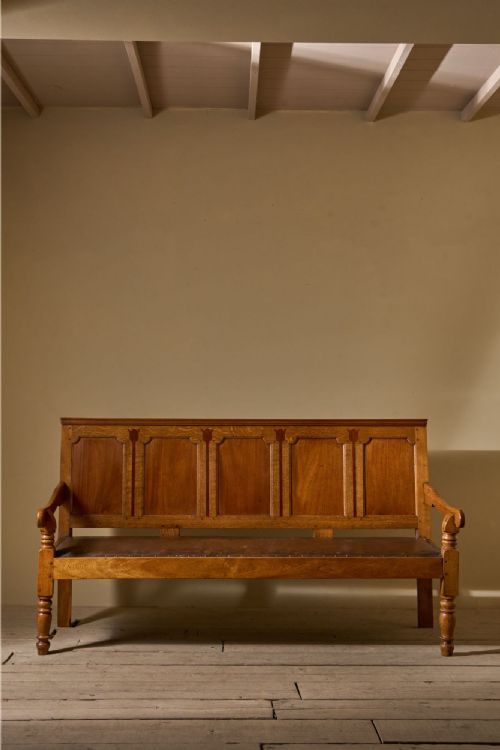
The versions most common on this page span the seventeenth, eighteenth and nineteenth centuries, often showing regional English country styles or Victorian revivals. They appear as straight-backed benches, high-backed box seats, and combinations with storage compartments beneath the cushion line.
How they were made
Makers built these pieces primarily from solid oak, utilising pegged frame-and-panel construction to accommodate seasonal movement in the timber without splitting. Secondary timbers such as fruitwood and pine also appear in regional work.
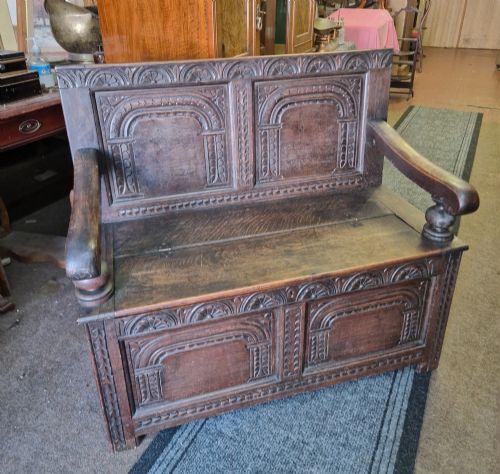
Carving is typically executed by hand directly into the panels and rails, featuring geometric motifs, floral patterns, or figural details. Surface finishes range from traditional wax to limed treatments applied to the grain.
Listings feature oak predominantly, alongside mahogany, fruitwood, and pine across seventeenth, eighteenth, and nineteenth-century periods.
What varies in quality
The standard of timber selection and the depth of the hand carving dictate the overall quality of a piece. Earlier examples show crisp, confident tool work by regional joiners, whilst revival pieces vary in the crispness and complexity of their ornamentation.
Proportions and structural integrity also separate standard examples from finer works. Pieces retaining their original box storage bases, unmodified panel heights, and authentic patina command greater interest than heavily altered or later assembled items.
The Carved Panel Settle Glossary
- Box settle
- A form of seating featuring a solid enclosed storage compartment beneath the bench seat. This design kept users raised above cold stone floors.
- Frame and panel
- A method of construction where a central floating panel sits within a grooved outer frame. This technique allows the timber to expand and contract safely.
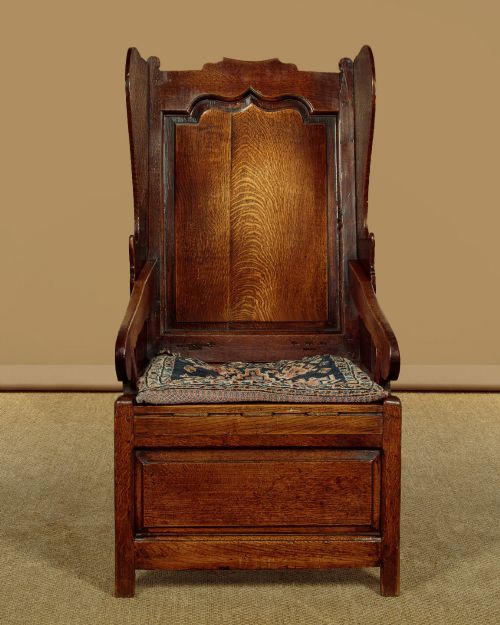
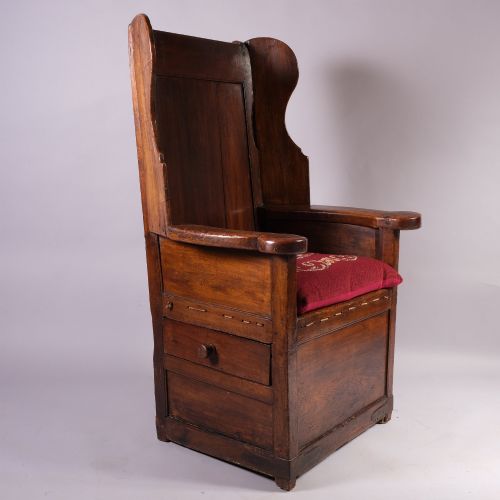
- Lambing chair
- A regional hooded armchair or settle designed with solid side wings. It shielded the occupant from cold draughts near the hearth.
- Monks bench
- A convertible form of seating with a hinged back that tips forward to form a table top. It combines a bench seat with a multi-purpose surface.
Carved Panel Settle: Frequently Asked Questions
Where did people put settles?
These seats traditionally stood in the communal halls or kitchens of large farmhouses and cottages. They offered a warm resting place near the hearth.
Today, they suit modern hallways, large living rooms, and dining spaces where substantial wooden furniture provides both seating and visual weight.
How do I spot a later revival piece?
Revival pieces often display machine-cut timber preparation, uniform colouration, and mechanical carving styles typical of the Victorian period onwards. The construction methods may use modern fixings or non-traditional joints.
Earlier examples show tool marks from hand axes, adzes, and pit saws, along with natural wear patterns accumulated over centuries of use.
What is the storage box used for?
The enclosed base beneath the seat served as a dry chest for blankets, rugs, and heavy household items in unheated homes. It also added ballast to keep the heavy wooden bench stable.
Modern owners utilise this compartment to store everyday items out of sight while maintaining an authentic historic appearance.
Why do some settles have high backs?
High wooden backs acted as windbreaks in draughty medieval and early modern interiors before central heating existed. They created a microclimate around the sitter by blocking cold air currents from behind.
The height also allowed carvers to display elaborate panel decoration, crests, and family motifs.