

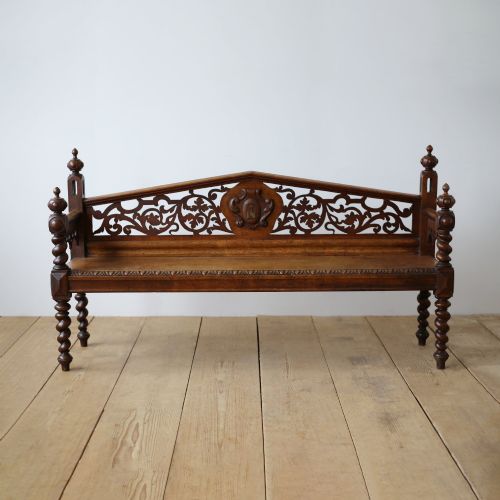
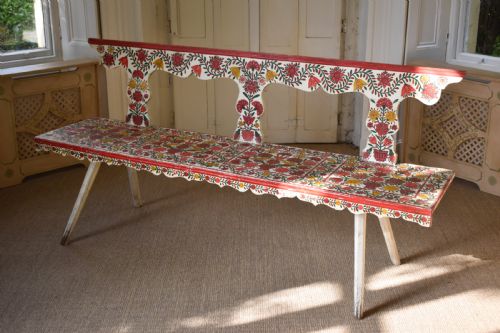


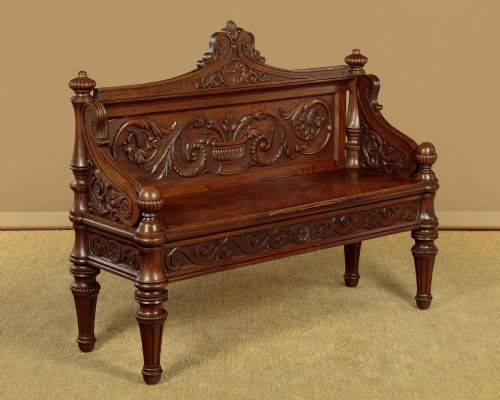
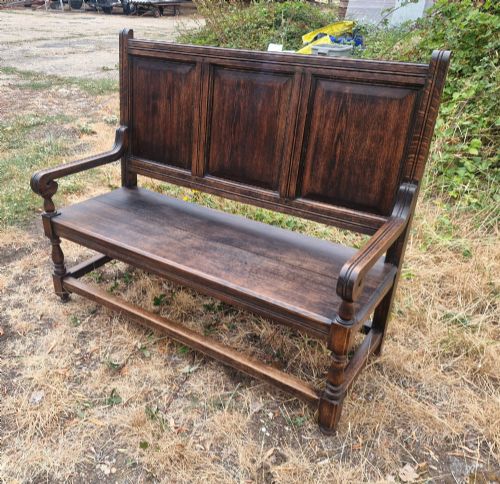
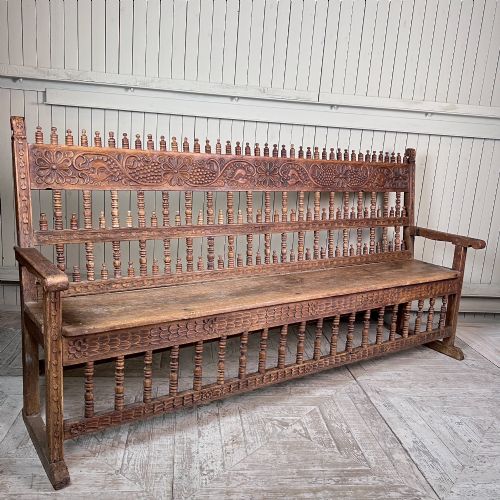


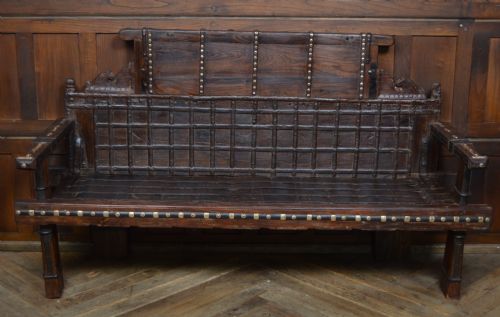


Carved Timber Settle
These carved timber settle pieces offer high-backed seating with substantial presence, bringing traditional woodwork and enduring utility into a modern interior.
Carved Timber Settle
A carved timber settle serves as a high-backed wooden bench, frequently found with panelled backs, arms, and occasionally integrated storage beneath the seat. When exploring a carved timber settle, buyers encounter variations spanning centuries, from country house elm to formal mahogany.
The selections available range from sturdy oak examples rooted in 18th century country traditions to Spanish colonial hardwood pieces and later revival styles. Oak and fruitwood dominate the forms, offering heavy timber construction designed originally to block draughts in large halls.
Many variants cross paths with hall seats, window seats, and canopied folk art forms, reflecting regional woodworking habits across Britain, Europe, and beyond. The most common versions on this page lean towards 19th century oak and hardwood interpretations with detailed carving.
Materials and construction methods
Construction relies heavily on native and imported timbers, primarily oak, mahogany, fruitwood, and elm, assembled with traditional joinery such as mortise and tenon. Carving is applied directly to solid panels, creating relief motifs that draw upon Jacobean, Gothic, and Renaissance influences.
Secondary materials such as brass fittings, wrought iron hardware, and occasional painted finishes appear on specific regional examples like Austrian and Spanish pieces. Burr elm and mahogany add decorative contrast through distinctive grain patterns on panelled fronts and seats.
Carved Timber Settle Retail Price Guide 2026
Typical asking prices for carved timber settle among the pieces listed under this phrase on Sellingantiques today, from the lower quarter to the upper quarter. They describe what is for sale here now, not the wider market.
Periods represented span from the 16th century through the 18th and 19th centuries into the Edwardian era and 1920.
Distinctions in quality and execution
Quality rests upon the proportion of the timber, the depth and crispness of the hand-carving, and the integrity of the original joints. Pieces retaining their structural timber without excessive replacement parts sit at the upper end of the scale.
The sophistication of the design dictates desirability, distinguishing simple vernacular country benches from ambitious revival pieces influenced by Gothic or Renaissance styles. Integration of functional elements, such as lift-up lids on box settles, also influences the character of each piece.
The Carved Timber Settle Glossary
- Settle
- A wooden wooden bench with a high back, solid arms, and often a closed base to keep out cold draughts. It represents an ancestor of the modern sofa.
- Box settle
- A variant featuring a hinged seat opening to a storage compartment underneath. This design maximised utility in smaller rooms.
- Jacobean Revival
- A 19th-century style copying the geometric strapwork, heavy turnings, and dark finishes of early 17th-century English furniture. It appears frequently on revival seating.
- Reformed Gothic
- A Victorian design movement focusing on structural honesty and simplified medieval motifs rather than ornate ecclesiastical decoration. It brings architectural lines to timber benches.
Carved Timber Settle: Frequently Asked Questions
Where should I place a settle?
A carved timber settle works well in a hallway, porch, or large kitchen where its high back can deflect draughts and provide substantial seating. It anchors an entranceway effectively.
Ensure you measure the depth and height carefully, as these pieces often feature substantial backs and enclosed bases that dominate smaller spaces.
How do I care for old oak?
Maintain the timber by applying a microcrystalline wax periodically to nourish the dry wood and protect the surface from moisture. Avoid placing the bench near direct heat sources.
Dust regularly with a soft cloth to prevent particulate build-up in the carved recesses of the panels.
Are settles comfortable to sit on?
Traditional wooden benches were designed for upright posture and draught exclusion rather than lounging, meaning they offer firm support. Many owners add loose cushions for everyday seating.
The seat height and depth vary significantly depending on the regional workshop and period of origin.
How can I date a wooden settle?
Dating relies on examining the tool marks, timber shrinkage, construction joints, and stylistic carving motifs relative to known historical periods. Secondary woods and nail types provide further clues.
Revival pieces from the 19th century often mimic earlier 17th or 18th century styles, requiring close inspection of the patina and wear patterns.