
Regency Gold Mirror
A regency gold mirror brings classical proportion and reflective light into a room through carved frames, convex plates and gilded surfaces.
Regency Gold Mirror
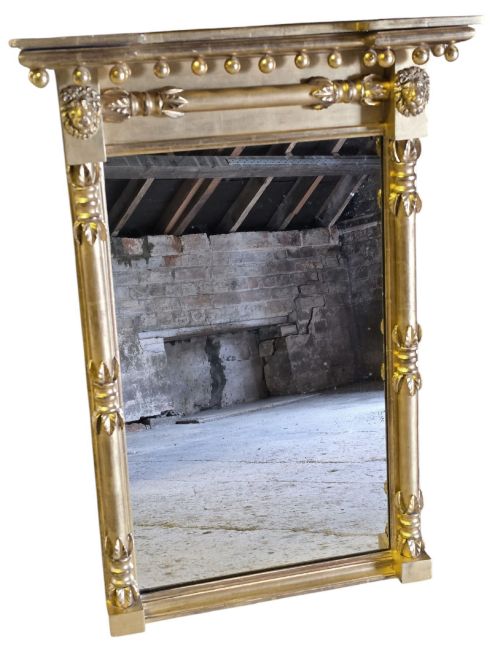
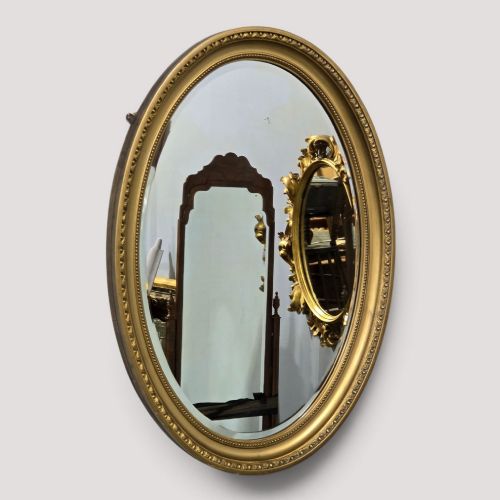
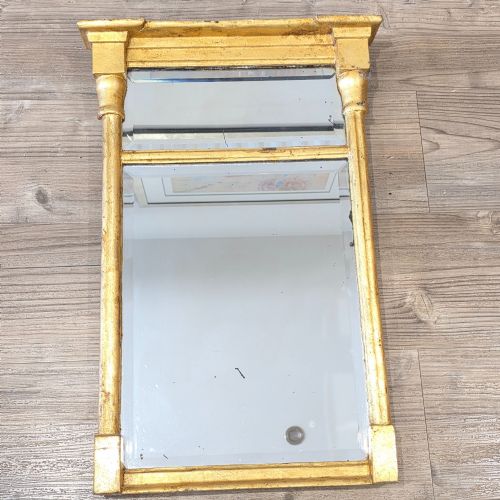
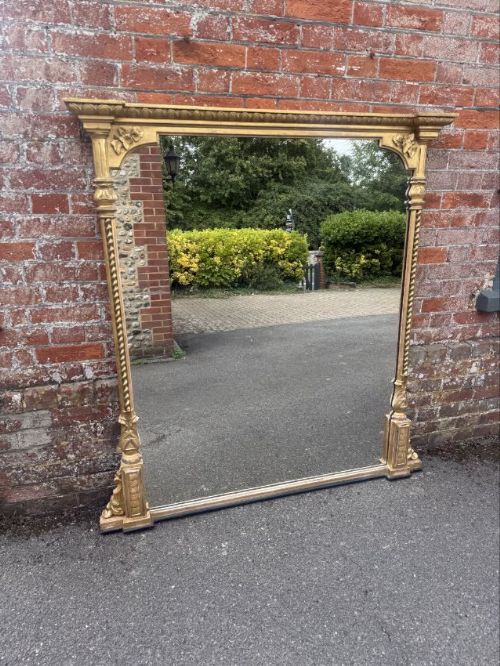
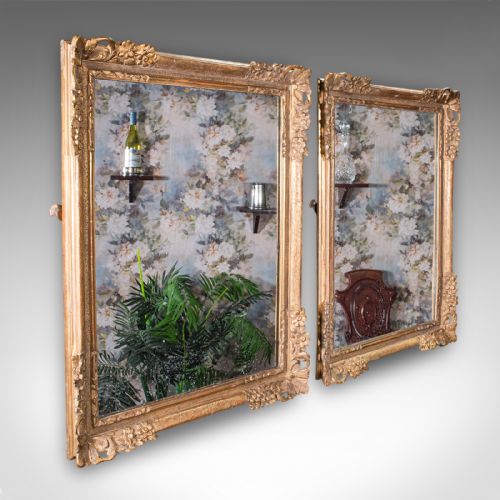
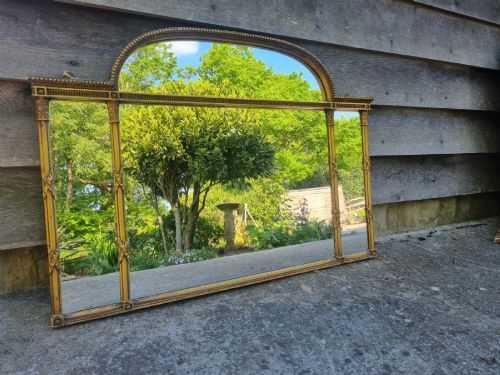
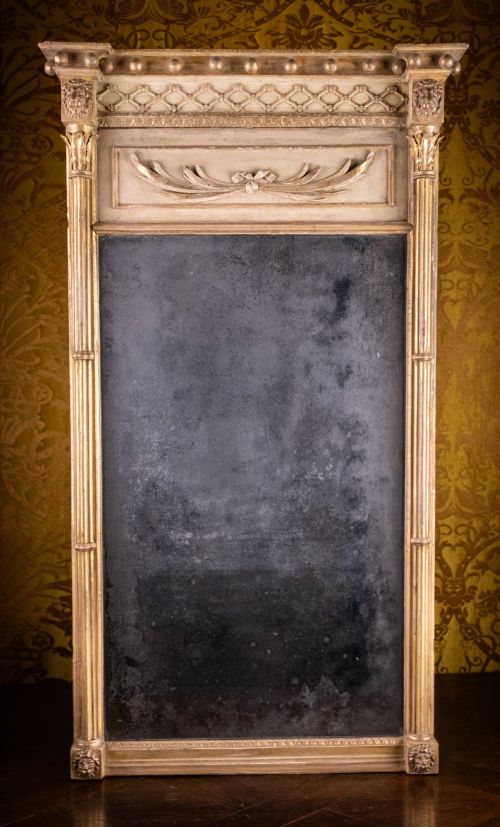
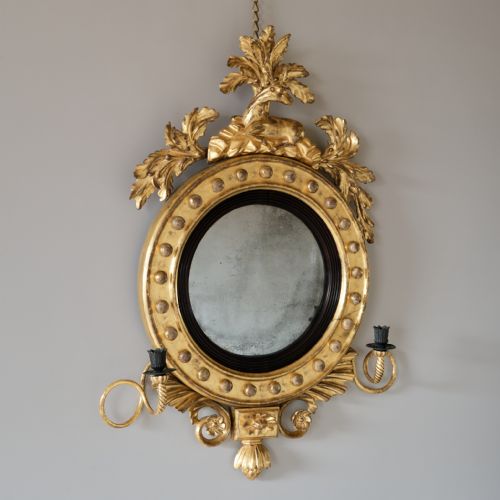
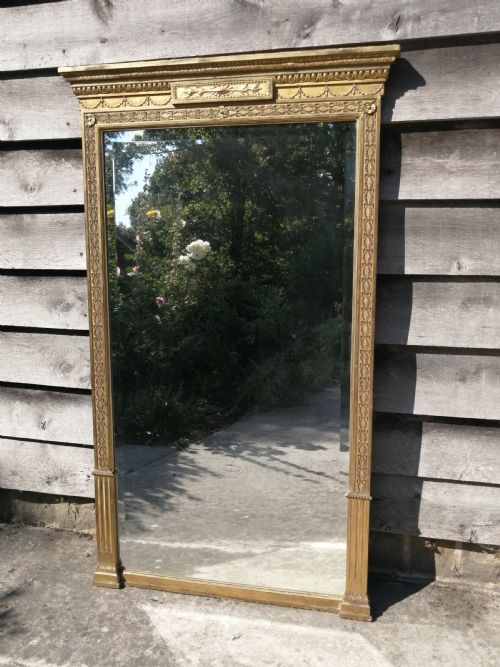
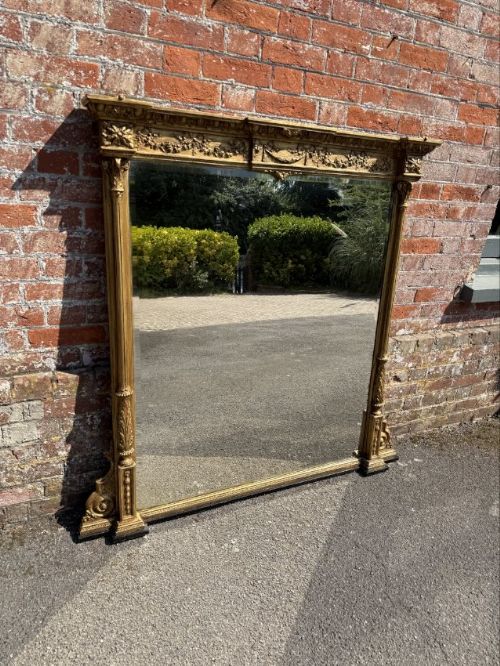
A regency gold mirror encompasses wall-hanging and overmantel forms designed to anchor a room with architectural presence. The selection here leans heavily towards nineteenth-century examples, including convex round frames and tall pier glasses.
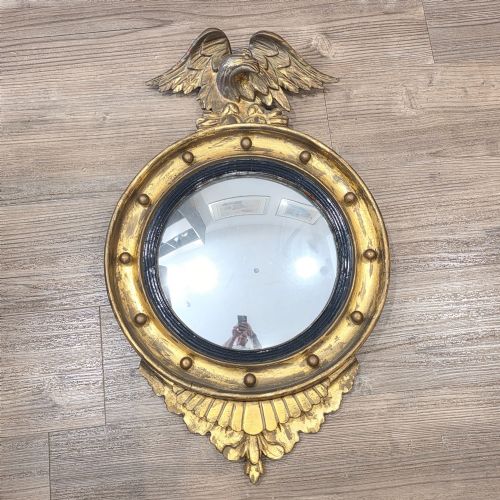
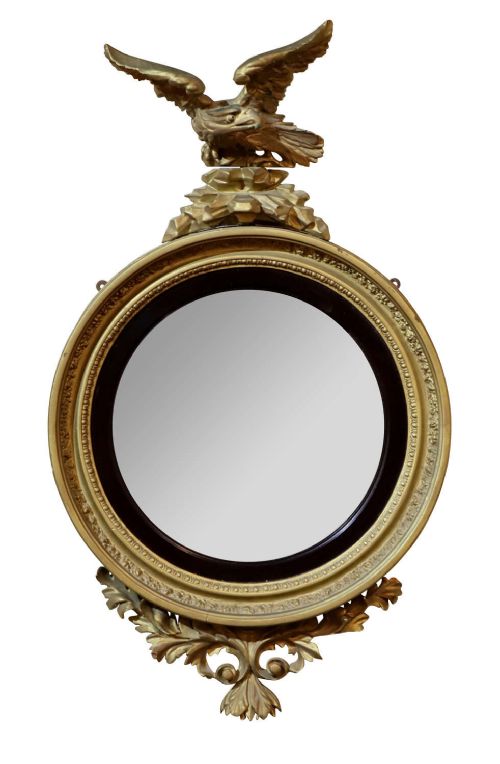
Makers of the period utilised classical motifs such as spread eagles, lion masks and rope twist moulding. These pieces range from compact circular convex glasses to large architectural overmantels meant to sit above a fireplace.
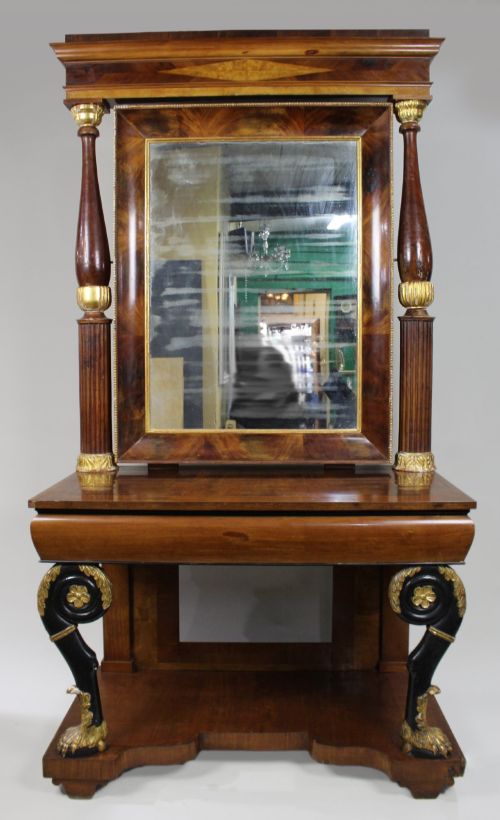
The aesthetic draws directly from neoclassical and Regency design principles, often incorporating ebonised details or verre eglomise panels alongside bright gold leaf. Buyers encounter everything from simple round butler mirrors to elaborate pier mirrors paired with console tables.
Materials and construction methods
Artisans built the primary structure from timber such as wood and mahogany, applying a layer of gesso to carve fine details like rope twists and classical figures. Gold leaf or oil gilt was then laid over the prepared surface to create a brilliant metallic sheen.
Convex and flat mirror plates were set within these frames, sometimes retaining original foxed glass that shows age through oxidation. Details like ebonised wood highlights and painted elements provided contrast against the dominant gilt finish.
Materials documented in the inventory include giltwood, gesso, verre eglomise, composition, ebonised wood and gold leaf.
Judging the standard of execution
Quality rests on the crispness of the gesso carving and the depth of the gilding, where hand-applied gold leaf differs visibly from flat modern paint. Finer examples retain their original mirror plates and structural framing without clumsy later repairs to the delicate crests.
The sophistication of the secondary decoration, such as verre eglomise panels or well-modelled eagle surmounts, separates standard regional work from pieces produced for high-status interiors.
The Regency Gold Mirror Glossary
- Giltwood
- Wood that has been coated in gold leaf or gold paint. This technique gives the frame its characteristic reflective warmth.
- Convex mirror
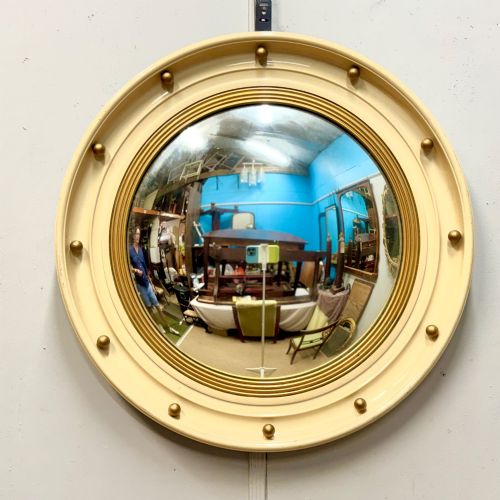
- A round mirror with a curved, bulging glass surface that reflects a wide panoramic view of the room. These often feature ball-stud frames and eagle crests.
- Pier mirror
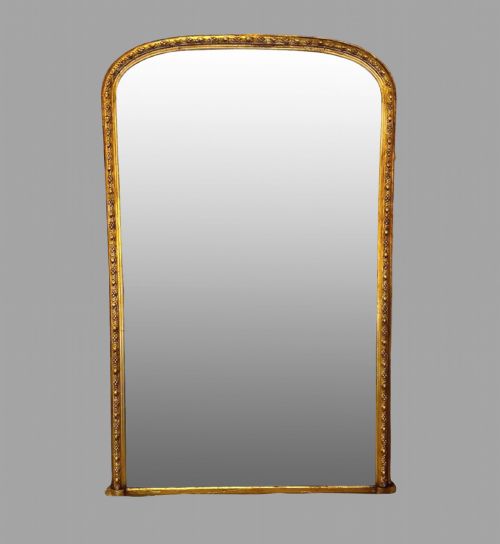
- A tall mirror designed to hang on the wall space between windows. They frequently coordinate with low console tables placed directly beneath them.
- Verre eglomise
- A cold-painting and gilding technique applied to the rear face of glass. It appears on upper panels of classical pier glasses.
- Overmantel mirror
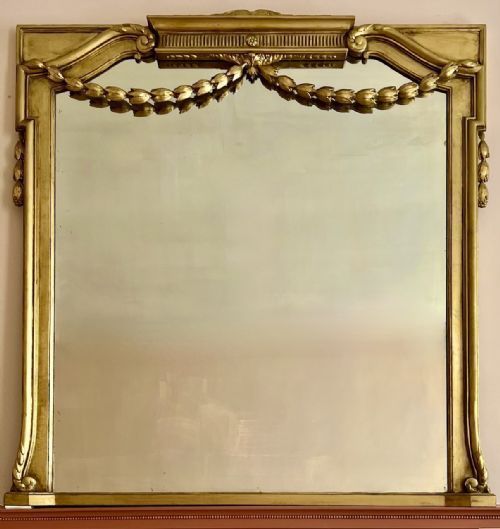
- A wide horizontal mirror built to sit on the chimney breast above a fireplace. They anchor the main wall of a reception room.
Regency Gold Mirror: Frequently Asked Questions
Where should I hang a convex mirror?
Convex mirrors work best opposite a window or in a hallway where the curved glass can capture and project light across the entire space. Because of their optical distortion, placing them at eye level in a principal room allows viewers to appreciate the full panoramic reflection.
Avoid hanging them in direct, harsh sunlight that might degrade the original gilt surface over decades. Instead, choose a neutral wall where the frame acts as a focal point.
What is the difference between a pier mirror and an overmantel?
Pier mirrors are vertically proportioned to fit narrow expanses of wall between architectural openings, occasionally pairing with console tables. Overmantels are built horizontally to stretch across the wide masonry of a fireplace breast.
While both use giltwood and gesso decoration, their shapes dictate their placement within a period interior scheme.
Are original mirror plates usually flawed?
Original nineteenth-century glass frequently exhibits foxing, which appears as dark spots or cloudy patches caused by the degradation of the backing over time. Collectors generally view minor foxing as a mark of authenticity rather than a defect.
Replacement glass is cleaner and brighter, but period plates retain the soft, uneven reflection characteristic of antique manufacture.