



Regency Glass Wine Goblets
Regency glass wine goblets are heavy lead crystal drinking vessels spanning the Georgian and Regency periods, prized for their deep bowls and faceted stems.
Regency Glass Wine Goblets
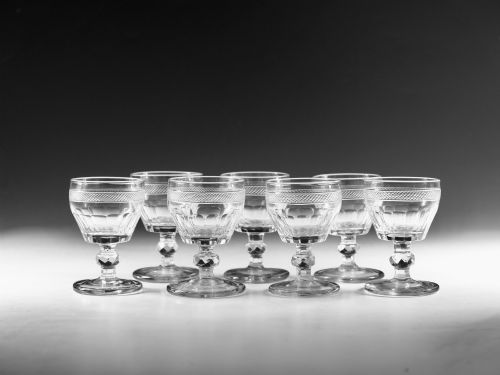
When you search for regency glass wine goblets, you encounter robust drinking vessels primarily appearing as rummers, port glasses, sherry glasses, and champagne glasses. The selection on this page centres heavily on Georgian and Regency examples alongside Victorian and eighteen-hundred period pieces.
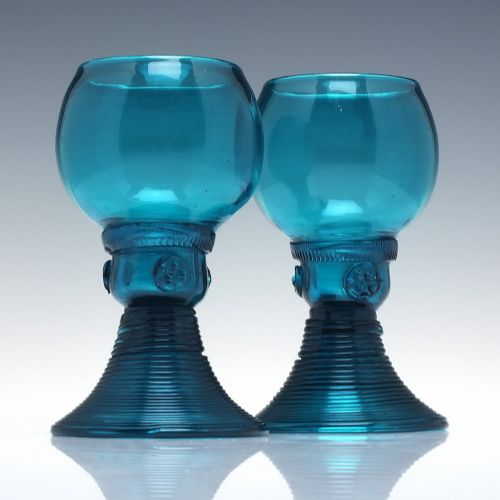
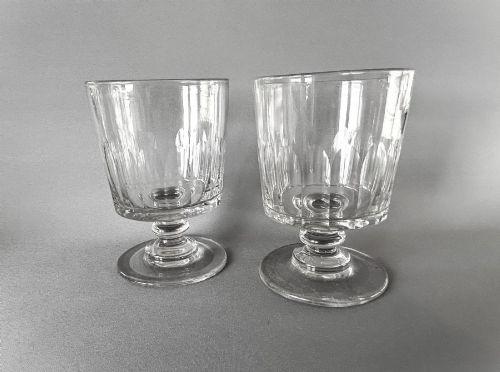
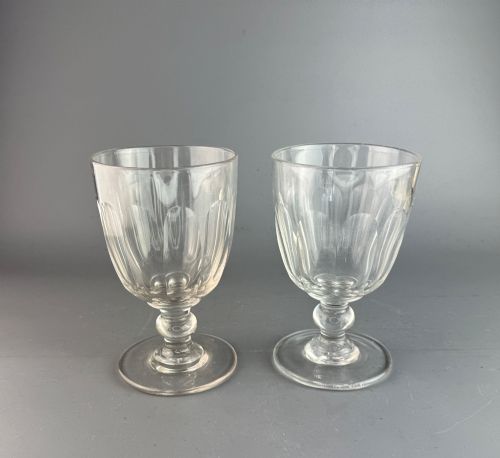
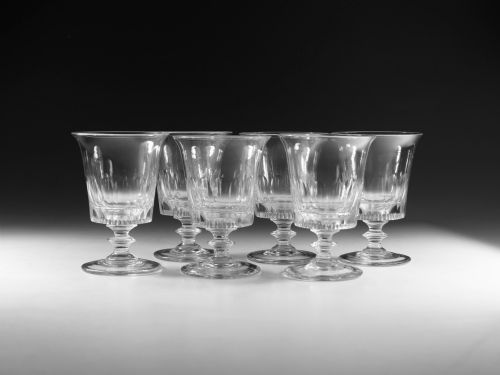
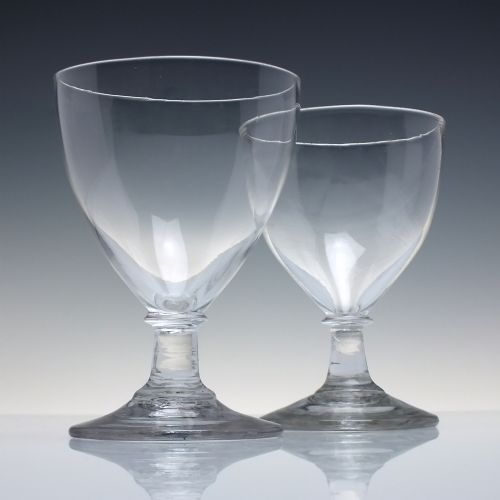
You meet distinctive forms including ovoid bowls, chunky rummers, and bucket shapes supported by heavy square lemon squeezer feet or circular bases. These pieces originate from English and Irish glasshouses, displaying both plain clear surfaces and rich coloured glass.
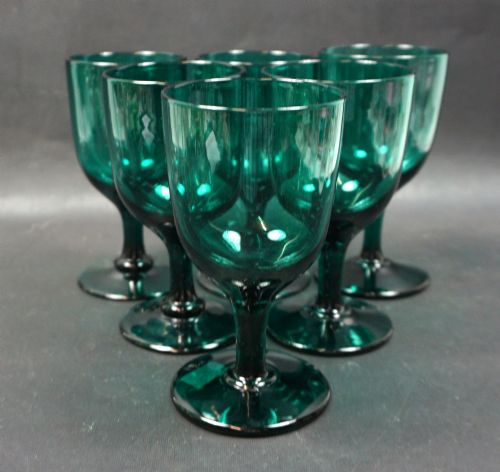
The assortment ranges from single large rummers to matched sets of six, reflecting the convivial dining habits of the early nineteenth century. Collectors find both delicate hued wine glasses in Bristol green, turquoise blue, and peacock blue, alongside weighty cut crystal.
How they were made
These vessels rely on lead crystal and flint glass, manipulated through traditional blown glass techniques to achieve substantial weight and clarity. Artisans shaped the molten metal into ovoid or bucket bowls before attaching stems and spreading feet.
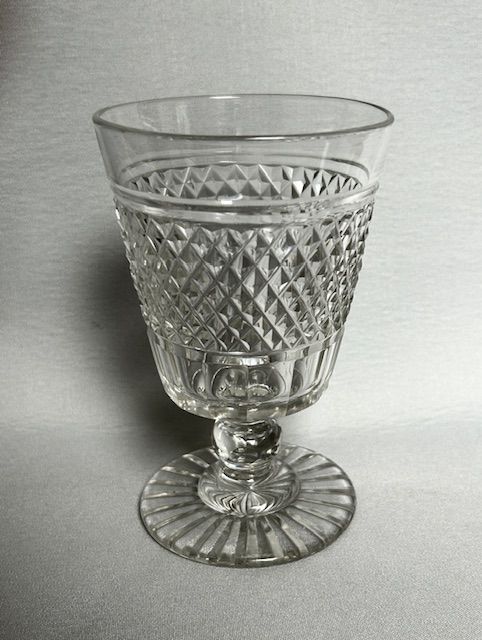
Decoration involved skilled cutting and hobnail patterns carved directly into the thick glass surface. Coloured glass variants required precise chemical additions during the melting process to produce deep shades of turquoise and green.
Regency Glass Wine Goblets Retail Price Guide 2026
Typical asking prices for regency glass wine goblets among the pieces listed under this phrase on Sellingantiques today, from the lower quarter to the upper quarter. They describe what is for sale here now, not the wider market.
If a glass wobbles slightly on its lemon squeezer foot, remember it was shaped by hand two centuries ago, not churned out by a modern machine.
What varies in quality
Quality rests in the depth and crispness of the cut glass facets, where sharp execution creates superior refraction in the lead crystal. Weight distribution also marks the distinction between ordinary vessels and finer heavy rummers.
Uniformity across a matched set of six wine glasses separates standard production from superior groups. The intensity and saturation of coloured glass, particularly in scarce turquoise or peacock blue hues, elevates the standing of individual pieces.
The Regency Glass Wine Goblets Glossary
- Rummer
- A large drinking glass popular in the Georgian and Regency eras, generally used for beer, wine, or punch. These vessels typically feature sturdy ovoid or bucket bowls.
- Lead crystal
- Glass containing a significant proportion of lead oxide, which increases weight, brilliance, and workability for cutting. This material defines the substantial feel of these goblets.
- Lemon squeezer foot
- A square, pressed glass base with sloping sides resembling a traditional kitchen lemon squeezer. This distinctive form appears frequently on early nineteenth-century rummers.
- Hobnail cut
- A decorative surface pattern of raised, pyramid-like facets created by intersecting cuts. This technique adds texture and sparkle to heavy glass bowls.
Regency Glass Wine Goblets: Frequently Asked Questions
What drinks were served in these rummers?
These large vessels were primarily used for hearty wines, ale, and punch during the Georgian and Regency periods. Their generous capacity suited the robust social drinking habits of the era.
Over time, smaller variations emerged for port, sherry, and champagne, adapting the heavy glass form to specific courses of a formal dinner.
How do I identify a Regency period glass?
Regency glasses frequently display thick lead crystal construction, ovoid or bucket bowls, and deep hobnail cutting. The presence of a square lemon squeezer foot strongly points toward this early nineteenth-century window.
Colour is another indicator, with specific shades like Bristol green and peacock blue appearing alongside clear flint glass in Georgian and Regency listings.
Are these glasses safe to use today?
While these pieces are durable lead crystal, their age and historical significance mean most modern owners prefer them for display or very careful occasional use. Hand washing in lukewarm water is essential to protect the historic glass.
Thermal shock can crack antique lead glass, so hot liquids and dishwashers must be strictly avoided.
Why do some glasses have square bases?
The square lemon squeezer foot was a hallmark of late Georgian and Regency manufacturing techniques, where glass was pressed or moulded into distinctive geometric shapes. This heavy base provided crucial stability for large rummers.
Such bases distinguish these nineteenth-century pieces from earlier round-footed wine glasses and later Victorian designs.