
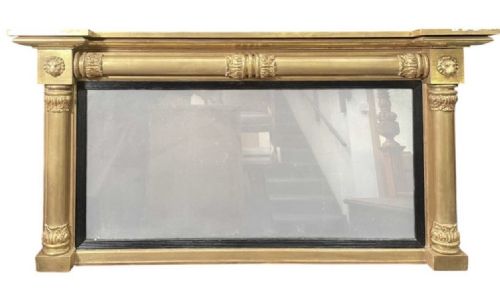
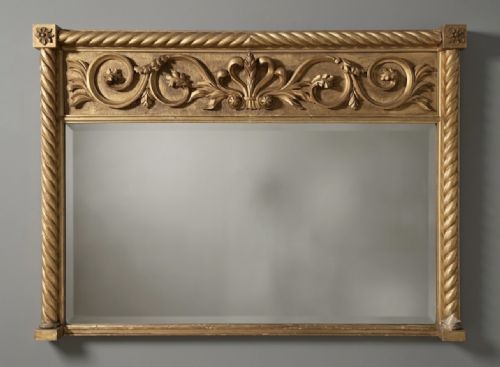
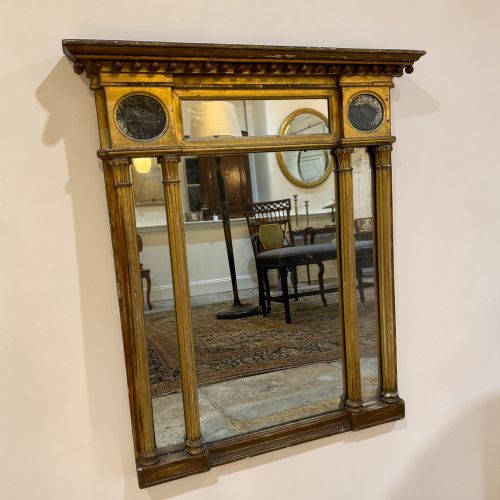
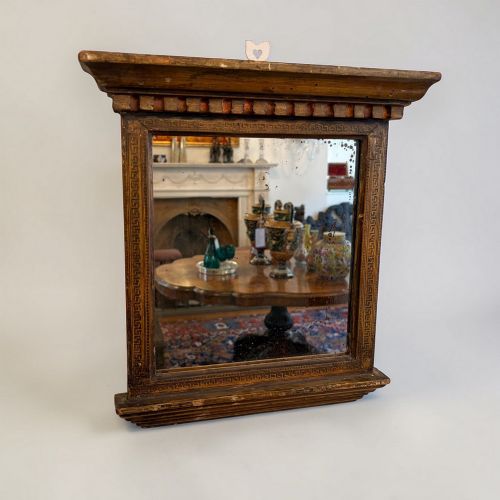
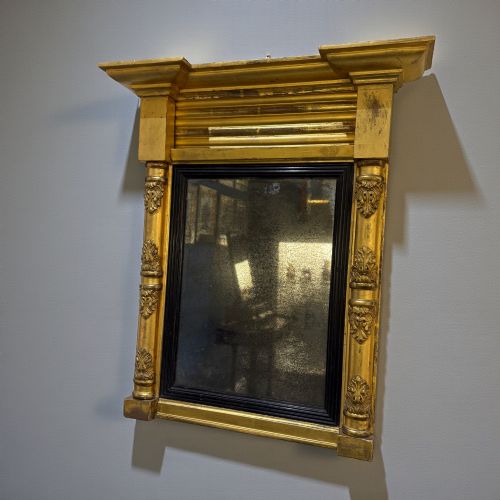
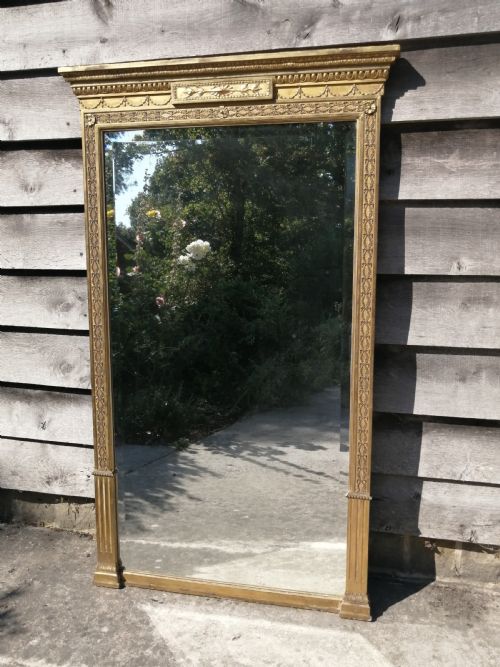
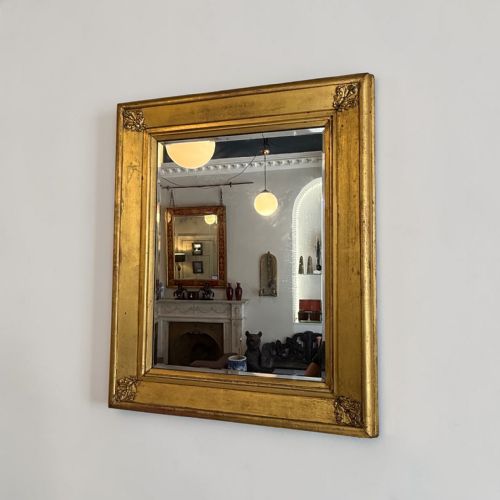
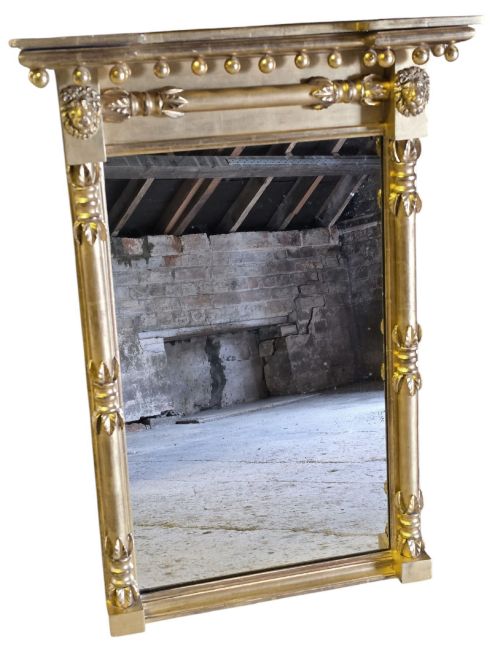
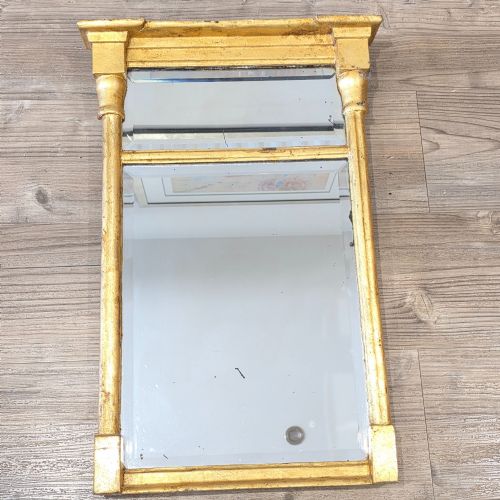
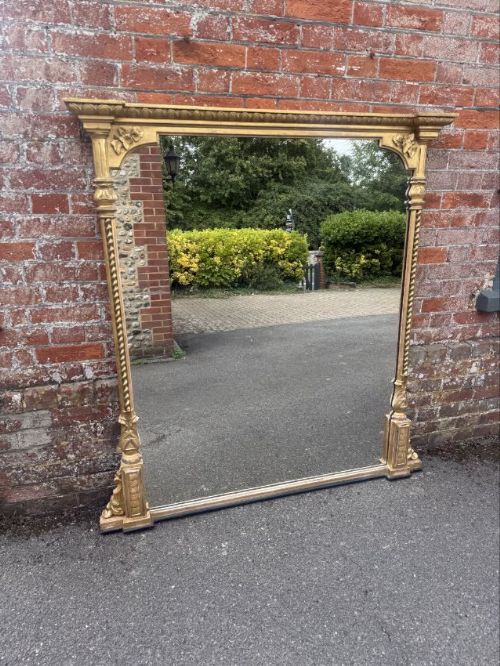
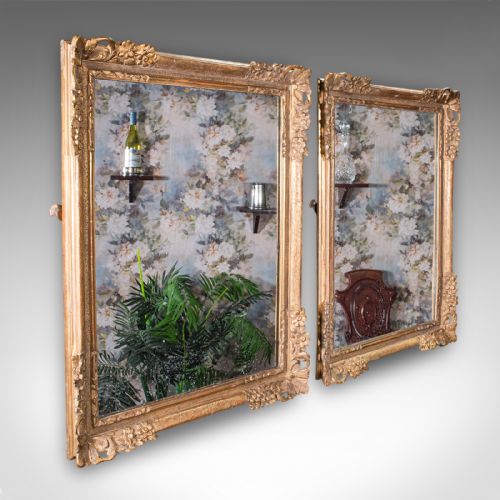
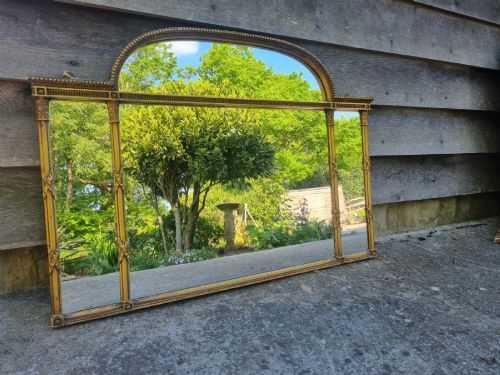
Regency Gilt Overmantel
A regency gilt overmantel brings horizontal grandeur and bright reflection to a room, historically designed to sit directly above a fireplace mantel.
Regency Gilt Overmantel
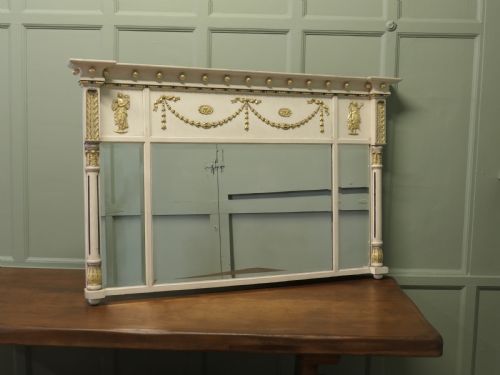
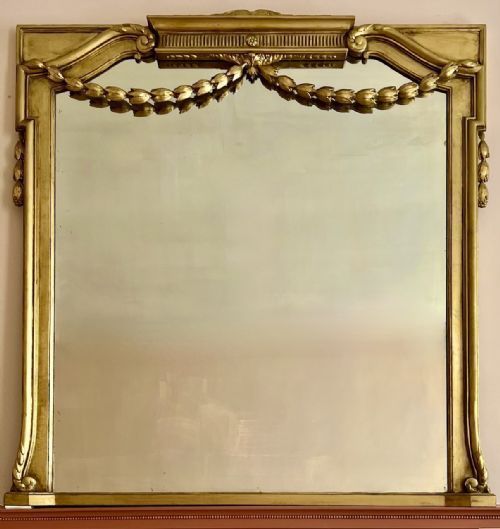
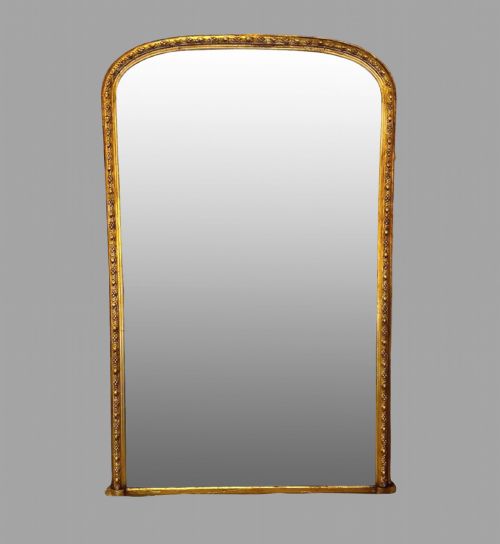
A regency gilt overmantel is a wide horizontal mirror designed to anchor the wall space above a fireplace, often featuring architectural framing or segmented plates. These objects appear frequently in forms spanning the 19th century, drawing on neoclassical design principles and subsequent Victorian revivals.
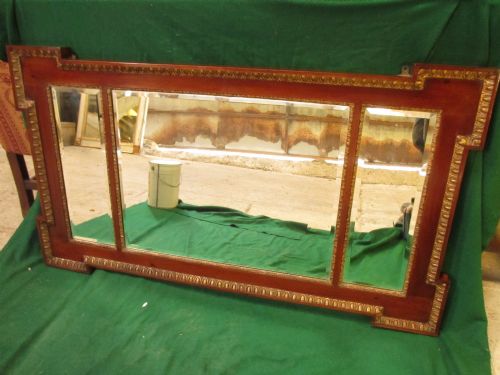
Buyers encounter both single-plate landscape formats and compartmental or triptych mirrors that divide the reflection across multiple panels. Examples range from compact country house pieces to large, imposing frames intended for formal reception rooms.
Origins trace primarily to English workshops utilising giltwood, gesso, and carved wood, with stylistic influences stretching from strict Regency periods into later 19th-century interpretations.
How they were made
Makers constructed the structural frames from timber such as wood or mahogany, applying layers of gesso to build up detailed surface ornament before gilding. Gold leaf or liquid gilding provided the bright metallic finish characteristic of these mirrors.
Decorative elements often included carved rope twists, reeded mouldings, or applied composition ornaments shaped in moulds. Glass plates were silvered by hand, frequently resulting in original surfaces that display light foxing or foxed characteristics over time.
Listings feature 19th-century materials including gesso, composition, and gold leaf applied to wood frames.
What varies in quality
Quality rests heavily on the crispness of the original carved woodwork and the depth of the gesso modelling beneath the gilding. Superior examples retain their original gold leaf surfaces and unblemished structural integrity without heavy restoration.
The nature of the glass plate also distinguishes the tier of the piece, with original silvered mirror plates or specialised verre eglomise panels holding greater historic interest than later replacements.
The Regency Gilt Overmantel Glossary
- Giltwood
- Timber carved and coated in gold leaf or metallic powder. This finish gives the frame its characteristic luminous appearance.
- Gesso
- A plaster-like mixture applied to wood frames and carved into detailed ornaments before gilding. It provides a smooth base for the metallic leaf.
- Overmantel
- A large mirror or painting designed specifically to hang above a mantelpiece. These pieces often feature wide horizontal proportions to suit the hearth below.
- Triple plate
- A mirror surface divided into three distinct vertical sections within a single frame. This layout is typical of wider Regency landscape mirrors.
- Verre eglomise
- A traditional technique where cold painting and gilding are applied to the rear face of glass. It creates a decorative panel with a deep, reflective border.
Regency Gilt Overmantel: Frequently Asked Questions
Where should an overmantel mirror be hung?
These mirrors are traditionally positioned centrally on the chimney breast directly above a fireplace mantel. Their horizontal proportions balance the width of the hearth below.
They also function effectively on principal walls in reception rooms where a wide reflective surface is desired to amplify natural light.
What is a triptych mirror?
A triptych mirror divides the reflective glass into three distinct panels framed side by side. This design prevents the glass from appearing disproportionately heavy.
Such compartmental formats were widely utilised during the Regency period to span wider fireplace openings.
How do I identify a Regency frame?
Regency frames frequently display neoclassical motifs such as reeded columns, ball-accented cavetto mouldings, and rope twist carvings. The overall geometry tends to be architectural and balanced.
Proportions are typically horizontal, aligning with the structural requirements of period fireplace surrounds.
What causes foxing on old mirror glass?
Foxing refers to the small dark spots and mottled patches that develop on antique mirror plates as the backing degrades. Moisture and atmospheric exposure over many decades cause the silvering to oxidise.
Many collectors value light foxing as a reliable indicator of an original, untouched glass plate.