
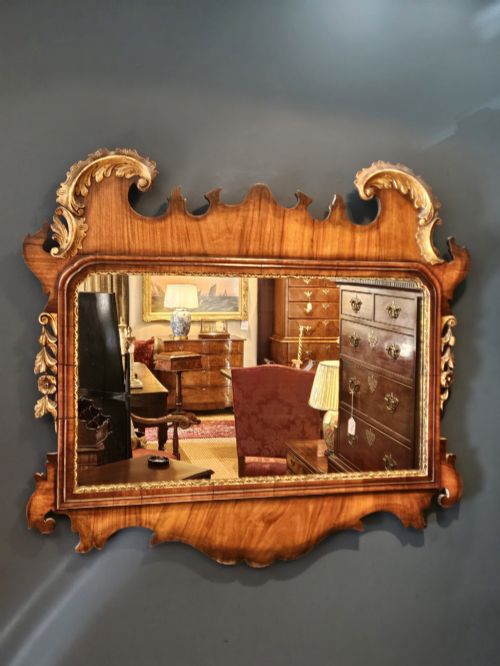


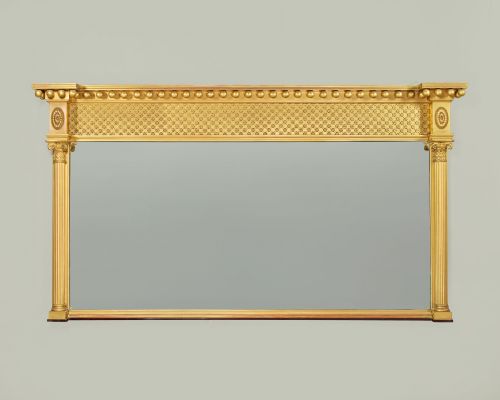
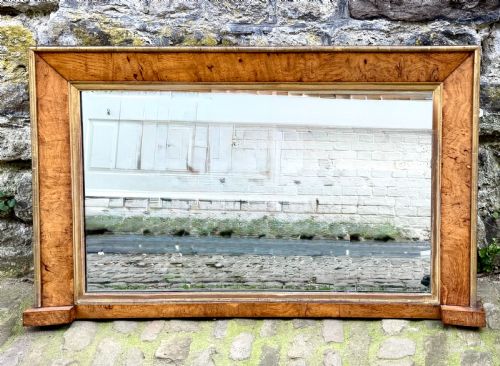


Landscape Gilt Mirror
A landscape gilt mirror brings width and presence to a room, reflecting light across horizontal proportions derived from nineteenth-century overmantel designs.
Landscape Gilt Mirror
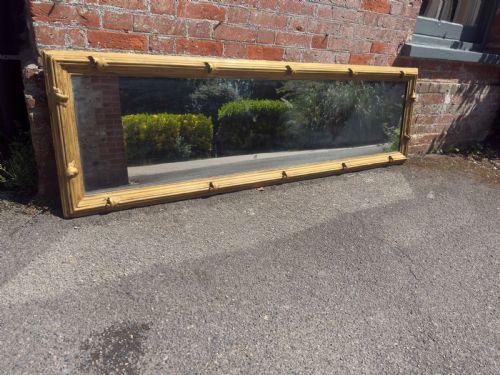
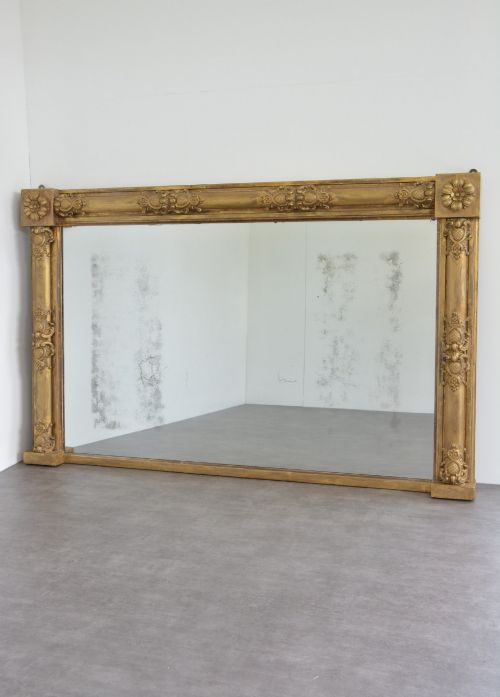
A landscape gilt mirror is designed with a horizontal orientation, primarily functioning as an overmantel or wall hanging above a fireplace or sideboard. The form encompasses nineteenth-century English and French examples alongside Georgian and Regency variations.
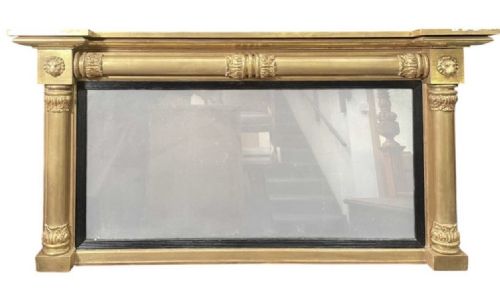
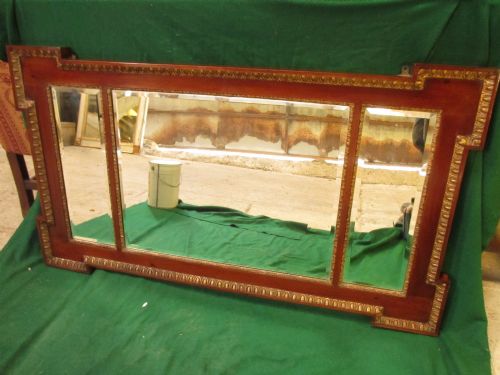
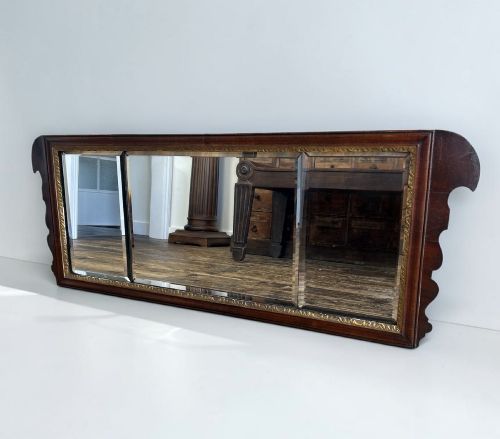
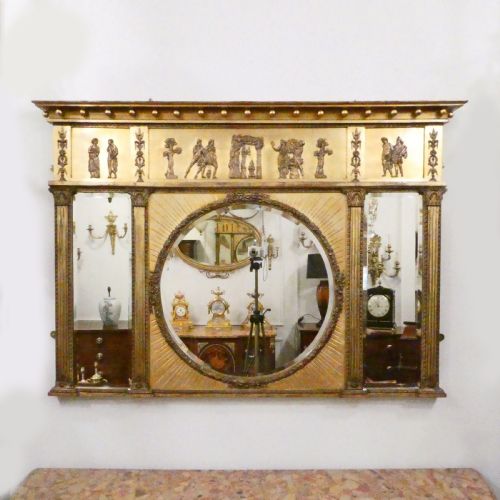
The version most commonly encountered on this page is the Regency or nineteenth-century overmantel mirror featuring a triptych or triple plate glass setup. These horizontal frames frequently incorporate neoclassical motifs such as columns, acanthus leaves, and giltwood mouldings.
How they were made
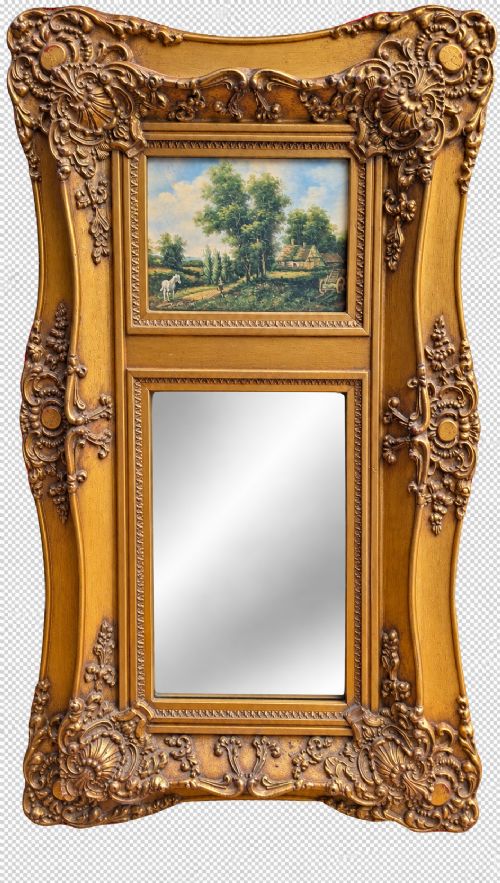
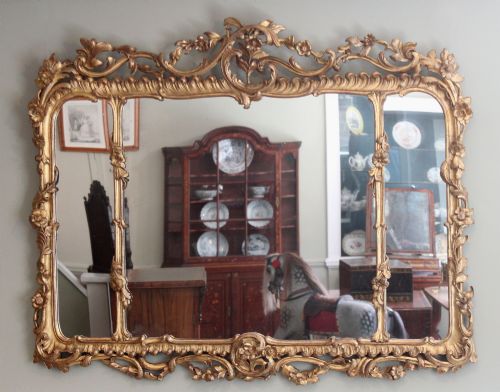
Makers constructed the structural frames from carved wood, often pine or mahogany, applying layers of gesso to build up intricate relief decoration before gilding with gold leaf or metallic paint. Parcel-gilt variations combine exposed dark timber surfaces with gilded highlights.
Reflecting surfaces rely on plate glass, sometimes arranged in multi-plate triptych formats to span wide horizontal dimensions. Older examples occasionally exhibit foxing on the glass, marking the natural ageing of the silvering behind the pane.
Certain nineteenth-century frames sneak in cheeky carved details like ho-ho birds and squirrels hiding among the foliage.
What varies in quality
Quality depends on the crispness of the carved gesso ornament and the depth of the gilding applied to the wooden substrate. Hand-carved wooden details and applied composition ornaments display distinct levels of sculptural definition.
The integrity of the original mirror plates and the proportion of the frame relative to its multi-plate arrangement dictate the visual harmony of the piece. Superior examples retain their original gilding surfaces and undamaged structural joinery.
Ciceri and Co
The Landscape Gilt Mirror Glossary
- Giltwood
- Timber that has been covered with a thin layer of gold leaf. This material defines the bright, reflective frames typical of nineteenth-century wall and overmantel mirrors.
- Gesso
- A plaster-like mixture applied to wooden frame bases to create a smooth surface for carving and gilding. Artisans modelled intricate relief decoration directly into this compound.
- Overmantel
- A large mirror designed to hang specifically above a mantelpiece. These pieces naturally assume a landscape orientation to follow the width of the fireplace below.
- Triptych
- A mirror divided into three distinct panels or plates within a single frame. This configuration frequently appears in wide Regency landscape designs.
- Foxing
- Small dark spots or cloudy patches that develop within the mirror glass over time. This chemical ageing process occurs as the backing degrades behind the glass plate.
Landscape Gilt Mirror: Frequently Asked Questions
Where should a landscape gilt mirror be hung?
These mirrors are traditionally positioned above a fireplace mantelpiece where their horizontal proportions balance the hearth opening. They also function effectively along main living room walls to reflect natural light across the interior space.
Because of their substantial width and heavy wooden frames, secure wall fixings into structural studs or masonry are necessary for safe installation.
What does triptych mean for these mirrors?
A triptych mirror contains three separate glass plates mounted side by side within one extended frame. This construction method accommodated the manufacturing limitations of large glass production during the Georgian and Regency periods.
The dividing mullions or borders between the plates help create a structured horizontal view across the room.
How do you clean a vintage gilt frame?
Giltwood and gesso surfaces require delicate maintenance because moisture and harsh cleaning agents can strip away the metallic leaf. Dusting gently with a dry, soft-bristled brush preserves the fragile raised decoration.
Glass panels can be wiped with a minimal amount of standard cleaner applied to a cloth rather than sprayed directly onto the glass, preventing liquid seepage into the antique frame.
What is foxed glass?
Foxed glass refers to mirror plates that display small, speckled age spots where the reflective silver backing has oxidized. This natural deterioration happens gradually over many decades in antique mirrors.
Many collectors value foxing as proof of age and authenticity rather than treating it as a defect to be repaired.