

Regency Flame Mahogany Furniture
Regency flame mahogany furniture brings striking timber figures and classic British proportion into a room, offering both practical storage and exceptional aesthetic presence.
Regency Flame Mahogany Furniture
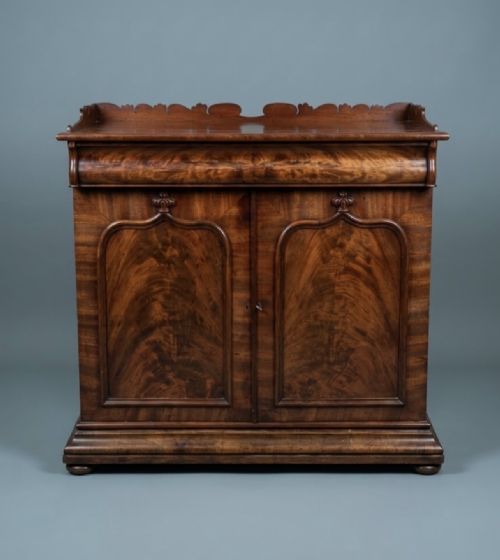
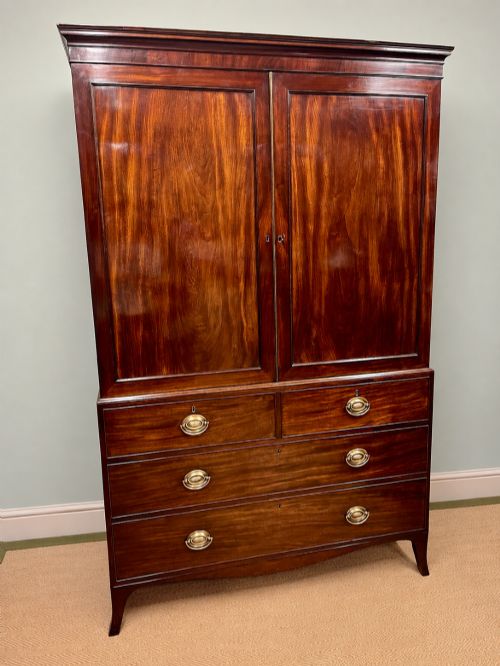
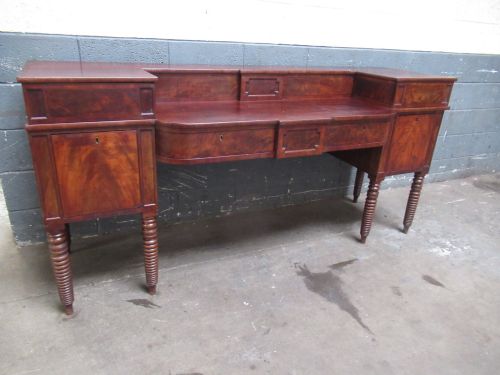
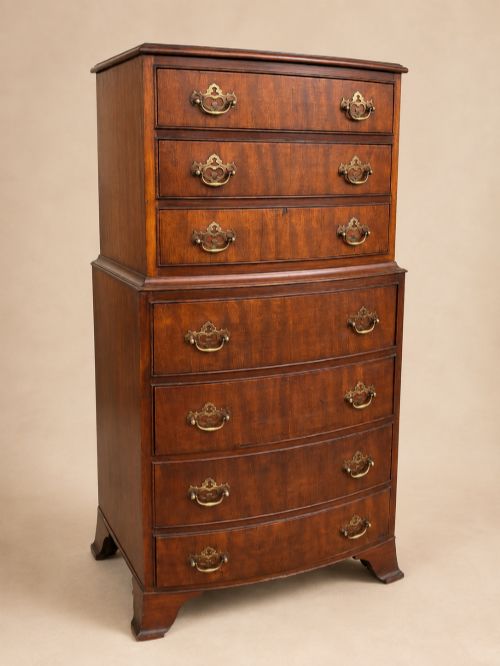
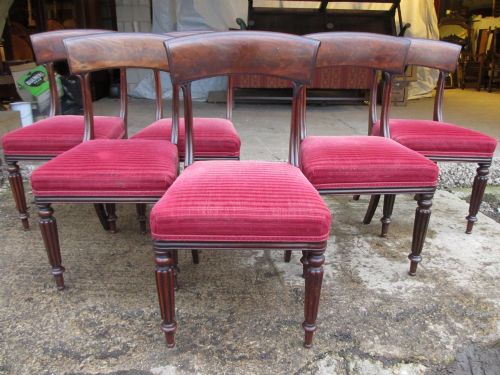
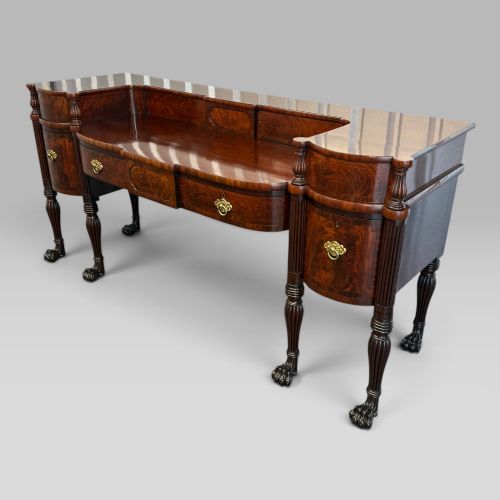
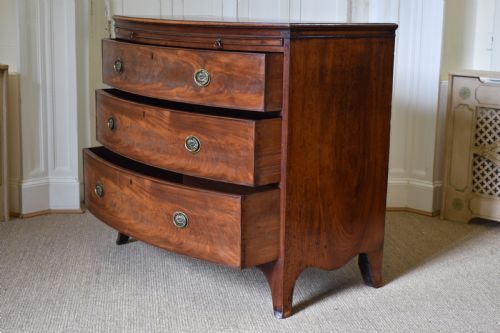
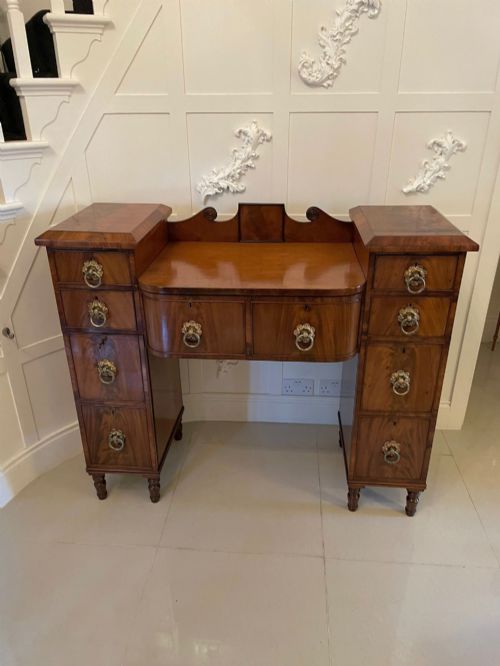
When searching for regency flame mahogany furniture, buyers encounter substantial timber pieces designed during the early nineteenth century and associated periods. The selection on this page centres on case furniture, with chests of drawers, sideboards, linen presses, and wardrobes appearing most frequently alongside bookcases and dining chairs.
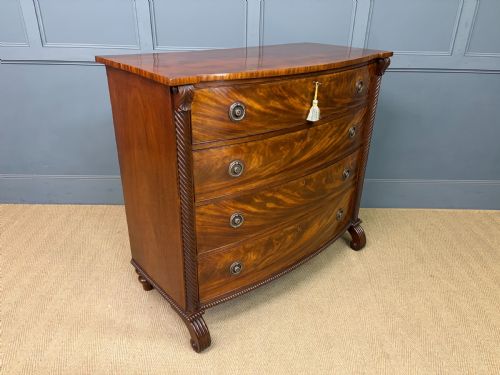
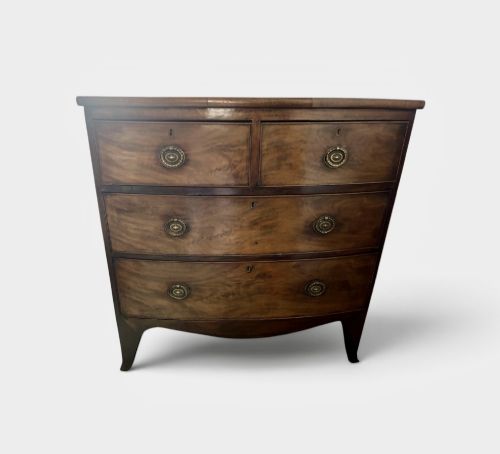
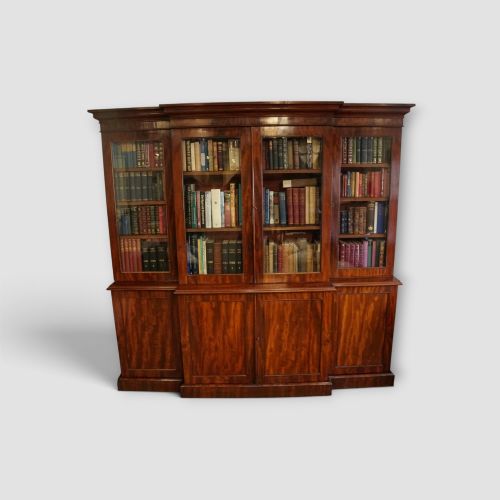
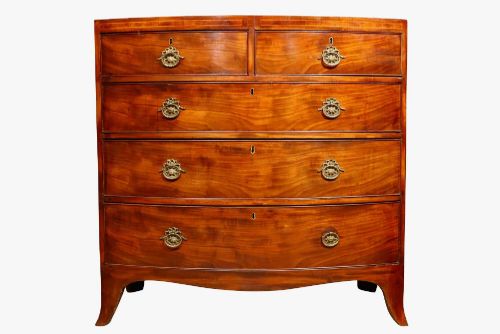
Originating largely from Regency, Georgian, and William IV eras, these items reflect the tastes of the early 1800s. Pieces frequently display bow fronts or breakfront forms, incorporating secondary timbers such as oak alongside the primary mahogany.
Scottish and English regional variations emerge among the sideboards and chests, showing distinct local preferences in proportion and detail. Buyers meet practical domestic items built for daily use, from small bedside chests to large library bookcases.
What Varies in Quality
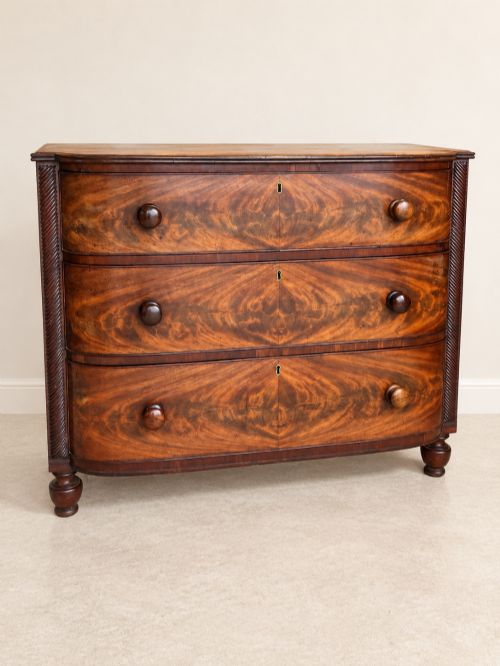
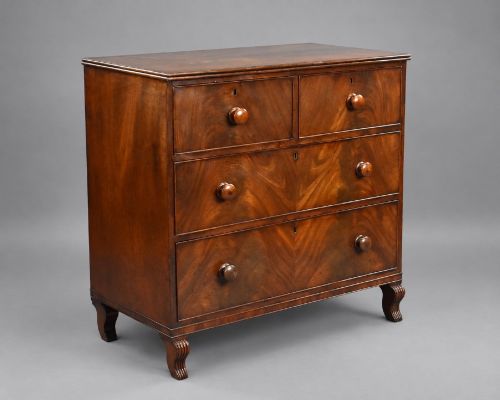
The visual impact of the timber grain sets the hierarchy among these pieces, as high-grade flame mahogany displays rich, symmetrical figuring across prominent drawer fronts and doors. Lesser examples rely on plain mahogany planks with minimal movement in the grain.
Originality of surface finish, brass hardware, and structural elements determines the standing of an item. Pieces retaining their early patination and secondary timbers without extensive modern timber replacement sit at the upper end of the scale.
Listings feature extensive Regency, Georgian, and William IV examples, dominated by mahogany, flame mahogany, brass, and oak.
Gillows·Walker Lancaster·S and H Jewell·Gillingtons
The Regency Flame Mahogany Furniture Glossary
- Flame mahogany
- A veneer cut from the branch junction of the mahogany tree, producing a distinctive, fiery feather pattern. Cabinet makers reserved this highly decorative timber for the principal display surfaces of chests and sideboards.
- Bow front
- A convex curved front contour popular on chests of drawers and sideboards during the Regency period. This shape softens the room presence of large case furniture.
- Breakfront
- A cabinet or bookcase design where the central section projects forward from the flanking wings. It creates architectural depth and visual weight.
- Linen press
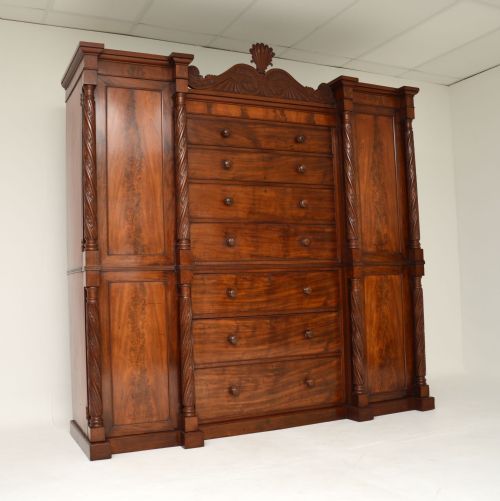
- A tall storage piece featuring upper sliding trays for textiles and lower drawers for bulkier garments. These items combine wardrobe capacity with modular internal storage.
- Secretaire
- A desk disguised as a standard drawer chest or sideboard component, featuring a fall-front writing surface concealing small pigeonholes and inner compartments. It allowed writing tasks without requiring a dedicated bureau.
Regency Flame Mahogany Furniture: Frequently Asked Questions
What is regency flame mahogany furniture?
It encompasses domestic storage and display pieces built during the early nineteenth century using mahogany timber selected for its dramatic grain figure.
Items range from dining chairs and chiffoniers to large breakfront bookcases and chests of drawers.
How do I identify a flame mahogany veneer?
Look for swirling, symmetrical grain patterns that resemble flickering flames across drawer fronts or cabinet doors. This effect comes from cutting veneer near branch junctions.
Plain mahogany lacks this characteristic feathered movement and appears as straight grain.
Were these pieces used for dining?
Dining rooms of the period utilised sideboards, cellarettes for wine storage, and sets of dining chairs alongside larger storage pieces.
Sideboards managed the serving of meals and housed silverware or linens.
How do I care for antique mahogany?
Keep wooden pieces away from direct heat sources and strong sunlight to prevent the mahogany finish from fading or drying out. Regular dusting with a dry cloth maintains the surface patination.
Occasional waxing protects the timber without building up heavy residues.