

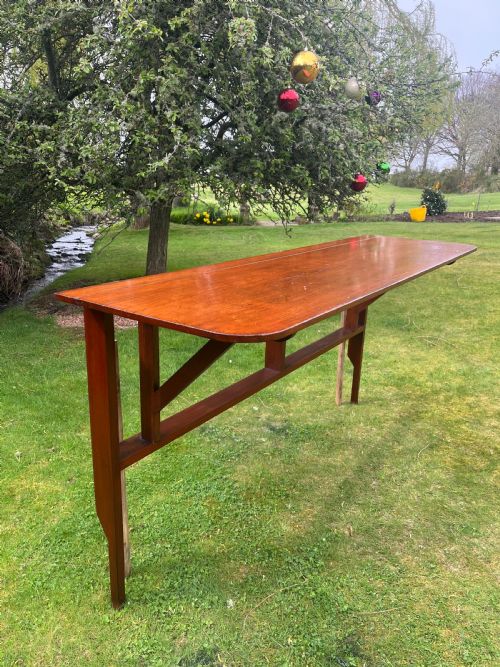

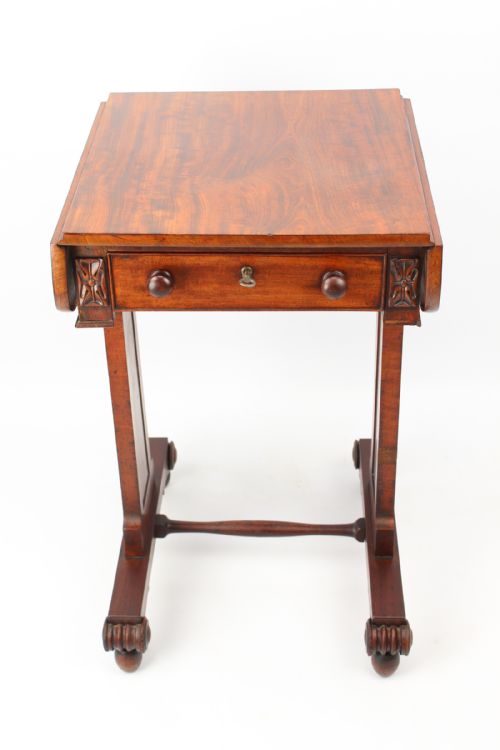

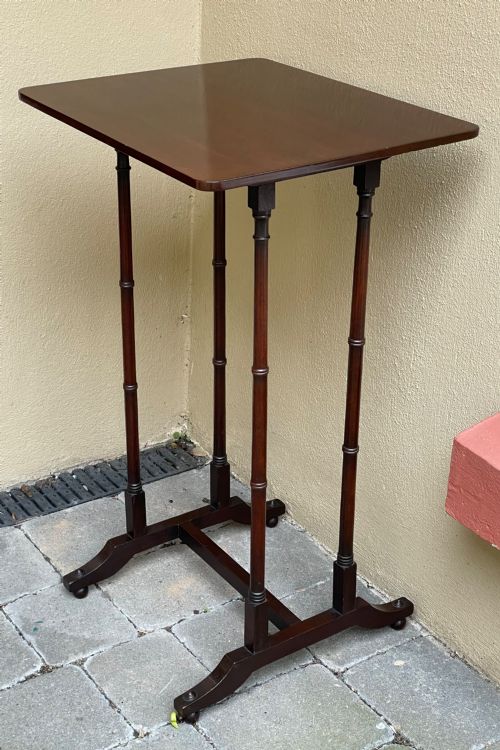


Mahogany Trestle Side Table
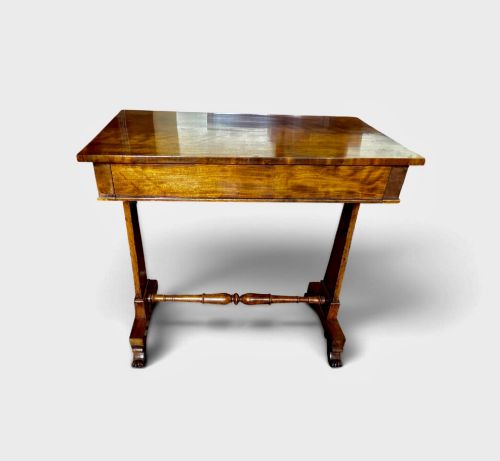
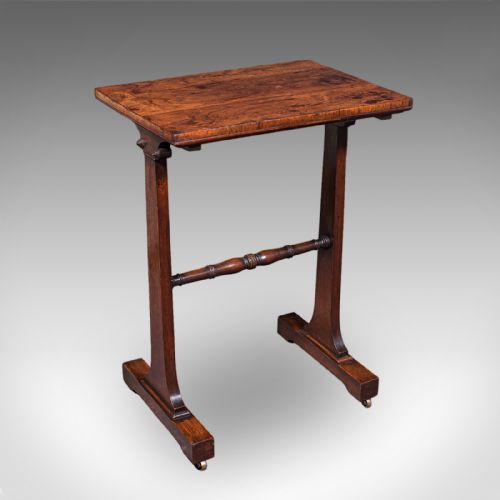
A mahogany trestle side table brings dependable utility and rich timber grain to a room, drawing on Regency, Victorian and Georgian design traditions.
Mahogany Trestle Side Table
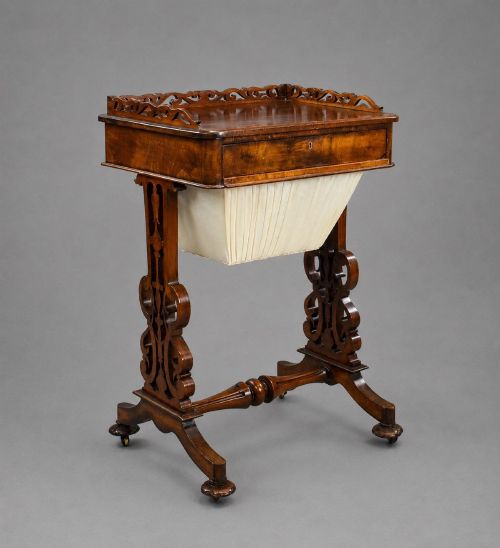
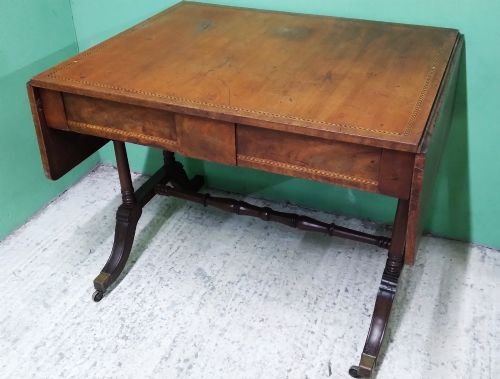
The mahogany trestle side table appears in forms ranging from compact lamp tables and drop-flap occasional pieces to library desks and sofa tables. These pieces span Georgian, Regency, William IV and Victorian periods, reflecting shifting domestic needs across the nineteenth century.
Makers often constructed these supports with double pedestals, cross frames or end standards to provide stability without heavy corner legs. Buyers encounter side tables, writing desks and window tables sharing this functional underframe architecture.
Proportions vary from diminutive nineteenth century examples designed for tight spaces to larger library and console tables intended for country house morning rooms. Walnut alternatives are absent here, with dense mahogany dominating the structural timber.
Materials and construction
Makers utilised solid mahogany and flame mahogany veneers over secondary timbers such as pine, occasionally incorporating contrasting yew veneer tops. Surface detailing often relies on brass fittings, leather writing inserts and fabric accents.
The underframes depend on robust joinery to support drop flaps, drawers and writing surfaces. Timber selection prioritises figured grain on prominent surfaces, paired with stable framing beneath.
Listings span Georgian, Regency, William IV and Victorian periods, using mahogany, flame mahogany, brass, leather, fabric, pine and yew.
Judging construction and finish
Quality rests on the depth of the mahogany grain, the crispness of turned or carved trestle supports, and the integrity of drawer linings. Tables featuring flame mahogany veneers or secondary timbers like yew demonstrate higher ambition in the workshop.
Integration of brass mounts, functional drawers and leather or fabric inserts separates standard utility furniture from finer library and writing tables. The harmony of proportions between the top and the trestle base determines the success of the piece.
Gillows Library Tables·Gillingtons Dublin·Heal & Son
The Mahogany Trestle Side Table Glossary
- Trestle
- A support structure consisting of two or more vertical frames connected by a horizontal beam. This design provides sturdy leg clearance beneath small tables and desks.
- Sofa table
- A rectangular occasional table traditionally placed in front of or beside a sofa, often fitted with drop leaves and small drawers. These pieces frequently utilise double pedestal or trestle bases.
- Flame mahogany
- A veneer cut from the fork of the mahogany tree where the branch meets the trunk. The resulting timber exhibits a flickering, highly decorative grain pattern.
- Drop-flap
- A hinged leaf attached to the main top of a table that can be raised to extend the surface area. It provides flexibility in smaller rooms.
- Library table
- A large freestanding table used for reading and writing, often equipped with drawers for stationery. These examples represent the more formal end of domestic furniture.
Mahogany Trestle Side Table: Frequently Asked Questions
What is a mahogany trestle side table used for?
These tables function as surface space for lamps, books and serving items in living areas and hallways. Many examples include drawers or drop flaps to accommodate writing and sewing tasks.
Their compact footprints make them versatile additions beside seating or against walls in period interiors.
How do I identify a Regency period table?
Regency tables typically display restrained classical lines, dark mahogany timber, and sometimes brass inlay or gilt bronze mounts. The proportions remain balanced and architectural, influenced by ancient Roman and Greek forms.
Look for crisp turning on the trestle supports and subtle reeded details rather than heavy Victorian carving.
Are these tables suitable for daily use?
Solid mahogany and sturdy trestle construction make these pieces well-suited for everyday living and placement in active rooms. The durable timber withstands regular handling while maintaining its structural stability.
Simple maintenance keeps the polished finish and wood grain protected against daily wear.
What is the difference between a side table and a sofa table?
Side tables generally feature fixed tops and stand against walls or beside chairs for general placement. Sofa tables are traditionally longer and narrower, often featuring drop leaves on either side to expand the surface.
Both forms utilise trestle or pedestal frames to keep floor space clear beneath the top.