

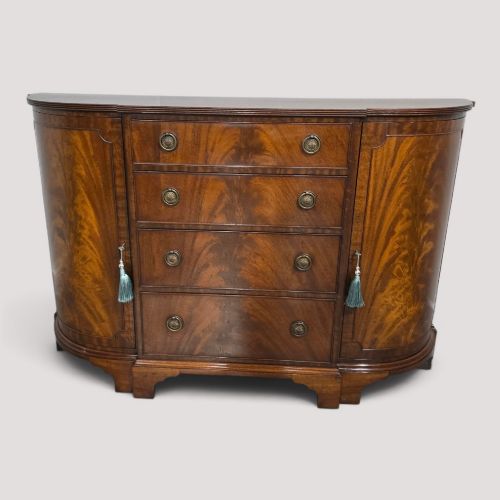
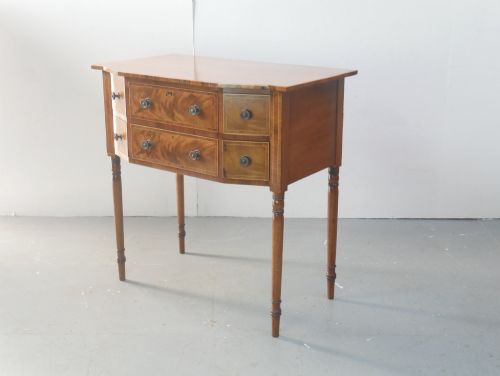
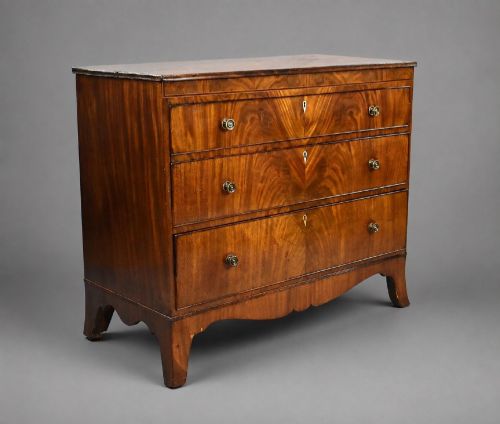
Regency Flame Mahogany Chest
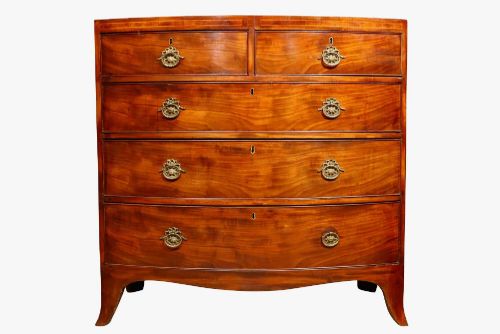
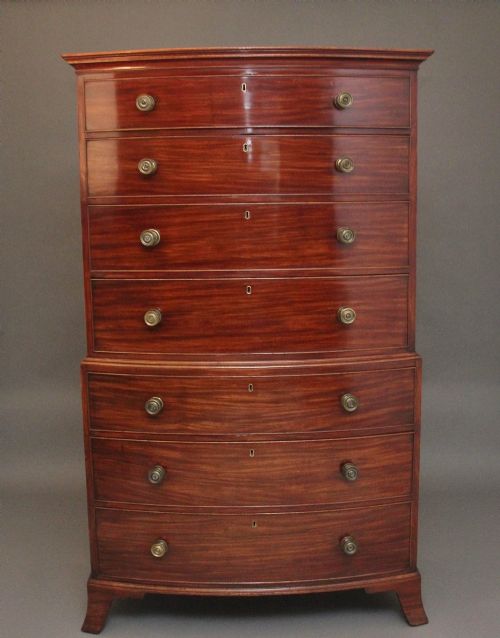
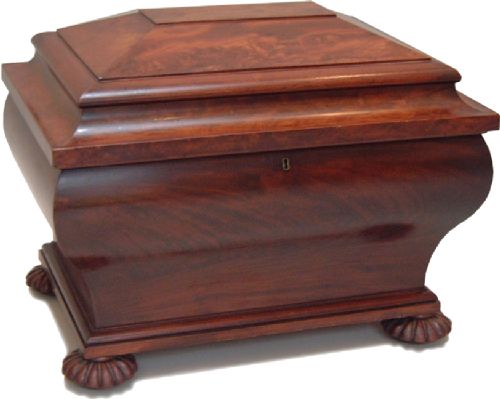
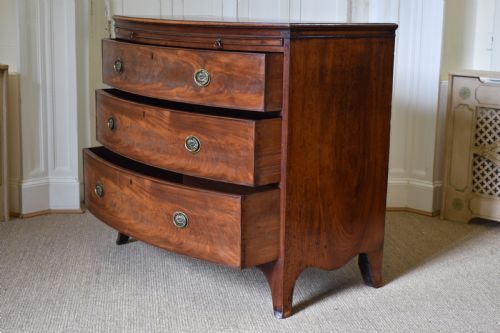
A regency flame mahogany chest brings commanding wood grain and architectural presence into a room, making it a focal point for storage and display.
Regency Flame Mahogany Chest
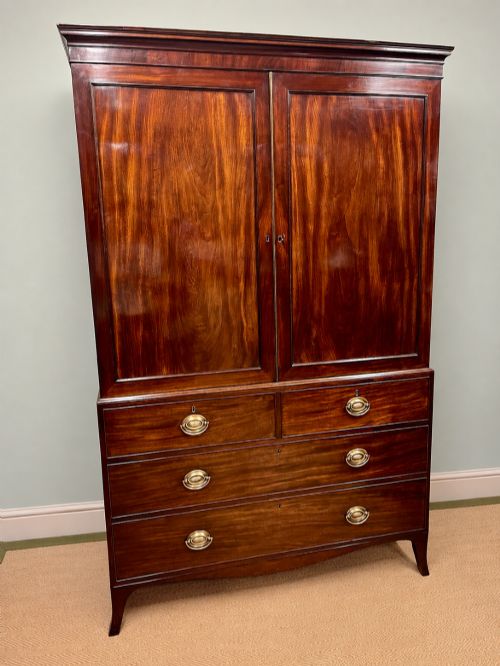
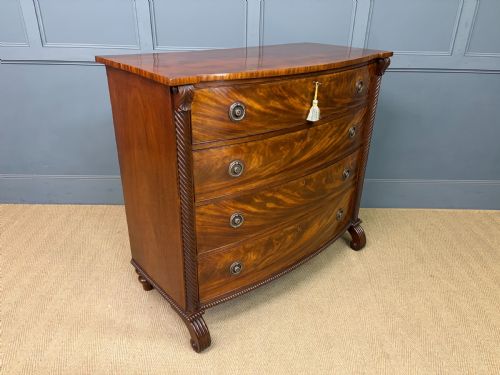
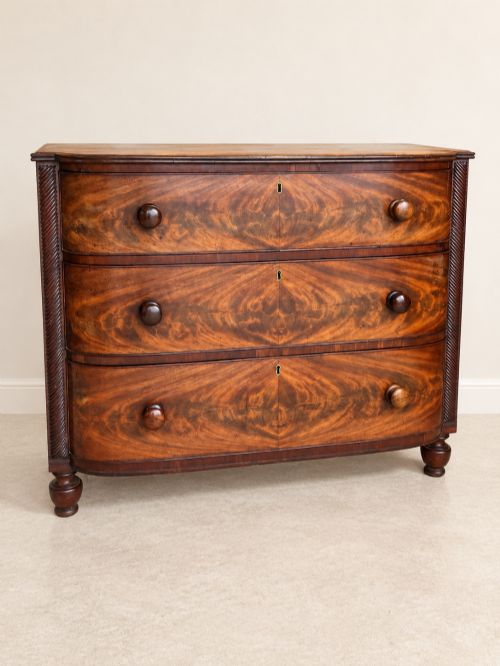
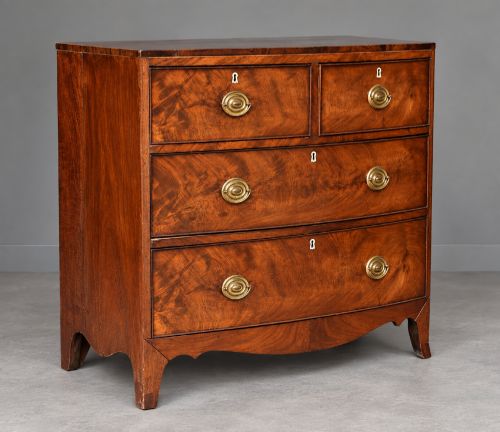
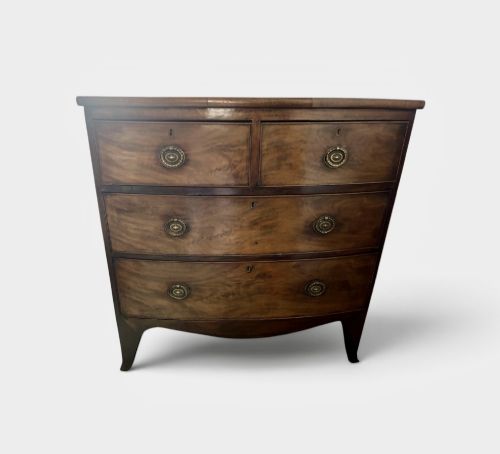
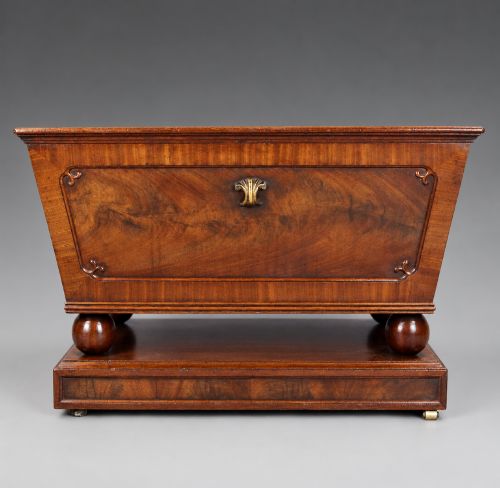
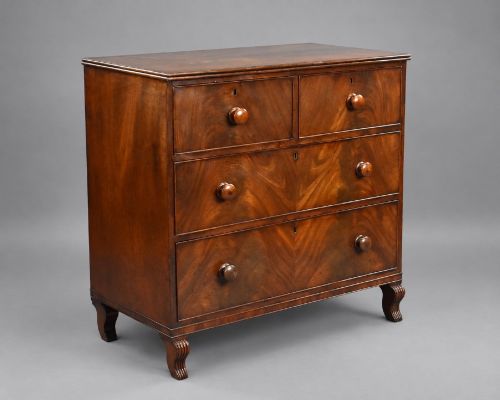
When searching for a regency flame mahogany chest, buyers encounter substantial case furniture built primarily during the late Georgian and Regency periods, predominantly taking the form of bow-fronted or straight-fronted chests of drawers.
The examples on this page trace origins from English and Scottish workshops, featuring stacked drawer configurations that often include secretive top drawers or gentleman's dressing fittings.
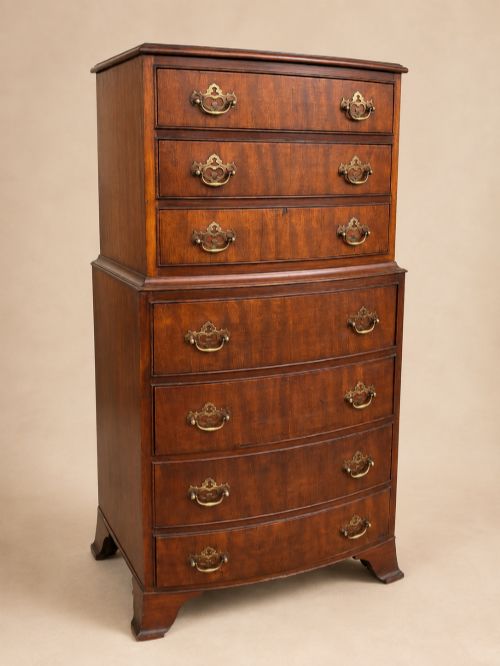
Beyond standard drawer units, the category stretches to encompass related storage forms such as linen presses, tallboys, and secretaire desks designed with drop-front writing surfaces.
How They Were Made
Cabinetmakers constructed the main carcases from sturdy secondary timbers like oak and pine, applying highly figured mahogany veneers across the visible drawer fronts and top surfaces to create striking visual patterns.
The distinctive flame figure arises from slicing timber taken from branch forks or specific growth points of the mahogany tree, which artisans then book-matched symmetrically across drawer facades.
Secondary materials such as brass for handles, escutcheons, and paw feet, alongside occasional bone or satinwood stringing inlay, completed the construction of these substantial pieces.
Listings demonstrate that Scottish Regency chests frequently incorporated solid oak drawer linings alongside their dramatic flame mahogany veneers.
What Varies in Quality
The visual impact of a regency flame mahogany chest depends heavily on the symmetry, boldness, and preservation of the veneer patterns chosen by the original cabinetmaker.
Structural integrity is evident in the choice of secondary woods for drawer linings, such as solid oak instead of lighter alternatives, and the precision of the dovetail joints connecting the drawer boxes.
Refinement shows in the subtlety of edge banding, the integration of working locks with original keys, and whether secondary elements like feet and brass hardware remain period-correct.
Gillows of Lancaster
The Regency Flame Mahogany Chest Glossary
- Flame mahogany
- A veneer cut from the branch junctions of the tree, yielding a fiery, feather-like grain pattern. This timber was prized for high-status furniture fronts.
- Bow front
- A convex, curved cabinet front that projects outward in a smooth arc. This shape defined much of the fashionable case furniture of the period.
- Secretaire
- A cabinet or chest featuring a fitted pull-out drawer with a drop front that conceals a writing surface and small compartments. It combined desk and drawer storage.
- Linen press
- A tall piece of furniture featuring upper cupboard doors enclosing sliding trays, sitting above a chest of base drawers. Originally utilised for storing folded linens.
- Tallboy
- A tall chest of drawers made in two stacked sections, often combining a chest on chest configuration. It maximised vertical storage space in bedrooms.
Regency Flame Mahogany Chest: Frequently Asked Questions
How do I spot original flame mahogany?
Original veneer work displays a deep, warm patina developed over centuries, showing natural undulations in the surface rather than a uniform modern finish.
Closer inspection reveals hand-cut veneer thicknesses and subtle variations in the grain matching that machine-sawn replacements cannot replicate.
Where should I place a chest?
These robust pieces suit bedrooms, hallways, or living spaces where their architectural drawer fronts provide a strong focal point.
Keep them away from direct sunlight and heat sources to protect the delicate mahogany veneers from drying out or splitting.
What is a secretaire drawer?
A secretaire drawer is the top drawer of a chest fitted with a hinged front that folds down to reveal small pigeonholes and writing surfaces.
This clever dual-purpose design allowed owners to write letters without needing a separate standalone desk in the room.
How do I care for the wood?
Maintain the finish by dusting regularly with a soft cloth and applying a traditional beeswax sparingly to nourish the timber.
Avoid silicone-based polishes, which can sink into the old pores of the mahogany and attract dust over time.