




Regency Fish Eye Mirror
A regency fish eye mirror gathers a whole room into a single curved glass plate, offering a curious optical sweep that masters space.
Regency Fish Eye Mirror
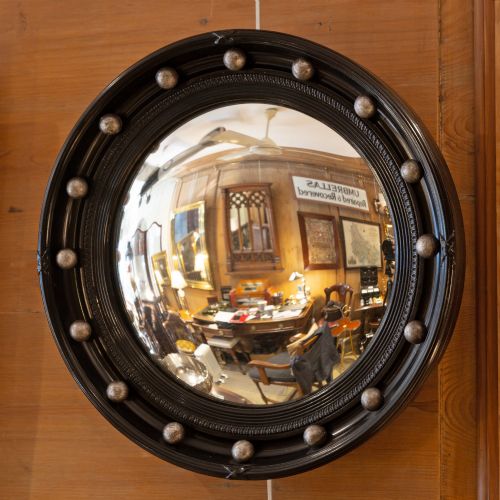
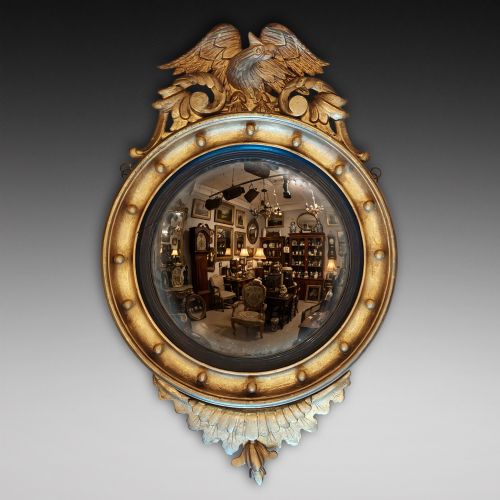
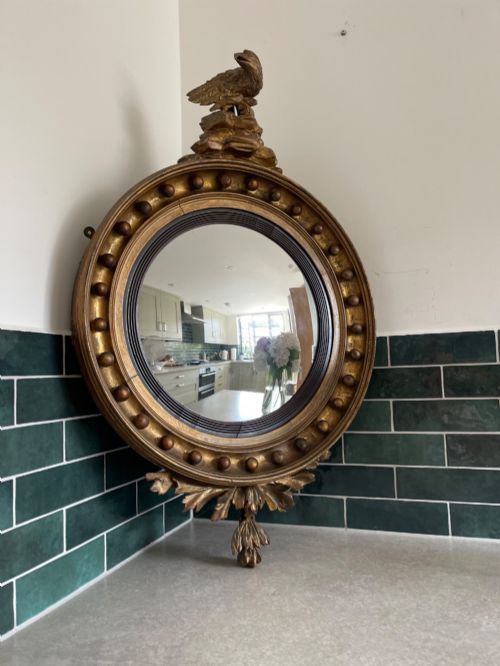
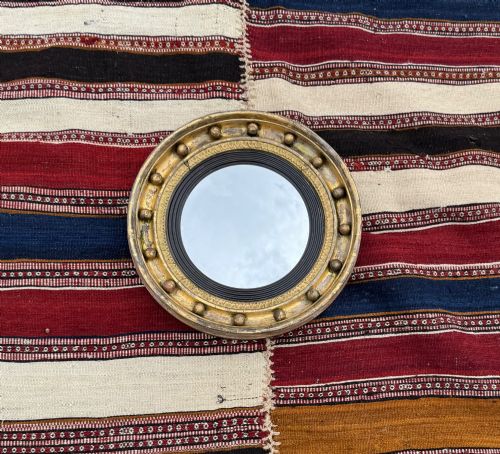
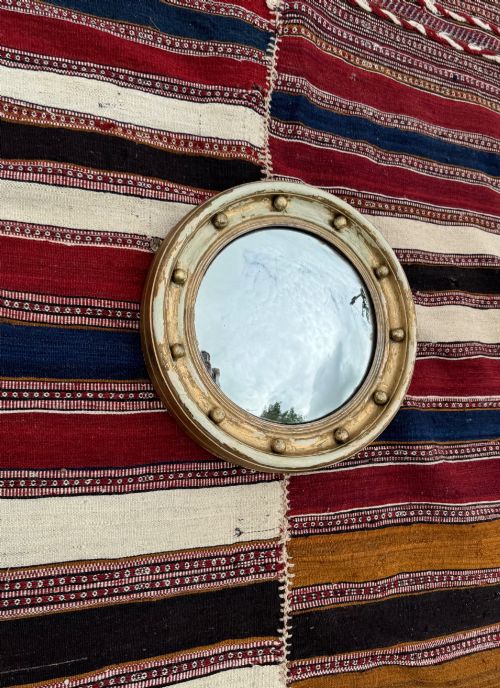
A regency fish eye mirror presents a circular convex plate set within a round frame, engineered originally to allow servants to monitor a dining room from a sideboard. These circular wall mirrors appear most frequently from the nineteenth century, spanning the Regency period alongside later revivals from the Victorian era and the early twentieth century.
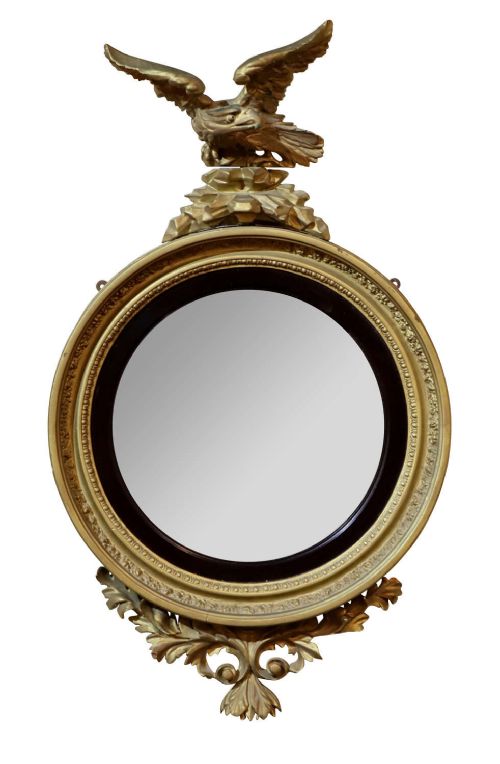
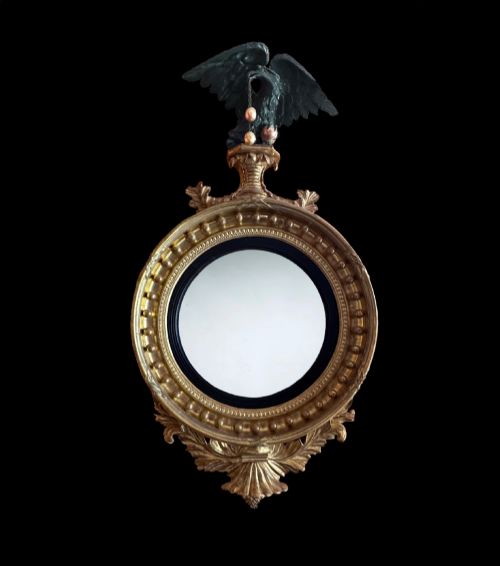
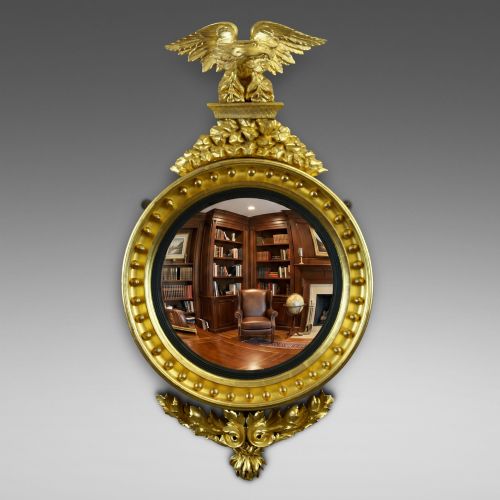
The standard form centres on a heavy frame modelled in giltwood or gesso, occasionally augmented by ebonised wood details or decorative crests. Examples range from small wall hangings to substantial plates crowned by carved eagle mounts.
Materials and Construction
Makers fashioned these frames from wood or carved gesso, applying gold leaf to achieve a brilliant metallic sheen that caught candlelight. The characteristic curved mirror glass required specialist blowing and silvering techniques to produce a distortion that reflected the entire interior.
Surmounts and candle arms, when present, were joined to the main circular body using traditional timber construction and pinned joints. Ebonised wood liners often provided a sharp contrast against the bright gilt exterior moulding.
Regency Fish Eye Mirror Retail Price Guide 2026
Typical asking prices for regency fish eye mirror among the pieces listed under this phrase on Sellingantiques today, from the lower quarter to the upper quarter. They describe what is for sale here now, not the wider market.
Materials recorded across the selection include giltwood, gesso, ebonised wood, and gold leaf.
Assessing Quality and Execution
The crispness of the carved ornament dictates the distinction of a piece, separating finely hand-carved gesso foliage and detailed eagle surmounts from softer, later mouldings. Gilt surfaces show variation in depth and application, where original gold leaf ages with a softer warmth than later metallic paints.
The clarity and distortion of the curved mirror glass itself influence desirability, alongside the preservation of the original ebonised reeded slip. Proportion between the convex plate and the surrounding frame defines the visual balance of the object.
The Regency Fish Eye Mirror Glossary
- Convex glass
- A curved mirror plate that swells outward like a sphere, creating a wide-angle reflection of the surrounding space. This optical distortion is the defining feature of the form.
- Giltwood
- Timber that has been coated with a thin layer of gold leaf over a prepared gesso base. It provides a luminous finish characteristic of formal period frames.
- Ebonised wood
- Timber treated with a dark stain or finish to imitate ebony. It frequently appears as an inner reed moulding framing the glass.
- Girandole
- A wall mirror fitted with attached candle sconces or arms. The polished brass or gilt branches reflect candlelight across the room.
- Surmount
- The decorative ornament fixed to the top of a frame, such as a carved eagle or floral crest. It adds vertical emphasis to the circular shape.
Regency Fish Eye Mirror: Frequently Asked Questions
How do I hang a convex mirror safely?
These pieces carry considerable weight due to the solid wood frame and heavy glass plate. Secure fixings into structural wall studs ensure stability.
Positioning the glass at eye level maximises the optical reflection of the room.
Why are some convex mirrors called butler's mirrors?
The term links to the historical placement of these plates in dining rooms and service areas. Staff utilised the wide field of view to monitor the table without intruding.
Over time the name transferred generally to smaller circular wall examples.
How can I tell a Regency period mirror from a later revival?
Early nineteenth-century examples display hand-carved detail in the gesso and traditional timber construction behind the plate. Later Victorian and twentieth-century revivals often utilise simpler mouldings or composition ornaments.
Inspecting the backboards and the nature of the gilt layer reveals the manufacturing era.
What is the purpose of the ebonised slip?
The narrow dark ring immediately surrounding the glass serves to frame the reflection. This visual border separates the distortion of the curved plate from the bright gilt frame.
It provides contrast that enhances the depth of the overall design.