





Regency Entryway Table
A regency entryway table delivers architectural presence to a hallway through figured timber and classical proportion.
Regency Entryway Table
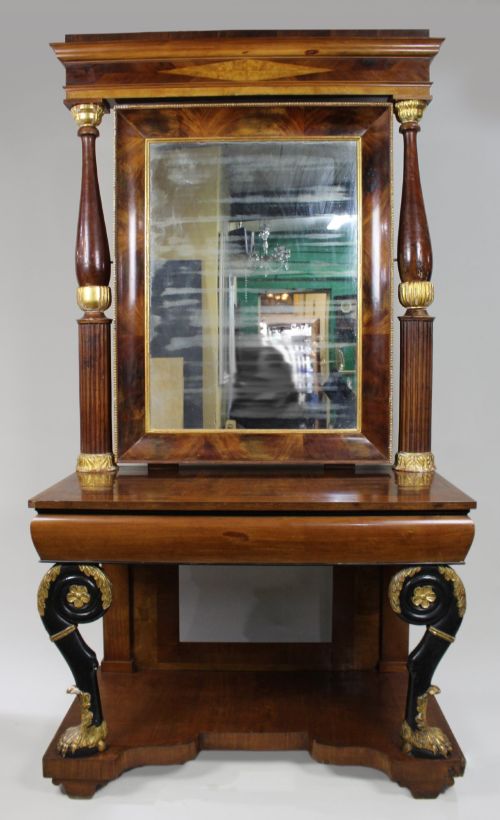
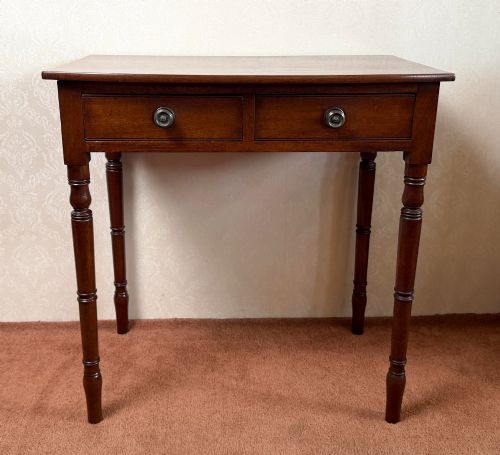
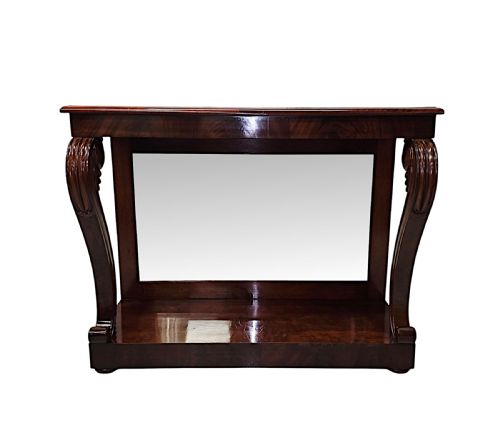
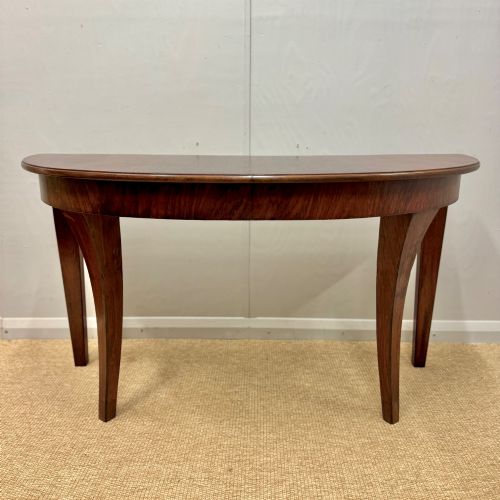
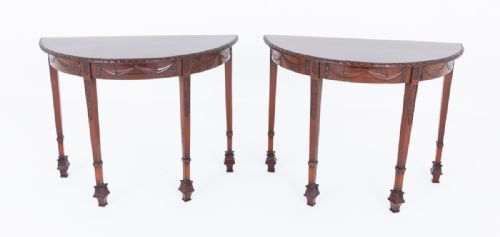
A regency entryway table encompasses console tables, side tables, hall tables and centre tables spanning the Georgian, Regency, William IV and later nineteenth century periods. These forms stand against a wall in a passage or reception space, often following a demi-lune or rectangular footprint.
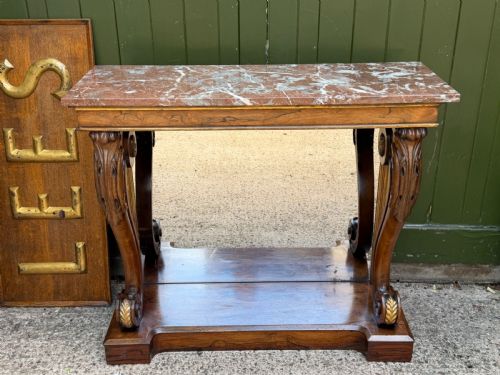
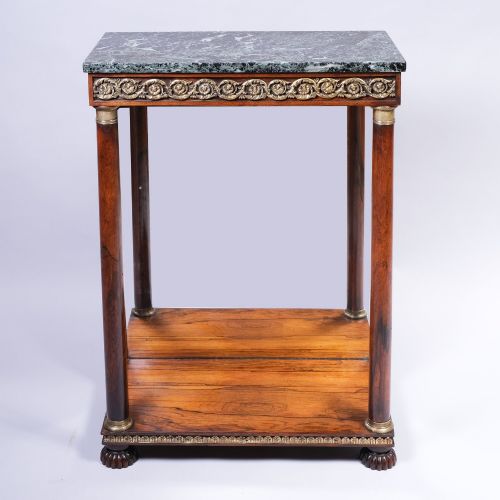
The version most commonly met on this page is constructed from mahogany or rosewood, frequently incorporating marble tops, brass mounts or mirror backs. Pieces range from straightforward English side tables to Irish and French Empire influenced designs with carved or parcel-gilt details.
How they were made
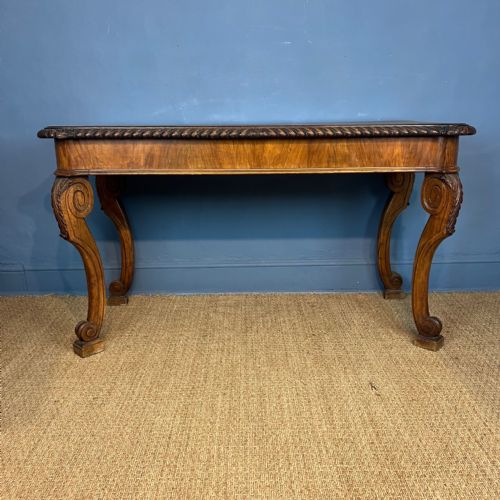
Cabinetmakers utilised solid timbers and wood veneers such as mahogany, rosewood, oak, walnut and pollard oak over foundational carcase structures. Flame mahogany and figured grain patterns were selected to present striking visual movement across top surfaces and friezes.
Decorative embellishments rely on brass mounts, parcel-gilding, giltwood and inset mirror backs to catch the light within a hallway. Heavy marble slabs and glass components are fitted directly to the timber framing of the console.
Structural supports take the form of concave legs, carved columns and painted wood bases characteristic of the Regency, William IV and Neoclassical styles.
Regency Entryway Table Retail Price Guide 2026
Typical asking prices for regency entryway table among the pieces listed under this phrase on Sellingantiques today, from the lower quarter to the upper quarter. They describe what is for sale here now, not the wider market.
The furniture spans Georgian, Regency, William IV and Neoclassical styles alongside nineteenth-century interpretations.
What varies in quality
The selection of timber grain and veneer determines the visual impact of a piece, with figured flame mahogany and richly contrasted rosewood sitting at the upper end. Finer examples display meticulous matching of wood patterns across expansive top surfaces and frieze drawers.
The sophistication of secondary materials and embellishments dictates execution standard. Heavy figured marble tops, crisp brass mounts, original mirror glass and well-defined parcel-gilding or carved giltwood separate exceptional pieces from simpler utilitarian tables.
Gillingtons of Dublin
The Regency Entryway Table Glossary
- Console table
- A table designed to stand against a wall, frequently secured to the vertical surface for stability. These pieces often feature decorative front legs while the rear relies on wall fixings.
- Demi-lune
- A half-moon shape characteristic of tables designed to sit flush against an entryway wall. This curved footprint saves floor space in narrow passages.
- Parcel-gilt
- Partially gilded with thin gold leaf to highlight specific carved details or mouldings against a dark wood or painted ground. This technique adds subtle contrast to Regency and Empire furniture.
- Pollard oak
- Timber taken from trees that have been pollarded, producing a dense, knotty grain pattern prized by cabinetmakers. It appears on select tables of substantial proportions.
- Frieze
- The horizontal band situated directly beneath the tabletop, sometimes plain and sometimes housing drawers or decorative mounts.
Regency Entryway Table: Frequently Asked Questions
Where should I place a console table?
These tables are traditionally positioned in hallways, entrance passages or reception rooms where a shallow footprint allows furniture to sit against a wall without blocking movement.
Pairing the table with a mirror back or hanging a looking glass above it reflects light into darker corridors and provides a surface for lighting or decorative objects.
What is the difference between a console and a side table?
A console table is specifically designed to stand against a wall and historically relied on wall brackets or rear supports for stability. Side tables are freestanding pieces with four legs that can be moved independently around a room.
In modern usage, the terms overlap considerably, particularly with demi-lune and rectangular variants found in nineteenth-century dining and hallway settings.
How do I identify a Regency period piece?
Regency furniture draws heavily on classical Neoclassical and French Empire motifs, featuring architectural lines, rosewood or mahogany veneers, brass mounts and sometimes parcel-gilded elements. Proportions are balanced and draw on ancient Roman and Greek design vocabulary.
Pieces from this era often incorporate concave legs, column supports or inset mirror panels beneath the main surface.
Can I use a marble top table in a busy hallway?
Marble tops offer a durable and cool surface that handles everyday use well, making them practical for placing keys and post in an entryway. The heavy stone slab sits securely within the timber frame of the table.
Care should be taken with acidic liquids near antique marble, but standard daily placement of decorative items causes no harm.