

Brass Inlaid Console
A brass inlaid console combines functional surface area with decorative metalwork, offering collectors a striking piece of period furniture.
Brass Inlaid Console
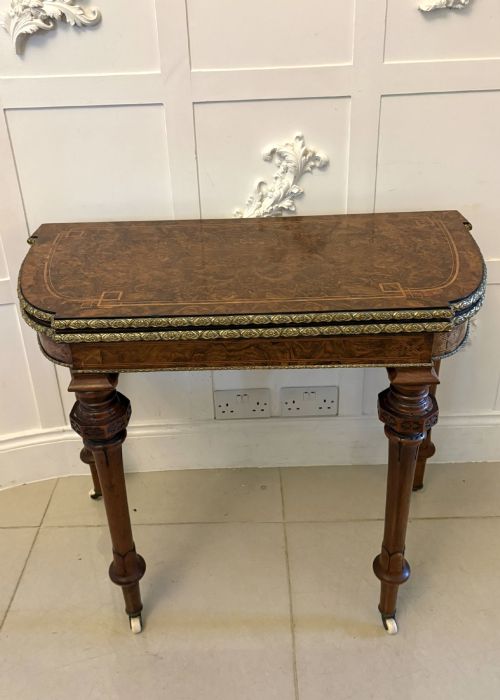
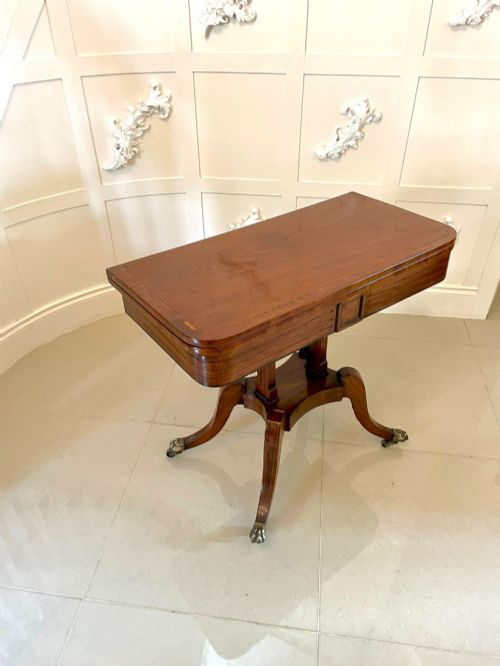
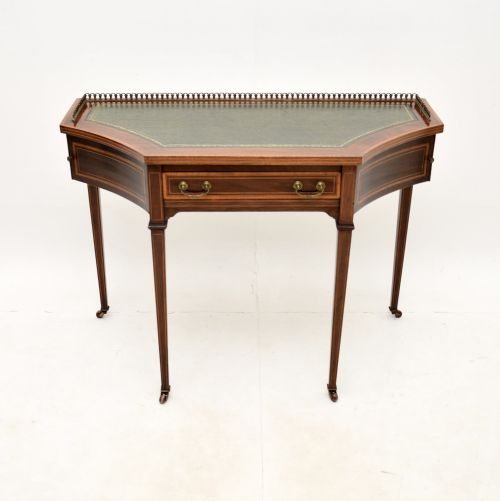
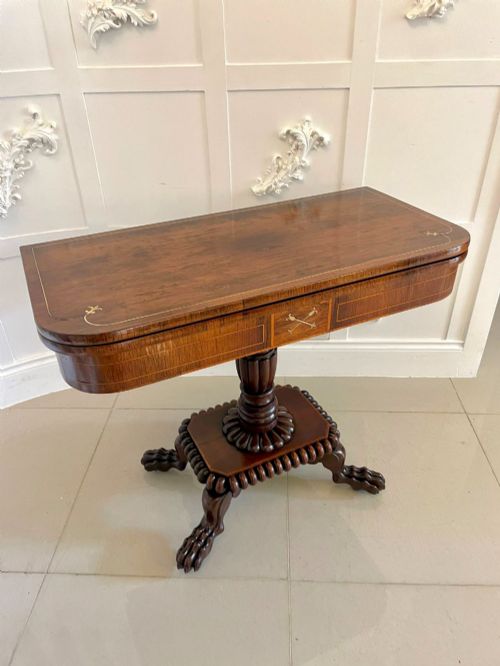
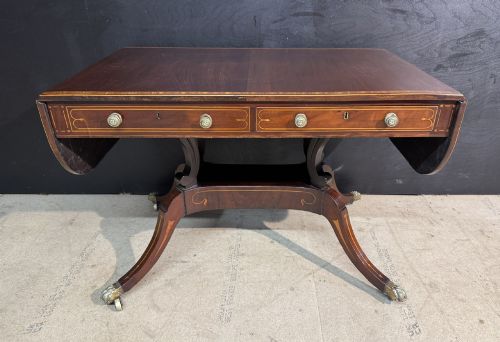
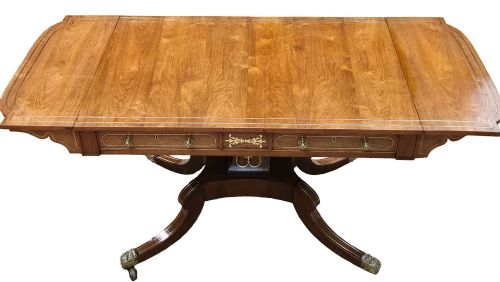
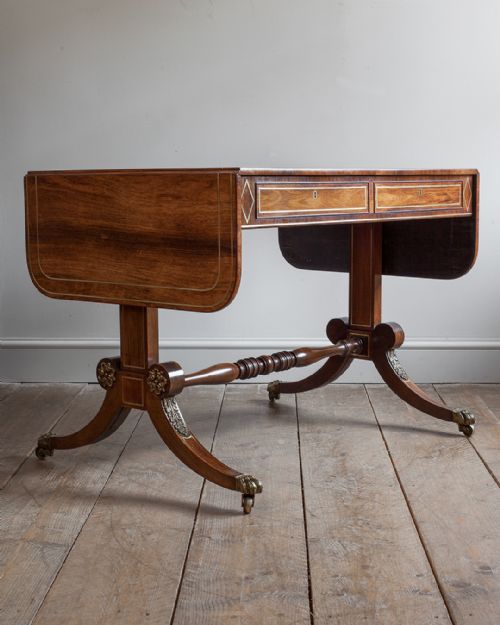
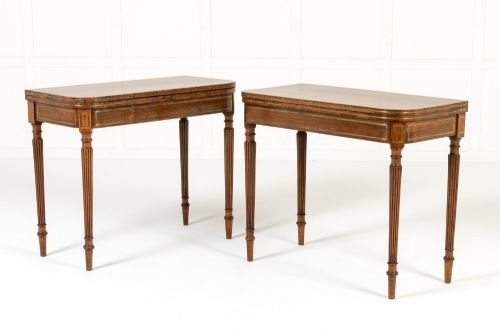
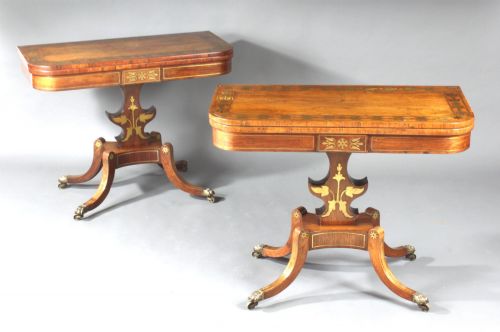
A brass inlaid console serves as a decorative and functional surface, frequently taking the form of card tables, sofa tables, and games tables that double as console pieces. These items appear across several key periods, with Regency and Georgian examples forming a significant part of the selection alongside later Victorian and Edwardian pieces.
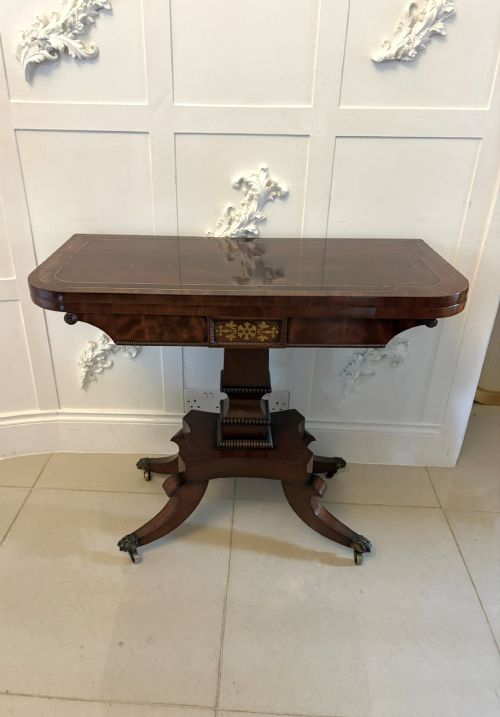
The format ranges from fold-over tops designed for cards to side tables and centre tables. Rosewood and mahogany provide the primary timber foundations for these console designs, often accented with contrasting woods such as satinwood or boxwood.
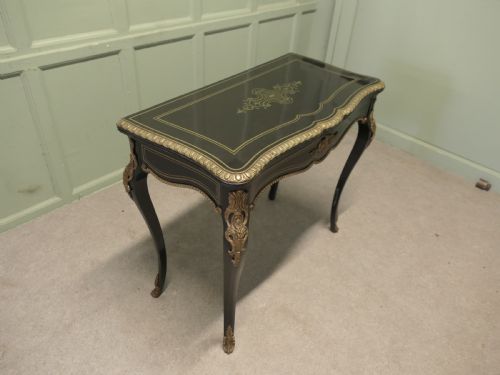
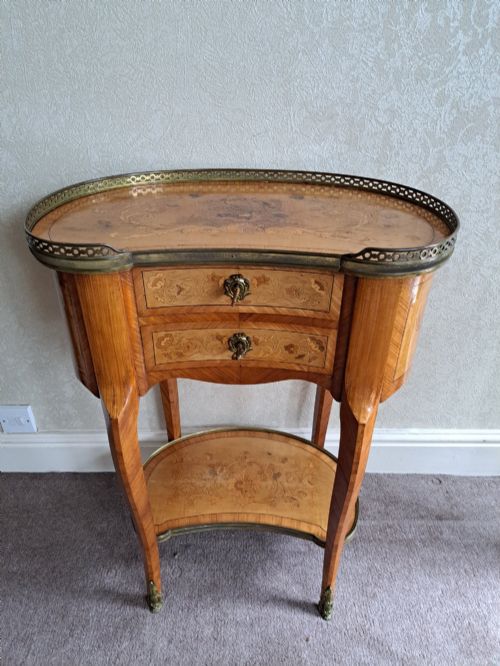
Origin spans English workshops and continental makers, including French styles like Empire and Louis types. Buyers will encounter various configurations, from pedestal bases with castors to multi-drawer side units.
How they were made
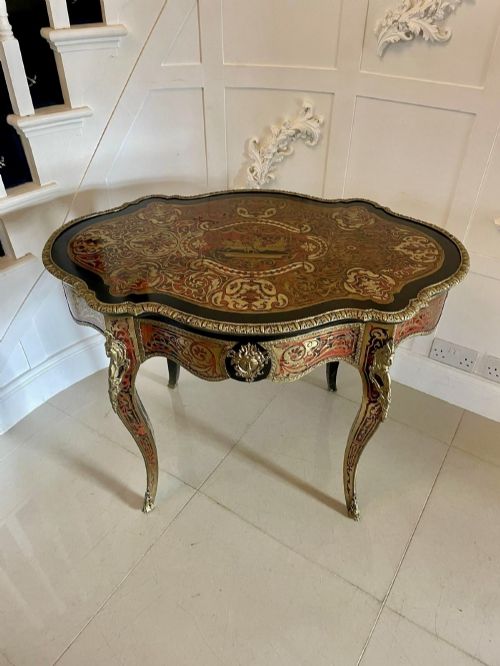
Craftsmen utilised dense timbers like rosewood and mahogany as the structural body for brass inlaid console furniture. Artisans routed channels into the wood surface to receive precisely cut brass wire, strip, or Boulle ornamentation.
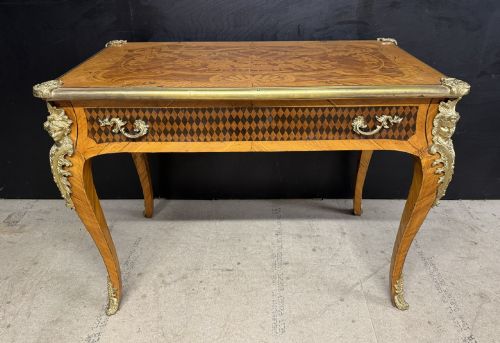
Additional decorative elements such as ormolu mounts, satinwood banding, and tortoiseshell details were integrated to complement the metal inlay. Structural stability relied on traditional joinery, scroll pedestals, and sabots fitted with castors for mobility.
The inventory spans the Georgian and Regency eras through to Edwardian interpretations and later French styles.
What varies in quality
The precision of the brass inlay work dictates the standard of execution, where tight joints and smooth integration into the timber show superior craftsmanship. Grain selection in rosewood and mahogany surfaces also sets finer examples apart from standard production.
The inclusion of original secondary materials, such as functioning castors, brass sabots, and detailed ormolu mounts, elevates the standing of a console. Furthermore, the fluidity of carved details on pedestals and legs reflects the skill of the original workshop.
George Bullock
The Brass Inlaid Console Glossary
- Boulle
- A form of marquetry utilising brass and tortoiseshell developed in France and popular on various console tables. This technique creates a rich contrasting pattern across the surface.
- Ormolu
- Gilded bronze used for decorative mounts and accents on furniture. It provides a bright metallic contrast to dark woods like mahogany and rosewood.
- Sabot
- A metal shoe fitted to the foot of a table leg. Brass sabots protect the timber and often house castors for movement.
- Sofa Table
- A rectangular table traditionally placed in front of a sofa, equipped with drop leaves. Many share design traits with console and card tables.
- Marquetry
- Inlaid wood designs forming decorative pictures or patterns. It differs from simple line inlay by creating pictorial compositions.
Brass Inlaid Console: Frequently Asked Questions
What is a brass inlaid console used for?
These tables served primarily as multi-functional furniture in principal rooms, functioning as writing desks, serving surfaces, or card tables when the top was unfolded.
Many designs incorporate fold-over mechanisms or drawers, allowing them to adapt to different social activities in historic homes.
How do I identify a Regency period console?
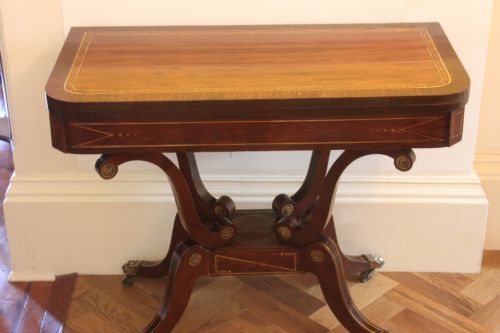
Regency pieces typically feature dark woods like rosewood paired with precise brass line inlay, often supported by central pedestal bases with scroll feet.
Look for classical proportions, sabots with castors, and restrained use of ormolu mounts rather than heavy carving.
Where should I place a console table?
Console tables fit well against hallway walls, beneath mirrors, or positioned behind sofas to provide display space for lamps and decorative objects.
Freestanding centre versions work effectively in larger rooms where the brass inlay can be viewed from multiple angles.
Are these tables suitable for daily use?
These antique tables accommodate normal daily activities such as holding decorative items or serving drinks, provided they are treated with care.
Periodic polishing and avoiding excessive moisture help preserve the delicate timber surfaces and embedded brass work.