





Regency Engraved Glass
Regency engraved glass brings together lead crystal vessels and drinking wares carved with hops, barley, and armorial motifs from the Georgian and Regency periods.
Regency Engraved Glass
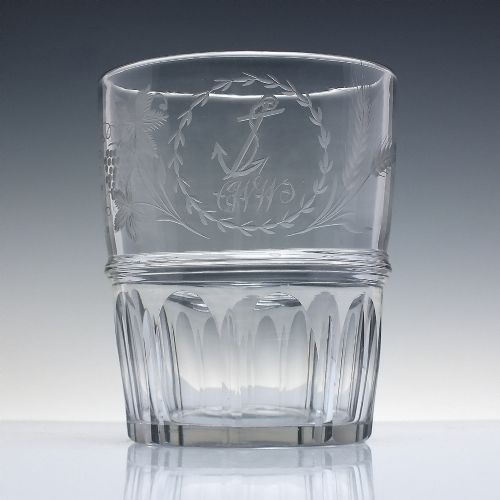
When you search for regency engraved glass, you meet sturdy lead-glass rummers, large serving decanters, and occasional wine glasses originating from English workshops across the Georgian and Regency periods. The most common survivals on this page are rummers and tumblers, frequently decorated with wheel-engraved hops and barley or commemorative subjects like bridges and Masonic symbols.
Beyond drinking vessels, the period also yields related items carrying surface engraving or reverse painting techniques on glass, alongside assorted decanters and serving bottles. These pieces span standard clear lead crystal as well as coloured glass bodies such as amethyst and peacock blue.
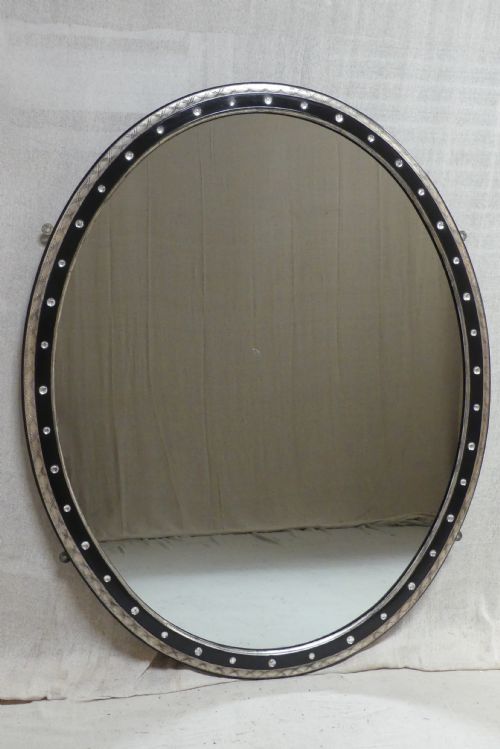
The objects stem predominantly from English manufacture during the early nineteenth century, drawing on Georgian and William IV stylistic influences. Collectors encounter everything from square lemon squeezer bases on rummers to parcel gilt mirrors and wall barometers reflecting the broader material culture of the era.
Materials and Technique
Makers utilised heavy lead crystal and clear glass, shaped by blowing into moulds or free-blowing before applying surface decoration. Panel moulding created structured facets on the lower bowls of rummers and wine glasses, while lead glass provided the necessary weight and clarity for deep wheel-engraving.
Engravers used rotating stone or copper wheels fed with an abrasive slurry to cut intricate motifs such as vines, hops, and heraldic crests directly into the glass surface. Additional embellishments on certain items included parcel gilding or reverse painting executed behind the glass pane.
Regency Engraved Glass Retail Price Guide 2026
Typical asking prices for regency engraved glass among the pieces listed under this phrase on Sellingantiques today, from the lower quarter to the upper quarter. They describe what is for sale here now, not the wider market.
Object forms include rummers, decanters, wall barometers, library clocks, and reverse glass paintings.
The Spectrum of Quality
Quality rests on the depth and crispness of the wheel-engraving, the clarity of the lead glass, and the stability of structural components like lemon squeezer feet. Superior examples display precise, confident cutting without wobbles or excessive surface scratching, maintaining clear bell tones when struck gently.
Proportions and weight separate standard utility vessels from exhibition-grade display pieces. Heavy, well-balanced rummers with complex armorial or topographical engravings command greater attention than lighter, simply panel-moulded items with basic linear bands.
The Regency Engraved Glass Glossary
- Rummer
- A heavy drinking glass with a short stem and a capacious bowl, widely used in the Georgian period for ale, wine, or punch. These vessels often feature engraved hops and barley motifs.
- Lemon squeezer base
- A square, pressed glass foot with indented corners resembling a citrus squeezer, characteristic of heavy rummers and decanter stands. This form gained popularity around eighteen hundred.
- Lead crystal
- A high-clarity glass containing lead oxide that increases refractive index and weight, allowing for deep cutting and engraving. It forms the primary material for quality drinking vessels on this page.
- Panel moulded
- A decorative technique involving vertical or fluted facets pressed into the lower section of a glass bowl during manufacture. It provides a tactile grip and catches ambient light.
- Reverse glass painting
- An artistic method where the image is painted directly onto the back of a glass sheet to be viewed from the front. This technique protects the pigment and produces a glossy surface finish.
Regency Engraved Glass: Frequently Asked Questions
What is a rummer glass?
A rummer is a robust drinking vessel featuring a thick stem and a large bowl designed for robust ales, wines, or punches during the Georgian era. These glasses frequently showcase wheel-engraved agricultural motifs.
They stand taller and heavier than standard wine glasses, reflecting the hearty tavern and dining habits of nineteenth-century life.
Are these pieces lead glass?
Many items listed here are made from lead crystal or lead glass, valued for its brilliance and weight. This composition allowed makers to achieve deep, sharp cuts during engraving.
You can identify lead glass by its characteristic heft and resonance when gently tapped.
How do I spot a lemon squeezer base?
A lemon squeezer base exhibits a distinctive square foot with indented sloping sides that mimic a kitchen squeezer. Makers pressed these bases to provide stability for heavy drinking vessels.
They appear frequently on rummers and decanter stands dating from the early nineteenth century.