










Engraved Lead Crystal Glass
Engraved lead crystal glass brings together heavy metal compositions and wheel-cut decoration, offering collectors tactile drinking vessels and decanters from the eighteenth century onwards.
Engraved Lead Crystal Glass
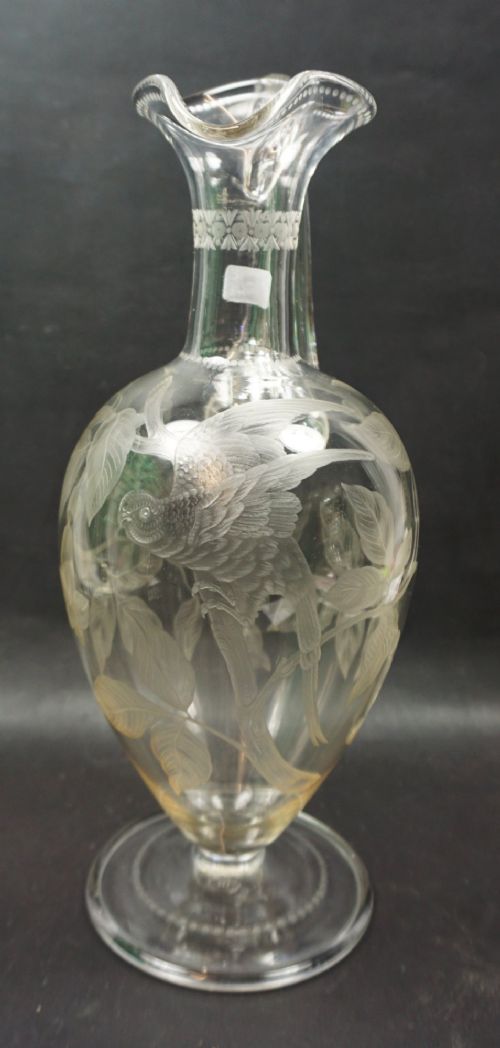
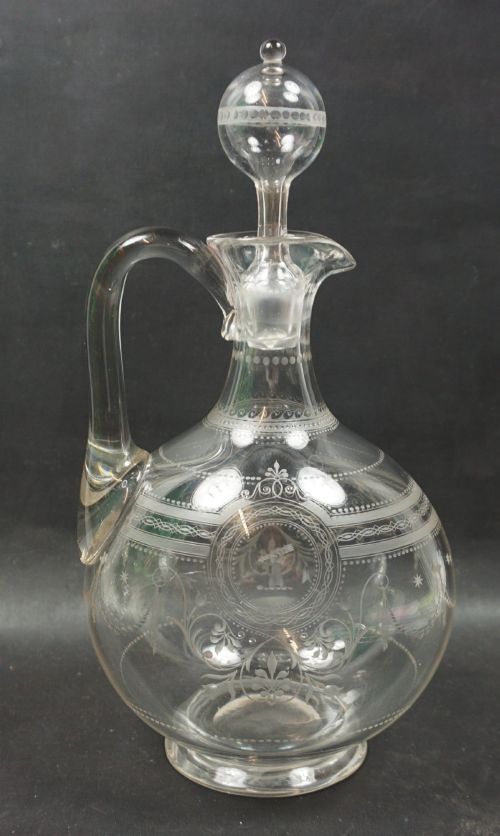
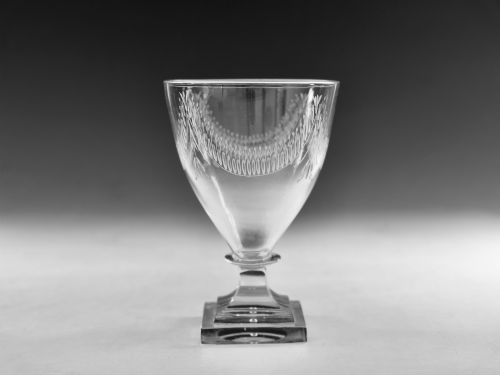
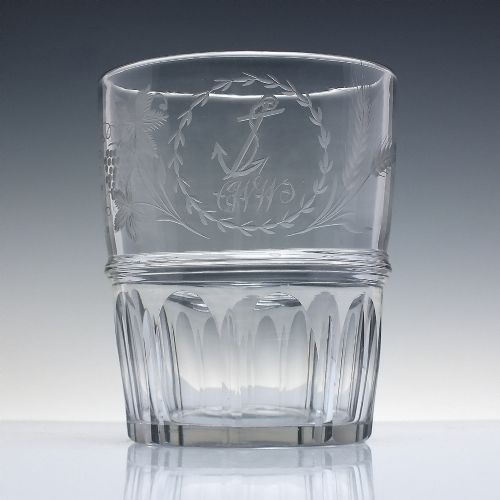
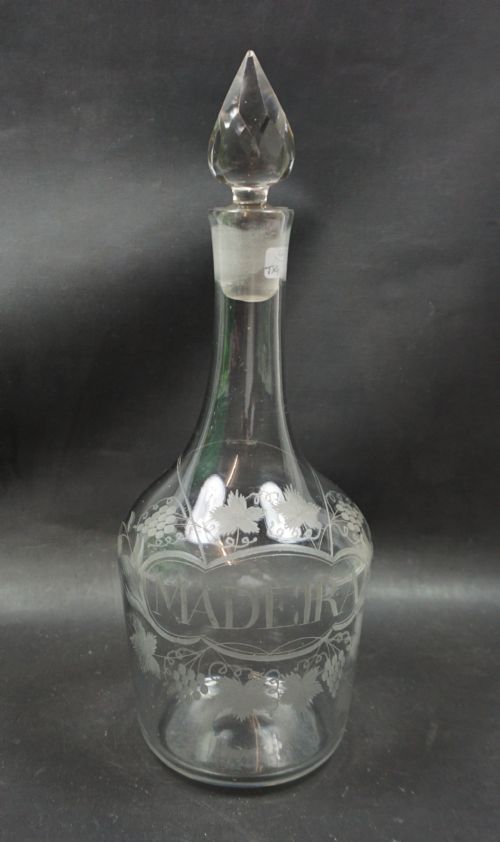
The most common forms on this page are heavy drinking rummers and wine glasses decorated with wheel-engraved hops, barley, or armorial motifs. These pieces showcase English manufacture from periods encompassing George III through to Edwardian times, using clear lead glass blanks.
How they were made
Glassmakers formed these vessels using lead glass and flint glass compositions, which provided the heavy weight and high refractive index needed for deep cutting. Artisans shaped the hot metal through blowing, often employing moulds or optical blowing techniques to create ribbed and patterned surfaces.
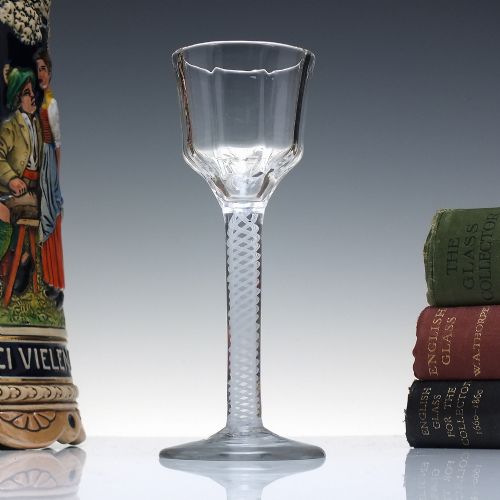
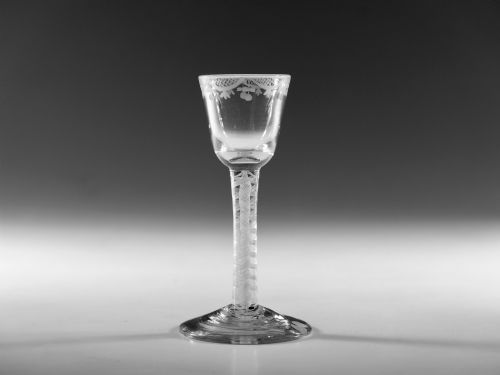
Decoration relied upon copper wheels and abrasive pastes to cut detailed patterns such as hops, barley, and coats of arms into the hardened surface. Twists within stems were created by drawing out air bubbles or opaque enamel canes inside the molten glass before stretching.
Engraved Lead Crystal Glass Retail Price Guide 2026
Typical asking prices for engraved lead crystal glass among the pieces listed under this phrase on Sellingantiques today, from the lower quarter to the upper quarter. They describe what is for sale here now, not the wider market.
Listings feature lead crystal, flint glass, and opaque enamel materials spanning Georgian, Victorian, and Arts and Crafts styles.
What varies in quality
The standard of engraving dictates much of the distinction between average and superior examples, with crisp, deep wheel-cuts showing greater control than shallow surface scratches. Finer pieces demonstrate meticulous polishing of the cut surfaces to restore transparency, whereas lower grades leave matte or dull tool marks.
Proportion and weight also separate standard production from exceptional vessels, with heavier lead content providing a clearer ring and sharper facets. The sophistication of internal stem formations, such as multi-spiral air twists or single-series opaque threads, indicates the skill required by the glasshouse.
James Powell London
The Engraved Lead Crystal Glass Glossary
- Rummer
- A large, heavy drinking glass popular in the eighteenth and nineteenth centuries, often featuring an engraved bowl for beer, ale, or wine.
- Air twist
- A decorative stem formation containing spiral channels of trapped air created by drawing and twisting heated glass rods.
- Flint glass
- An early British term for heavy, high-clarity lead glass developed to imitate natural rock crystal.
- Lemon squeezer base
- A square, pressed glass foot with sloping sides resembling a manual citrus juicer, commonly found on Georgian rummers.
- Ogee bowl
- An S-profile drinking vessel shape curving outward at the rim and inward at the base.
Engraved Lead Crystal Glass: Frequently Asked Questions
What is a rummer glass used for?
Rummers served as substantial drinking vessels for ales, beers, and wines during social gatherings. Their generous capacity made them practical for daily dining tables.
Many examples feature engraved hops and barley motifs that directly reference the agricultural ingredients of the beverages poured inside them.
How can I identify Georgian glass?
Georgian glass typically displays a heavy feel due to high lead content combined with characteristic pontil marks on the undersides of bases. These pieces often feature plain stems, air twists, or facet cutting.
Stylistic cues like ovoid bowls and armorial engravings help distinguish eighteenth-century production from later Victorian copies.
What does Jacobite engraving mean?
Jacobite engraving refers to secret political symbols applied to wine glasses in support of the exiled Stuart claimants to the British throne. These designs frequently include roses, buds, and oak leaves.
Collectors prize these symbolic glasses for their historical associations with clandestine eighteenth-century loyalist societies.
Are these glass pieces safe to use?
Antique lead crystal glass is generally safe for holding beverages during occasional dining or display. Hand washing in lukewarm water protects the historic surface from thermal shock and abrasive detergents.
Modern dishwashers should be avoided because harsh cycles can cloud the clear lead glass and damage delicate wheel-cut details.