

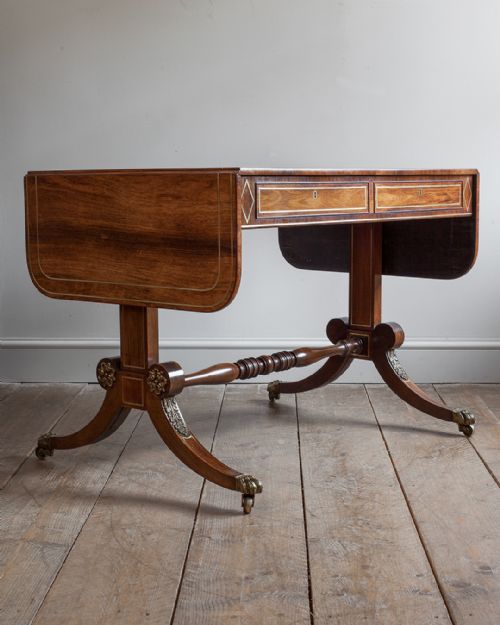
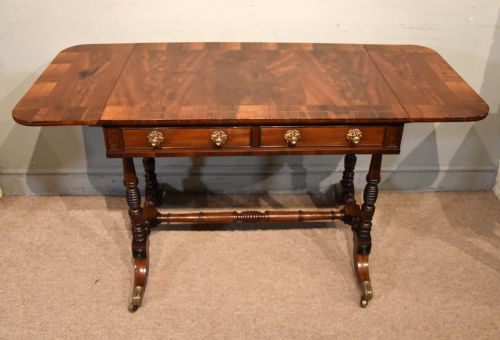
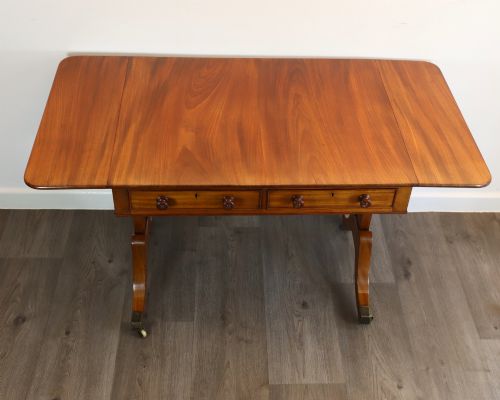
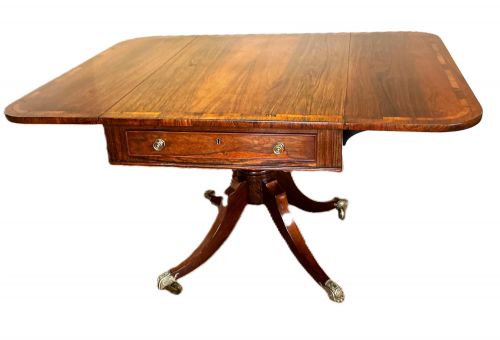

Regency Drop Leaf Desk
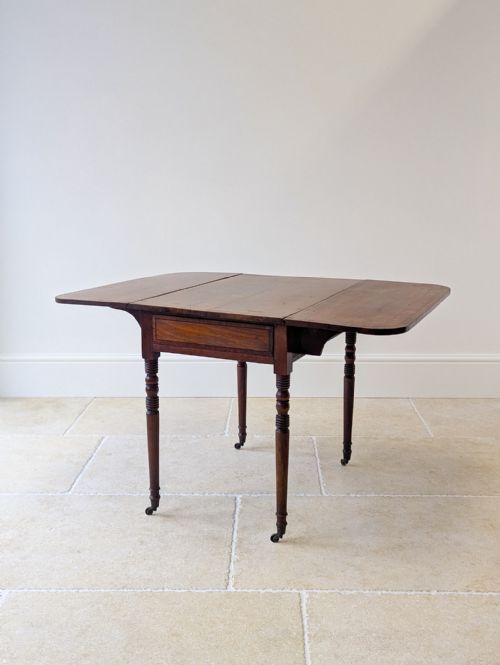
Regency drop leaf desk pieces are versatile tables with folding flaps and writing surfaces designed for the elegant rooms of the early nineteenth century.
Regency Drop Leaf Desk
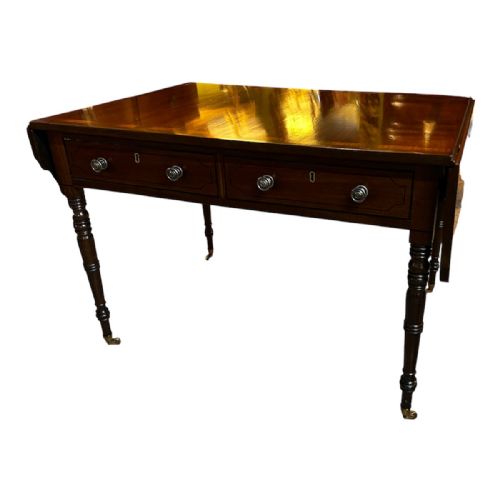
When you search for a regency drop leaf desk, you encounter a selection of sofa tables, pembroke tables, and work tables from the Regency, Georgian, and Victorian periods. These pieces serve multiple functions as writing surfaces, sewing stations, and occasional tables with hinged flaps that expand the top when needed.
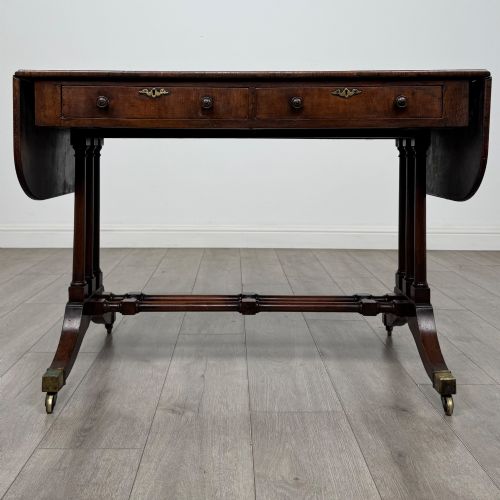
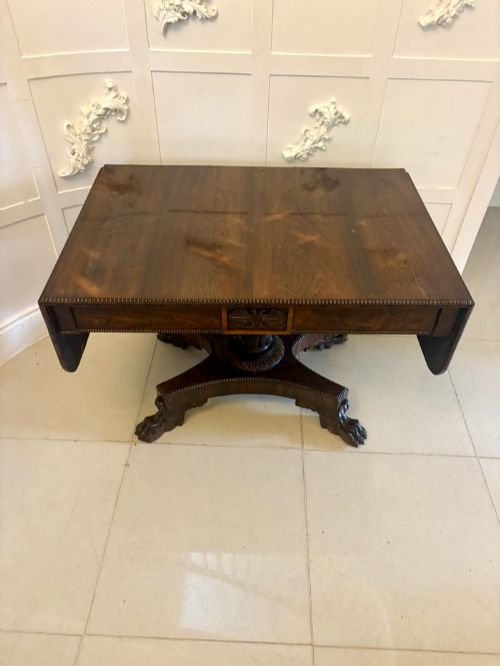
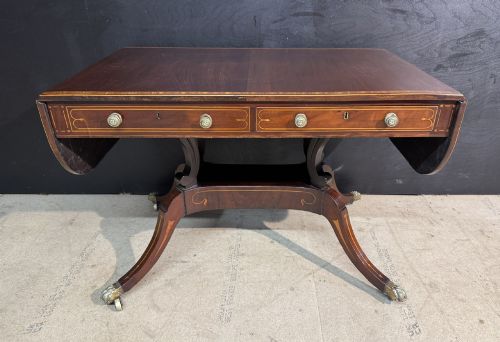
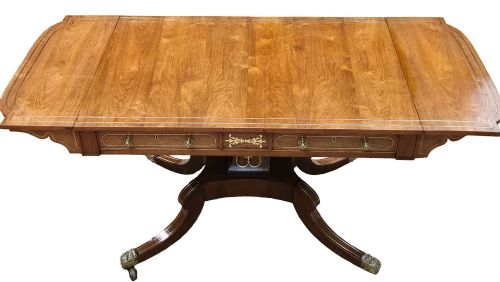
The most common forms on this page include mahogany and rosewood sofa tables supported by pillar bases or lyre ends. Many feature drawers for writing materials, while others incorporate drop flaps designed for libraries and drawing rooms.
Materials and Construction
Cabinetmakers constructed these tables primarily in solid and veneered timbers such as mahogany, rosewood, and satinwood, often selecting flame or figured variations for visual impact. Secondary woods provide structural stability inside drawers and framing.
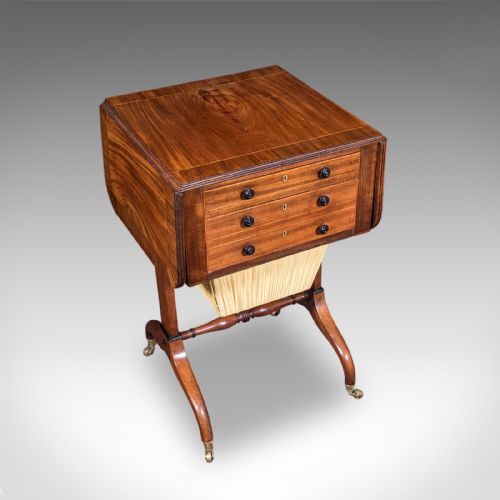
Decoration relied upon brass inlay, ebony stringing, and boxwood banding rather than heavy carving. Brass mounts, castors, and pillar collars finished the legs and supported the mobility required of freestanding furniture.
Regency Drop Leaf Desk Retail Price Guide 2026
Typical asking prices for regency drop leaf desk among the pieces listed under this phrase on Sellingantiques today, from the lower quarter to the upper quarter. They describe what is for sale here now, not the wider market.
Listings feature timbers including mahogany, rosewood, satinwood, and yew wood across Regency, Georgian, and Victorian periods.
Assessing the Craftsmanship
Quality separates pieces through the selection of timber veneers and the precision of the wood inlay. Superior examples display continuous grain patterns across the leaves and drawers, executed by skilled hands.
The integrity of the drop leaf mechanism, the weight of the brass mounts, and the stability of the pillar or lyre supports determine the grade of the piece. Tables with original patination and uncompromised structural joints hold the highest regard.
Jean-Joseph Chapuis
The Regency Drop Leaf Desk Glossary
- Drop leaf
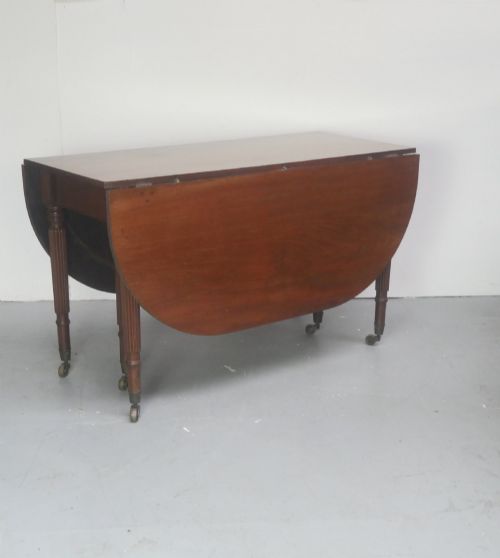
- A table with hinged flaps that fold down at the sides to reduce the footprint when not in use. These leaves are supported by swing brackets or pivoting legs.
- Sofa table
- A rectangular occasional table designed to stand in front of or behind a sofa, typically featuring two small drawers and drop leaves at each end.
- Pembroke table
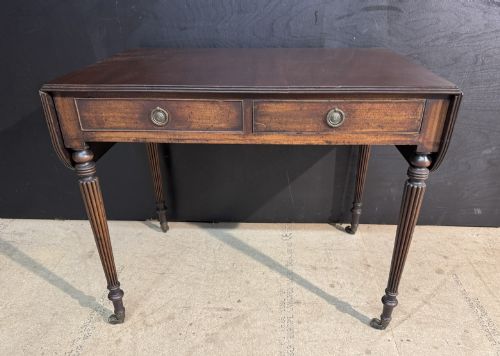
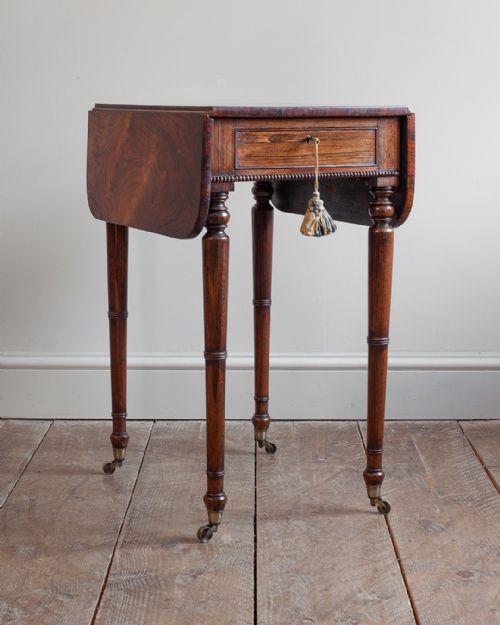
- A small rectangular table with two folding flaps on opposite sides, usually equipped with a single drawer and slender legs.
- Stringing
- A thin inlay of contrasting wood or light-coloured material set into the surface of furniture to create decorative borders and geometric outlines.
- Lyre end
- A furniture support shaped in the classical form of a lyre, frequently utilised on the pedestals of Regency tables and desks.
Regency Drop Leaf Desk: Frequently Asked Questions
How do I use a sofa table today?
These tables function well as compact writing desks, console tables behind sofas, or small dining surfaces in restricted spaces. The folding flaps allow you to adjust the surface area to suit the room.
Keep them away from direct heat sources and sunlight to protect the rosewood or mahogany veneer from drying and fading over time.
What is the difference between a pembroke and a sofa table?
A pembroke table typically has smaller drop leaves on two opposing sides and rests on four legs with a single drawer. A sofa table is longer and lower, historically positioned near seating, featuring leaves on the short ends and often a double pedestal or lyre base.
Both forms offer flexibility, but sofa tables generally provide a wider central expanse suited for reading and writing.
Are drop leaf tables stable enough for writing?
Solidly built tables with properly adjusted swing brackets support normal writing tasks without difficulty. The hinges and drop leaf supports carry the downward pressure when the flaps are raised.
Avoid placing excessive weight on the extreme edges of the extended leaves to maintain structural balance.