
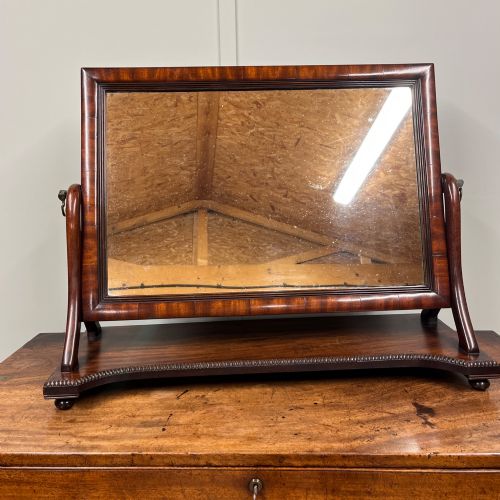
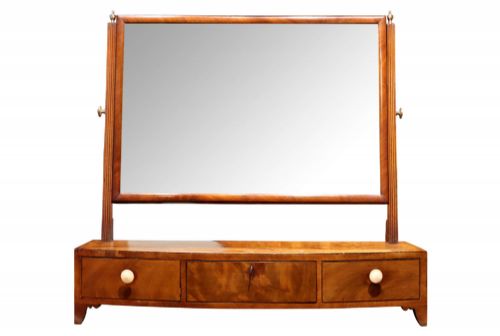


Regency Dressing Table Mirror
A regency dressing table mirror brings classical proportion and rich timber to the bedroom, pivoting smoothly on its upright supports.
Regency Dressing Table Mirror
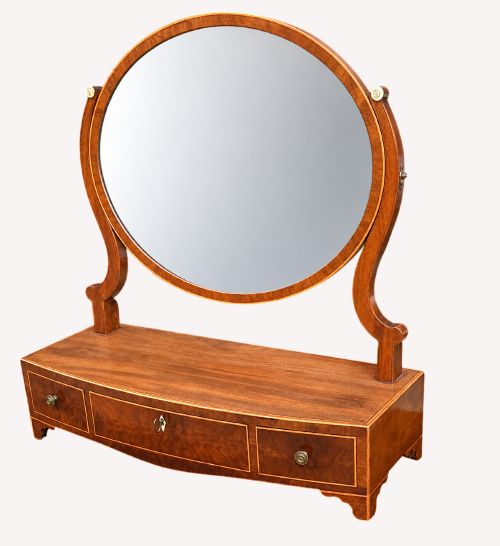
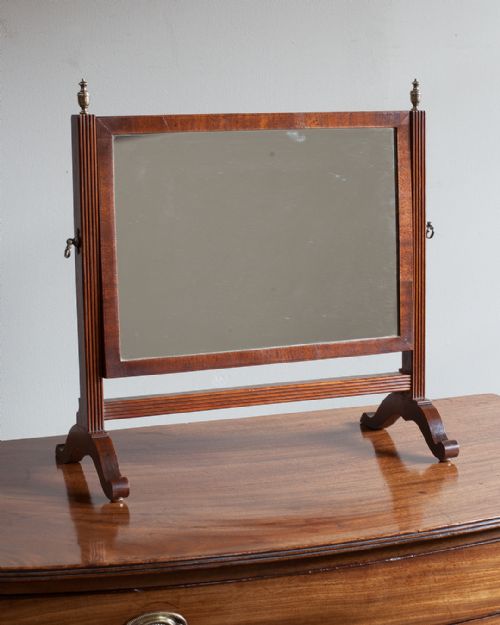
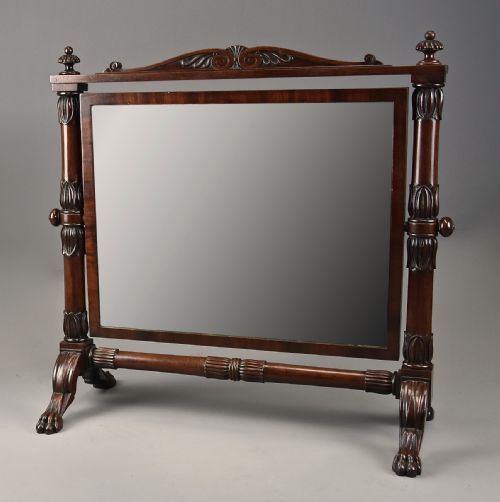
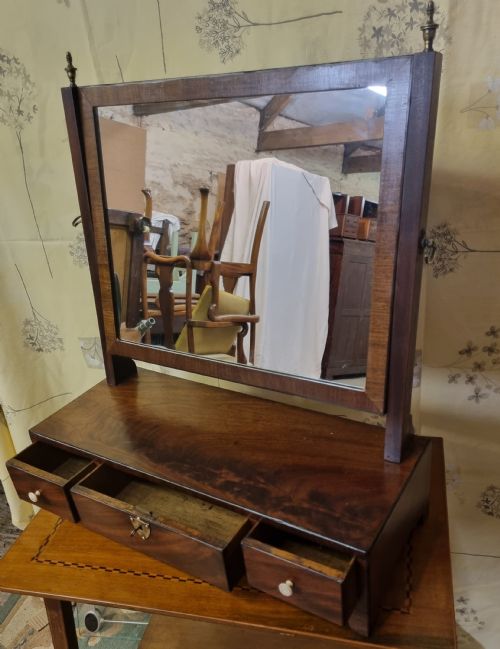
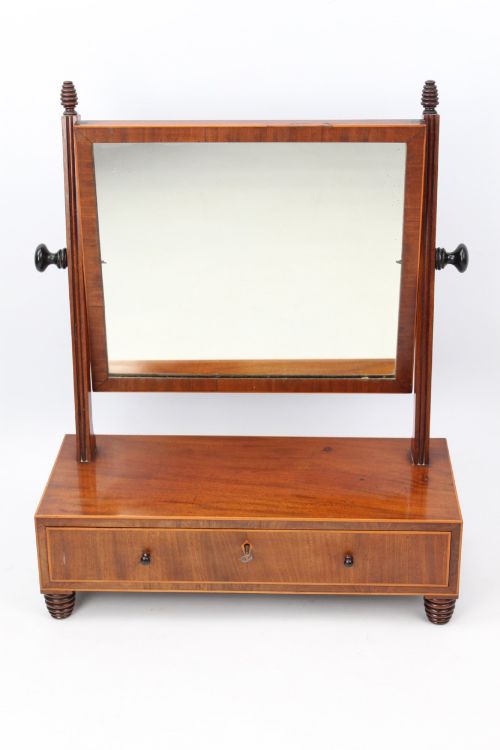
A regency dressing table mirror sits upon a chest or table, designed to tilt for personal grooming. These pieces take various forms, including box-base toilet mirrors and larger cheval designs.
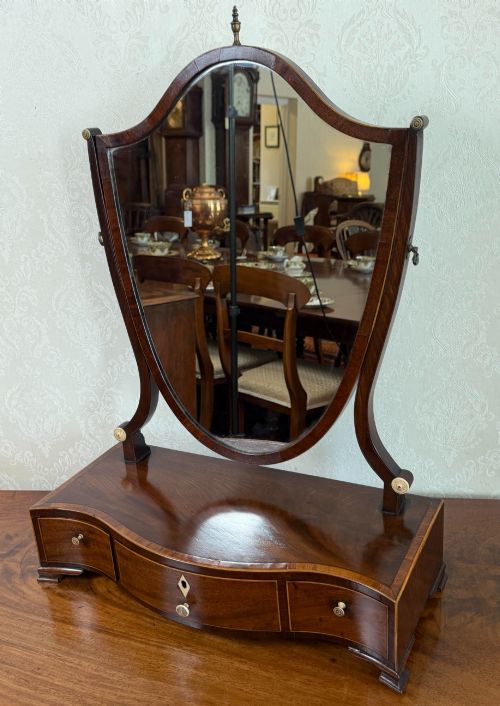
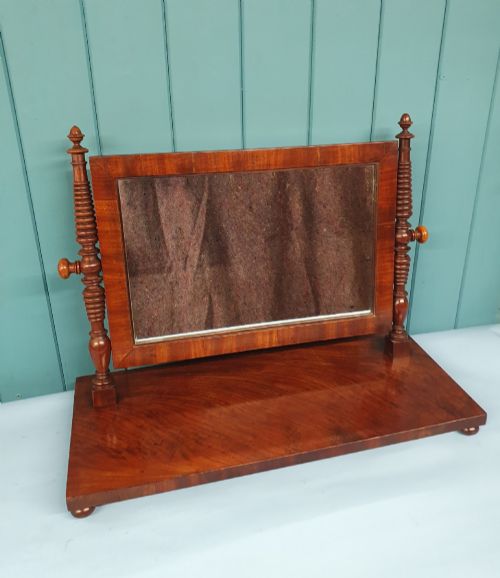
Mahogany dominates the selection, shaped with bow fronts or serpentine lines. Smaller examples feature drawers for trinkets, while others stand as plain swing frames.
Pieces span the Georgian, Regency, and Victorian eras, reflecting shifts in classical taste from the late eighteenth through the nineteenth century.
How they were made
Cabinet makers utilised solid mahogany and Cuban mahogany veneers over secondary timbers. Surfaces often receive decorative stringing in boxwood or ebony.
Brass fittings secure the pivoting plates and support the swing frames. Some incorporate bone escutcheons around drawer keyholes.
Original mirror glass is held within rebated frames, secured by thin wooden slips at the back.
Listings feature mahogany, satinwood, rosewood, and yew wood, sometimes combined with brass and marble.
What varies in quality
Selection of timber grain defines the visual weight of the frame, with figured mahogany and rosewood indicating finer workshops. Cabinet construction shows skill in the dovetailing of small drawer boxes.
The sophistication of outline, such as serpentine or bow-front bases, separates standard pieces from more ambitious cabinet work. Details like fine boxwood stringing and brass stop-fluting elevate the design.
Gillows·P & MA Nicholson
The Regency Dressing Table Mirror Glossary
- Toilet mirror
- A smaller table-top looking glass, historically used for powdering and dressing rather than full-length viewing.
- Cheval mirror
- A tall freestanding glass designed to pivot within a complete frame, allowing the user to see their entire outfit.
- Stringing
- A narrow inlay of contrasting wood, such as boxwood, set flush into the mahogany surface to outline panels and drawers.
- Serpentine
- A curved shape featuring a convex centre flanked by concave wings, creating a flowing line across the front of the mirror base.
- Swing mirror
- A plate suspended between two upright arms by adjustable screws, allowing the glass to tilt at various angles.
Regency Dressing Table Mirror: Frequently Asked Questions
What is a regency dressing table mirror?
A regency dressing table mirror is a small tabletop looking glass designed to tilt on vertical supports above a fitted wooden base.
These pieces were standard bedroom furnishings during the early nineteenth century, providing a functional reflection surface while holding small items in integrated drawers.
How do I date a toilet mirror?
Dating relies on timber selection, structural proportions, and inlay techniques characteristic of specific design periods.
Earlier eighteenth-century examples favour simpler uprights and walnut or early mahogany, whereas Regency pieces introduce bold serpentine shapes and brass mounts.
Where should I place a swing mirror?
A swing mirror sits comfortably on top of a heavy chest of drawers, sideboard, or dedicated dressing table.
Position the piece near a natural light source to make best use of the pivoting frame for daily grooming tasks.
Are the mirror plates original?
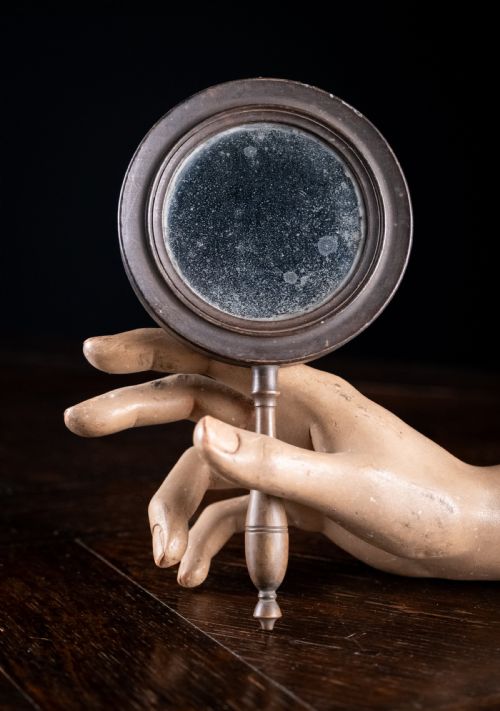
Many surviving pieces retain their original glass, which often exhibits minor foxing and age spots.
Replacements occur frequently over centuries of use, so inspecting the silvering and backing boards helps determine the age of the plate.