

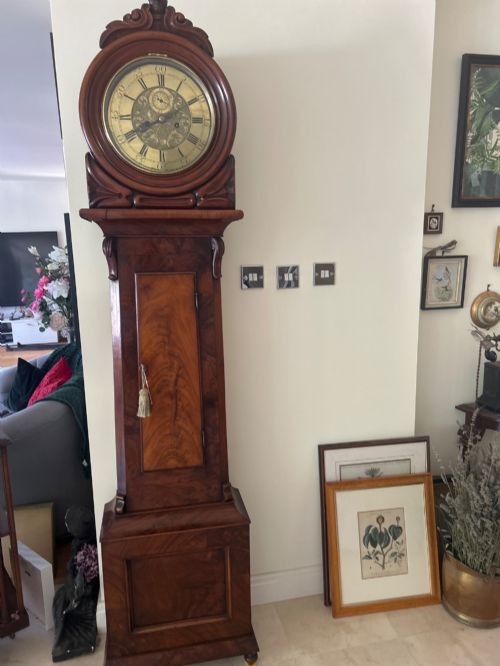
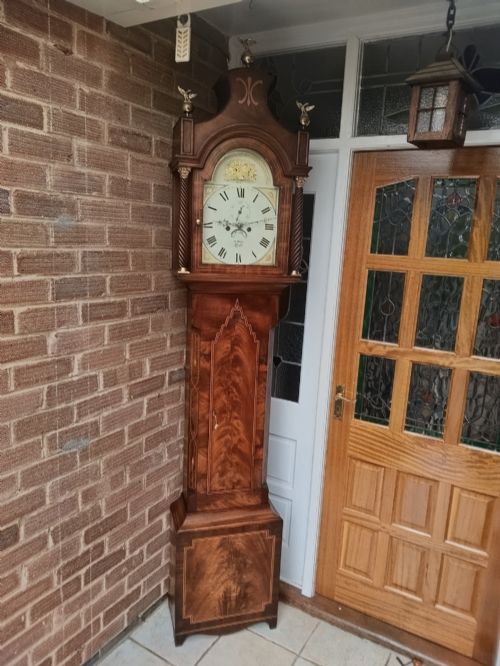
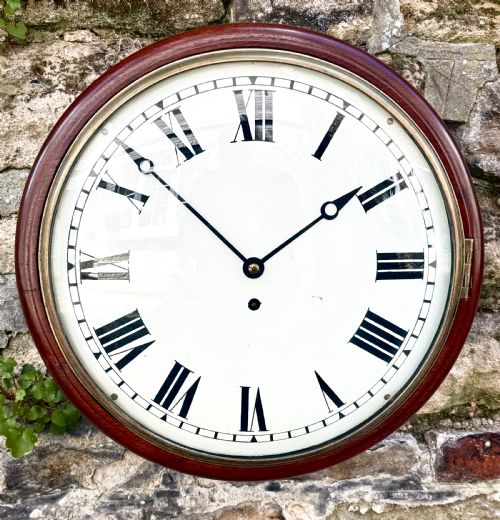

Regency Dial Clock
When you want a regency dial clock, you are looking at substantial wall-hung timekeepers built for precision.
Regency Dial Clock
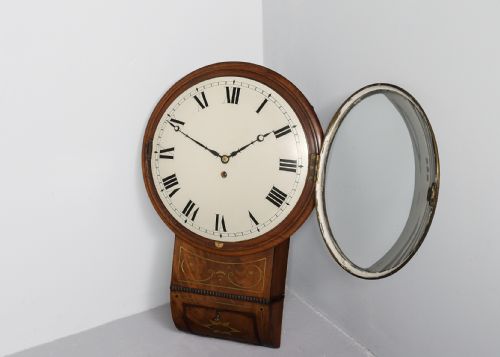
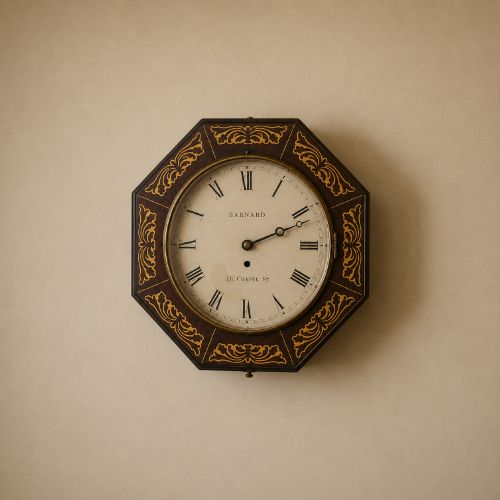
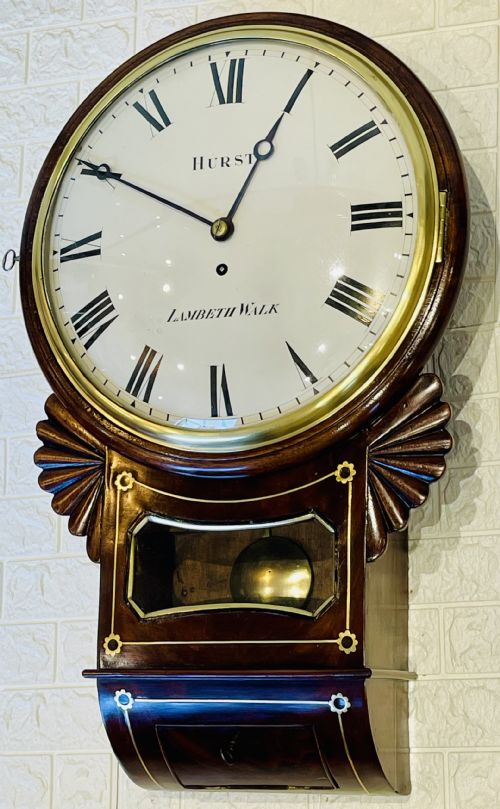
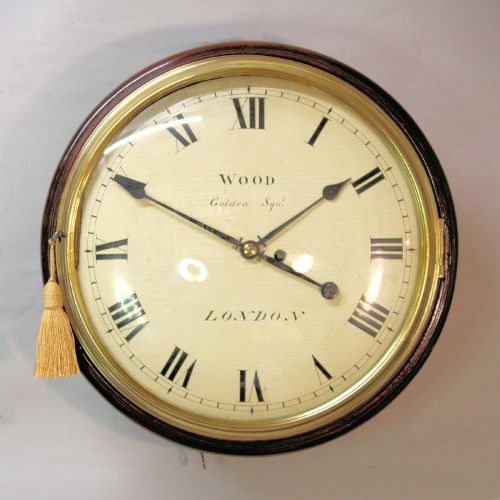
A regency dial clock usually presents a circular face enclosed in a mahogany or rosewood case, frequently featuring a drop trunk below to house the pendulum.
The materials span rich timbers like flame mahogany alongside brass inlay, silvered metal dials, and occasionally ebonised wood or oak.
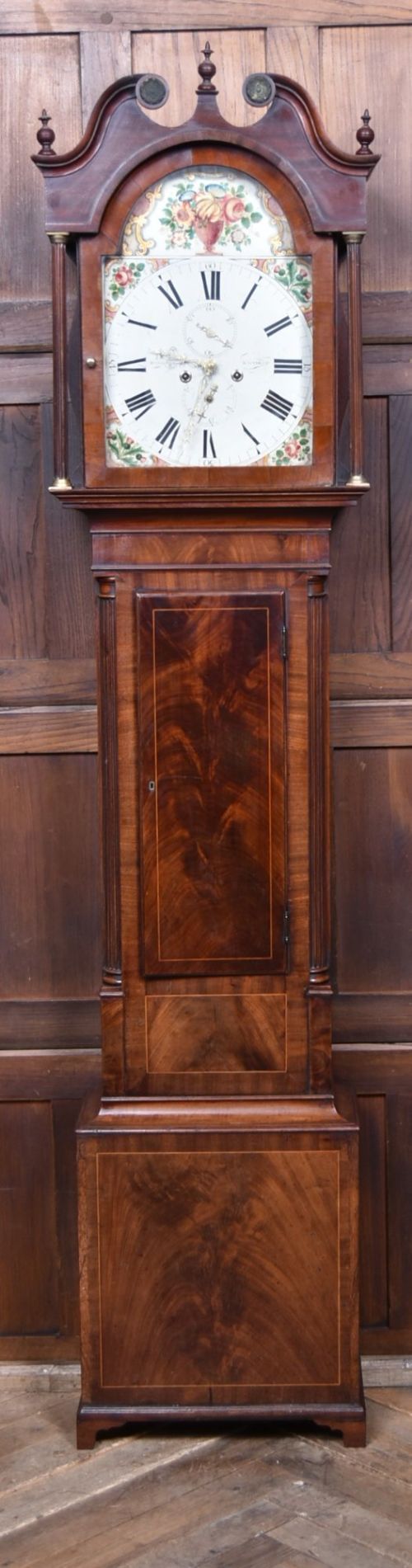
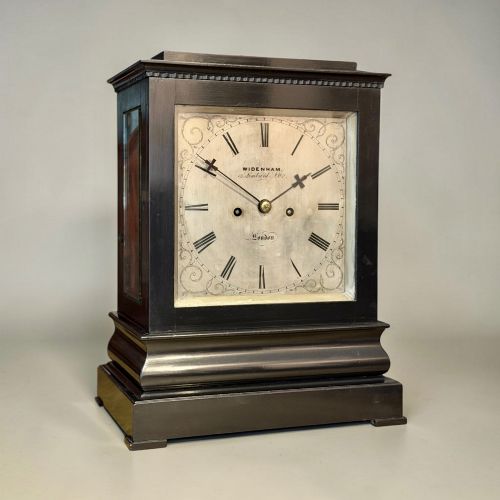
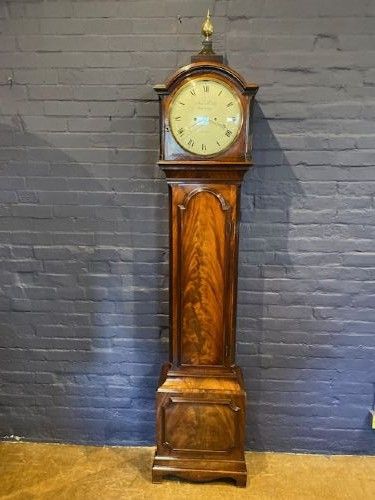
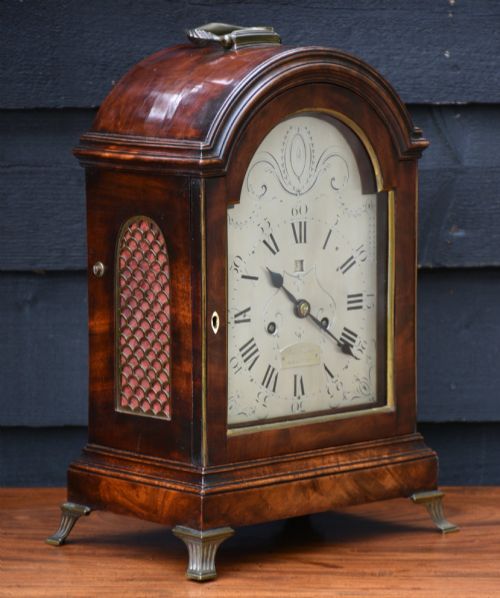
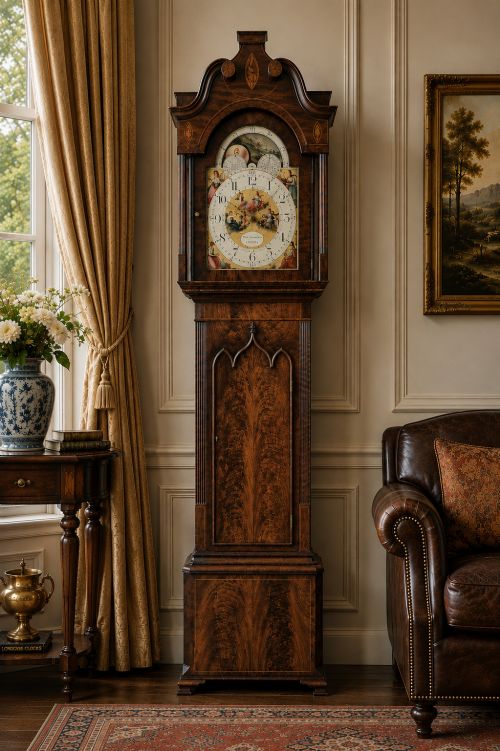
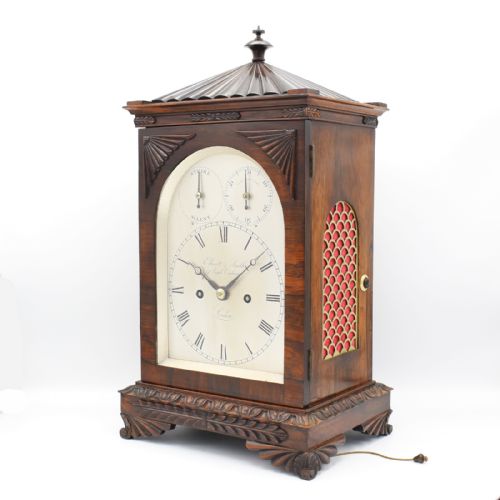
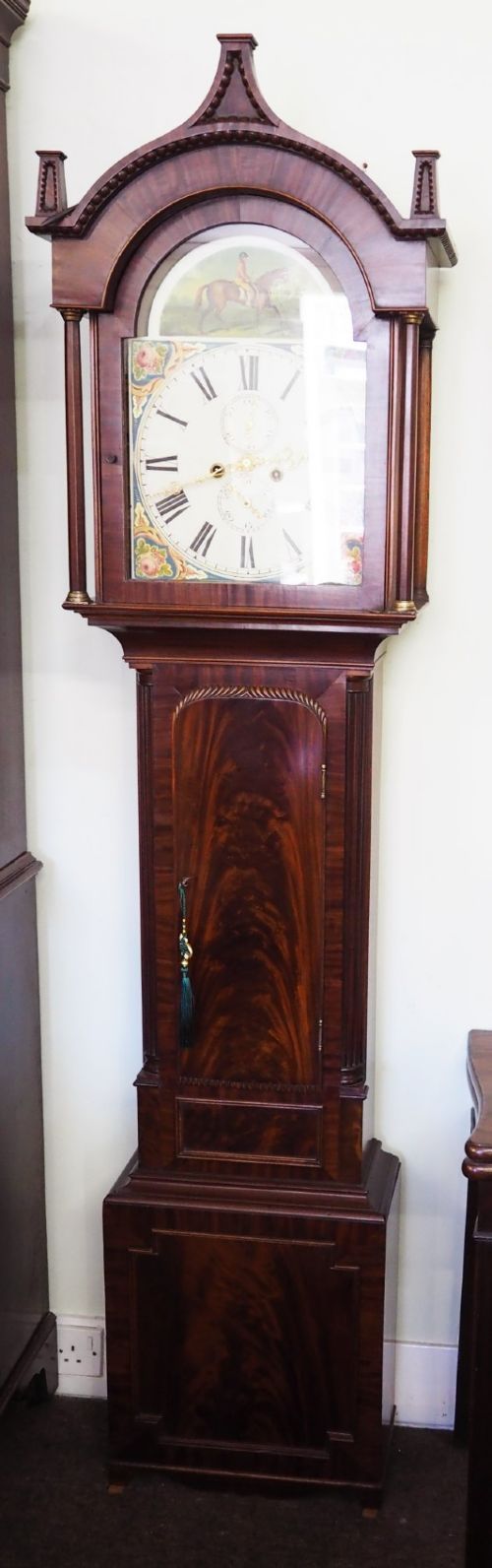
While wall clocks dominate this specific search, the broader evidence encompasses longcase clocks, bracket clocks, and marine chronometers from the same era.
Materials and construction
Cases utilise dense hardwoods like mahogany and rosewood, selected for stability and figured grain, often highlighted with contrasting brass stringing or inlay.
Movements rely on fusee mechanisms to maintain steady power to the gear train as the mainspring unwinds, driving either painted wooden or silvered metal dials protected by heavy glass bezels.
Listings feature movements by London and provincial makers housed in mahogany, oak, and rosewood cases dating from the 18th to the 19th century.
Judging the work
Quality rests on the crispness of the timber selection, the subtlety of the brass inlay work, and the precision evident in the movement's engraved details.
Finer examples display proportioned cases with well-balanced convex or wooden dials that retain their original markings and signatures from established makers.
James Duncan·Thomas Lindey·James Tupman·George Younge·Samuel Kellett·Widenham of London·Litherland Davies·Des Granges·Paul Philip Barraud·Arnold and Frodsham
The Regency Dial Clock Glossary
- Fusee
- A conical pulley used in clock movements to equalize the declining power of the mainspring. This ensures the gear train receives consistent force as the spring unwinds.
- Drop dial
- A wall clock design where the circular dial sits above an extended wooden box containing the pendulum. This lower trunk provides room for a swinging pendulum while keeping the clock compact.
- Convex dial
- A clock face that curves outward toward the viewer. This shape helps reduce glare from windows and improves legibility from various angles in a room.
- Silvered metal
- A brass or copper dial plate treated with a silver compound to produce a matte finish. Numerals are typically engraved and darkened for high contrast.
Regency Dial Clock: Frequently Asked Questions
Where should I hang a dial clock?
These clocks suit rooms with good wall space where the dial remains easily visible from a distance, such as a hallway or study.
Ensure the wall is sturdy enough to support the weight of a hardwood case and heavy glass bezel.
How do fusee movements work?
A fusee uses a spiral-grooved cone to regulate the pull of the mainspring, transferring power through a gut line or chain.
This clever mechanical adjustment delivers even tension to the escapement as the clock runs down over its eight-day cycle.
Are wooden dials original?
Many English wall clocks from the period feature convex wooden dials finished with painted numerals rather than metal faces.
Makers turned these from solid timber blanks to prevent warping and to provide a smooth ground for the painted chapter rings.
How do I wind the clock?
A small key fits through a designated hole in the dial face to tension the mainspring via the fusee arbor.
Care should be taken not to overwind the movement, stopping as soon as resistance is felt against the key.