
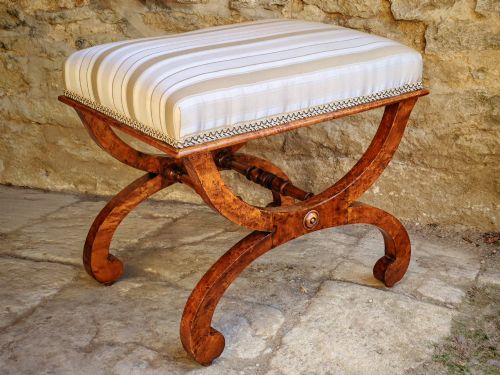


Regency Curule Seat
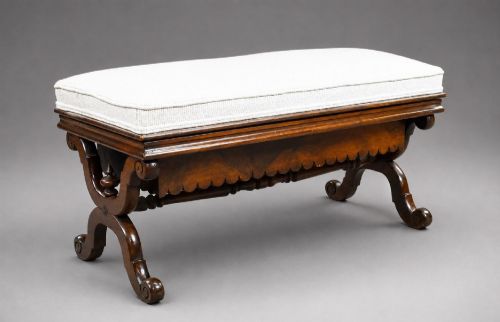
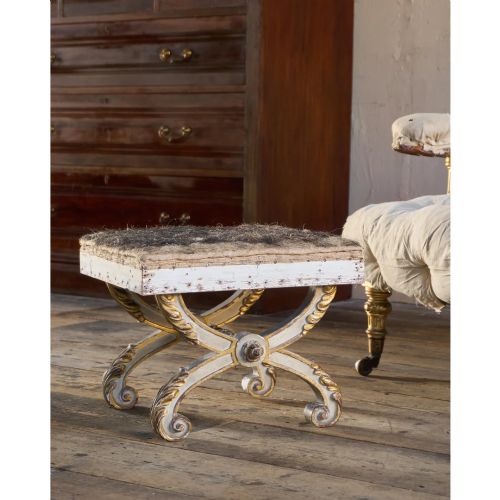
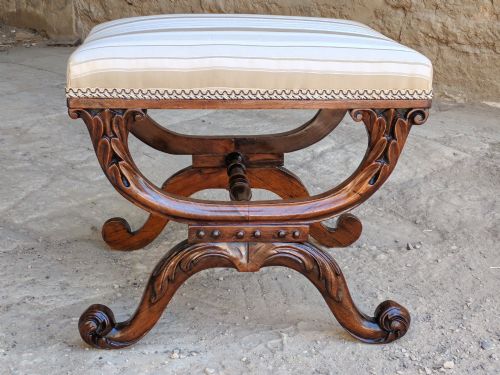
These regency curule seat examples are classical X-framed forms designed for prominent rooms, bringing ancient Roman authority directly into domestic spaces.
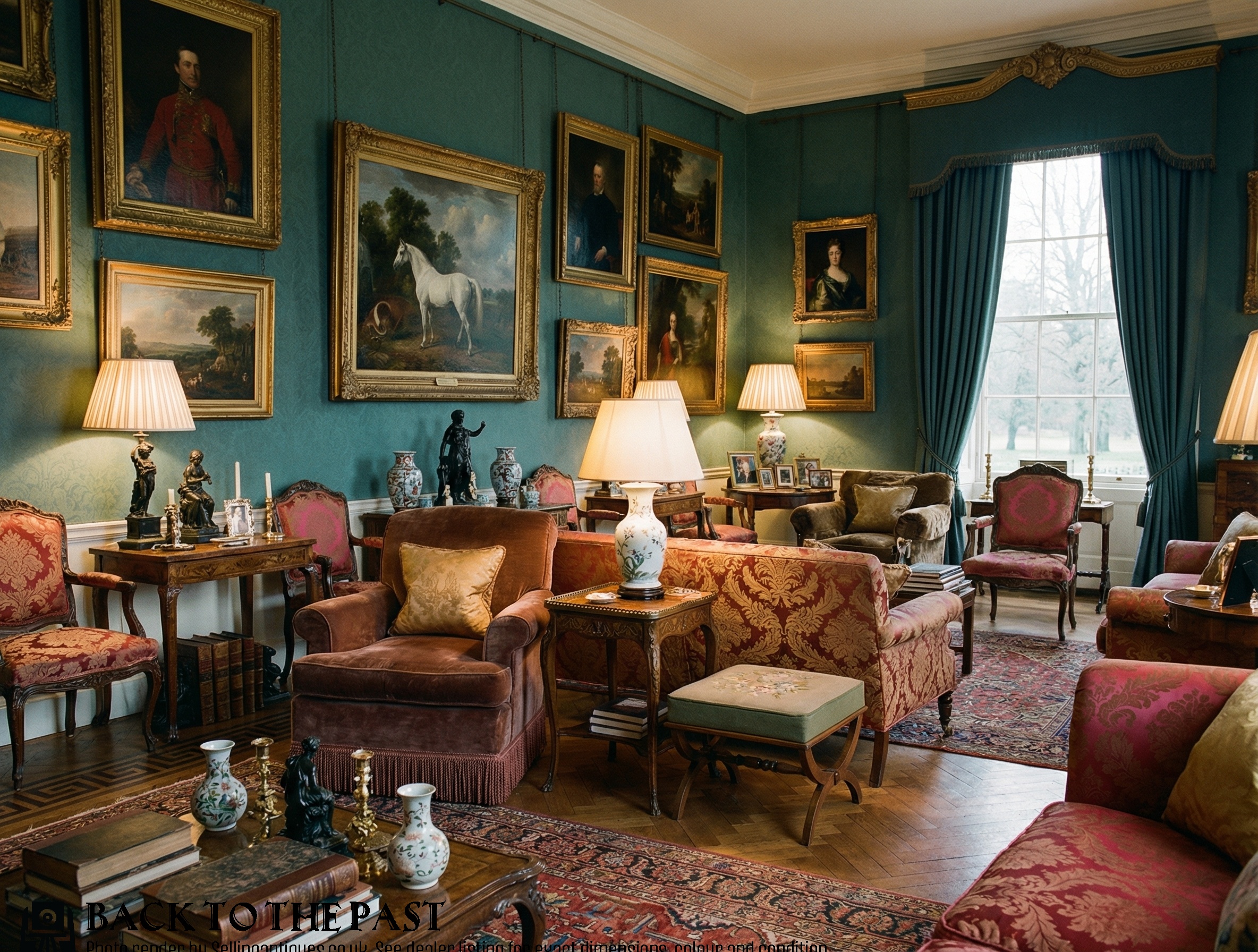
Regency Curule Seat
A regency curule seat draws on classical Roman folding chair shapes, translated into domestic seating forms like stools, window seats, and benches. Most pieces appearing here belong to the nineteenth century, including the Regency period itself alongside related William IV and Georgian eras.
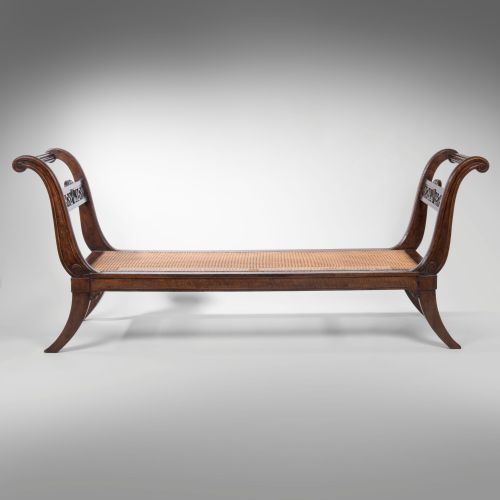
The inventory covers a varied selection of object types, ranging from simple footstools and piano stools to large window seats and open armchairs. Mahogany and rosewood form the core of the wooden examples, accompanied by giltwood, gesso, and iron frames.
How They Were Made
Cabinetmakers utilised dense timbers like mahogany and rosewood to construct the characteristic crossing curves of the frame. Selected pieces incorporate brass details, gesso over giltwood, or cane inserts to enhance the architectural silhouette.
Upholstery plays a fundamental role, utilising fabric, tapestry, and traditional stuffing methods across stools and window seats. Inlaid elements and carved details appear on specific frames, reflecting regional English, Irish, Italian, and French workshops.
Regional variants span English workshops, Irish cabinetmakers, French Empire designs, and Italian neoclassical giltwood production.
What Varies In Quality
The strength of the intersection where the X-frame members cross dictates the structural integrity of the seat. Superior examples demonstrate precise joinery that handles weight evenly without relying on visible exterior reinforcement.
Material selection separates standard production from exceptional pieces, notably the choice of highly figured rosewood, burr maple, or fire-gilt surfaces. The refinement of carved ornament and the retention of period upholstery materials further distinguish the range.
Miles & Edwards
The Regency Curule Seat Glossary
- Curule
- An ancient Roman magistrate's chair shape characterised by crossing concave legs forming an X. This classical silhouette was revived during the Regency and nineteenth century for ceremonial and domestic seating.
- Giltwood
- Timber coated with gold leaf or powder over a prepared gesso ground. This technique provides a brilliant metallic finish frequently seen on neoclassical and continental examples.
- X-frame
- A structural furniture base formed by intersecting side supports that create an X shape when viewed from the side. It underpins the entire curule form.
- Gesso
- A plaster-like mixture applied to wood surfaces as a smooth base for gilding or painting. It allows crisp, low-relief ornamentation to be modelled directly onto the frame.
- Window seat
- An elongated stool or bench designed specifically to sit within a bay or recessed window space. These often share the curule X-frame configuration in Regency interiors.
Regency Curule Seat: Frequently Asked Questions
What is a curule seat?
A curule seat is a form of furniture based on ancient Roman folding magistrate chairs, featuring distinctive X-shaped crossing legs.
In nineteenth-century interiors, these pieces served as decorative stools, window seats, and occasional chairs rather than folding field furniture.
Where did they place window seats?
Window seats were designed to fit into deep architectural window recesses or corridors in large Georgian and Regency homes.
They provided convenient perches for reading or looking out while maintaining an unobstructed view through the lower glass.
How do I identify a Regency period piece?
Regency pieces typically display classical restraint, architectural symmetry, and inspiration from ancient Greek, Roman, and Egyptian design.
Makers working in this period relied heavily on dark imported timbers, brass mounts, and curule frames to evoke classical antiquity.
Are these seats comfortable?
Most curule stools and benches function primarily as occasional seating or decorative accent pieces rather than deep lounging chairs.
Upholstered tops and padded window seats offer a firm sit, though their rigid X-frames prioritise architectural form over soft lounging.