


Green Tapestry Stool
These green tapestry stool pieces bring tactile historic warmth to a room, offering practical seating paired with rich needlework top surfaces.
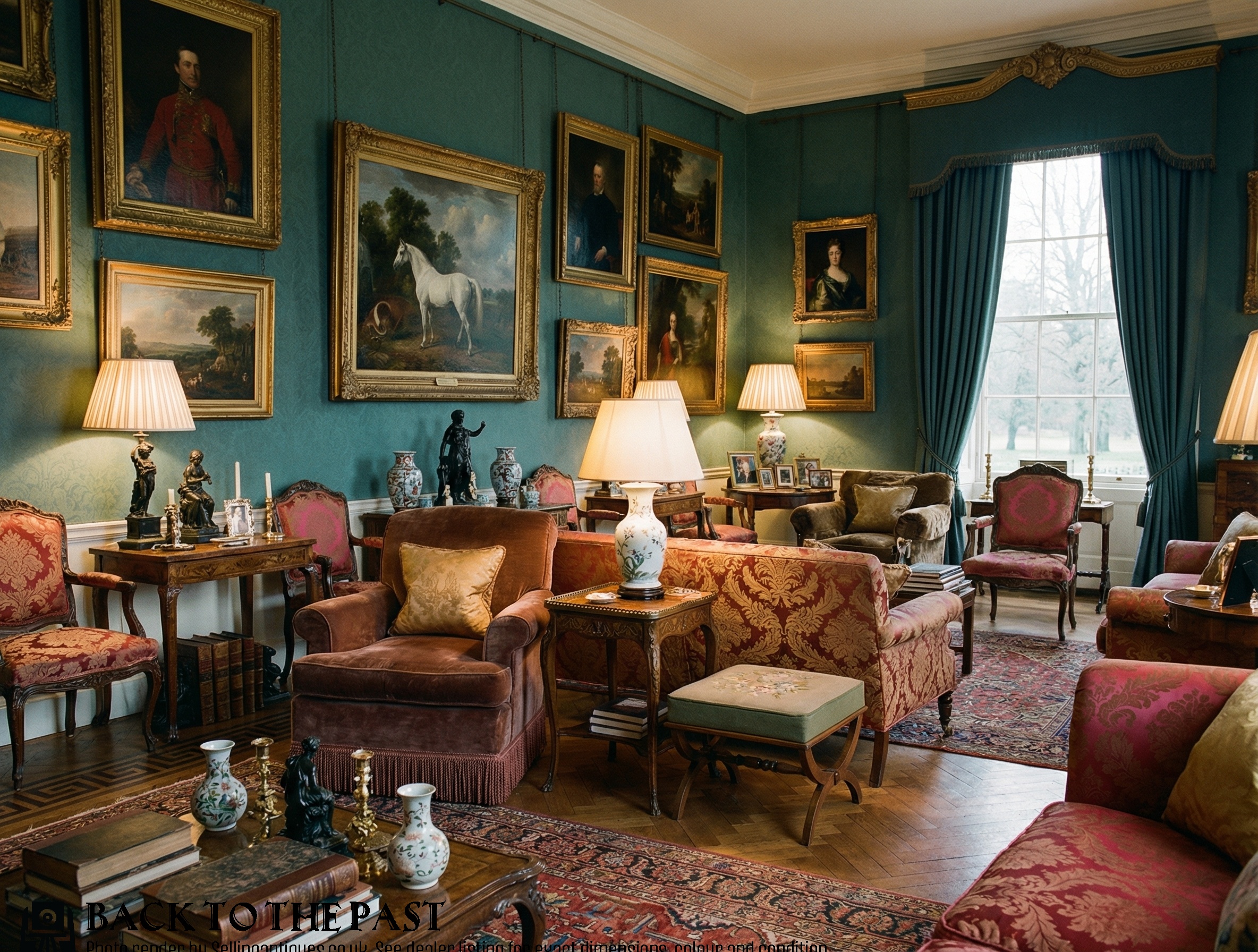
Green Tapestry Stool
A green tapestry stool spans several distinct historical eras, appearing in forms such as Victorian centre stools, Regency ottomans, and earlier 17th century back stools. Buyers seeking these items encounter a variety of seating types including footstools, window stools, and work boxes.
The pieces listed on this page range from Victorian walnut and mahogany frames to rosewood Regency examples and 1920s needlework designs. Makers and origins stretch from French foot stools to pieces produced by Whytock and Reid.
Most items combine a wooden frame with textile upholstery, often featuring needlepoint or tapestry work. Forms vary from long footstools and window stools to compact poufs and paired back stools.
How they were made
Makers utilised solid timbers such as mahogany, walnut, rosewood, and general wood to construct the foundational frames of these stools. Wood carving often defines the structural style, visible in pieces from the Regency and Victorian periods.
Upholstery forms the decorative top surface, employing tapestry, wool, fabric, and needlepoint. Brass details occasionally appear on these frames, complementing the textile coverings.
Listings feature items from the 17th Century, Victorian period, Regency era, and 1920.
What varies in quality
The calibre of the timber frame distinguishes individual pieces, with dense hardwoods like rosewood and walnut holding higher finish quality than general wood variants. Hand-carved decorative elements display greater artisanal precision than plain structural joints.
The condition and complexity of the tapestry or needlework surface dictate much of the visual appeal. Original needlepoint and detailed textile execution separate standard utility items from finer decorative examples.
Whytock and Reid
The Green Tapestry Stool Glossary
- Tapestry
- A form of textile art traditionally used for wall hangings or heavy upholstery. On these stools, it provides the decorative needlework top surface.
- Ottoman
- A low upholstered seat or bench without a back or arms. Some historical variants double as work boxes.
- Needlepoint
- A type of canvas work embroidery stitched with yarn. This technique creates the detailed patterned surfaces seen on many period stools.
- Regency
- An architectural and design period dating from the early nineteenth century. Pieces from this era often feature refined rosewood frames and distinctive silhouettes.
Green Tapestry Stool: Frequently Asked Questions
What periods do these stools come from?
The available pieces span multiple centuries, including the seventeenth, nineteenth, and early twentieth centuries.
Specific stylistic influences range from Regency and Victorian Rococo Revival to Chippendale and Queen Anne styles.
How were these stools used historically?
These items served various domestic functions, from resting feet to providing extra seating by windows or centre tables.
Some larger examples, such as ottomans and work boxes, combined seating with compartment storage for household tasks.
What materials make up the frames?
Frames are constructed from hardwoods such as mahogany, walnut, and rosewood, alongside general wood.
Brass components also appear on certain frames to accent the timber structure.
How do I identify the upholstery?
The top surfaces are finished in tapestry, wool, fabric, and needlepoint materials.
Many listings specifically retain original needlepoint or textile coverings applied during their period of manufacture.