




Regency Column Wall Mirror
These regency column wall mirror examples bring architectural order to a room through classical framing and bright glass.
Regency Column Wall Mirror
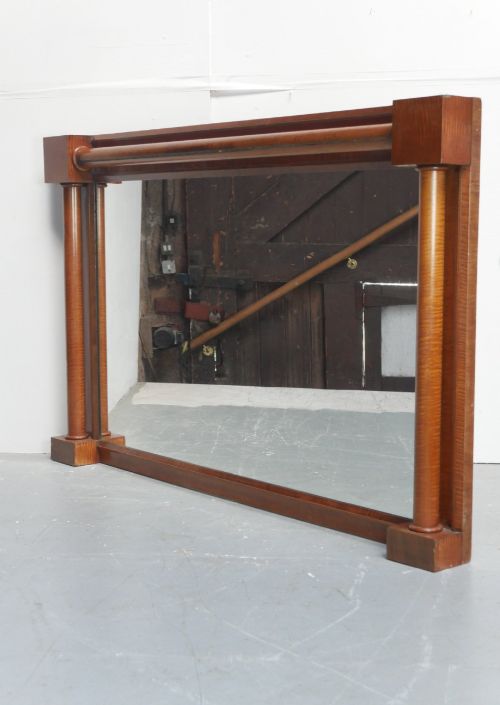
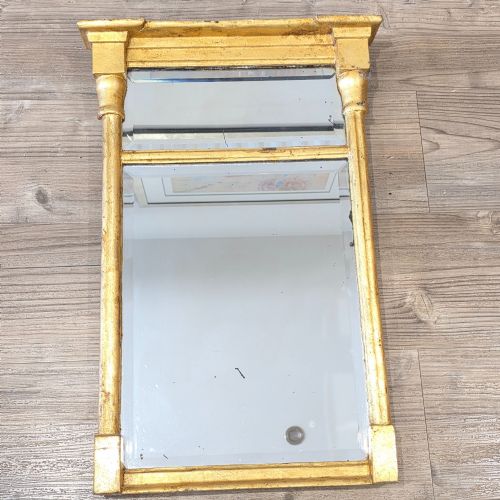
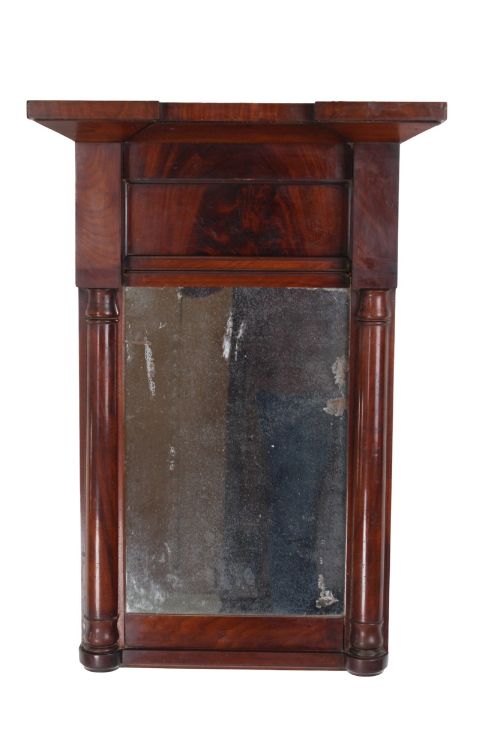
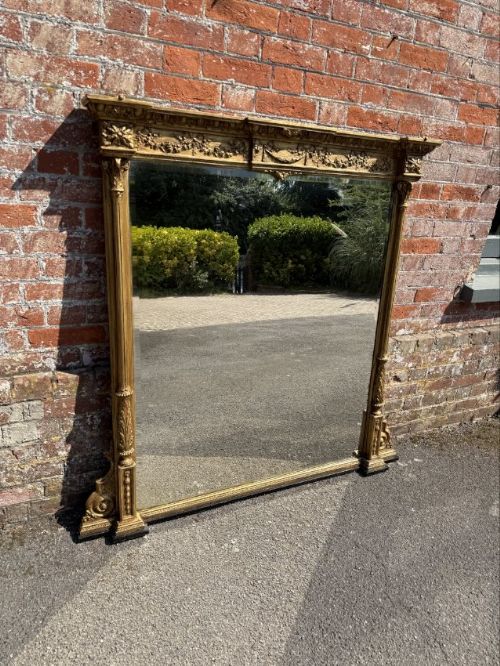
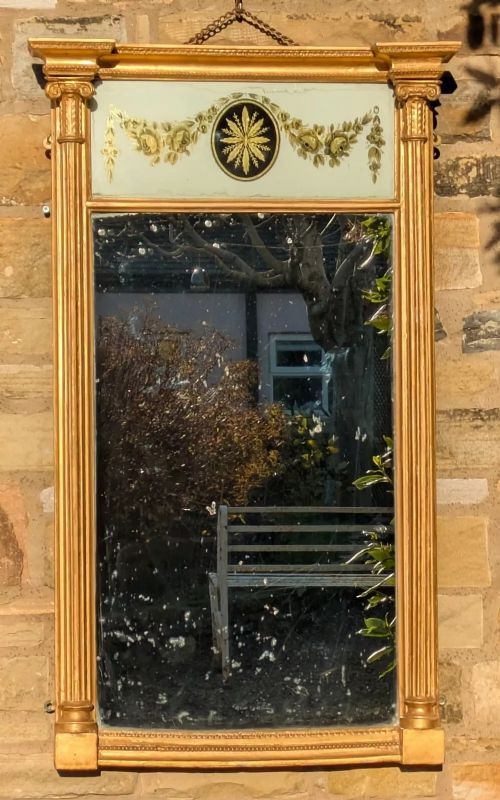
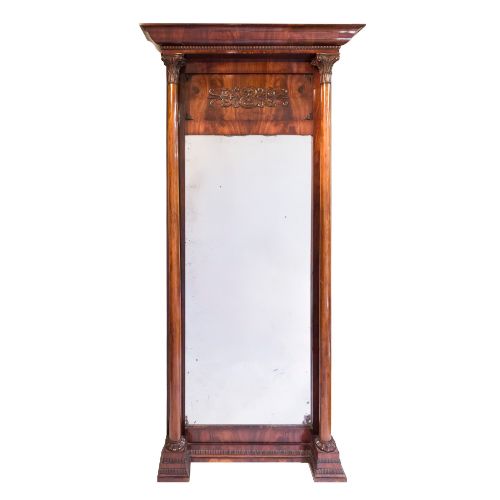
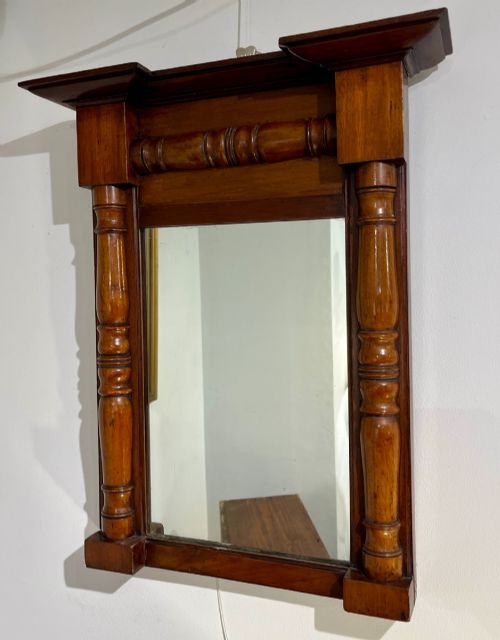
When you search for a regency column wall mirror, you encounter wall mirrors, overmantel mirrors, and pier mirrors built in periods spanning the Regency, Victorian, and Edwardian eras. The most common form met here is the pier mirror or overmantel mirror featuring classical columns or pilasters flanking the glass.
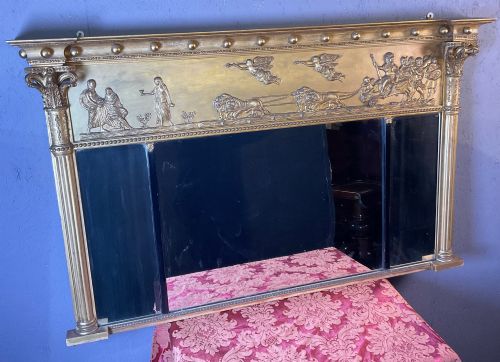
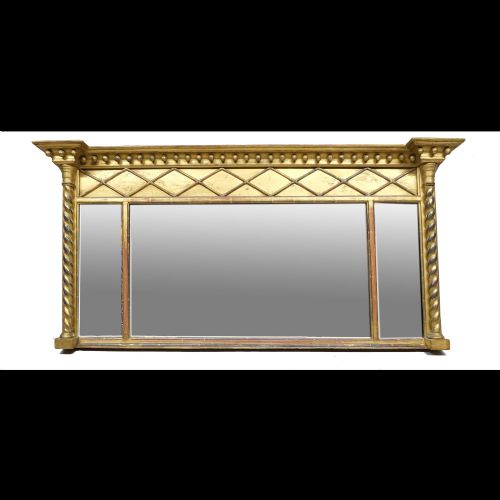
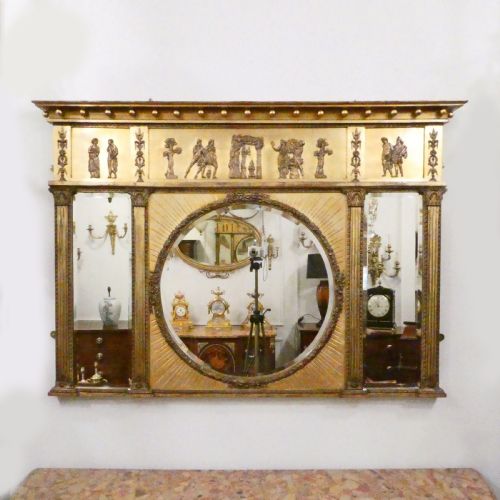
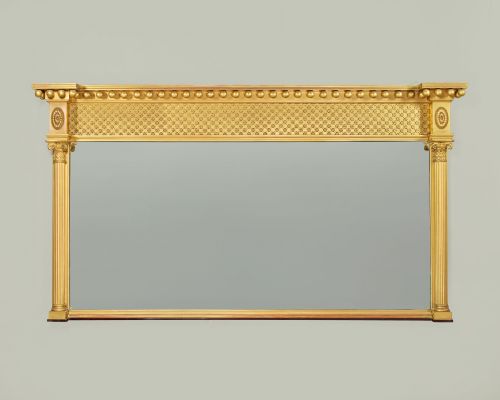
Originating primarily from English workshops, these pieces draw on Neoclassical, Grand Regency, and Regency Revival design idioms. They range from neat-sized pier mirrors suitable for narrow wall spaces to large triptych and triple plate overmantel mirrors designed to sit above a fireplace.
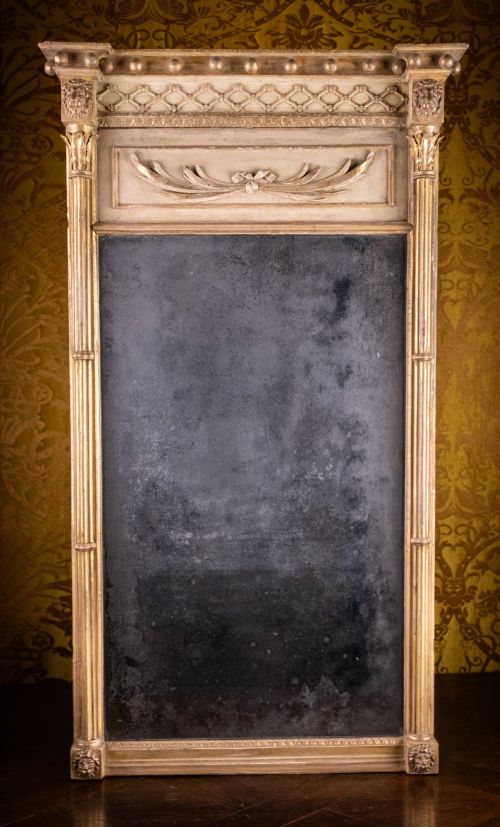
The architectural vocabulary relies heavily on straight structural lines set off by decorative details such as lion masks, verre eglomise panels, or Egyptian Revival columns. Pieces appear in both original period execution and later revival interpretations spanning the nineteenth century.
How they were made
Carved wood and gesso provide the structural and decorative foundation for gilded examples, allowing crisp enrichment of column capitals and frames. Gold leaf and composition materials are applied over the gesso base to achieve a brilliant reflective surface.
Mahogany and birds eye maple feature prominently in timber versions, selected for rich grain patterns and finished with polished surfaces. Mirror glass plates are set within the timber or gilt frames, sometimes split into triptych formats or paired with decorated glass panels.
Current listings feature pieces spanning the 1800s through the Edwardian era, incorporating materials such as giltwood, gesso, mahogany, and birds eye maple.
What varies in quality
The crispness of the carved wood and gesso ornamentation defines the visual success of gilded column frames, distinguishing masterwork modelling from softer, mechanical decoration. Detail in column capitals, reeding, and applied elements like lion masks reveals the hand of a skilled maker.
The choice of primary timber and the handling of parcel gilt or painted surfaces dictate the refinement of mahogany and maple pieces. Superior examples balance architectural proportion with harmonious integration of decorative panels and plate glass.
The Regency Column Wall Mirror Glossary
- Pier mirror
- A tall mirror specifically designed to hang on the wall space between windows, known as the pier.
- Overmantel mirror
- A wide horizontal mirror intended to be positioned directly above a mantelpiece or fireplace.
- Verre eglomise
- A cold decoration technique involving painting and gilding on the reverse side of glass panels.
- Gesso
- A plaster-like mixture applied to wood frames to provide a smooth base for subsequent gilding.
- Triptych
- A mirror plate divided vertically into three distinct sections within a single frame.
Regency Column Wall Mirror: Frequently Asked Questions
Where should I hang a pier mirror?
Pier mirrors function best in narrow wall spaces, traditionally between windows or above console tables, to reflect natural light.
Their vertical proportions help elongate wall space while maintaining a disciplined architectural presence.
How do I identify a Regency period mirror?
Regency pieces often display classical architectural motifs such as columns, reeding, and Neoclassical ornamentation derived from ancient Greek and Roman design.
Materials commonly include giltwood, carved gesso, and figured mahogany.
What is an overmantel mirror used for?
Overmantel mirrors are wide horizontal glasses built to mount above a fireplace opening, unifying the hearth with the rest of the room.
They frequently incorporate multiple plate sections or decorative panels to fill expansive wall areas.
How do giltwood and painted finishes differ?
Giltwood finishes apply gold leaf over gesso and carved wood to create a bright, reflective metallic surface that catches interior light.
Painted and parcel gilt finishes combine pigmented surfaces with selective gilding to highlight architectural details like columns and mouldings.