


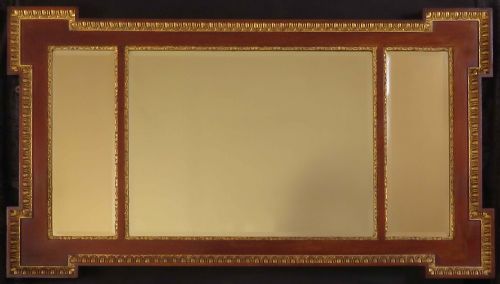
Gilded Triple Plate Mirror
A gilded triple plate mirror brings depth and light to a room through its three distinct glass panels.
Gilded Triple Plate Mirror
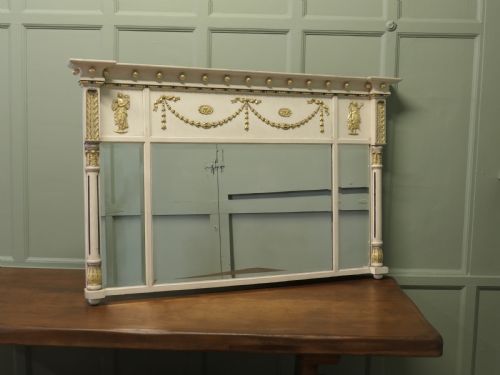
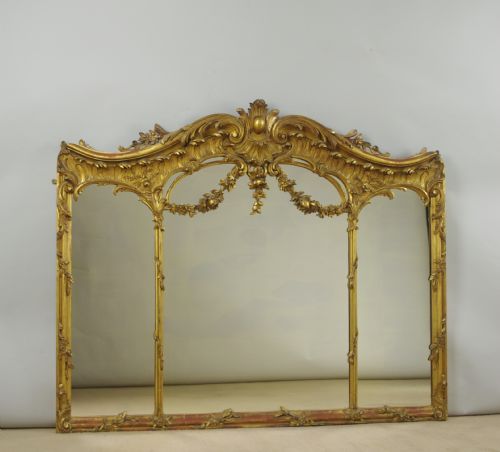
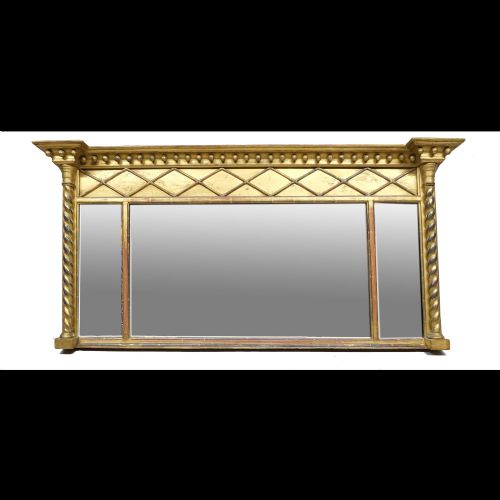
When you search for a gilded triple plate mirror, you are looking at large architectural glass pieces designed to sit above a mantelpiece or anchor a principal wall. These grand accessories span the nineteenth century, including Victorian, Regency, and late Georgian periods.
The most common form you will meet on this page is the horizontal overmantel mirror featuring three adjacent glass panels within a single frame. They frequently display stylistic details such as laurel wreaths, griffin friezes, or elaborate Rococo carving.
Makers often shaped these frames from giltwood, gesso, and composition materials on a wooden base, finished in bright or burnished gold leaf. They function both as practical reflective surfaces and as substantial decorative focal points for period interiors.
How they were made
The construction of these frames combines carved wood with moulded gesso and composition ornaments to achieve intricate relief work. Artisans then applied thin sheets of gold leaf over a prepared bole base, burnishing the surface to catch the light.
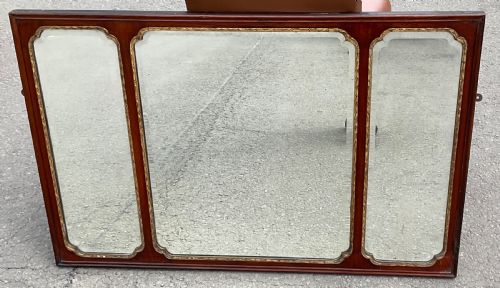
The glass itself consists of three separate plates set side by side within the rebate of the frame, often divided by slender mouldings or wooden muntins. Secondary woods such as pine or mahogany commonly form the robust backboards that protect the mirror plates.
Listings feature pieces spanning the nineteenth century, encompassing Regency, Victorian, and late Georgian periods.
What varies in quality
The depth and crispness of the carved or moulded ornamentation set the better examples apart from simpler production. Fine pieces display sharply rendered motifs like laurel wreaths and classical friezes rather than soft or muddy composition details.
The quality of the gilding and the preservation of the original mirror glass also dictate the standing of a piece. Original silvering showing even foxing and ageing holds more character than poorly executed modern re-silvering.
The Gilded Triple Plate Mirror Glossary
- Giltwood
- Wood that has been coated with gold leaf or gold paint. It provides a luminous surface that defines classical and revival mirror frames.
- Gesso
- A plaster-like mixture applied to wood frames to create a smooth surface for carving or moulding. It allows intricate decorative details to be formed before gilding.
- Overmantel mirror
- A large horizontal mirror designed specifically to hang above a fireplace mantel. These pieces frequently incorporate multiple glass plates to expand visual space.
- Composition
- A moulded material made from whiting, resin, glue, and oil pressed into decorative ornaments. It was widely used in the nineteenth century as a faster alternative to hand carving.
- Triptych
- An artwork or object divided into three sections. In mirror design, this describes the arrangement of three distinct glass plates within one frame.
Gilded Triple Plate Mirror: Frequently Asked Questions
Where should I hang a triple plate mirror?
These large horizontal mirrors find their traditional home directly above a fireplace mantelpiece, where their length balances the hearth below. They also work effectively on a principal dining room or hallway wall to reflect light and expand the sense of space.
Ensure the wall construction and fixings can safely support the considerable weight of a large timber and glass frame.
How do I clean a gilded frame?
Dust gilded wood and composition frames gently with a soft, dry brush or a feather duster. Avoid using water, chemical sprays, or damp cloths, as moisture can damage the delicate gold leaf and underlying gesso.
Clean the mirror plates separately using a cloth sprayed lightly with glass cleaner, taking care not to let the liquid run onto the gilt frame.
Are the mirror plates original?
Many nineteenth-century mirrors retain their original glass, which often exhibits subtle foxing, dark spots, or slight distortion. These natural signs of ageing confirm the antiquity of the piece and add authentic character.
Replacement glass appears brighter and entirely uniform, which sometimes occurs when plates were updated during the twentieth century.
What is the difference between Regency and Victorian styles?
Regency frames, dating from the early nineteenth century, lean towards classical restraint with architectural lines, ball-stud details, and motifs like laurel leaves and griffins. Victorian examples from later in the century often embrace heavier proportions and exuberant Rococo revival curves.
Both styles utilise giltwood and composition, but the sculptural vocabulary reflects the changing tastes of their respective decades.