
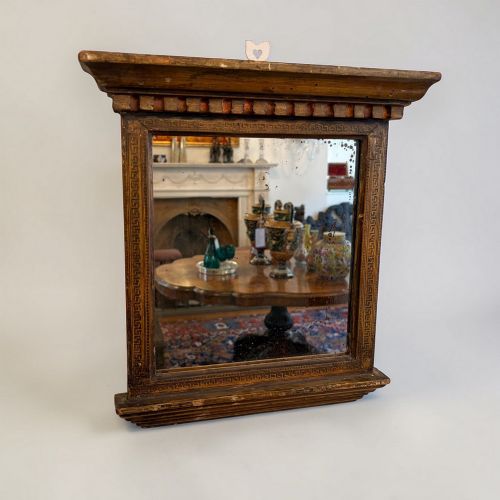
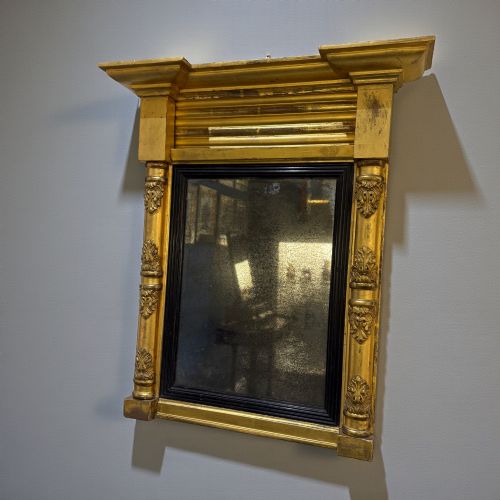
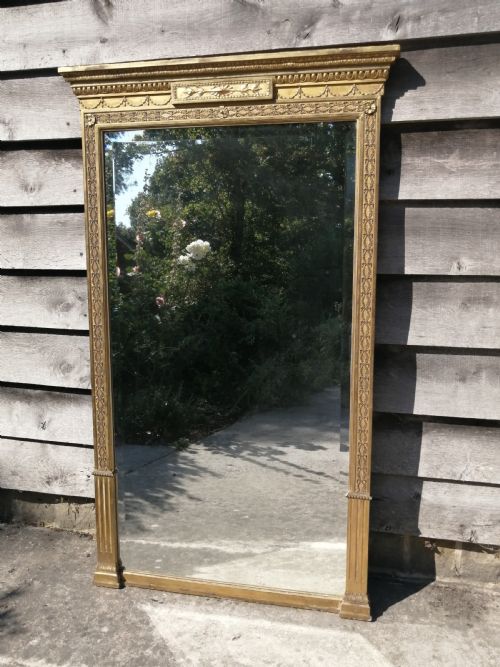
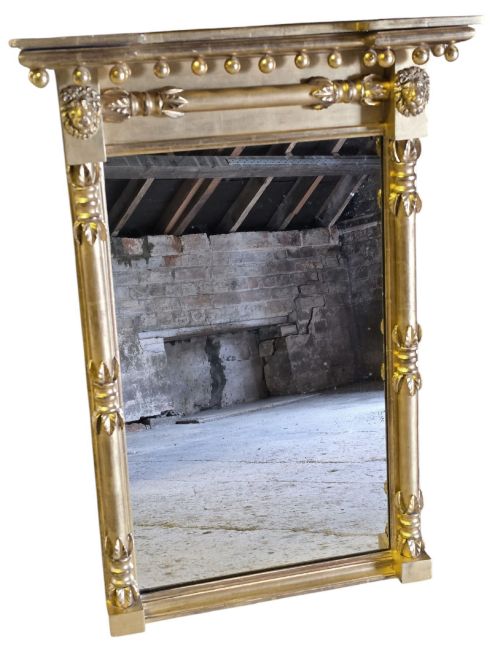
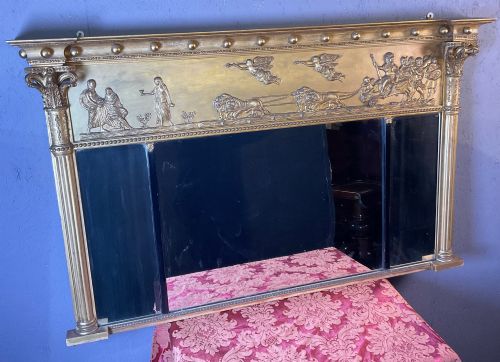
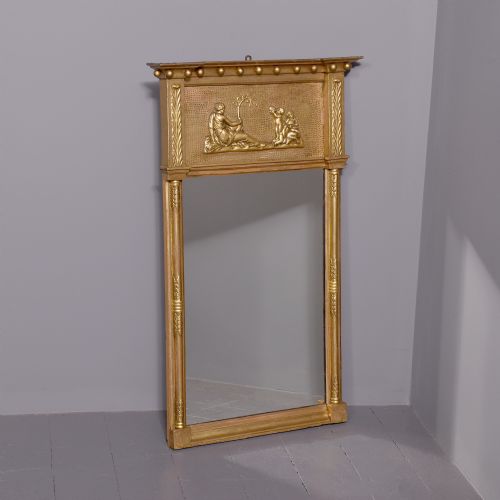

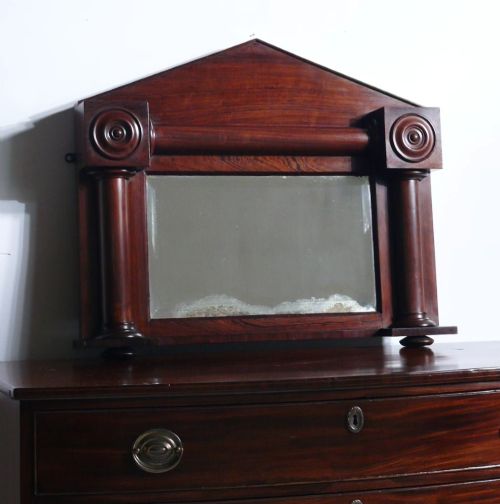
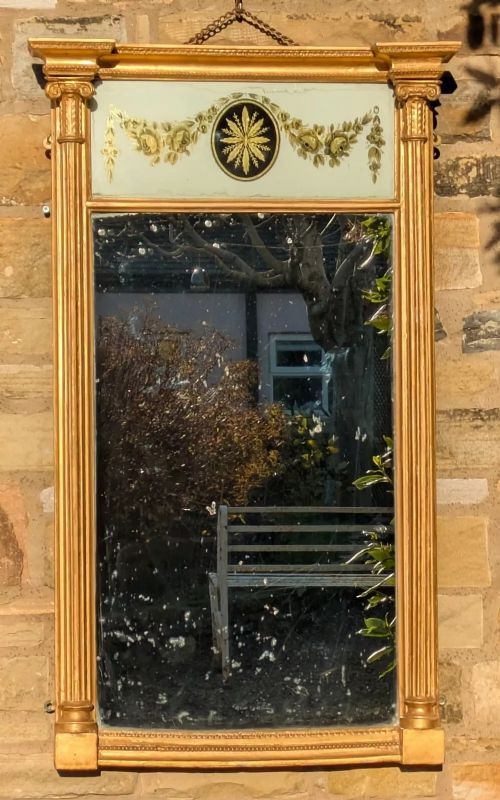
Regency Classical Overmantel Mirror
A regency classical overmantel mirror brings architectural harmony and reflected light to a principal room, drawing the eye with its balanced proportions.
Regency Classical Overmantel Mirror
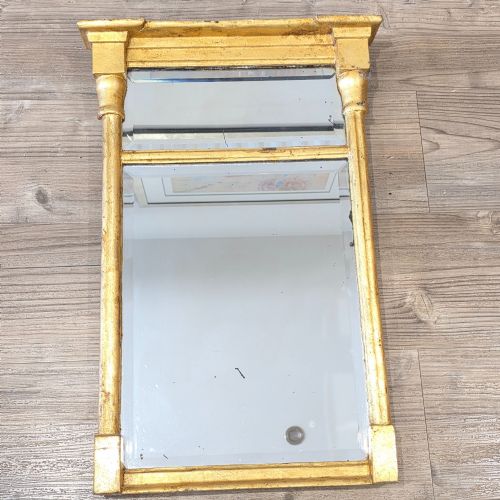
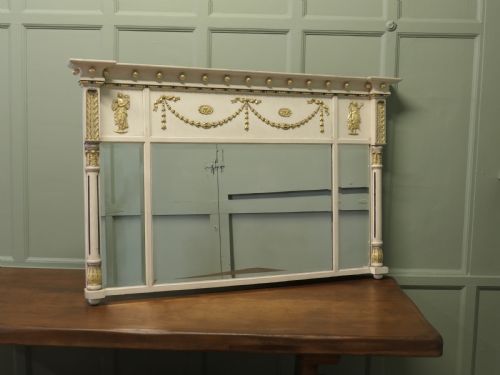
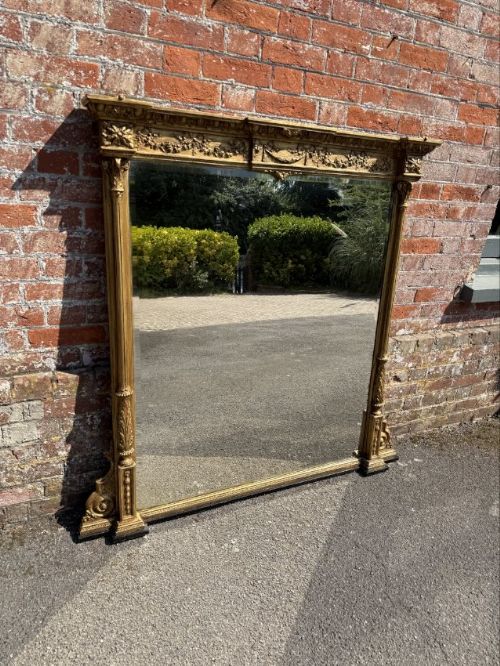
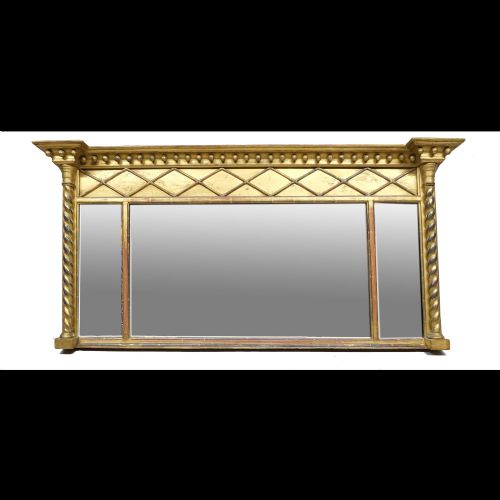
A regency classical overmantel mirror sits above a fireplace mantel or acts as a grand wall-hanging pier glass, shaping the visual volume of a formal interior. These pieces emerge predominantly from nineteenth-century workshops, drawing on classical motifs, columnar supports, and tripartite glass plates.
The buyer meets variations spanning genuine Regency period pieces alongside later revival interpretations, including Victorian and Edwardian examples. Forms range from compact painted frames to expansive gilded triptychs incorporating reverse-painted glass panels and lion masks.
How They Were Made
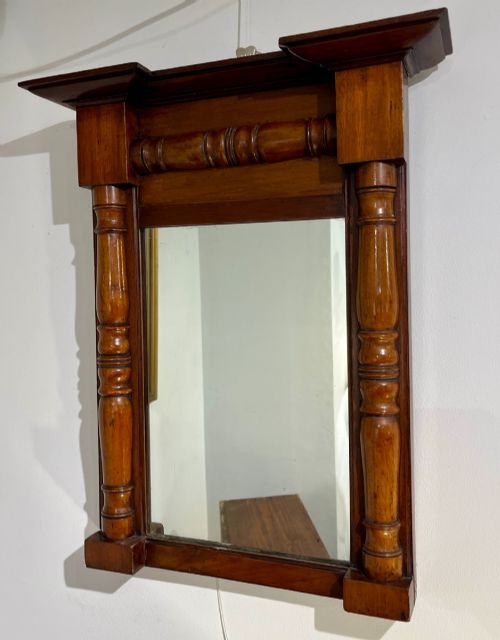
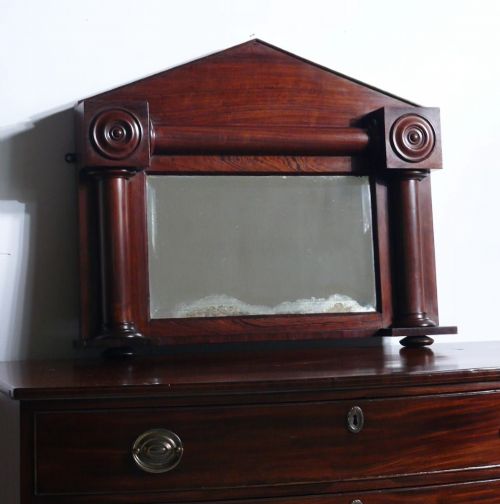
Craftsmen built structural frames from woods such as mahogany, rosewood, and pine, applying layers of gesso and composition ornament to shape classical details like columns, pilasters, and friezes. Gold leaf or paint finished the surfaces, creating the characteristic metallic sheen.
Mirrors utilised individual glass plates, sometimes divided into triple-plate triptych configurations or paired with verre églomisé panels featuring dark ground painted decoration.
Materials recorded across the inventory include giltwood, gesso, rosewood, mahogany, and composition ornament.
What Varies in Quality
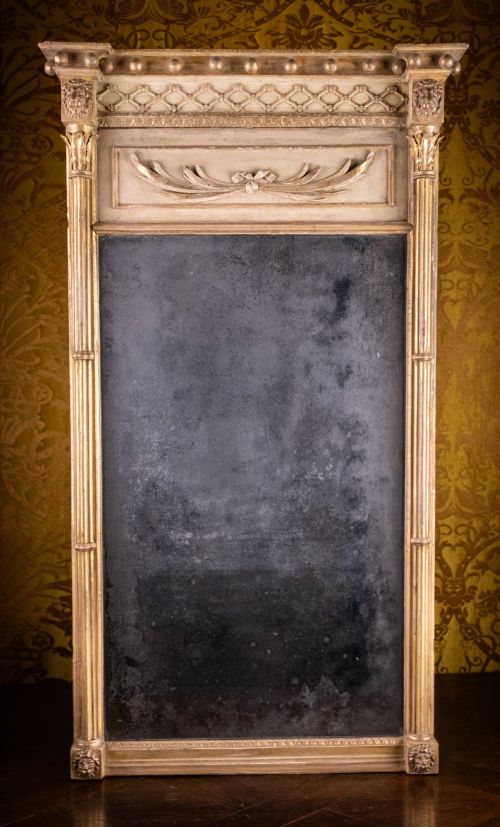
The crispness of carved wooden ornament and the depth of the gesso moulding dictate the initial visual impact of the piece. Superior examples exhibit finely detailed composition work, intact original gilding, and well-proportioned architectural frames that hold their structural integrity.
The condition and retention of the original mirror plates and glass panels define historical authenticity. Traces of age, such as subtle silvering degradation or crackle finish, interact with the quality of the timber beneath the surface to establish the character of the object.
The Regency Classical Overmantel Mirror Glossary
- Overmantel mirror
- A large horizontal mirror designed specifically to hang on the wall directly above a fireplace mantelpiece. They often mirror the length of the hearth below.
- Pier glass
- A tall vertical mirror traditionally hung on the narrow section of wall between two windows, known as the pier. These reflect natural light deeper into the room.
- Verre églomisé
- A cold decoration technique where design is applied to the reverse side of glass using gold or silver leaf and paint. This creates a reflective, decorative panel often seen above the main mirror plate.
- Gesso
- A plaster-like mixture applied to wood frames as a base for gilding or painting. Skilled carvers and modellers built up intricate relief decoration upon this foundation.
- Triptych
- A mirror divided into three distinct vertical sections or plates within a single frame. This layout is frequently found in grand nineteenth-century overmantel designs.
Regency Classical Overmantel Mirror: Frequently Asked Questions
Where should an overmantel mirror be hung?
These mirrors traditionally anchor the space directly above a fireplace mantel, reflecting the room and balancing the hearth below.
They also function effectively on principal walls as standalone statement pieces where their proportions can command the interior.
What is a pier mirror?
A pier mirror is a tall, narrow glass designed to fit the wall space situated between two windows.
Because of their vertical format, they maximise light distribution in period drawing rooms and parlours.
How do I spot an original glass plate?
Original mirror plates display subtle imperfections, slight foxing, and variations in depth within the glass itself.
Later replacements usually appear overly flat and lack the characteristic soft reflection of nineteenth-century mercury or silvered glass.