
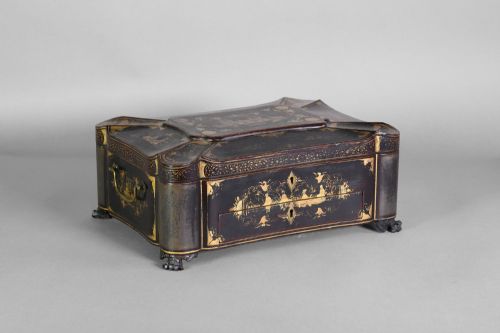
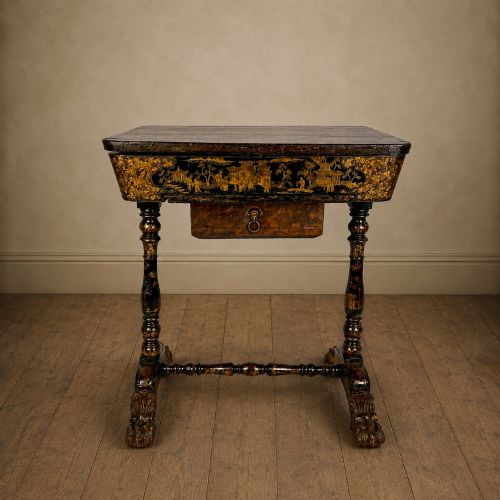


Regency Chinoiserie Box
A regency chinoiserie box brings miniature hand-painted worlds of gilded figures and pavilions directly to a side table.
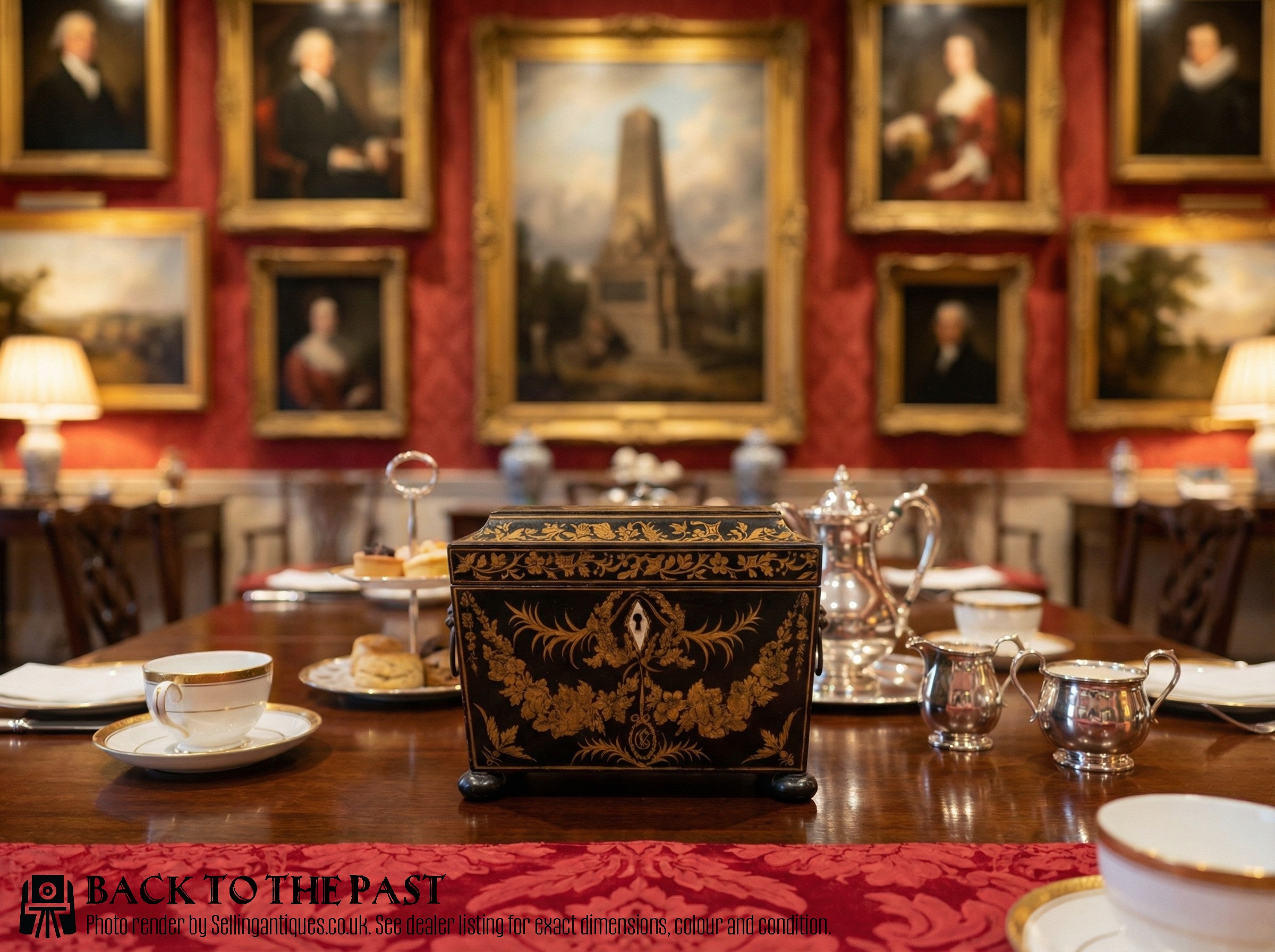
Regency Chinoiserie Box
A regency chinoiserie box covers a diverse group of lidded containers created during the Regency period alongside related examples from the Georgian and Victorian eras. These items span functional objects like tea caddies, work tables, sewing boxes, and playing card cases designed to hold specific household treasures.
The objects most frequently met on this page include penwork tea caddies and lacquered workboxes decorated with Chinese Export motifs. Makers of the period drew heavily on Eastern design traditions, rendering imaginary landscapes on wood surfaces with meticulous ink penwork and gold leaf.
How they were made
Craftsmen built the foundations of these pieces from timber, preparing the surfaces with layers of dark lacquer or specialised paint before applying detailed penwork. Artisans executed intricate architectural scenes and figures using fine ink line work alongside applied gold leaf to catch the light.
Listings feature items spanning the Regency, Georgian, and Victorian periods, constructed from lacquered wood, brass, bone, and gold leaf.
What varies in quality
The skill of the penwork and the density of the gilding separate standard containers from exceptional pieces. Superior examples display microscopic precision in the depiction of figures, foliage, and pavilions without hesitation in the ink lines.
The integrity of the original lacquer surface and the completeness of internal fitments, such as ivory or bone knobs and compartments, influence the standing of an individual box. Surviving stands or original brass feet add considerable substance to the overall execution.
The Regency Chinoiserie Box Glossary
- Penwork
- A decorative technique using india ink applied with a fine quill pen to create elaborate monochrome or gilded illustrations on wood. This method mimics the appearance of more costly inlaid ivory or tortoiseshell.
- Japanning
- A European imitation of East Asian lacquerwork produced by coating surfaces with specialised varnishes and paints, then curing them under heat. The finish is typically built up in multiple layers to achieve a glossy dark ground.
- Chinoiserie
- The European interpretation and imitation of Chinese and East Asian artistic traditions, popular in architecture, furniture, and decorative objects during the eighteenth and nineteenth centuries. It relies on fanciful motifs of temples, mandarins, and exotic flora.
- Toleware
- Enamelled or lacquered metalware, usually sheet steel or iron, shaped into domestic articles such as trays, caddies, and canisters. British workshops produced varied painted versions throughout the nineteenth century.
- Tea Caddy
- A small lidded box or chest originally built to store loose tea leaves under lock and key when tea was an expensive commodity. Regency variants often contain multiple internal compartments with individual lids.
Regency Chinoiserie Box: Frequently Asked Questions
What were tea caddies used for?
Tea caddies served as secure containers for storing costly black and green tea leaves in the Georgian and Regency drawing room. Because tea was a precious commodity, the caddy was kept locked by the mistress of the house.
Inside, the box typically featured two or more lidded canisters to separate different tea varieties, sometimes accompanied by a mixing bowl made of glass.
How do I date a penwork box?
Dating relies on examining the secondary woods used inside the box, the style of the brass feet and escutcheons, and the specific motifs in the penwork. Regency examples from around eighteen-twenty tend to feature crisp architectural perspectives and distinct Regency furniture forms.
Later Victorian interpretations often display heavier proportions and simpler decorative repeats compared to the intricate Chinese Export influences seen in the early nineteenth century.
What is the difference between japanning and lacquer?
True Asian lacquer uses the sap of the toxic lac tree native to East Asia, which hardens into a durable, waterproof resin through a chemical curing process. European japanning uses spirit- or oil-based varnishes applied over painted wood grounds.
While both finishes create a dark, glossy surface suitable for gilding, European japanned pieces often exhibit a different ageing crackle and softer underlying timber construction.
Can I use a workbox for jewellery?
Workboxes and sewing tables transition easily to holding modern jewellery due to their compartmentalised interior trays and small lidded sections. Originally designed for spools, pins, and needlework tools, these fitted spaces suit rings and earrings well.
Lined interiors of silk or velvet, where original, provide a soft bed for precious items, though fragile textiles may require gentle handling.