
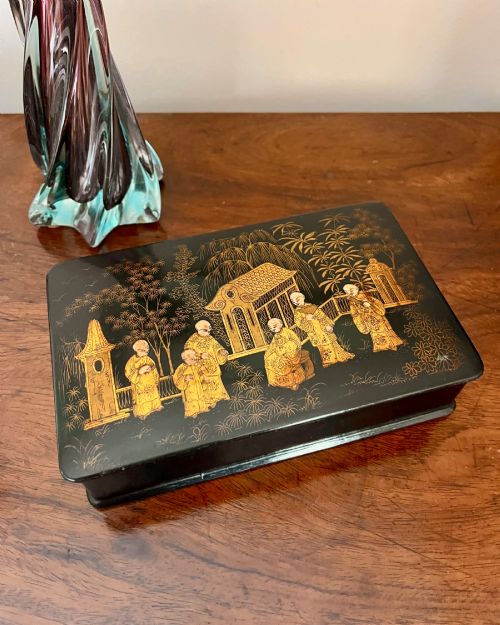


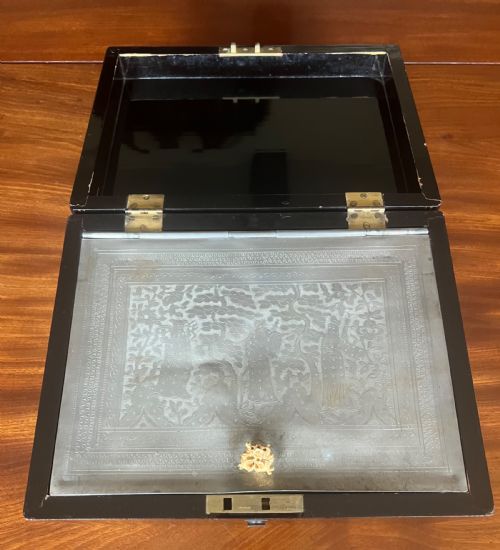


Chinoiserie Tea Box
A chinoiserie tea box brings painted narrative and exotic detail to a room, offering both decorative presence and historic storage.
Chinoiserie Tea Box
When you search for a chinoiserie tea box, you encounter decorative boxes and tea caddies shaped by Chinese Export influence and European adaptation. These pieces function as small storage vessels designed with distinctive orientalist motifs.
The selections on this page span the Georgian, Regency, and nineteenth-century periods, presenting forms finished in paint, lacquer, and penwork. Most examples meet you as tea caddies or decorative boxes originating from the early nineteenth century and the Regency era.
Makers of these items drew upon Chinese Export styles and Georgian chinoiserie aesthetics to produce distinctive containers. The surface decoration remains the primary draw for collectors seeking period decorative arts.
How they were made
Wood serves as the foundational material for these pieces, shaped into tea caddies and decorative boxes. Artisans applied layers of paint, lacquer, and gold leaf to create the characteristic pictorial surfaces.
Listings feature items spanning the Georgian, Regency, and nineteenth-century periods, including pieces dated to eighteen-hundred and eighteen-seventy.
What varies in quality
The refinement of the surface decoration dictates the standing of an individual piece. Fine penwork and detailed gold leaf application separate sophisticated examples from simpler painted boxes.
Period integrity and the preservation of original lacquer surfaces distinguish better specimens. The crispness of the Chinese Export motifs and the execution of the stylistic details govern overall visual success.
The Chinoiserie Tea Box Glossary
- Chinoiserie
- A European stylistic tradition reflecting Chinese artistic influences, prevalent in decoration and furniture design. This aesthetic defines the painted and lacquered scenes found on these boxes.
- Tea Caddy
- A small container originally built for storing dry tea leaves before blending. These vessels often include internal lidded compartments.
- Penwork
- A decorative technique using fine ink lines on wood to simulate inlay or engraving. Regency makers used this method to render intricate orientalist scenes.
- Lacquer
- A durable finish applied in multiple layers and polished to a smooth sheen. Asian and European workshops utilised this medium to achieve glossy decorative surfaces.
- Chinese Export
- Goods manufactured in China specifically for Western markets during the eighteenth and nineteenth centuries. These items blended Eastern craftsmanship with European functional requirements.
Chinoiserie Tea Box: Frequently Asked Questions
What is a chinoiserie tea box?
A chinoiserie tea box is a small decorative container finished with painted, lacquered, or penwork scenes inspired by Chinese art. These pieces were originally made to store valuable tea leaves in period homes.
Today, they function as decorative objects that introduce colour and historical character to interior spaces. Their intricate surface designs make them focal points on tables or mantels.
How were these boxes used?
Historically, these boxes served to keep expensive loose tea leaves secure and dry under lock and key. Tea was a costly commodity, making the caddy an important household possession.
Modern owners utilise them as decorative storage for small items or display them purely for their visual artistry. Their compartmentalised interiors suit the organisation of small trinkets.
How do I date a Regency tea caddy?
Dating relies on identifying characteristic stylistic markers, construction methods, and materials associated with the early nineteenth century. Regency examples frequently feature specific penwork techniques and classical furniture proportions.
Comparing the hardware, hinges, and internal wooden compartments with dated examples helps confirm the period of origin. Surface motifs also reflect the prevailing taste of the eighteen-hundreds.
What materials are used on these boxes?
Wood forms the core structure, overlaid with paint, lacquer, or delicate penwork designs. Artisans frequently integrated gold leaf to highlight the pictorial scenes.
Additional materials include brass for locks and escutcheons, alongside bone for internal details. Each component contributes to the decorative and structural integrity of the piece.