



Lacquered Tea Chest
A lacquered tea chest brings tactile warmth and intricate hand-painted detail into a room, offering both history and practical storage.
Lacquered Tea Chest
When searching for a lacquered tea chest, buyers encounter decorative boxes and tea caddies spanning the Regency and Victorian periods, alongside Chinese export pieces. These vessels range from early nineteenth-century forms to mid-nineteenth-century items.
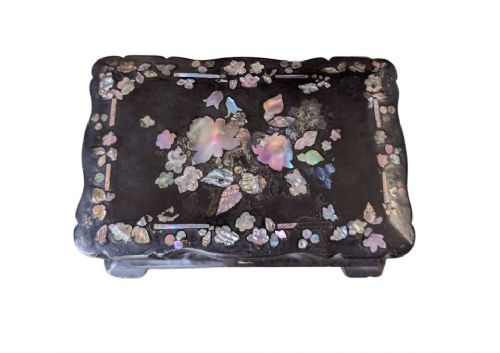
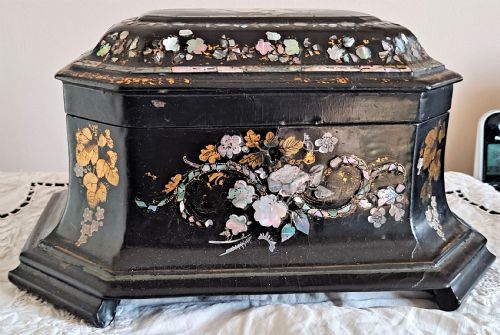
The most common versions met on this page are Victorian papier-mâché tea caddies adorned with mother-of-pearl inlay, alongside Regency penwork tea caddies and Chinese export tea caddies dating around eighteen hundred.
These objects served the domestic ritual of storing precious tea leaves securely under lock and key, reflecting the status and refinement of polite society in past centuries.
How they were made
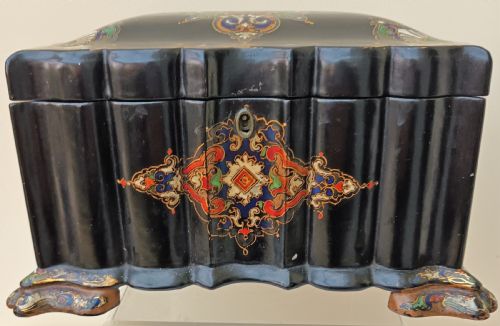
Maker construction relies heavily on wood, papier-mâché, and lacquer, manipulated to create sturdy boxes designed for daily household use. Artisans applied layers of lacquer to achieve smooth, resilient exterior surfaces.
Decoration incorporates gold leaf, mother-of-pearl, and delicate penwork to build up intricate Chinoiserie scenes and geometric borders. Brass fittings and bone elements frequently provide internal and external structural accents.
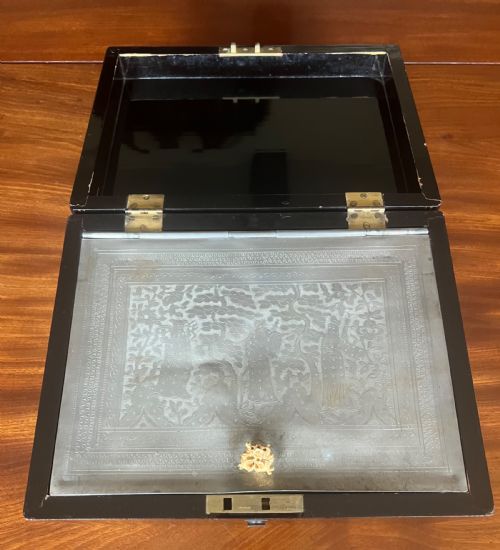
Current listings feature materials including lacquer, wood, brass, gold leaf, papier-mâché, bone, mother-of-pearl, and pewter across Regency and Victorian styles.
What varies in quality
Quality rests upon the precision of the penwork detail and the intricacy of the applied gold leaf and mother-of-pearl inlay. Finer examples display meticulous hand-painted Chinoiserie motifs with sharp, sustained definition across the surface.
The choice of base material and the depth of the lacquer finish separate standard domestic boxes from superior pieces. Well-executed construction ensures the box and its interior compartments survive centuries of handling.
The Lacquered Tea Chest Glossary
- Tea caddy
- A small box or chest designed for storing loose tea leaves. These containers often featured internal compartments and locking lids to protect expensive leaf tea.
- Penwork
- A decorative technique utilising fine ink drawing on wood or gesso to imitate Japanese lacquer or intricate carving. Artisans created elaborate motifs by hand before sealing the surface.
- Papier-mâché
- A composite material made from paper pulp or reinforced paper layers mixed with adhesive. It was moulded into shapes and lacquered to provide a smooth canvas for inlay.
- Chinoiserie
- European artistic style reflecting Chinese aesthetic traditions through decorative motifs and landscapes. This style dominated much of the Regency decoration seen on these boxes.
- Mother-of-pearl
- The iridescent inner layer of certain mollusc shells used for inlay work. Craftsmen cut thin pieces to embed within lacquer and papier-mâché surfaces.
Lacquered Tea Chest: Frequently Asked Questions
How do I date a tea caddy?
Dating a tea caddy involves examining the construction materials, the style of decoration, and internal hardware. Regency penwork and Victorian papier-mâché exhibit distinct artistic traits tied to their respective eras.
Early nineteenth-century Chinese export pieces often display specific lacquer techniques and forms. Comparing these physical characteristics against known period styles helps establish an accurate timeline.
What was penwork used for?
Penwork served as an intricate decorative method to ornament wooden boxes with detailed ink drawings. Artisans drew complex Chinoiserie scenes and borders directly onto prepared surfaces before varnishing.
This technique provided an accessible alternative to expensive imported lacquerware. It produced striking monochrome or tinted designs that defined the Regency style.
How should I clean a papier-mâché caddy?
Cleaning requires a soft, dry cloth to gently remove dust from the lacquer and inlay surfaces. Moisture and chemical cleaners can damage fragile papier-mâché and dislodge mother-of-pearl.
Keeping the box away from direct sunlight and excessive humidity protects the finish. Regular gentle dusting maintains the lustre of the original surface.