
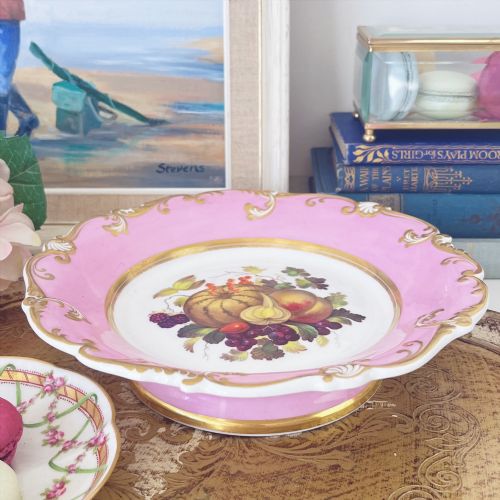
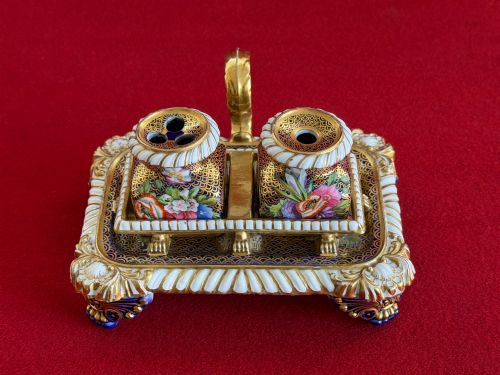
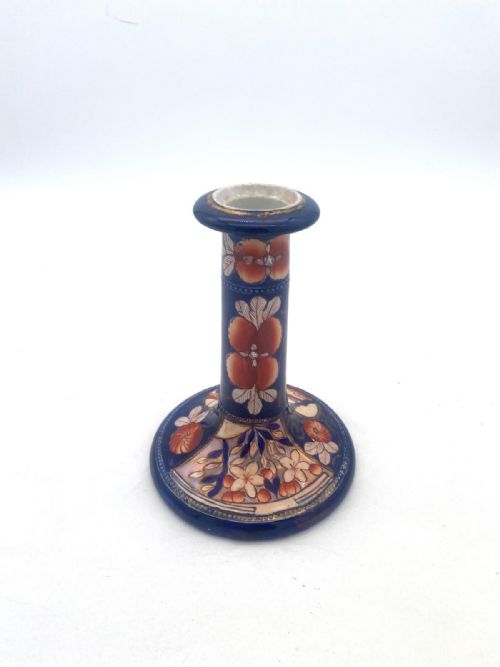
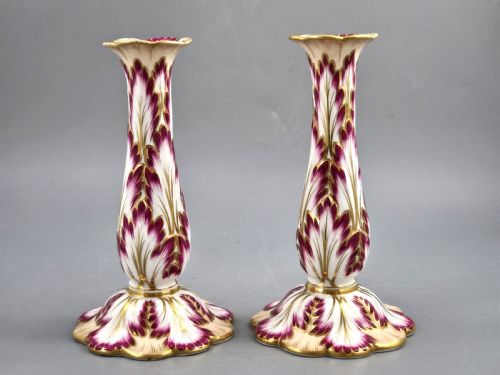
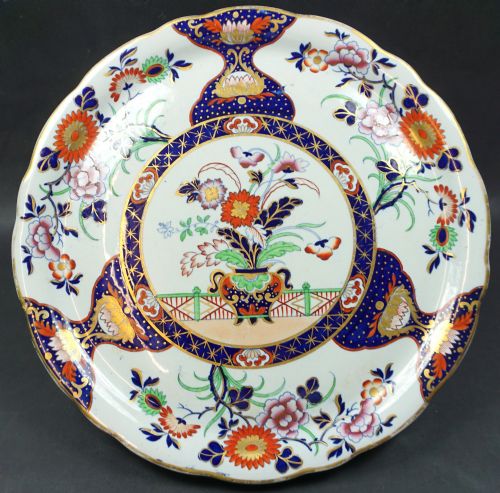
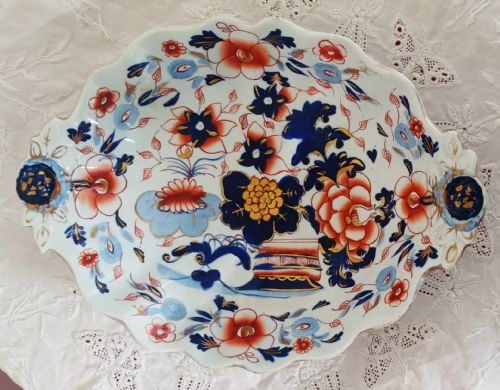

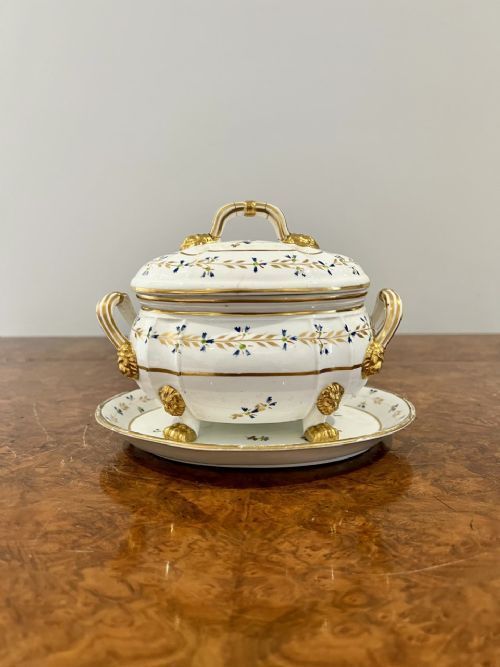


Regency Ceramic Stand
A regency ceramic stand brings crisp early nineteenth-century forms and intricate transfer-printed or hand-painted patterns to a table.
Regency Ceramic Stand
When you search for a regency ceramic stand, you encounter a variety of serving vessels, basins, and display pieces from the early nineteenth century. These objects include comports, tazzas, inkstands, soup tureens with matching bases, and specialised garden seats or wash stands.
The pieces on this page span the Regency, Georgian, and wider nineteenth-century periods, capturing the decorative tastes of English potteries between eighteen hundred and eighteen thirty. You are most likely to meet transfer-printed ironstone, porcelain comports with hand-painted fruits, and blue and white earthenware stands.
Makers such as Spode, Mason's, and Coalport produced these utilitarian and display items to serve formal dining and interior decoration. Their forms reflect both classical English Regency styles and the popular Chinoiserie tastes of the era.
How they were made
Potters of the period utilised materials such as earthenware, ironstone china, and porcelain, shaping them into sturdy vessels and delicate display stands. Surface decoration often relied on blue and white transfer printing, hand-colouring, and rich enamel palettes.
Gilding with gold leaf and intricate glaze applications added formal polish to high-end porcelain comports and inkstands. Ironstone china provided a durable body for heavy garden seats and large soup tureens intended for daily service.
Elephants and two quails unexpectedly march across the surfaces of early nineteenth-century stands and dishes.
What varies in quality
The standard of a regency ceramic stand rests on the crispness of the transfer print or the precision of the hand-painted details. Finer examples display vivid enamel colours and carefully applied gold leaf that remain sharp across the surface.
The weight and balance of the ceramic body, alongside the integrity of any associated handles, covers, or matching bases, separate standard production wares from pieces of superior execution.
H & R Daniel·Spode·Masons Ironstone·Ridgway·Hicks & Meigh·Coalport·Crown Derby·Enoch Wood & Sons·Chamberlain Worcester·Minton·Rogers
The Regency Ceramic Stand Glossary
- Ironstone China
- A patented ceramic body known for its hardness and durability. It allowed potteries to produce heavy items like soup tureens and garden seats.
- Comport
- A elevated dish or bowl used for serving fruit or sweets at the table. These often feature decorative stands or footed bases.
- Transfer Print
- A method of applying complex decorative patterns to ceramics using an engraved copper plate and tissue paper. This technique enabled consistent blue and white designs.
- Enamel
- Opaque glass-like pigments fused to the ceramic surface through firing. These added vibrant colours to hand-painted patterns.
- Chinoiserie
- A European decorative style reflecting Chinese artistic motifs. It appears frequently on Regency era plates, bowls, and stands.
Regency Ceramic Stand: Frequently Asked Questions
What was a regency ceramic stand used for?
These stands served various domestic functions, acting as bases for tureens, washing basins, or as standalone comports for serving food. Many pieces were designed to accompany specific bowls or plates to protect dining tables.
Larger versions functioned as decorative garden seats or wash stands within domestic interiors, combining utility with distinct aesthetic appeal.
How do I date a regency ceramic stand?
Dating relies on identifying the pottery mark, the manufacturing style, and the specific decorative pattern recorded in the piece's history. Items from this era typically exhibit characteristics of the Regency, Georgian, or broader early nineteenth-century periods.
Changes in ceramic bodies, such as the adoption of ironstone china alongside traditional porcelain and earthenware, also help narrow the timeframe of manufacture.
What is the difference between porcelain and ironstone?
Porcelain is a fine, vitrified ceramic material often associated with delicate cabinet cups, inkstands, and decorative comports. It tends to be more translucent and refined in its finish.
Ironstone china is a heavy, opaque earthenware developed for durability. It frequently appears on larger items like soup tureens, garden seats, and heavily patterned serving dishes.
How should I care for antique ceramics?
Antique ceramics require gentle handling to preserve fragile glazes, hand-painted enamels, and delicate applications of gold leaf. Dusting with a soft, dry cloth is usually sufficient for regular maintenance.
Avoid exposing these pieces to harsh cleaning agents, sudden temperature changes, or prolonged direct sunlight to protect the original surface decoration.