


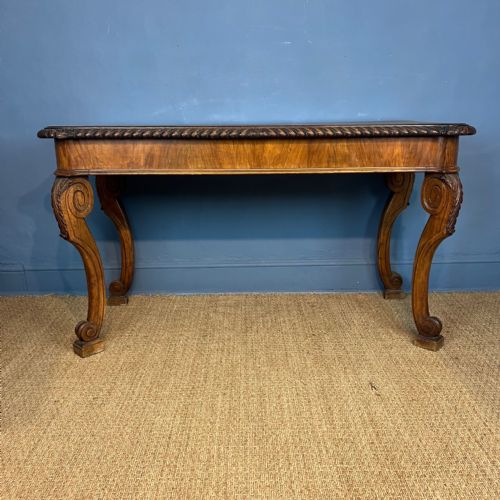


Regency Carved Wall Table
A regency carved wall table brings architectural presence to a hall or drawing room through classical lines and substantial timber.
Regency Carved Wall Table
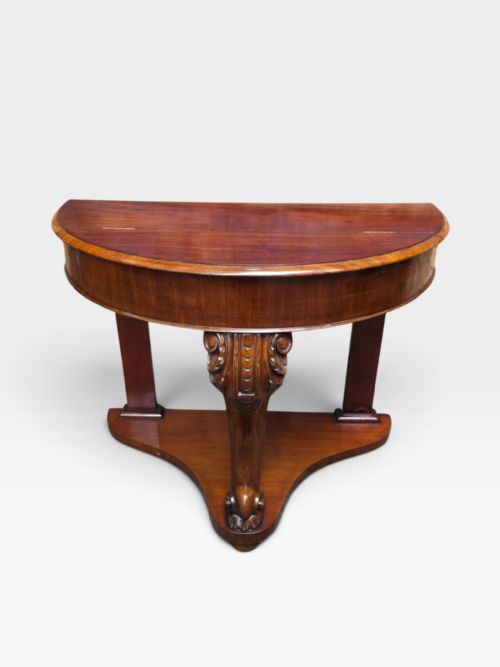
A regency carved wall table sits flush against a room's perimeter, often functioning as a console, serving, pier or hall table. These pieces emerge primarily from the nineteenth century, including specific periods like Regency, William IV, George IV and Georgian.
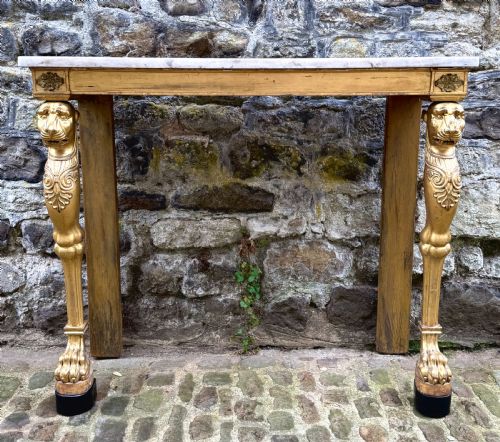
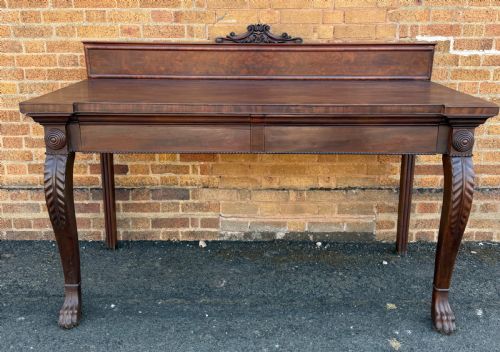
The forms span demi-lune shapes, serving tables of imposing scale, and pairs of console tables featuring pie crust edges or monumental proportions. Many examples incorporate accompanying pier mirrors or feature marble tops designed for functional display.
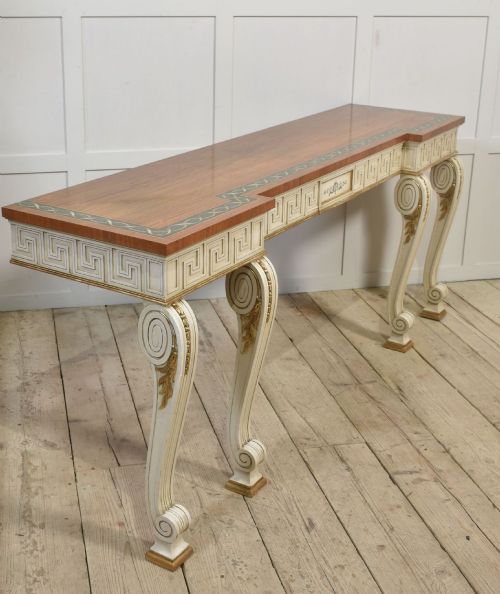
Makers and workshops from the nineteenth century utilised architectural motifs, drawing heavily on neoclassical design principles. The pieces on offer range from authentic period items to later twentieth-century interpretations.
Materials and construction
Makers relied heavily on mahogany, flame mahogany veneer, oak and walnut for the structural carcase and tabletops. Giltwood and painted wood surfaces added decorative contrast, frequently paired with marble slabs for durability and finish.
Carving technique defined the ornamental vocabulary, utilising parcel gilt highlights and classical motifs. Brass mounts and glass elements completed the assemblies on specific pier and console variants.
Listings span the nineteenth century, featuring mahogany, marble, giltwood and flame mahogany veneer.
Judging execution and proportion
Quality rests in the crispness of the timber carving and the harmony of the architectural proportions. Dense grains like flame mahogany and pollard oak elevate the visual weight of the piece.
The selection of materials marks the division between standard utility and finer craftsmanship. Solid marble slabs and meticulous gilding separate the more ambitious console and serving tables from simpler painted or plain wood examples.
The Regency Carved Wall Table Glossary
- Console table
- A table designed to be fixed against a wall, typically supported by front legs or brackets while relying on the wall for ultimate stability.
- Serving table
- A large side table placed in a dining room or hall for the presentation of dishes or decorative objects.
- Giltwood
- Timber that has been coated with a thin layer of gold leaf or gesso preparation, creating a reflective metallic finish.
- Demi-lune
- A half-moon shape characteristic of tabletops designed to sit flat against a wall with a curved front profile.
Regency Carved Wall Table: Frequently Asked Questions
Where should I place a console table?
These tables suit entrance halls, drawing rooms, or dining spaces where floor space is limited. Their shallow depth allows them to anchor a wall without obstructing movement.
They often sit beneath mirrors or artwork to create a focused decorative arrangement.
How do I care for a marble top?
Marble requires protection from acidic liquids and harsh cleaning agents that can etch the polished surface. Regular dusting with a soft cloth maintains the natural sheen.
Heavier items should be placed down gently to avoid chipping the edges of the stone.
Are these tables designed to be freestanding?
Most wall tables rely on attachment to the vertical surface for complete stability. The rear legs or brackets are often minimal since the wall bears part of the load.
Checking the stability against the skirting board ensures safe daily use.
How do I distinguish William IV from Regency style?
Regency design tends toward lighter neoclassical lines inspired by classical antiquity. William IV pieces often display heavier proportions and robust architectural members.
Both styles overlap within the broader nineteenth-century timeline found in these listings.