

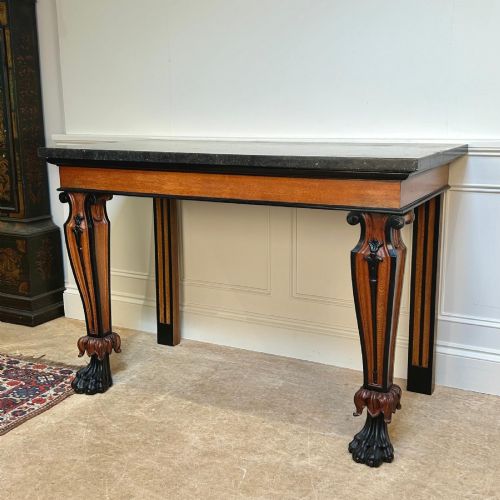
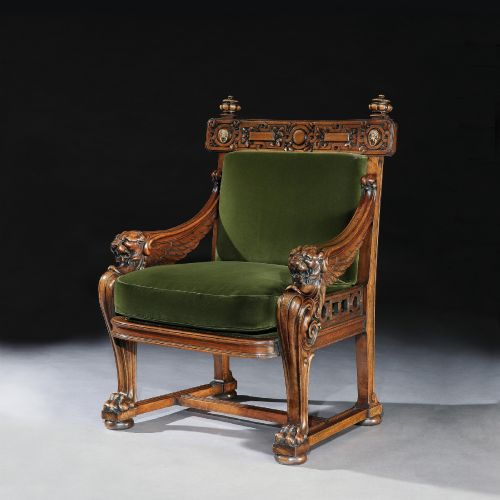
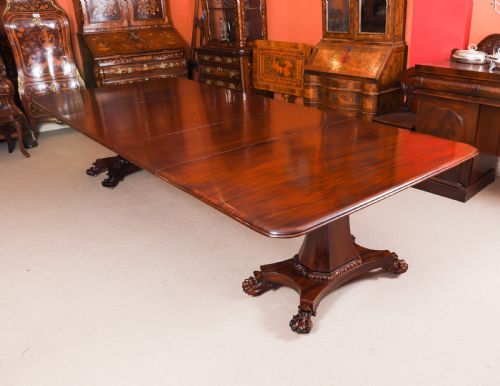
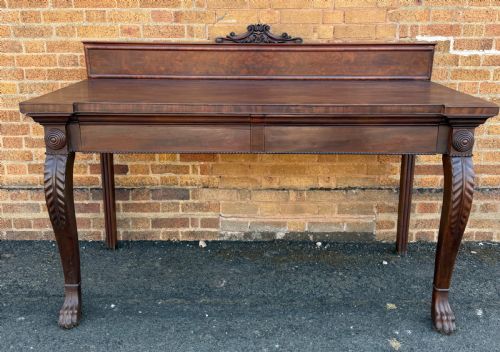
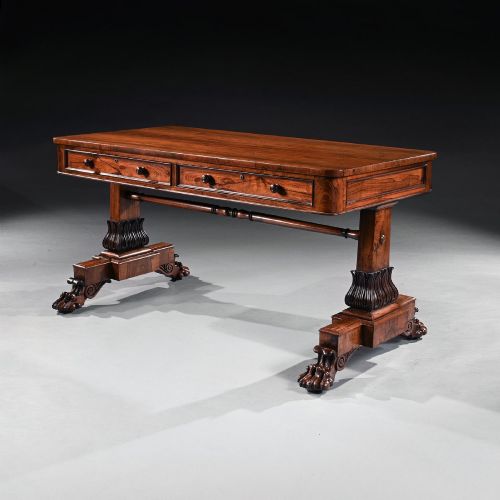
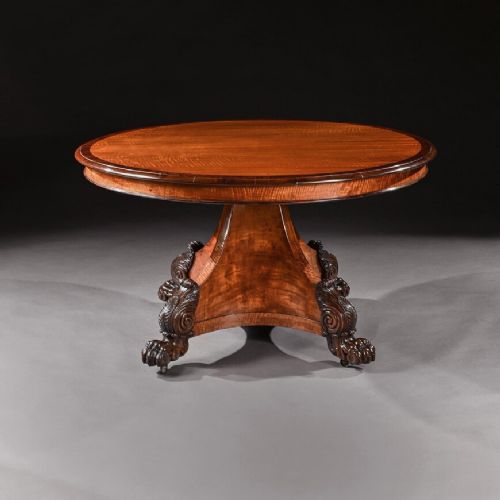
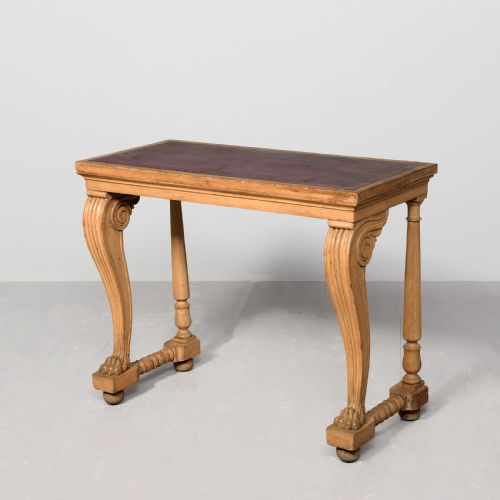
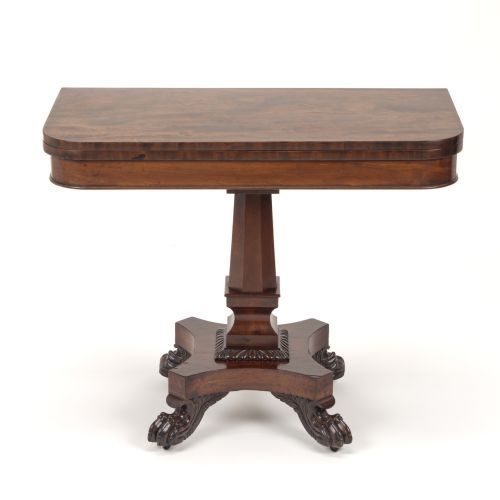
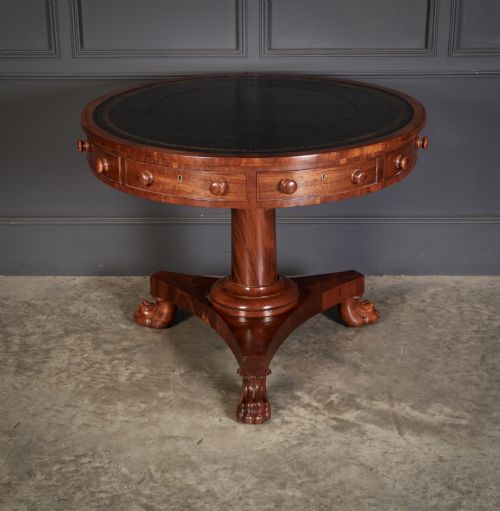


Regency Carved Paw Feet
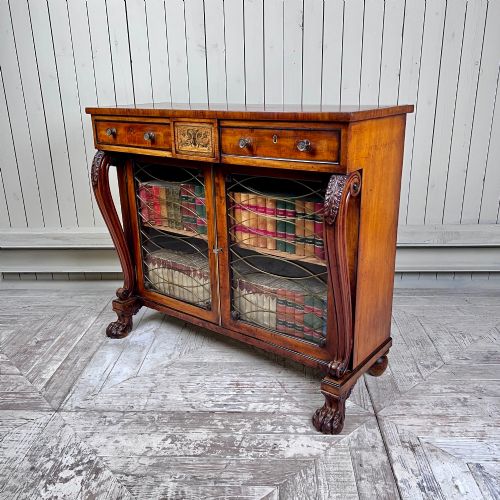
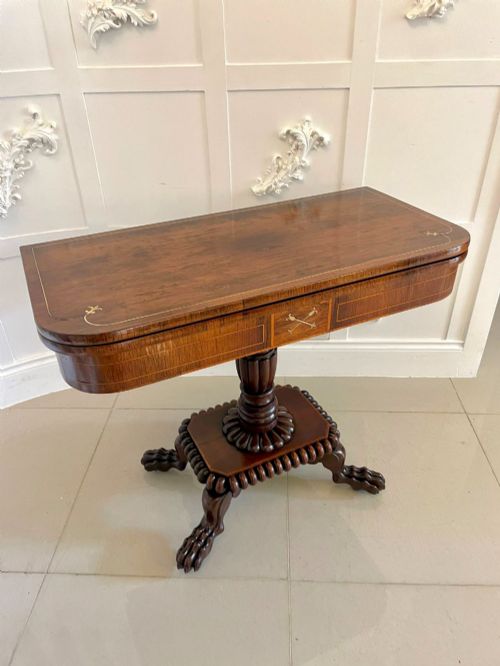
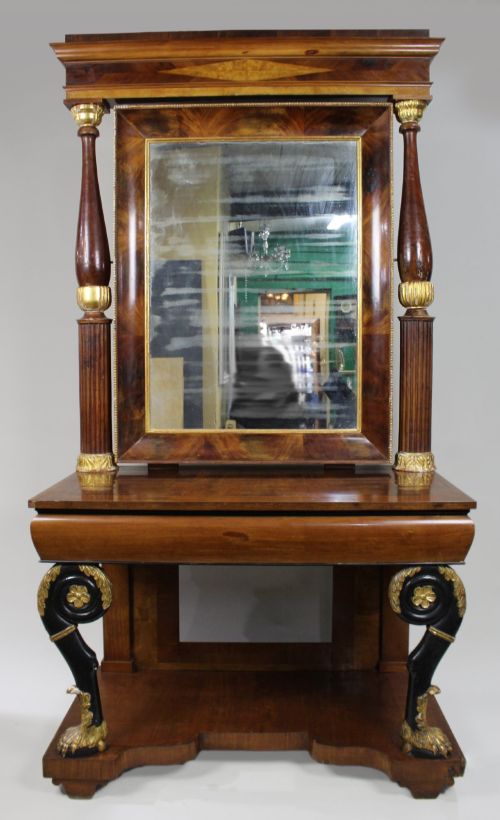
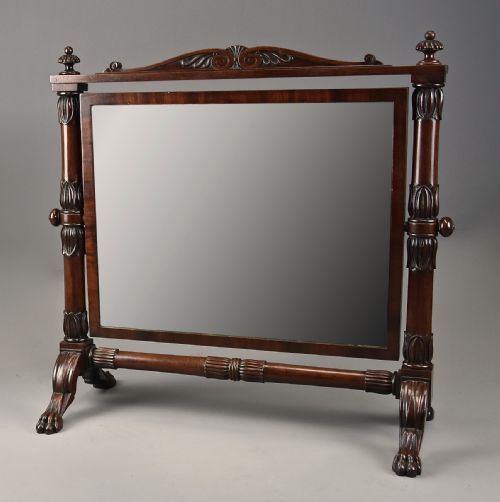
Regency carved paw feet anchor heavy mahogany and rosewood tables, serving pieces and cellarettes with sculptural weight.

Regency Carved Paw Feet
These pieces encompass dining tables, console tables, card tables, and cellarettes bearing regency carved paw feet, originating principally from the nineteenth century, Georgian, and William IV eras.
The buyer encounters substantial timber forms such as breakfast tables, pedestal card tables, and sarcophagus wine coolers, constructed from mahogany, rosewood, and oak.
Design influences span from classical British workshops to French Empire and Irish country house interpretations, anchored by distinct leonine supports.
Materials and Technique
Cabinetmakers utilised dense native and exotic timbers, pairing solid mahogany, oak, and rosewood with flame mahogany veneer, satinwood, and gonçalo alves.
Details incorporate brass inlay, parcel gilding, and contrasting ebony stringing to accentuate the structural lines of pedestals, friezes, and supports.
Carving is executed directly into the primary timber of the base, shaping robust animal paws that ground pedestal columns, console legs, and heavy cellarettes.
Nineteenth-century cellarettes occasionally doubled as miniature wine cellars complete with fitted interior compartments for securing individual bottles.
Judging Quality
The calibre of a piece rests upon the crispness of the timber carving and the architectural balance between the upper surface and the heavy footed base.
Selection of figured veneers, such as flame mahogany or rosewood, demonstrates superior workshop practice, matched by precise brass inlay and sound structural joinery.
P and MA Nicholson·Thomas Hope·James Mein of Kelso·Jean-Joseph Chapuis
The Regency Carved Paw Feet Glossary
- Cellarette
- A lockable container designed for holding wine bottles, often shaped as a sarcophagus and raised on carved feet. These items sat beneath sideboards or beside dining tables.
- Monopodia
- A single-legged support, or a support terminating in a lion or animal paw. This classical motif forms the structural base for tables and armchairs.
- Sarcophagus
- A coffin-shaped burial chest form adopted by furniture makers for wine coolers and cellarettes during the regency period. The tapered body usually rests on robust paw feet.
- Triform
- A three-sided base or pedestal configuration utilised on circular breakfast and centre tables. This design provides stability beneath heavy timber tops.
- Fold-Over
- A table mechanism featuring a hinged top that doubles the surface area when opened for tea or card games. The pivoting leaf rests upon a swing leg or frame.
Regency Carved Paw Feet: Frequently Asked Questions
What are regency carved paw feet?
These are sculptural furniture supports carved to resemble animal paws, frequently lions, used on nineteenth-century tables, cellarettes, and case pieces.
They provide a heavy, grounded aesthetic rooted in classical design, elevating the furniture off the floor with substantial visual weight.
How were cellarettes used?
Cellarettes stored wine bottles safely within dining rooms before refrigeration existed, often positioned near the main dining table or serving sideboard.
Lined interiors held bottles securely, while lockable lids preserved the contents until the host required them.
How do I style a console table?
Console tables fit neatly against hallways or living room walls, providing a sturdy surface for lamps, mirrors, and decorative objects.
Their substantial timber construction and carved bases demand open floor space where the architectural details remain visible.
How to tell George IV from William IV?
George IV furniture often leans towards refined classical proportions with delicate brass inlay, whereas William IV pieces typically display heavier, bolder proportions.
Timber choices also shift towards deeply figured rosewood and broader mahogany grains supported by massive pedestals.