
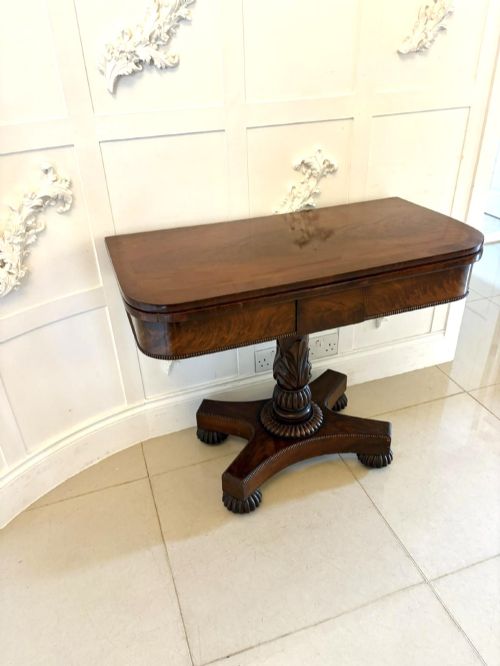
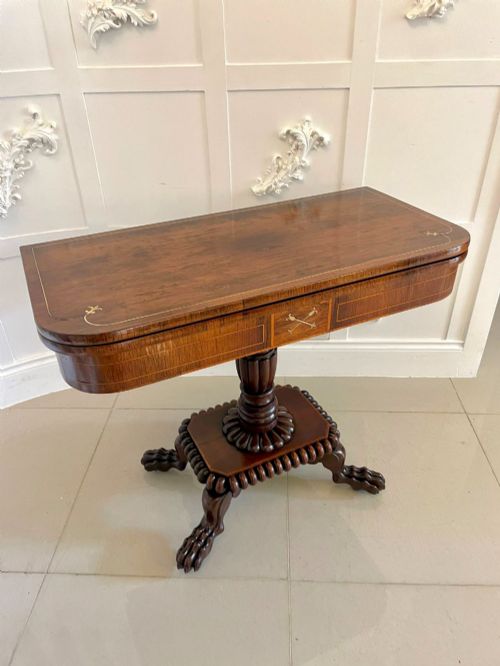
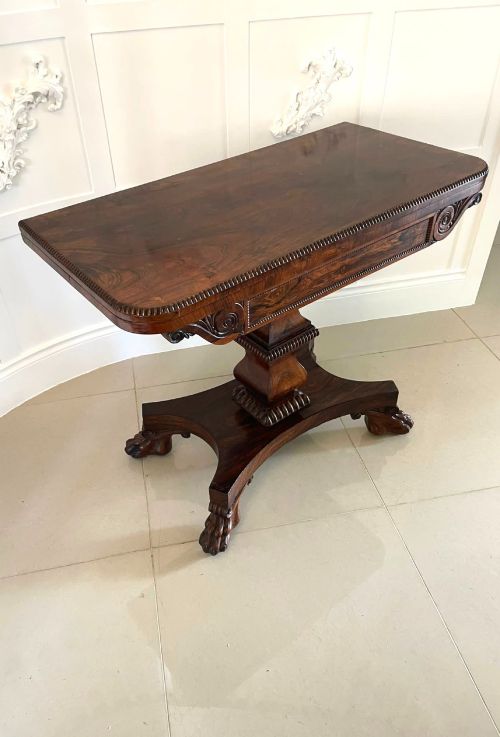
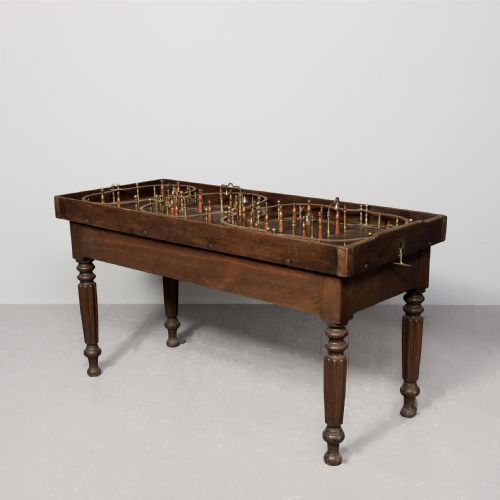
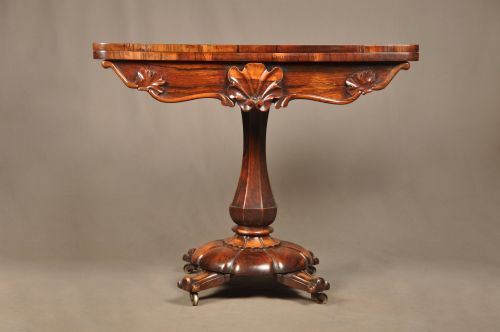
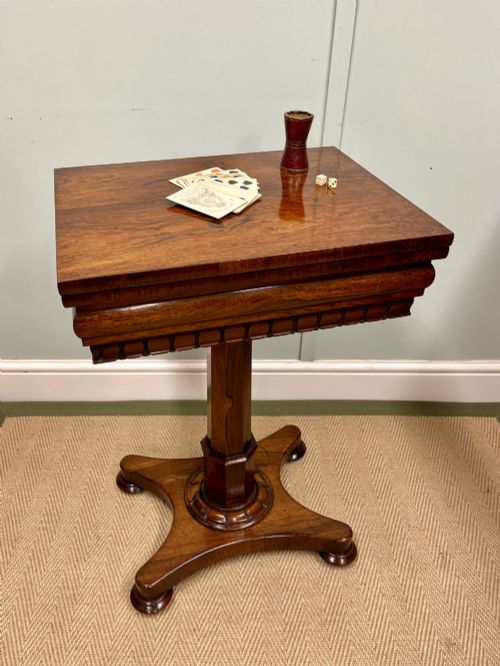
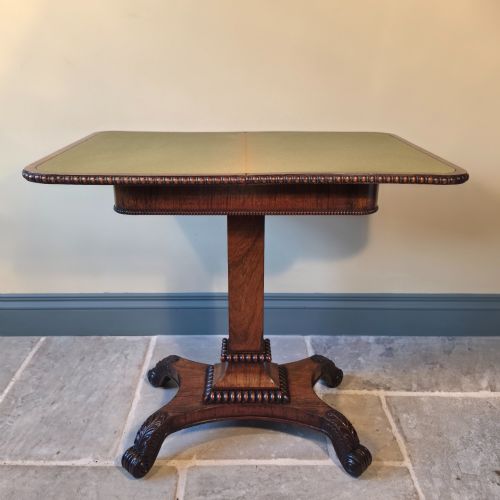
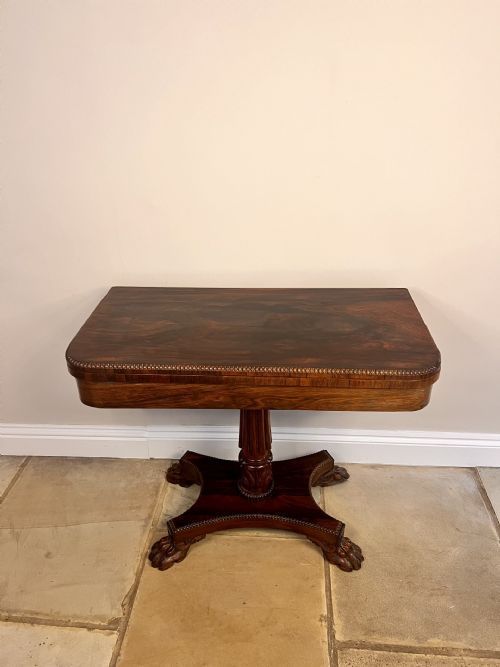
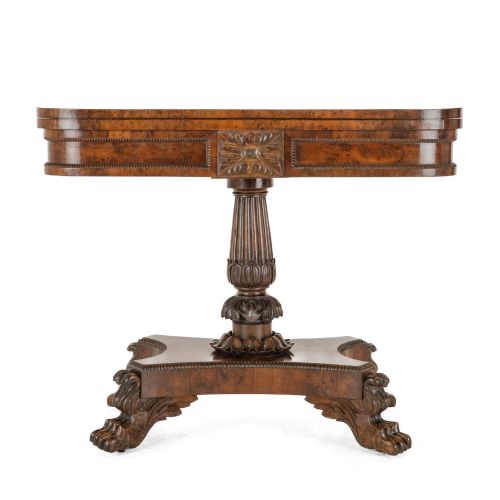
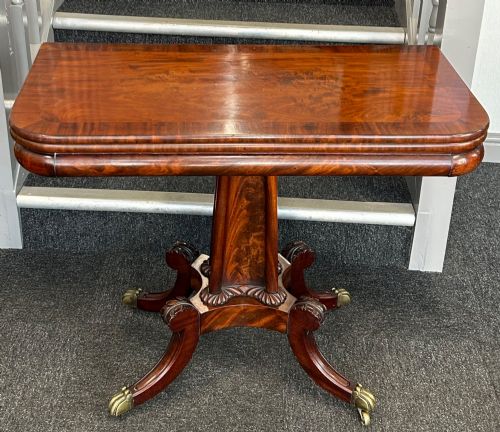


Regency Carved Gaming Table
Regency carved gaming table designs bring fold-over tops and clever internal spaces into the room, built for social play and formal display.
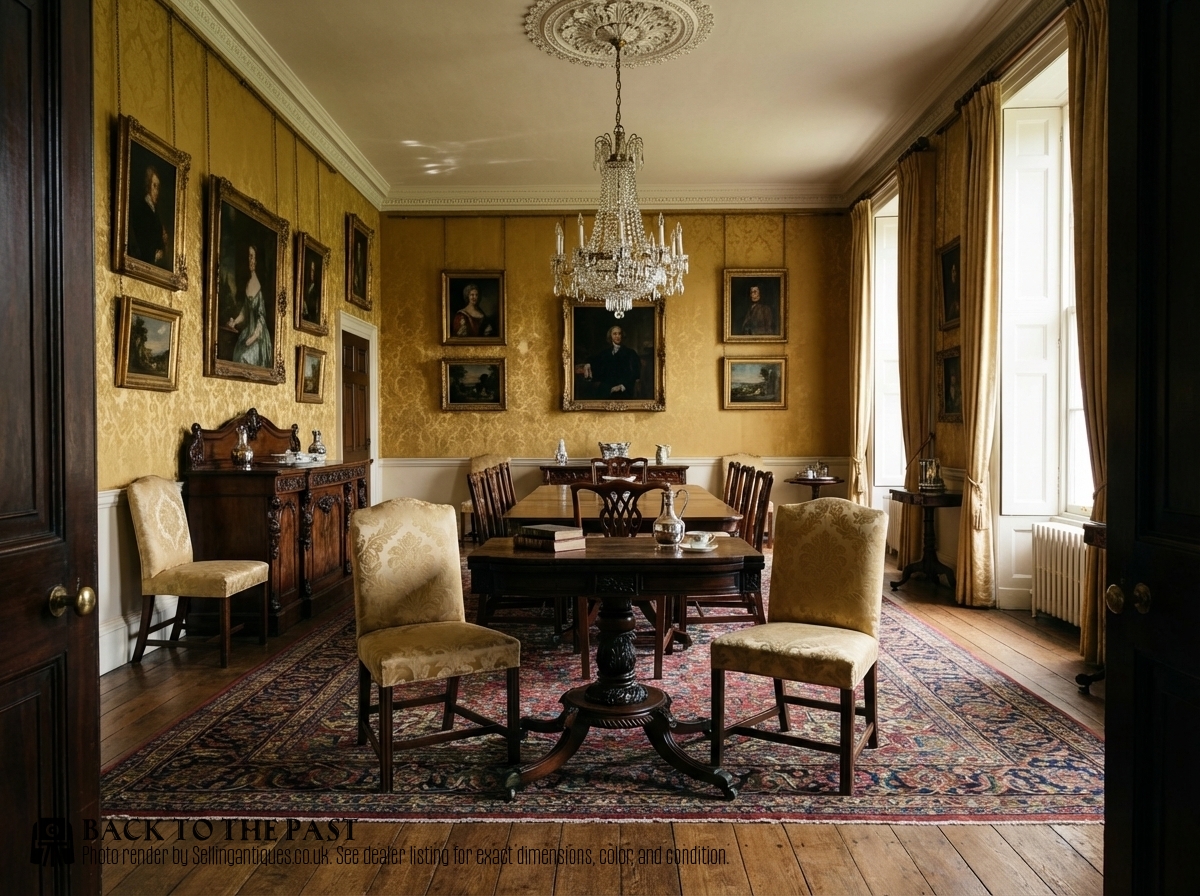
Regency Carved Gaming Table
A regency carved gaming table serves as a functional centrepiece, most frequently appearing in rosewood and mahogany across the Regency, George IV, and William IV periods. These pieces combine compact profiles with folding leaves designed to transform side tables into playing surfaces.
The selection spans card tables, tea tables, and console tables, frequently displaying pedestals with carved details such as dolphins or lyre supports alongside D-shaped tops.
Materials and Technique
Cabinetmakers utilised dense timbers like mahogany and rosewood, often applying flame mahogany veneer or contrasting boxwood and brass inlay to enhance the primary surfaces. Specialised woods such as burr yew and birdseye maple appear alongside structural oak.
Folding mechanisms and pedestal bases define the construction, joining turn-over tops to sturdy central pillars and plinths without relying on complex internal hardware.
A game of skittles manages to creep into the formal parlor alongside polite card playing.
Craftsmanship and Selection
Superior examples distinguish themselves through the crispness of carved wooden details on bases and pillars, alongside the careful selection of figured timber veneers on the fold-over top. Poorer execution shows in heavy, uninspired joinery and plain secondary timbers lacking visual depth.
The integration of brass inlay and the precision of the turning on pedestals mark the division between standard workshop production and finer cabinet work.
William Trotter·Gillows
The Regency Carved Gaming Table Glossary
- Card table
- A small folding table designed specifically for playing cards, featuring a hinged top that opens to reveal a baize-lined playing surface.
- Flame mahogany veneer
- A thin slice of mahogany timber displaying a distinctive flickering flame pattern, applied to the primary surfaces of superior furniture.
- Lyre support
- A furniture base shaped in the formal outline of a classical musical lyre, commonly used beneath pedestals in the Regency period.
- Baize
- A coarse woolen fabric traditionally used to line the playing surfaces of card and games tables.
- Turn-over top
- A hinged table top designed to rotate and fold out flat to double its surface area for games or dining.
Regency Carved Gaming Table: Frequently Asked Questions
How do you open a regency carved gaming table?
Most designs utilise a turn-over or fold-over mechanism where the top leaf swivels on its pivot and unfolds flat onto a supporting rail or swinging rear leg.
Opening the top frequently reveals a concealed storage well beneath for cards, counters, and small gaming accessories.
Where were these tables placed in a home?
These pieces typically stood against drawing room or parlour walls as decorative side tables when closed, requiring minimal floor space.
During evening gatherings, they were pulled into the centre of the room and unfolded to accommodate card players.
What is the difference between a card table and a tea table?
Card tables generally feature an interior lined with fabric or baize designed to cushion the placement of cards and prevent slipping.
Tea tables usually present a plain polished wood interior surface intended for porcelain tea services rather than active gaming.
How do you date a regency carved gaming table?
Dating relies on identifying stylistic markers such as classical carved dolphin bases, brass inlay patterns, and specific timber choices like rosewood or flame mahogany veneer.
Early nineteenth century pieces frequently transition from late Georgian proportions into the heavier forms associated with the William IV era.