
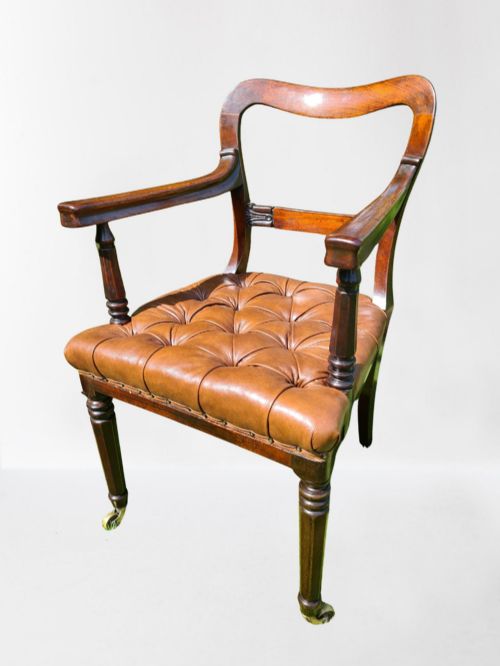
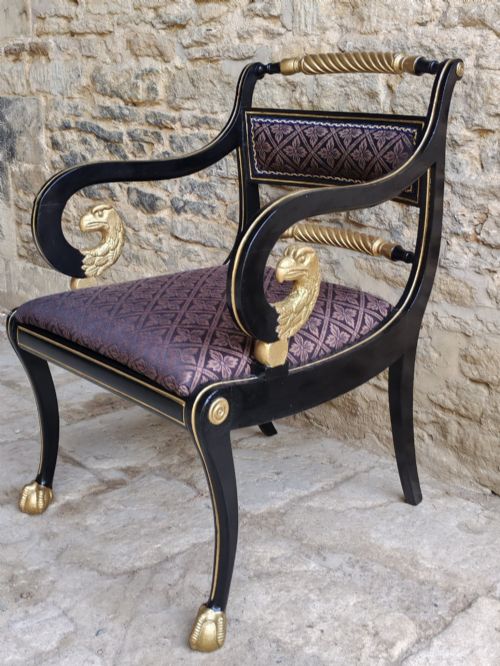
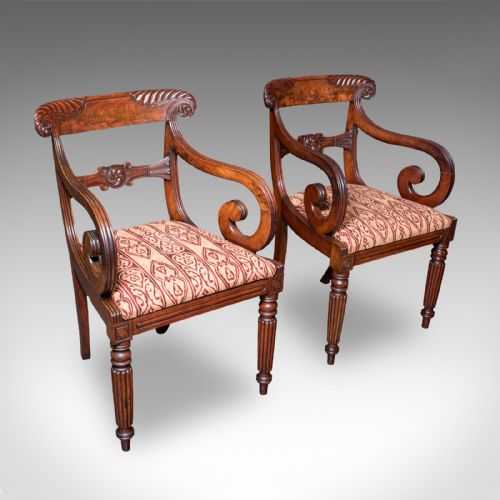
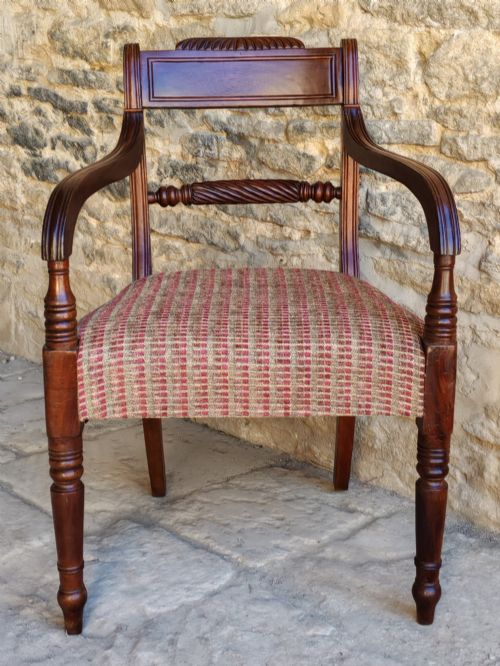
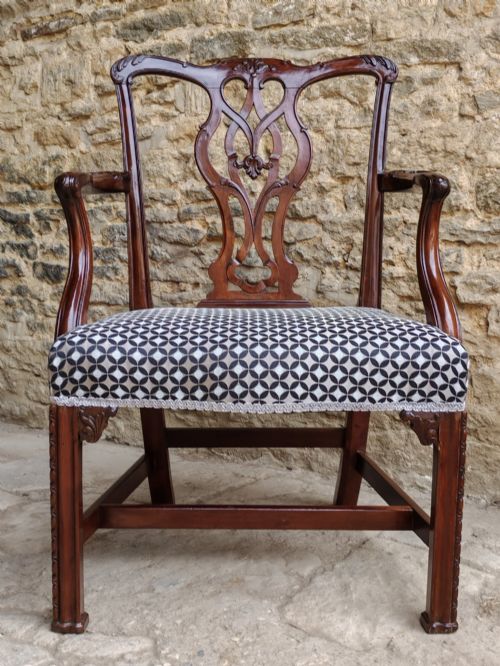
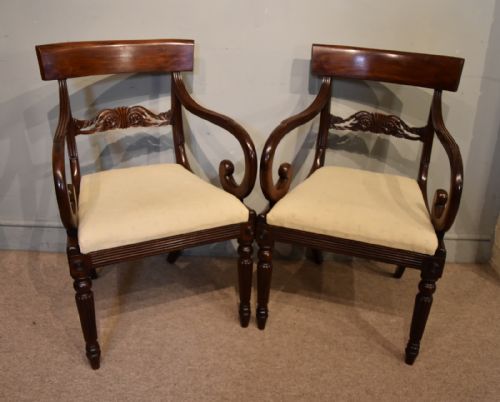
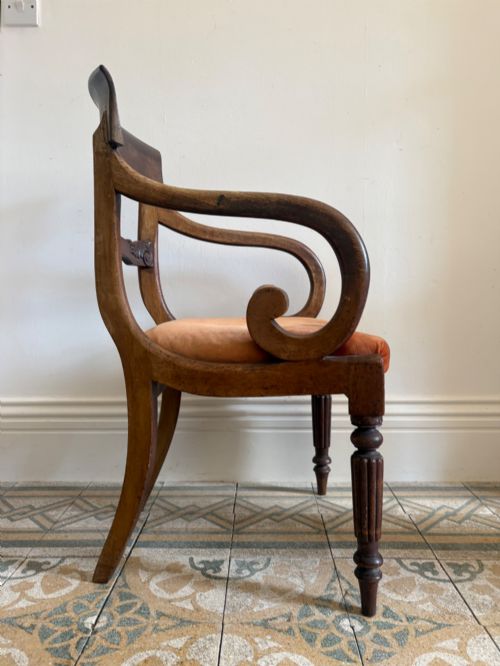
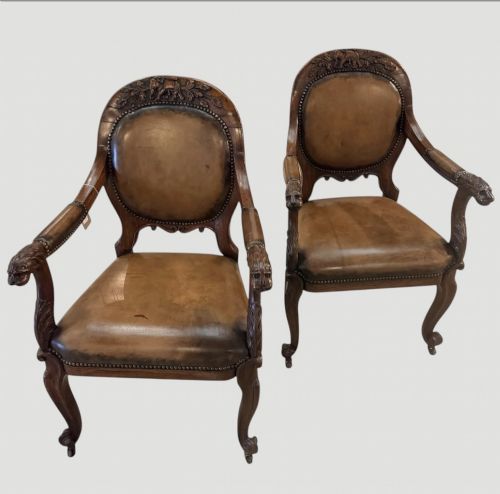
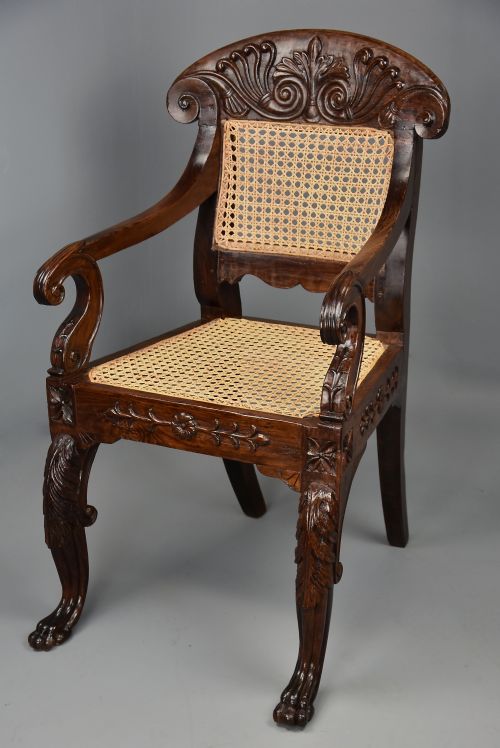
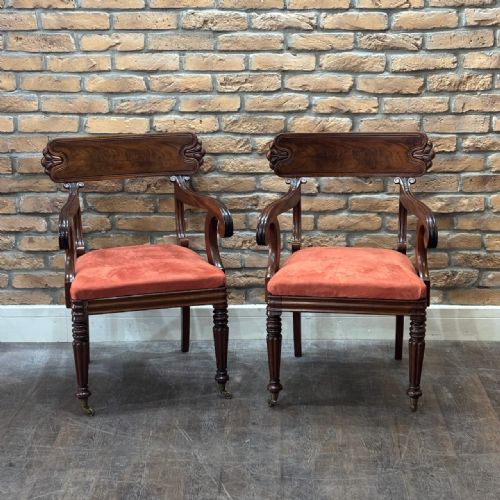


Regency Carved Elbow Chair
These regency carved elbow chair examples bring classical proportion and robust timber to any study or dining room.
Regency Carved Elbow Chair
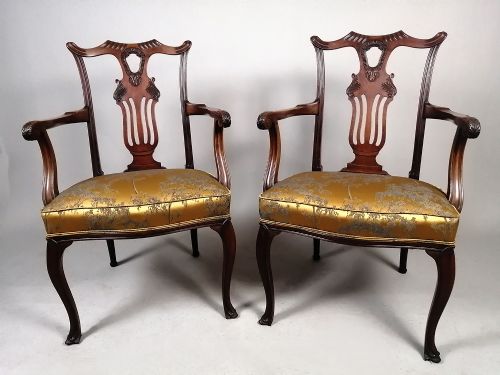
A regency carved elbow chair represents the seating forms of the early nineteenth century, encompassing styles from Georgian transitionals to William IV and Grand Regency periods. Buyers seeking a regency carved elbow chair encounter dining armchairs, library seats, and desk chairs designed for formal reception rooms and private studies.
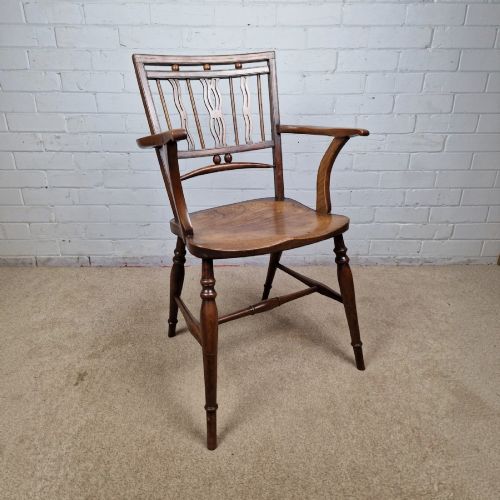
The selection ranges from strict Regency origins around eighteen twenty through later nineteenth century revivals, including Anglo-Indian interpretations and regional English variants such as Mendlesham and East Anglian dish seat armchairs. These seating pieces serve dual purposes as functional office or dining furniture and decorative statement items within traditional interiors.
Most entries originate in the broader nineteenth century alongside authentic Regency productions, spanning mahogany, rosewood, and ebony construction. Buyers select these chairs for their distinctive arm supports, carved back splats, and robust timber frames that anchor a room with historical gravity.
What varies in quality
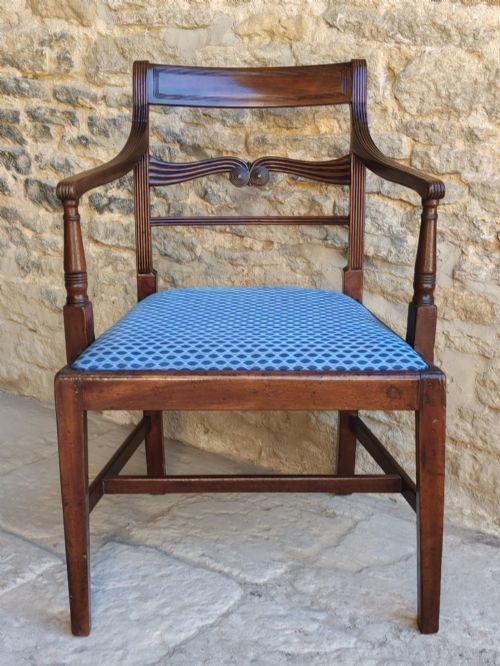
The distinction between standard examples and superior pieces rests upon the crispness of the timber carving and the selection of figured mahogany or exotic rosewood. Master cabinetmakers achieved finer proportions and more fluid lines in the scroll arms and back rails.
Originality of components, from the drop-in seat frames to the brass inlay work, dictates the historical standing of an armchair. Pieces retaining their initial surface patination and undamaged cane or upholstery foundations command greater appreciation among collectors.
One unexpected variant even doubles as a commode elbow open armchair, proving the Georgians expected their seating to multitask.
The Regency Carved Elbow Chair Glossary
- Carver
- An armchair designed with elbow supports, traditionally placed at the head of a dining table or utilised as a desk chair. These pieces match simpler side chairs intended for the same room.
- Regency
- A style period spanning the early nineteenth century, characterised by classical restraint, Grecian influences, and symmetrical carved ornamentation. Furniture from this era often incorporates mahogany and brass details.
- Lyre back
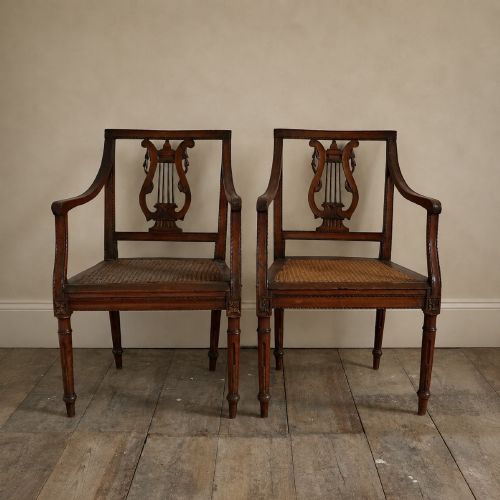
- A chair back splat shaped to resemble an ancient musical instrument, frequently utilised during the Regency period. This symmetrical wooden motif adds classical elegance to the centre of the backrest.
- Ropeback
- A carved wooden backrail or splat reeded to resemble twisted rope, common in early nineteenth century seating. This decorative technique adds texture to the mahogany frame.
- Padouk
- A heavy tropical hardwood with a reddish hue, utilised in Anglo-Indian furniture production during the nineteenth century. Cabinetmakers favoured this timber for its dense grain and resistance to wear.
Regency Carved Elbow Chair: Frequently Asked Questions
Where should I place a regency carved elbow chair?
These armchairs suit studies, libraries, and formal dining rooms where their architectural presence can be fully appreciated. They also function well as standalone reception seats in hallways or bedrooms.
Pairing a single chair with a writing desk or placing a pair beside a fireplace highlights their classical proportions and carved timber details.
How do I care for the mahogany timber?
Maintain the wood by dusting regularly with a soft, dry cloth and avoiding placement near direct heat sources or strong sunlight. Natural beeswax applied sparingly helps preserve the surface patination.
Harsh chemical polishes should be avoided as they can strip the historic finish and soften the crisp edges of the hand carvings.
What is the difference between a carver and an armchair?
In historical furniture terminology, a carver refers specifically to an elbow chair designed to accompany a set of matching dining chairs. The term highlights the decorative arm supports and larger proportions compared to standard side chairs.
Both words describe seating with arms, though carver often implies a formal dining context rather than a library or desk assignment.
Can I use these chairs at a modern desk?
Many nineteenth century elbow and desk chairs offer appropriate ergonomic heights for writing, provided the seat clearance accommodates modern knee room. Their sturdy mahogany construction makes them durable for daily workspace use.
Checking the specific seat height and arm clearance ensures the chair fits comfortably beneath a contemporary desk surface.
How do I identify a Regency period piece?
Authentic Regency seating typically displays classical motifs such as reeded legs, brass inlay, scroll arms, and sabre or turned front supports. The timber is predominantly dense mahogany or rosewood.
Later nineteenth century revivals often repeat these design elements, but inspection of the joinery and timber oxidation helps reveal the true age of the piece.