


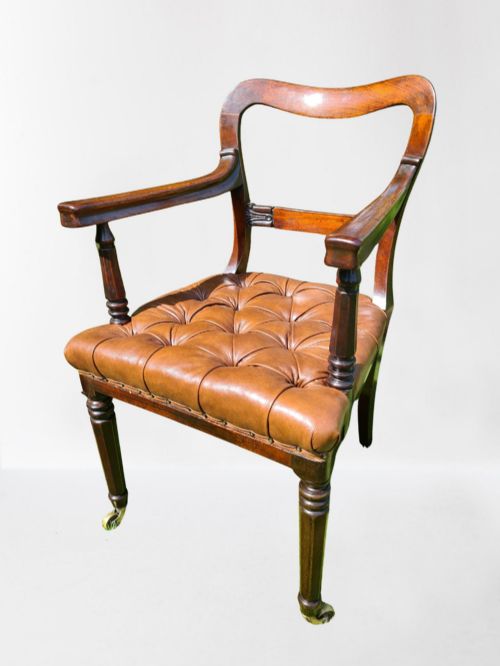
Regency Carved Chairs
Regency carved chairs bring classical proportion and refined timber grain into domestic spaces.
Regency Carved Chairs
When searching for regency carved chairs, buyers encounter seating from the early nineteenth century designed with neoclassical severity and flowing classical lines. These pieces encompass everything from single hall chairs to large matched dining sets for sixteen people.
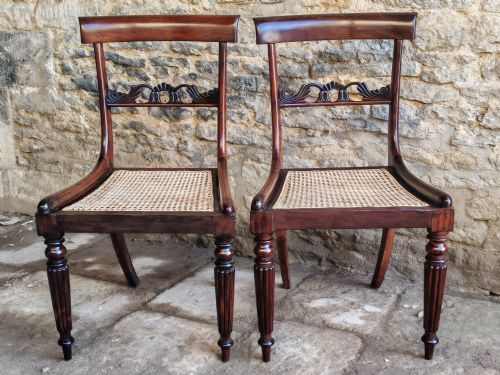
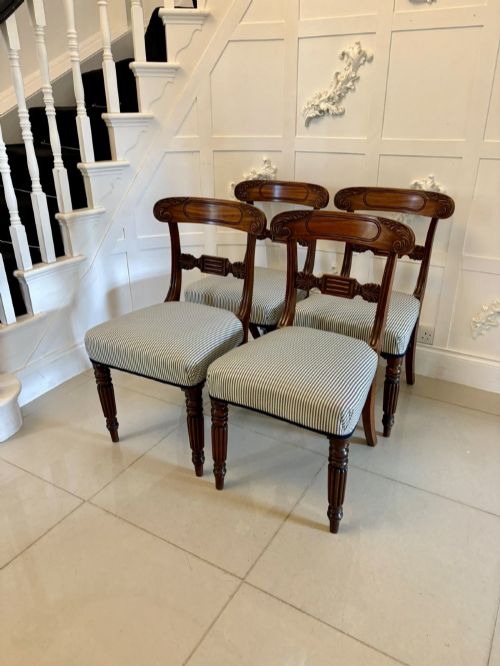
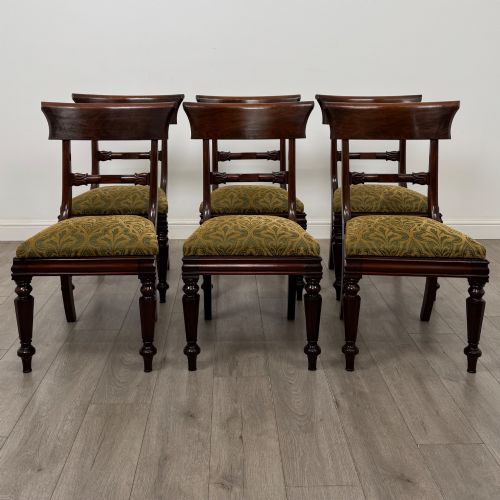
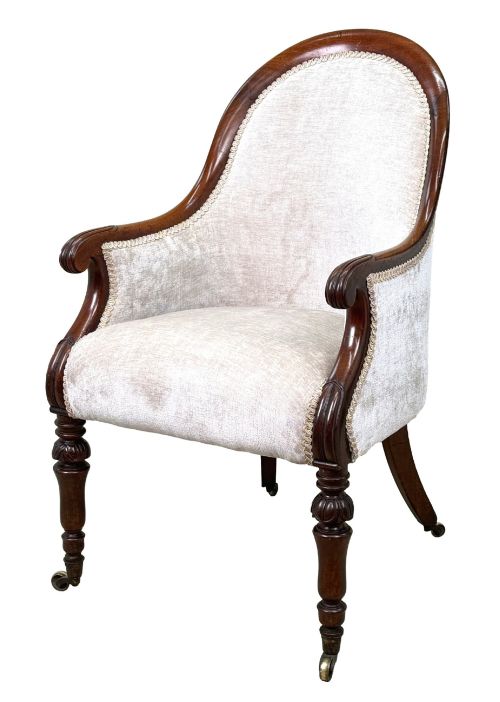
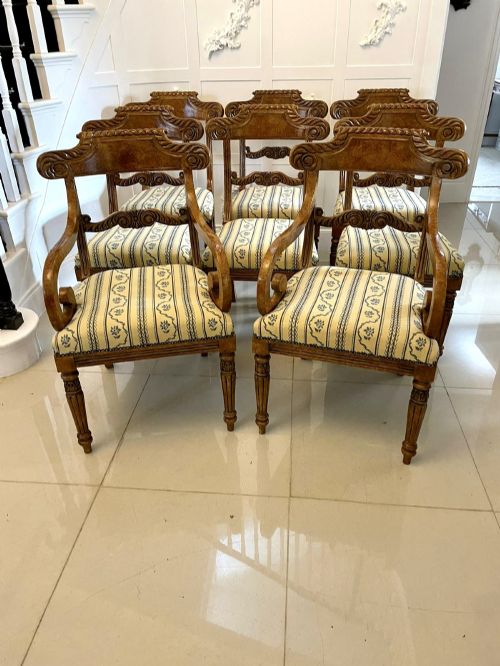
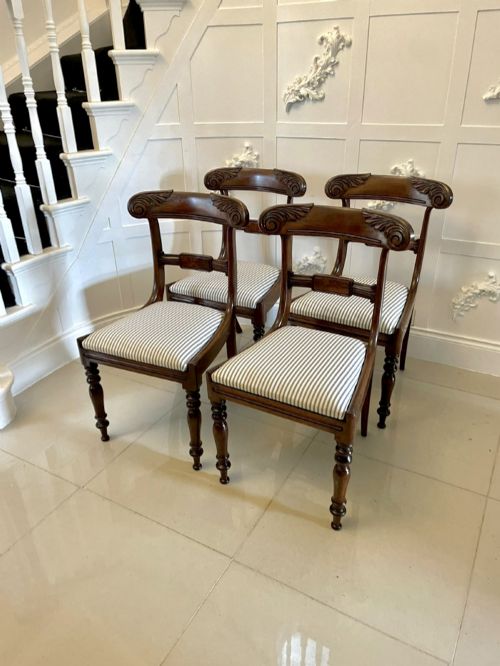
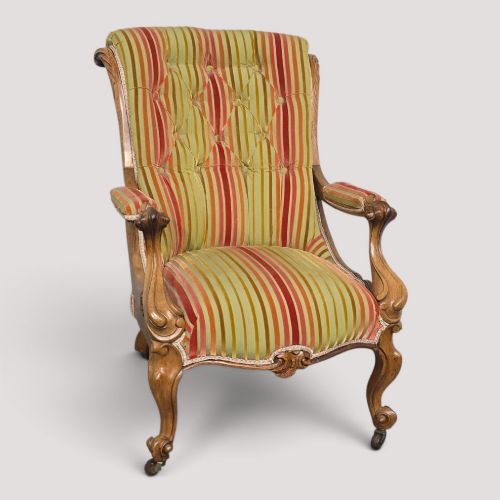
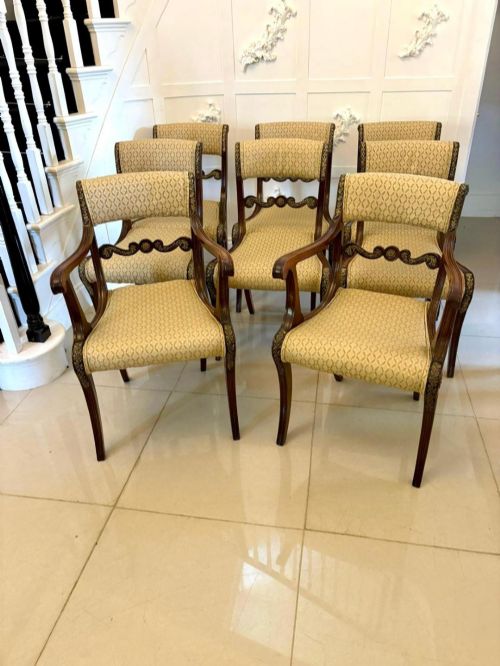
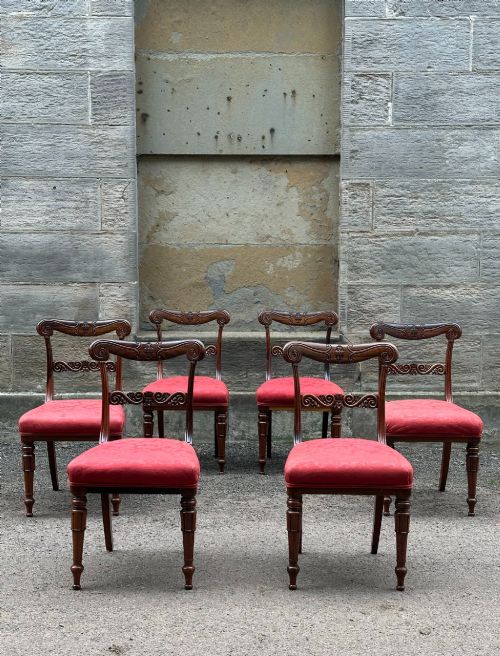
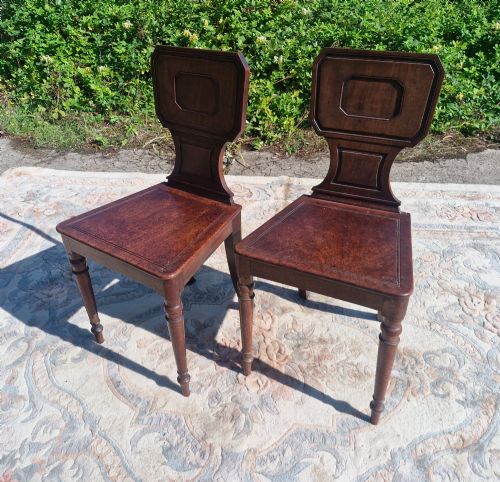
The most frequent examples on this page are mahogany and rosewood dining chairs featuring carved tablet top rails, rope backs, or curved sabre legs. Single library armchairs, desk chairs, and pairs of rigid timber hall chairs also appear regularly across the listings.
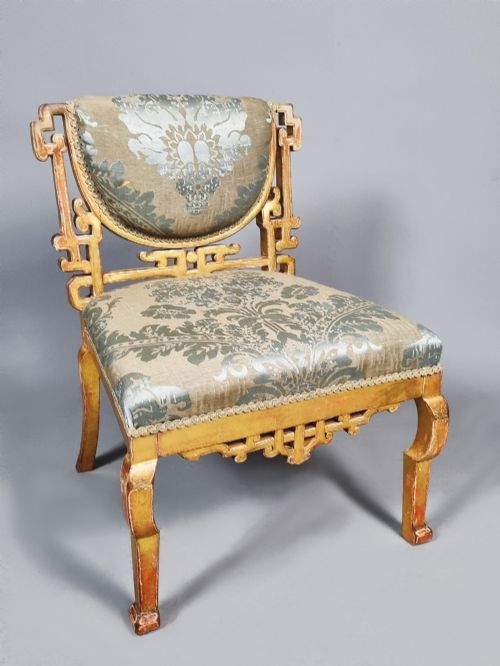
Makers of the period drew inspiration from Greek, Roman, and Egyptian antiquity, incorporating lyre motifs, scroll arms, and brass inlay. Pieces span single items for a hallway to substantial dining suites suited to formal rooms.
Materials and construction
Cabinet makers utilised dense imported hardwoods like Cuban mahogany and solid rosewood, selected for deep colour and ability to hold crisp hand-carved details. Secondary timbers such as beech or pine often provide structural support beneath upholstered drop-in seats.
Joinery relied on mortise and tenon frames secured with pegged joints rather than metal screws, allowing timber to expand and contract naturally. Brass wire inlay and cast brass mounts decorated select surfaces, whilst upholstery used horsehair stuffing beneath fabric or leather.
Listings feature dining chairs, hall chairs, and library armchairs spanning the Georgian, Regency, and William IV periods in mahogany and rosewood.
Judging quality and proportion
Quality rests in the depth and sharpness of the hand carving, where superior pieces exhibit undercut details rather than shallow surface incisions. Timber selection also divides the range, with figured mahogany and richly grained rosewood marking out higher workshops.
Structural integrity separates fine survivals from lesser examples, particularly where legs join the seat rail. Sets that remain together in matching numbers without replaced crest rails command greater attention from collectors.
Gillows
The Regency Carved Chairs Glossary
- Sabre leg
- A curved chair leg that tapers towards the foot, sweeping outward in imitation of a classical cavalry sword. This form provides lateral stability without heavy stretchers.
- Bar back
- A horizontal timber slat across the upper backrest, frequently shaped or reeded. It acts as the primary structural support for carved central splats.
- Carver
- An armchair designed with elbow rests, traditionally placed at the head of a dining table. They match the aesthetic of smaller side chairs in a set.
- Monopodia
- Carved supports shaped like the leg and paw of a lion or mythical beast. They appear on armchairs influenced by classical Roman furniture.
- Drop-in seat
- A removable wooden frame padded and upholstered separately before fitting into the seat rails. This construction allowed easy recovering without dismantling the chair frame.
Regency Carved Chairs: Frequently Asked Questions
How do I spot a true period piece?
Examine the timber shrinkage, tool marks, and construction joints beneath the seat frame. Period pieces display hand-cut joinery and dense, oxidised hardwoods consistent with early nineteenth-century cabinet making.
Compare the carving depth and proportions against documented examples from the same decade. Variations in timber colour across different parts of the frame often reveal later repairs or married components.
Can I use these chairs for daily dining?
Most dining chairs from this era remain structurally robust for daily use if joints are periodically checked and tightened by a professional. Solid mahogany and rosewood frames withstand normal seating loads well.
Consider the seat height and upholstery firmness, as historical padding often feels stiffer than modern foam. Protective pads on chair feet help prevent splitting on hard floors.
What is the difference between side chairs and armchairs?
Side chairs are built without armrests and were traditionally arranged along dining room walls or around the sides of a table. They occupy less physical space and feature narrower seat frames.
Armchairs, or carvers, incorporate elbow supports and sit at the head and foot of a dining table or beside a library fireplace. They require more generous proportions and often showcase more elaborate carved arm terminals.
How should I care for rosewood and mahogany?
Maintain a stable indoor humidity and keep timber away from direct heat sources and strong sunlight to prevent veneer cracking and fading. Apply a microcrystalline wax periodically to nourish the surface.
Avoid silicone-based polishes that build up over time and attract dust. Dust gently with a dry, soft cloth along the grain of the wood.