
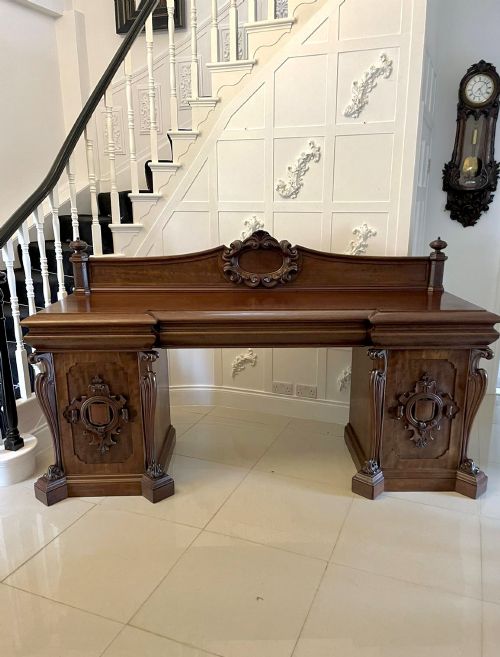
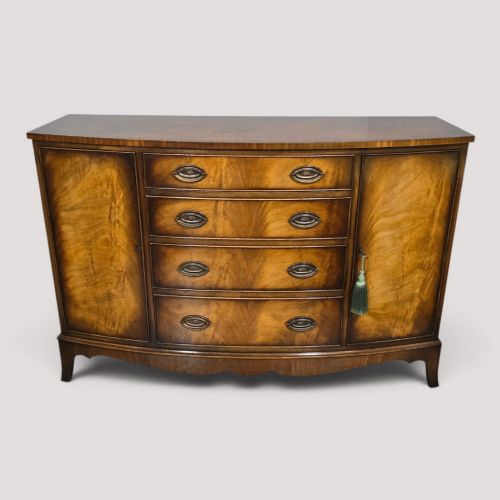
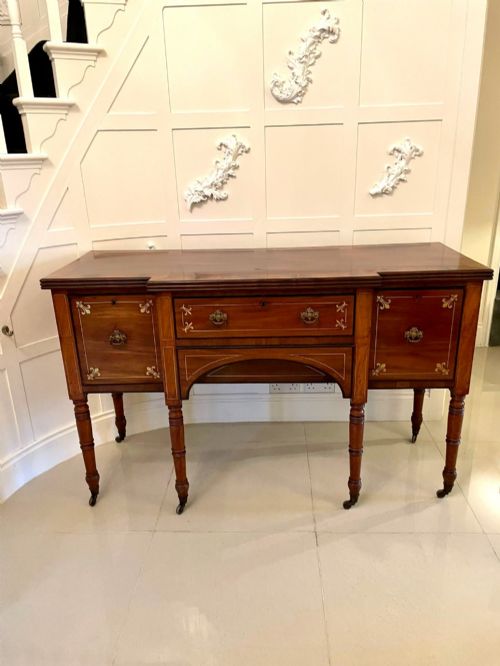
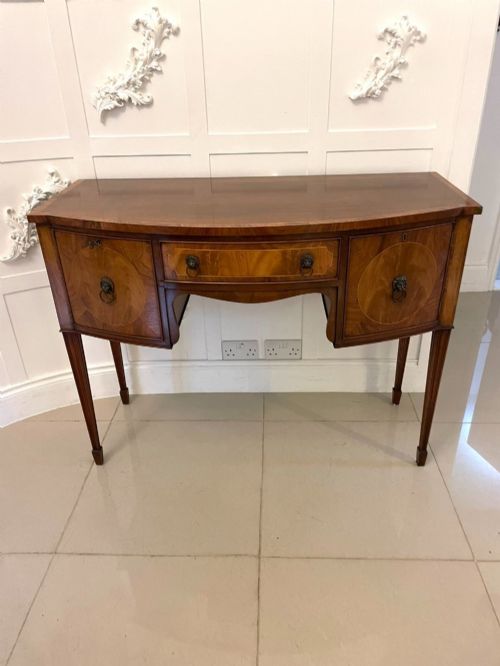
Regency Buffet Server
These regency buffet server pieces combine generous proportions with fine timber, offering a practical dining room centrepiece.
Regency Buffet Server
A regency buffet server search brings together large dining room furniture items intended for holding food and tableware. The pieces on this page span the nineteenth century, including Georgian and Victorian revivals alongside original Regency and William IV examples.
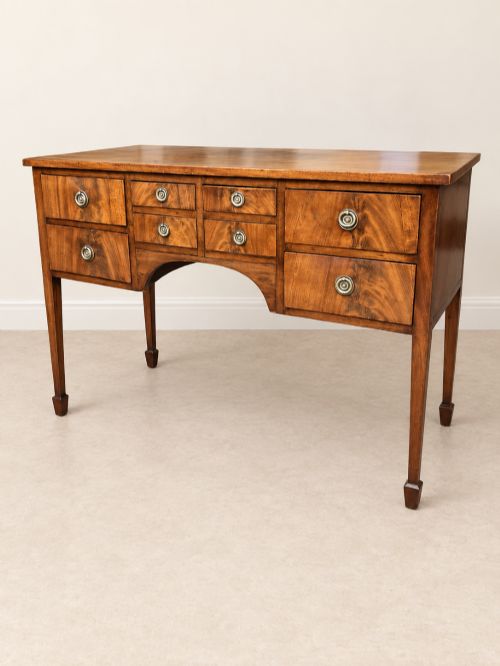
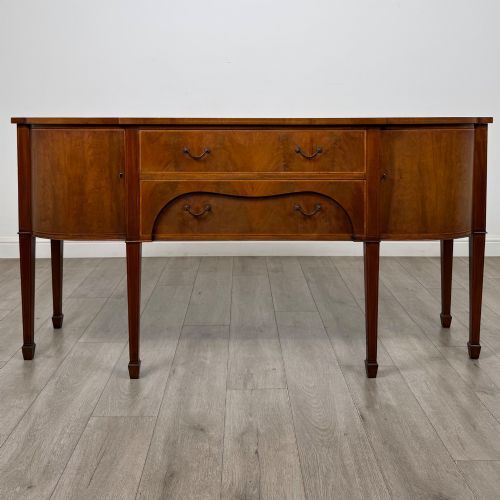
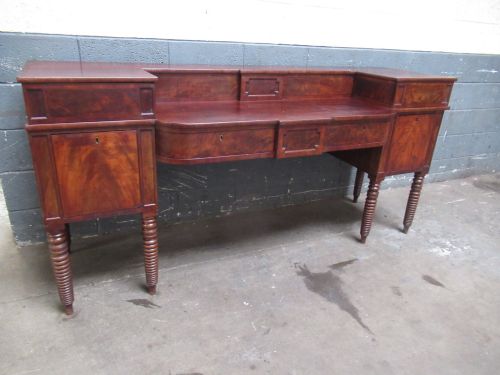
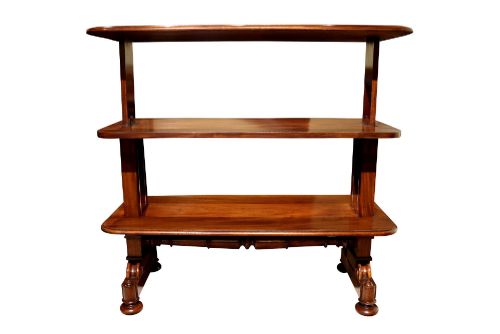
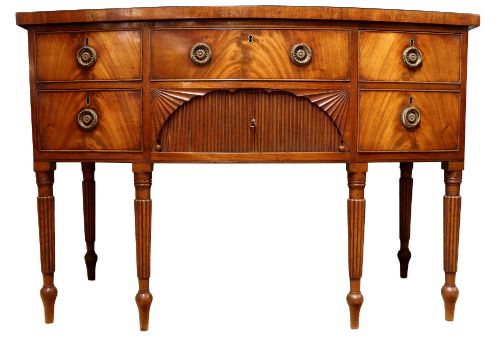
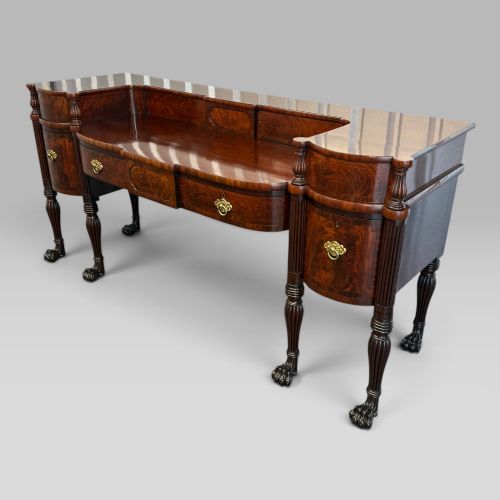
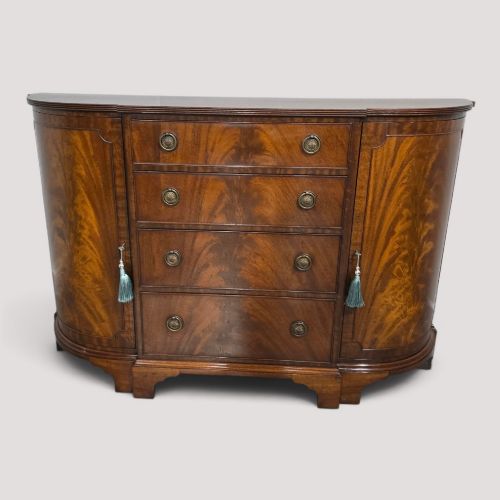
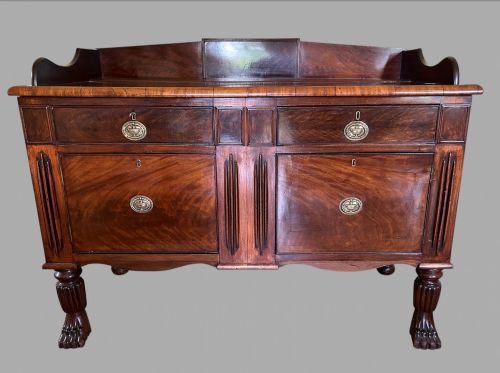
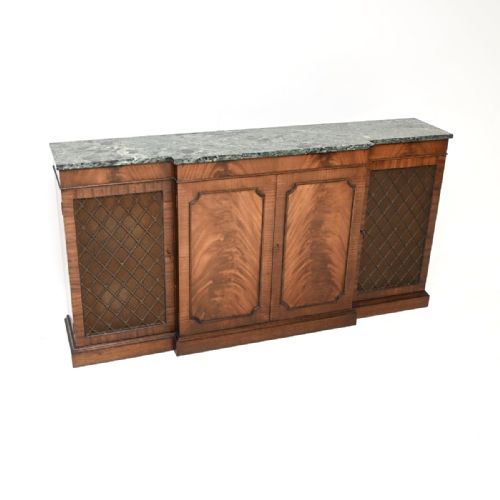
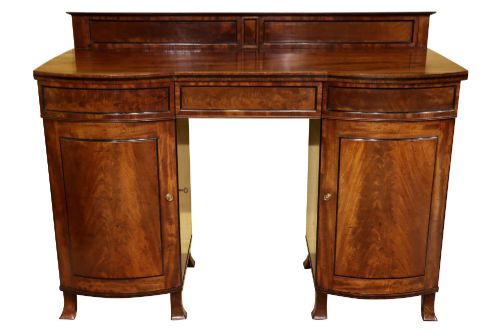
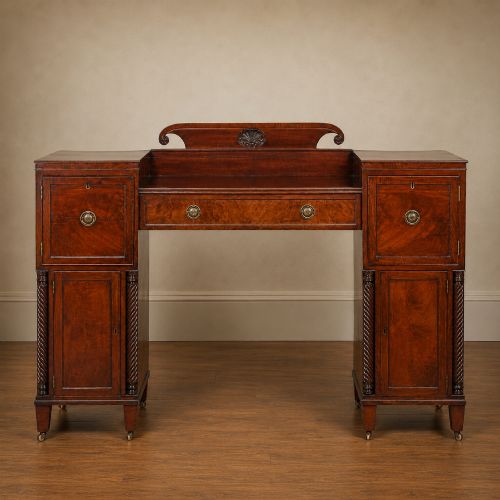
Buyers will most commonly encounter mahogany bow-front sideboards, pedestal sideboards, and tiered serving furniture across these listings. Forms range from compact bowed designs to large breakfront cabinets and multi-tiered dumb waiters.
Materials and construction
Cabinet makers utilised solid mahogany and applied flame mahogany veneer to large structural surfaces. Secondary woods such as oak appear in internal framing and drawer construction.
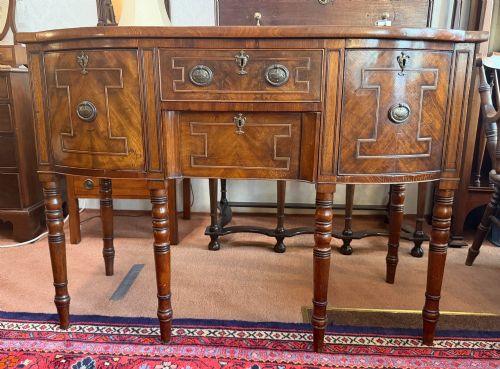
Decorative detailing relies on contrasting stringing and inlay using boxwood and ebony. Metal elements include brass handles, gallery rails, and cast brass paw feet.
Some tiered dumb waiters feature rotating trays designed to pass wine and snacks without summoning servants.
Assessing quality and finish
The choice of timber grain defines the visual impact, particularly where matched flame mahogany veneer covers large door panels and drawer fronts. Selection of cabinet timber dictates the depth of figuring across the piece.
Refinement in decorative additions separates standard production from finer cabinet work. Hand-cut boxwood or ebony inlay and cast brass mounts show superior execution.
Gillows
The Regency Buffet Server Glossary
- Bow-front
- A cabinet front that curves outwards in a convex sweep. This shape softens the room presence of a large dining room sideboard.
- Flame mahogany
- A veneer cut from timber where the branch meets the trunk, producing a rippling flame pattern. It creates striking visual movement on drawer fronts.
- Breakfront
- A piece of furniture where the central section projects forward from the flanking cabinets. This configuration breaks up long horizontal lines.
- Pedestal sideboard
- A sideboard comprising two distinct end pedestals connected by a recessed central board or table. These substantial pieces suit large dining spaces.
- Dumb waiter
- A tiered serving stand with rotating or fixed circular trays on a central column. It provides accessible shelving for dishes during meals.
Regency Buffet Server: Frequently Asked Questions
What is a regency buffet server used for?
These pieces function as dining room servers for organising dishes, cutlery, and serving platters during meals. They provide surface space for food presentation and storage within deep drawers and cupboards.
Historically, larger variations accommodated the heavy service requirements of nineteenth-century dining. Today they serve similar storage and display roles in modern dining rooms.
How do I identify a Regency period piece?
Look for characteristic architectural proportions, classical inlay lines in boxwood or ebony, and rich mahogany timbers. Authenticating pieces relies on examining construction methods, drawer linings, and timber ageing.
Later nineteenth-century revivals often copy these Regency proportions and material choices closely. Comparing secondary woods and brass fittings helps distinguish original pieces from later copies.
Where should I place a large sideboard?
These substantial items require adequate wall space in a dining room or wide hallway to balance their proportions. Positioning them away from direct heat sources protects the timber and veneer.
Allow sufficient clearance around the front for opening deep cabinet doors and drawers. Proper placement highlights the curved bow-fronts and figured wood grain.
How do I care for mahogany furniture?
Clean surfaces regularly with a soft, dry cloth to remove dust without harming the polish. Avoid placing furniture in direct sunlight to prevent fading of the mahogany timber.
Apply quality beeswax periodically to nourish the wood and maintain the surface sheen. Keep indoor humidity stable to protect veneers from lifting.