


Regency Bronzes Pair
Regency bronzes pair options bring classical symmetry to a room, uniting patinated metal and gilt mounts in matching sets.
Regency Bronzes Pair
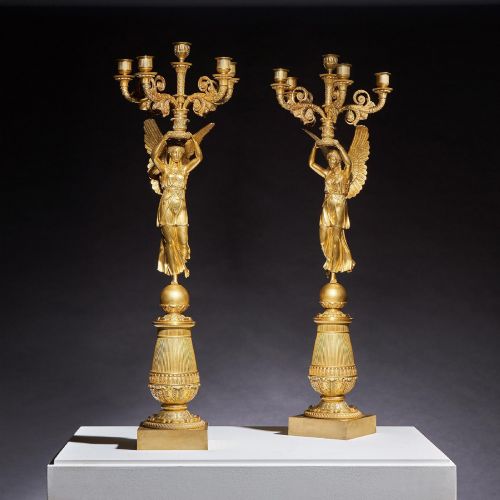
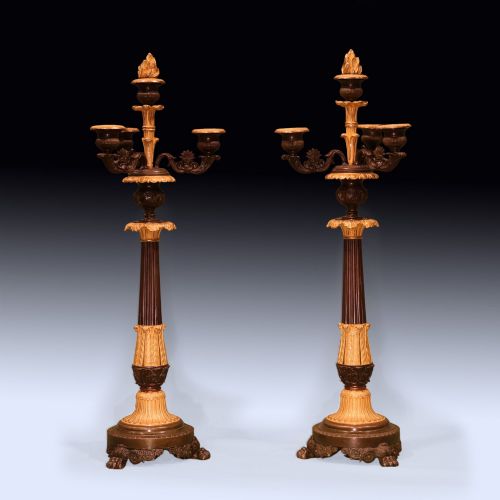
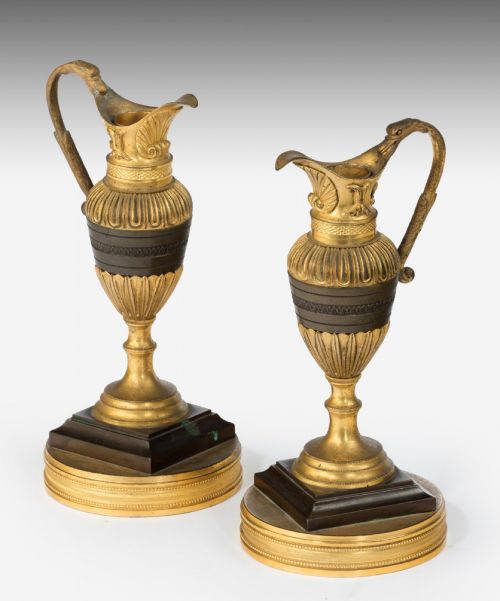
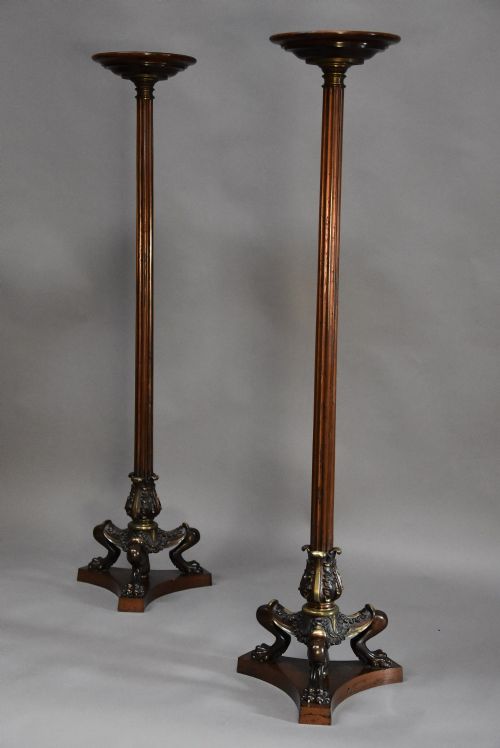
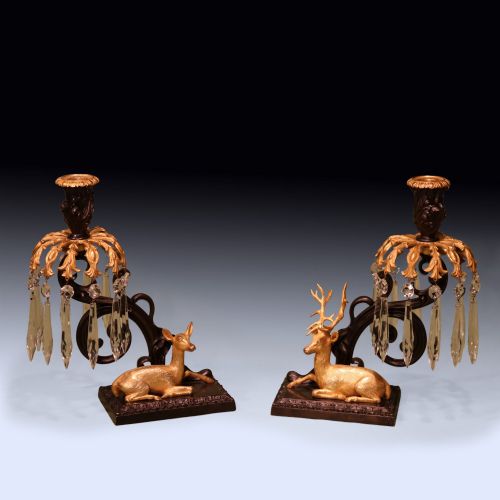
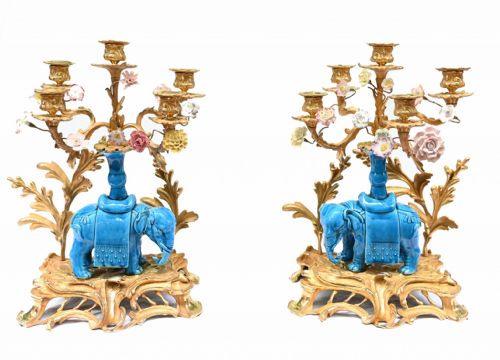
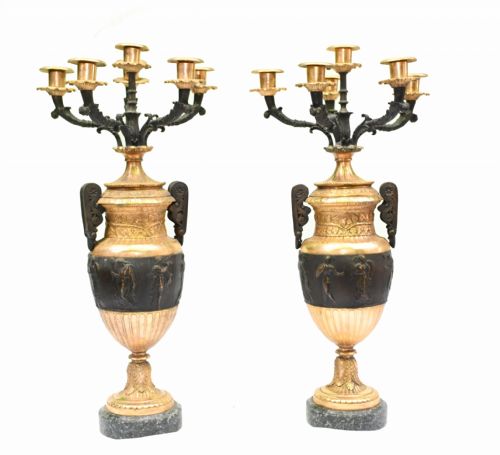
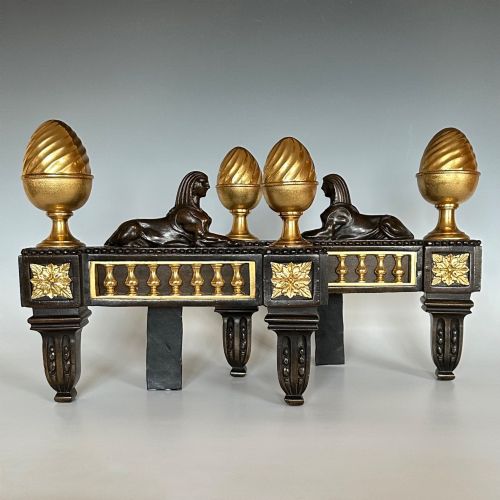
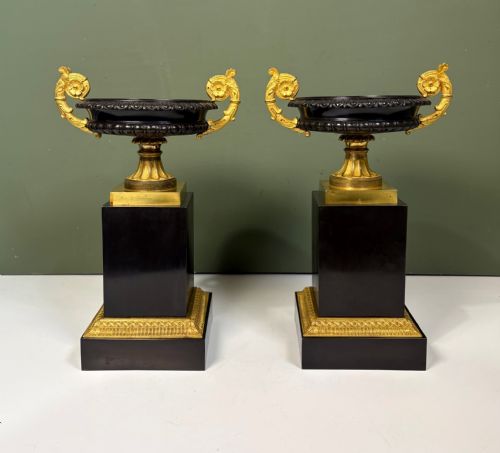
A regency bronzes pair brings together matched decorative or functional objects conceived in identical design during the early nineteenth century and subsequent revival periods. Buyers seeking these items encounter matching candlesticks, candelabra, urns, and lamps designed for symmetrical placement on mantelpieces or sideboards.
The selections recorded here span periods from the nineteenth century into later revival decades, incorporating French Empire and Neoclassical influences alongside British Regency forms. Candlesticks, table lamps, and wall lights dominate the physical evidence, often pairing dark patinated metal with bright gilt highlights.
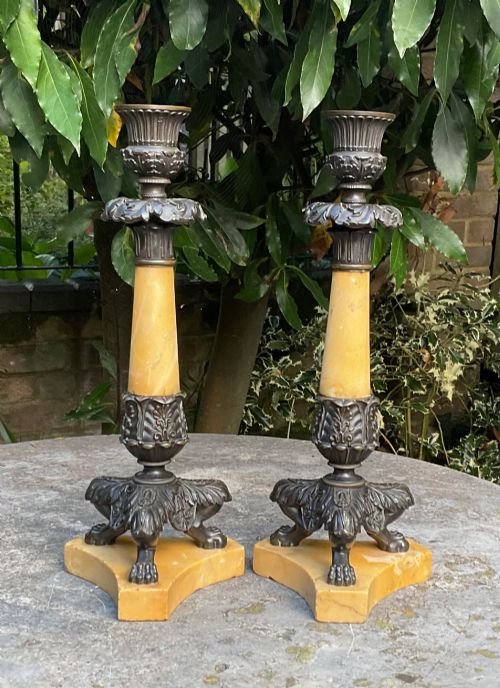
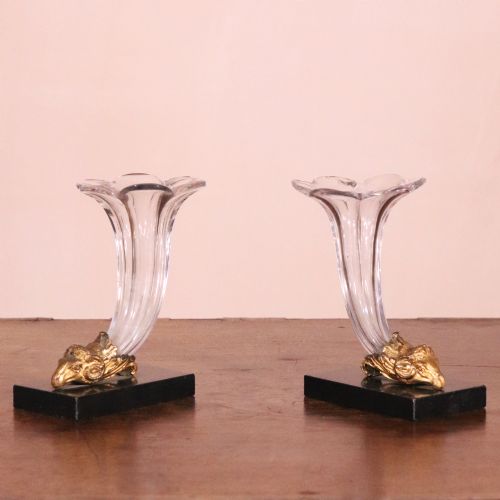
Many examples incorporate mixed media such as white or sienna marble plinths, glass lustres, and porcelain elements. The unifying factor across these variations remains the paired composition intended to anchor a room with formal balance.
Materials and manufacture
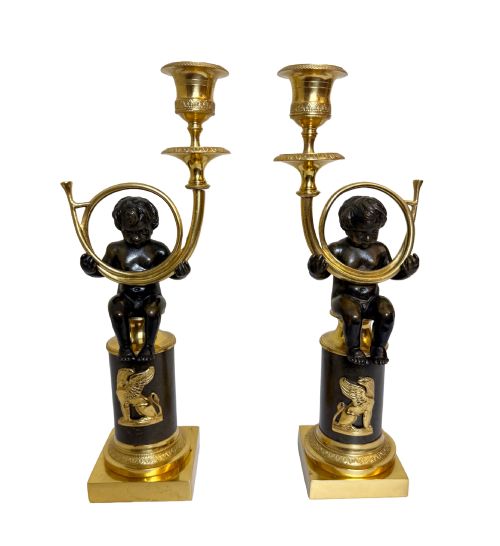
Maker workshops utilised bronze as the primary structural and sculptural body, applying chemical patination to achieve deep brown or black surfaces alongside mercury gilding for ormolu details. This combination creates high visual contrast between dark metallic figures and bright, polished gold sections.
Foundries combined lost-wax casting and sand-casting techniques to produce crisp sculptural details such as campana sconces, foliage, and figural mounts. Final assembly involved mechanical fastening to marble bases and integration with glass or porcelain components.
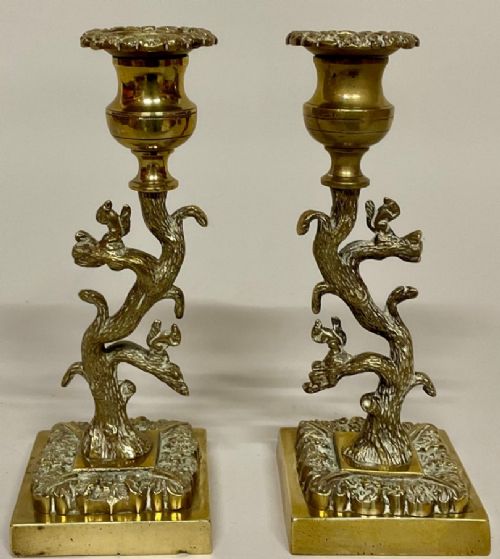
Squirrels forage among bronze tree branches on one unusual pair of nineteenth-century candlesticks.
Distinctions in craftsmanship
Superior examples demonstrate meticulous chasing of the cast metal surface, where craftsmen hand-tooled the cooled bronze to sharpen edges and define textures before gilding. Lesser work leaves cast details soft and uniform, lacking the crisp separation between matte patination and burnished ormolu.
The choice of secondary materials marks another divergence, with dense marbles and heavy cast mounts separating high-status commissions from lighter, later commercial productions. Proportions, structural integrity, and the fidelity of classical motifs dictate the standing of individual pairs.
Pierre Philippe Thomire·George Smith·Thomas Hope
The Regency Bronzes Pair Glossary
- Ormolu
- Gilded bronze produced through the application of a mercury and gold amalgam, fired to leave a durable metallic gold layer on the bronze base.
- Patination
- The surface coloration of the bronze achieved through natural ageing or chemical treatment, ranging from deep chocolate brown to near black.
- Campana
- A bell-shaped classical vessel form frequently utilised for the sconces or bodies of candlesticks and urns within this period.
- Cassolette
- A decorative vase or urn featuring a reversible lid that functions either as a solid vessel or a candle holder.
- Tazza
- A shallow ornamental cup or plate mounted on a stem and foot, often paired for display on furniture surfaces.
Regency Bronzes Pair: Frequently Asked Questions
How were these pairs used originally?
Owners placed these matching items symmetrically on mantelpieces, side tables, or pier tables to provide balanced illumination and formal decoration.
They functioned as practical light sources for candles or as purely decorative accents that demonstrated the household's taste for classical antiquity.
How do I care for gilt bronze?
Dust surfaces gently with a soft, dry brush to prevent accumulation without disturbing the delicate metallic finish.
Avoid chemical polishes and abrasive cloths, which can strip the thin layer of mercury gilding or damage the underlying bronze patination.
Are these pieces strictly from the Regency period?
The inventory includes items from the original Regency era alongside later nineteenth-century revivals and early twentieth-century interpretations.
Design motifs persisted across decades, meaning stylistic influences often span multiple manufacturing periods.
Why are marble bases common?
Marble plinths provided a stable, heavy foundation that elevated the bronze figures and added architectural weight to the composition.
Craftsmen selected contrasting stone colours like white or sienna to frame the dark patinated metal and bright ormolu mounts.